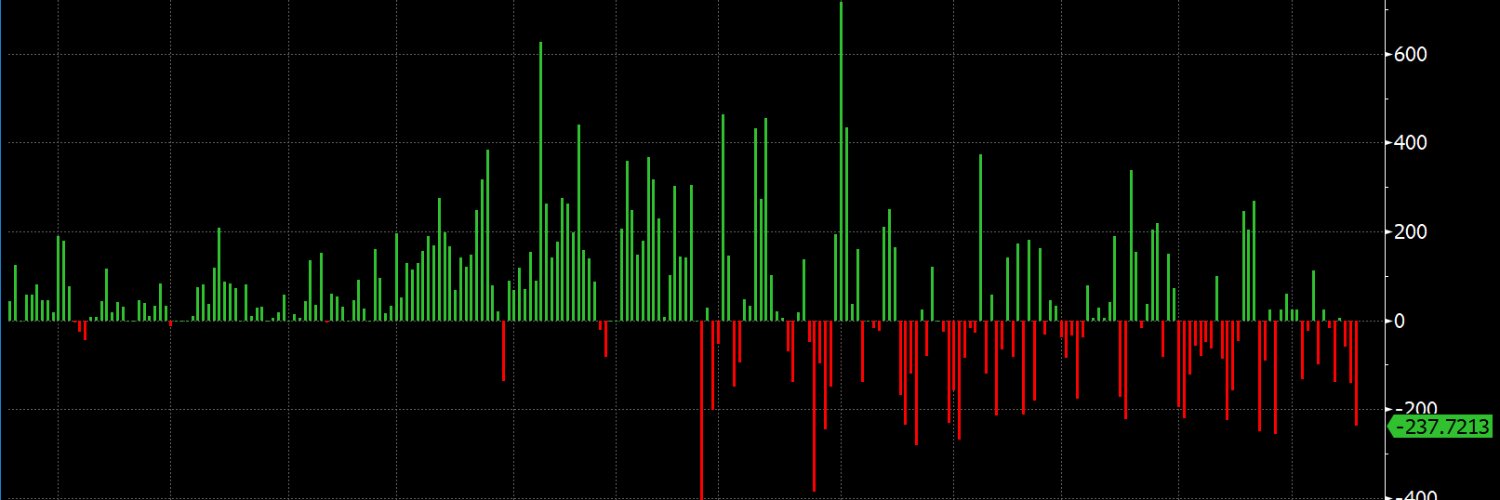
Surprising: Moody’s keeps #France at Aa3 w/a negative outlook despite the turmoil. Markets seem far less relaxed: 5y default insurance costs have surged to 103bps, the highest in over a decade. Investors are repricing French risk. Moody’s is standing still. https://t.co/8RNGBQEIAD
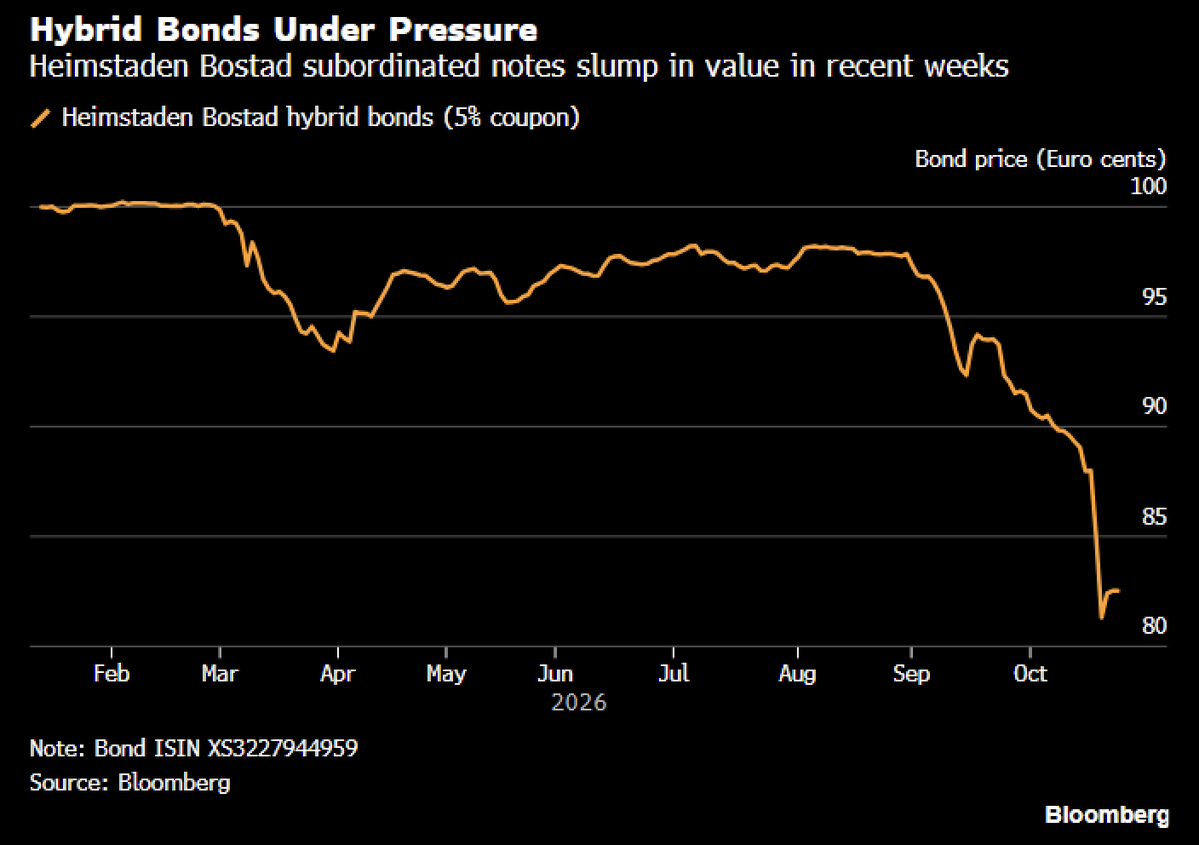
Good Morning from Germany, where one of Europe’s biggest landlords calls the country “uninvestable.” Heimstaden is withholding fresh capital over Berlin’s expropriation plans. It owns 20,000 apartments in the city worth ~€5bn and estimates a potential €1bn loss. Its hybrid bond has plunged from ~98 cents in August to 82.5. The irony: a policy meant to tackle the housing shortage risks driving away investment without building a single new home. https://t.co/hb4Ox0lalB
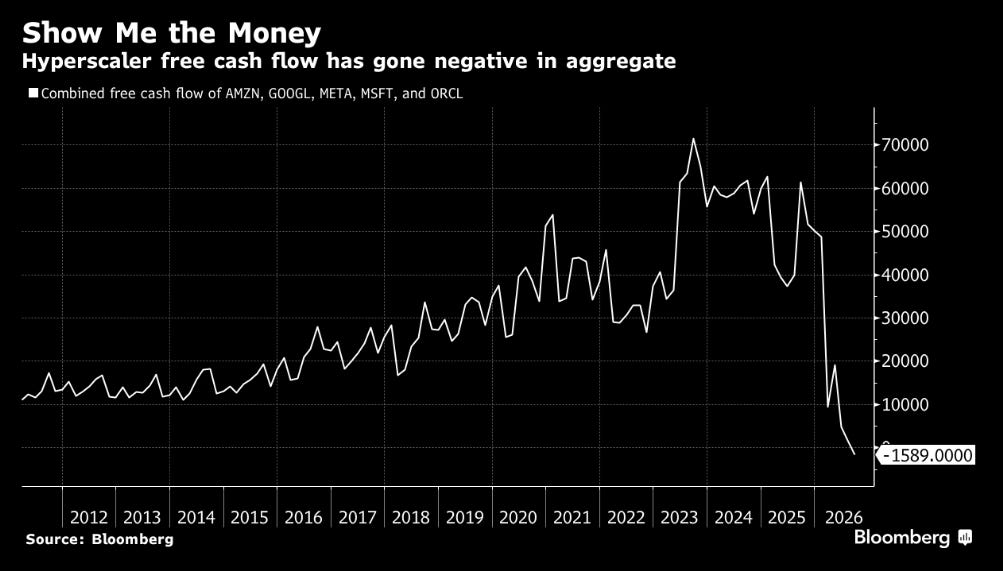
AI & Hyperscaler’s & Free Cash Flow (FCF) aka 'Show Me The Money':
👉 combined Hyperscalers FCF has just switched negative
👉 from positive +$70b to negative -$1.6 billion in 3 years
👉 and let this one sink in: that $-1.6 billion is without counting the hundreds of billions they borrowed or the trillions in off balance sheet obligations …
P.S. way more on that and more via my future reports:
✍️ Maverick’s AI Long-Term View
✍️ AI ROI CAPEX Pressure Cooker
✍️ Is AI in Bubbly Territory
✍️ S&P 500: Why I am Just Not a Buyer These Days
✍️ S&P 500: Valuation, Fundamentals, Special Metrics & Leading Indicators
✍️ S&P 500: Performance, Sentiment, Seasonality & Technical Analysis
✍️ Is the U.S. Stock Market in a Bubble?
✍️ Market Pockets of Overvaluation, Animal Spirits and Bubbly Territory
✍️ The State of the U.S. Economy in 75 Charts = A Deep Dive!
✍️ Decoding the U.S. Economy in Real-Time Through Sleek High Frequency & Alternative Data
Free to subscribe = free to enjoy!
https://t.co/z3WChD7wL5
With respect,
Mav
𝗗𝗶𝗲 𝗴𝗮𝗻𝘇𝗲 𝗪𝗲𝗹𝘁 🌎 𝘀𝗰𝗵𝗮𝘂𝘁 𝗮𝘂𝗳 𝗙𝗿𝗮𝗻𝗸𝗿𝗲𝗶𝗰𝗵 🇫🇷 – 𝘄𝗮̈𝗵𝗿𝗲𝗻𝗱 𝗱𝗶𝗲 𝗰𝗹𝗲𝘃𝗲𝗿𝗲𝗻 𝗴𝗹𝗼𝗯𝗮𝗹𝗲𝗻 𝗜𝗻𝘃𝗲𝘀𝘁𝗼𝗿𝗲𝗻 𝗶𝗵𝗿 𝗩𝗲𝗿𝘁𝗿𝗮𝘂𝗲𝗻 𝗶𝗻 𝗱𝗶𝗲 𝗦𝗰𝗵𝘄𝗲𝗶𝘇 🇨🇭 𝘀𝗲𝘁𝘇𝗲𝗻.
𝗗𝗶𝗲 𝗥𝗲𝗻𝗱𝗶𝘁𝗲 𝘃𝗼𝗻 𝗦𝗰𝗵𝘄𝗲𝗶𝘇𝗲𝗿 𝗦𝘁𝗮𝗮𝘁𝘀𝗮𝗻𝗹𝗲𝗶𝗵𝗲𝗻: 𝟬,𝟱𝟮 % 🇨🇭
𝗙𝗿𝗮𝗻𝗸𝗿𝗲𝗶𝗰𝗵: 𝟱,𝟬 %
Rund 450 Basispunkte Differenz: Die Märkte stufen die Schweiz inmitten des europäischen Chaos als deutlich sicherer ein.
Dieser Vertrauensvorsprung besteht, weil die Schweiz politischer Unruhe, hoher Verschuldung und Instabilität fernbleibt. 🇨🇭
Bilaterale III vertieft die Bindung: dynamische Rechtsübernahme, erweiterte Personenfreizügigkeit, Kohäsionszahlungen.
Ein Ja in 2027/28 droht genau jene Bedingungen zu importieren, welche die Märkte derzeit abstrafen.‼️
Die Grafik ist das Urteil der Märkte. Das andere Bild macht es sichtbar.
𝗗𝗮𝘀 𝗶𝘀𝘁 𝗱𝗮𝘀 𝗹𝗮𝘂𝘁𝗲𝘀𝘁𝗲 𝗩𝗲𝗿𝘁𝗿𝗮𝘂𝗲𝗻𝘀𝘃𝗼𝘁𝘂𝗺 𝗱𝗲𝗿 𝗠ä𝗿𝗸𝘁𝗲. ✅
Nassim Taleb on the Importance of Probability in Investing from back in 2016 -- a timely reminder:
👉 probability of default aka ruin aka wiping out an entire portfolio
👉 sequence of returns risk
👉 tail risk hedging
and more ... enjoy!
https://t.co/WpCc1UeHvG
„Nobody will be successful with the old recipe where you had global cars developed in Europe and sold them at a premium price” in China, CEO Håkan Samuelsson said Friday during an analyst call. “Those times are gone.“
I can't believe it but @CharlesSchwab is following @Fidelity down the morally bankrupt path of charging retail investors insane fees to trade ETFs.
Instead of $100 it's going to be $50.
So maybe they're 1/2 as evil?
"Yes we're screwing over our own customers but at least we're not as bad as @Fidelity!"
Would be embarrassed to work at either shop.
Gross.
China's gov't has been buying $2.5b/day in equity ETFs since July to try and prop up market after AI slump. What's wild is China typically only sees about $218m/day in ETF flows = the govt is 10x the average. It would be like if the US Treasury bought $100b/day in ETFs here. Great note on the 'natty team' today from @RebeccaSin_SK@JackiWang17 on BI ETF<GO>.
Volvo Cars (Volcar B) vs. AB Volvo / Volvo Group (VolvB), or Consumer passenger vehicles vs. Commercial B2B heavy machinery and transportation -- last 5 years:
👉 Volvo Cars: down 78% (with a - 26% CAGR )
👉 Volvo Group: up 109% (with a +16% CAGR)
Sounds the same, but not the same :)
I might cover one or both in the future deep dives!
Cheers!
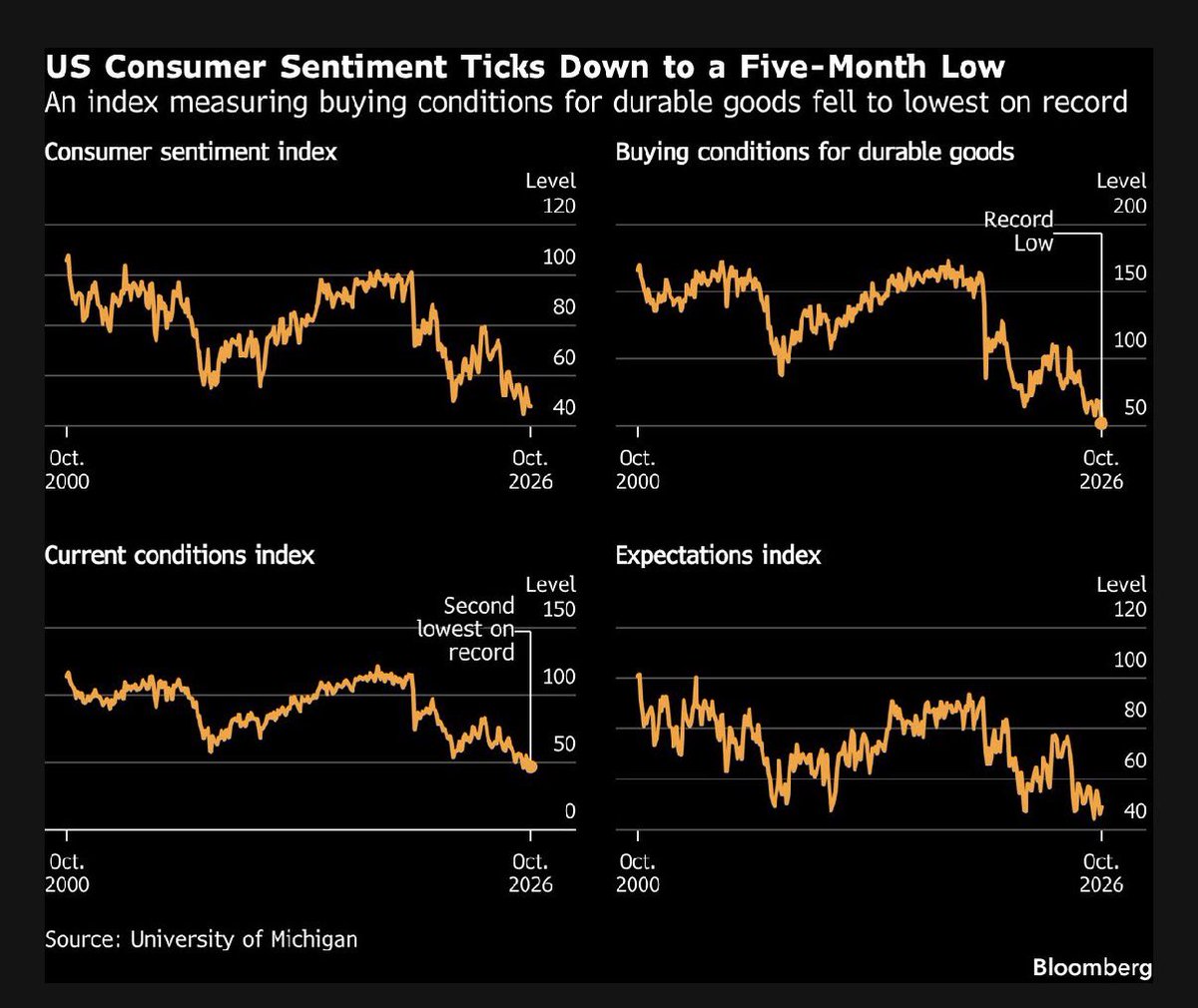
Final Sept UMich survey takeaways:
• Sentiment slipped versus initial estimates.
• Current conditions sank to 2nd-lowest on record, though expectations improved.
• 1-yr inflation expectations edged higher to 4.7%. (Unlikely to prompt a Fed hike next week, but cements odds for December.)
Bloomberg charts below.
#economy #markets #growth #inflation
𝙎𝙬𝙞𝙩𝙯𝙚𝙧𝙡𝙖𝙣𝙙 𝙋𝙖𝙮𝙨 𝙇𝙪𝙭𝙪𝙧𝙮 𝙋𝙧𝙞𝙘𝙚𝙨—𝙔𝙚𝙩 𝙎𝙩𝙞𝙡𝙡 𝙏𝙤𝙥𝙨 𝙩𝙝𝙚 𝙒𝙤𝙧𝙡𝙙 𝙞𝙣 𝙀𝙙𝙪𝙘𝙖𝙩𝙞𝙤𝙣 𝙍𝙚𝙨𝙪𝙡𝙩𝙨
🇨🇭 spends like a luxury brand on living costs yet still ranks among the global elite in PISA scores—proof that quality, not just price tags, defines a world-class system.
Its DUAL pathway (academic + world-leading apprenticeships) turns high investment into skilled, employed graduates who power one of the planet’s most innovative economies, with youth unemployment near rock bottom.✅
The chart’s “strong but expensive” placement shows the real implication: when education delivers measurable results that match a high-cost society, families and nations get lasting returns instead of just higher bills. And, the beautiful environment is a weekend bonus 🙏👇.
U.S. Asset Long-Term Returns: $10,000 invested from 1970 to 2026 with drawdowns:
Equities (S&P 500):
👉 +11.28% average annualized return with a 15.17% annualised volatility = higher returns mixed with lower volatility compared to since 1925
👉0.44 Sharp Ratio with a 6.61% excess return
👉 $10,000 turned into 3,902,250 = life changing money = very good!
Commodities:
👉 +8.33% return with a 17.33% volatility = higher returns with similar volatility compared to since 1925
👉 0.21 Sharp Ratio (you did likely expect more) with a 3.66% excess return
👉 $10,000 turned into $870,266 = very good!
Treasury Inflation-Protected Securities (TIPS):
👉 +6.40% return with a 5.42% volatility which is a bit higher than treasuries
👉 0.32 Sharp Ratio which is higher than Treasuries, and with a 1.73% excess return
👉 $10,000 turned into $318,713 = very decent given risk free, both nominal and real
Treasuries:
👉+6.10% return with a lower 5.19% volatility
👉 0.28 Sharp Ratio with a 1.43% excess return
👉 $10,000 turned into $273,412 = decent given nominal risk free
Gold:
👉 +8.80% return with a 19.71% volatility = sweet returns mixed with high volatility
👉 0.21 Sharp Ratio with a 4.13% excess return
👉 $10,000 turned into $1,109,631 = life changing money = very good!
P.S. Gold did NOT beat S&P 500 as a too common popular chart that floats around -- that is just a price return chart! As I always like to say, if people do not count dividends from the S&P 500, or they do not matter, they can just send them to me, no problem ;)
Source:
✍️ Model Portfolios by Maverick: Introduction & Preview
https://t.co/fcGZtjYvZX
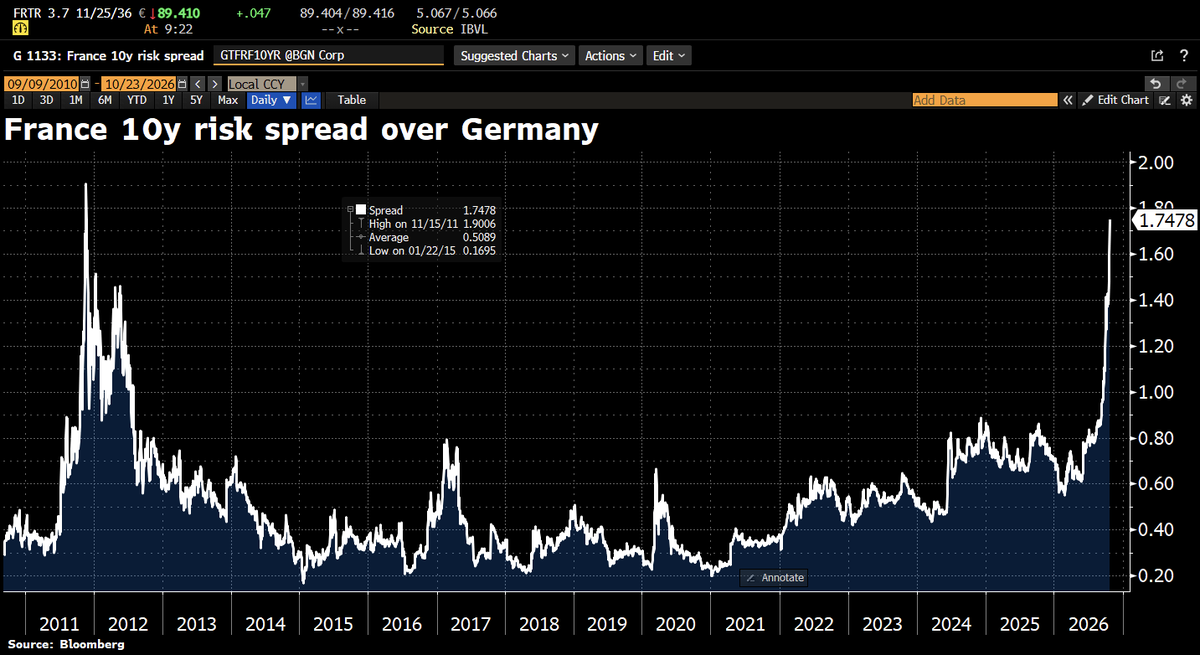
Bond markets are turning up the pressure on Paris as France’s risk premium keeps climbing. The 10y yield spread over Germany has widened further to 175bps, the highest since 2011. Just 15bps shy of its eurozone debt-crisis peak.
I AM UNDIVERSIFIED AND IT FEELS GOOD
Apart from tactical trades by mangers, I don't have any strategic benchmark allocations to any of the following:
- Bitcoin
- NFTs
- Diversified crypto
- Gold
- Silver
- Private credit funds
- Corporate bonds
- Mortgage bonds
- Multi-level marketing distributorships
I know it's reckless to be undiversifed in this way, but I've been enjoying it.
@ptuomov@Maverick_Equity@lennard_eth when translated into USD or EUR, there is some return, flight to safety crisis hedge, but I get it, not much or not worth it as the opportunity cost of capital is quite high -- and there are alternatives for risk-adjusted returns, right? thank you
From the @FT: "Cracks are appearing in America’s debt-laden $10tn AI infrastructure boom as project delays, public backlash and shaky investor confidence bring a reckoning for the data centre build-out underpinning the US economy."
IMO, what makes all these issues even more interesting is that no matter how they evolve, there are significant economic, financial, social, and geopolitical implications
#economy #markets #tech #ai