To understand China economically read 'How China works' by Xiaohian Lan and 'On China' by Henry Kissinger on its political & military doctrine/philosophy.
Imagine growing up in absolute dirt poverty in east Tennessee, daughter of a tobacco farmer, going to school wearing rags your mother stitched into a coat, and when you die the British royal family has its military band play your up-the-workers country-pop anthem in tribute.
Pesquisa assustadora do César Hidalgo e coautores sobre mobilidade socioeconômica no Brasil. Mais especificamente no Nordeste e Norte, justamente a região mais sensível.
Contrariando uma tradicional literatura em economia urbana, os autores acharam que nessas regiões o efeito de spillover do mercado de trabalho urbano é extremamente limitado. Existe probabilidade alta de você entrar pobre nesses mercados urbanos e permanecer pobre; em contraste com os mercados urbanos da região Sudeste e Sul.
Muito interessante ver esse efeito heterogêneo. Vai bem em linha com a literatura qualitativa, tanto econômica quanto sociológica, sobre urbanização e persistência institucional no Nordeste.
Is every pixel in a photo from your phone's camera "real"? This debate misses a fundamental fact about how digital cameras have always worked: the camera sensor only captures ONE color (red, green, or blue) per pixel. The rest are made up in a process called demosaicing.
1/2
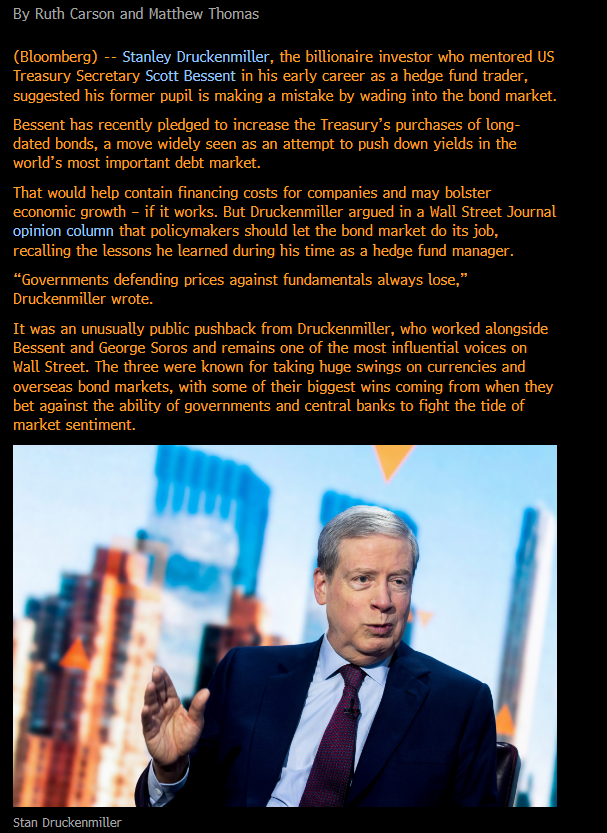
When Yellen’s Treasury tilted most issuance toward short-term bills while buying back billions of long-dated Treasuries, and the Fed delayed QT before cutting rates in an election year, the mainstream was either silent or applauded.
Now, it is “market manipulation.” Now, every basis point of yield suppression is “a subsidy to procrastination.”
The same mainstream that applauded Bidenomics as Washington normalized roughly $2 trillion in extra annual spending beyond the COVID emergency, shortened the maturity profile of federal debt, and blurred the line between fiscal and monetary policy.
But when another Treasury uses buybacks, suddenly the bond market must be allowed to “speak.”
That is not consistency. It is financial self-interest dressed up as fiscal morality.
If you want debt to be termed out at market-clearing yields, which I fully support, start by criticizing the Fed and Treasury policies, especially the mess inherited in 2025.
I don’t want the Treasury intervening in debt markets. But it is disingenuous to stay silent or actively defend the same kind of intervention when it comes from eurozone treasuries and state-owned companies, the BoJ, the ECB, or the BoE, and then suddenly sound every alarm when Bessent does it.
Either debt-market interventions are wrong on principle, regardless of who does it, or the outrage is just selective political or financial convenience.
None of this would be necessary if the Fed had followed its mandate in 2021, prioritizing price stability and maximum employment, instead of promoting Bidenomics' fiscal excess and helping bury structural imbalances in the federal balance sheet.
Via Bloomberg, summary Office of Debt Management.
Britain restored the gold standard in 1821, pegging sterling at £3 17s 10½d per troy ounce, and the following decades gave you one of the most instructive experiments in monetary history: falling prices coexisting with explosive real growth.
Prices fell. Roughly 50% between 1820 and 1850 by some price indices. The textile mills of Manchester kept expanding. Railway track mileage in Britain jumped from virtually zero in 1820 to over 6,000 miles by 1850. Real wages climbed. The orthodox panic about deflation, the kind you still hear from central bankers today, would have predicted stagnation. Instead you got the industrial revolution, accelerating.
The mechanism is simple once you strip away the Keynesian fog. Deflation under a gold standard reflects genuine productivity gains: producers squeeze more output from the same inputs, and prices fall because goods become cheaper to make. This is healthy deflation, not demand collapse. The cotton spinners of Lancashire caused falling yarn prices through innovation.
Sound money advocates have always stressed this distinction. Falling prices from productivity growth reward savers, keep capital costs honest, and force businesses to earn their profits through efficiency rather than inflating their way to margins.
The British experience between 1821 and 1850 is an inconvenient data point that modern central bankers quietly ignore: a hard currency, shrinking prices, and the fastest sustained economic expansion the world had yet seen. Simultaneously.
THE REPO MARKET IS THE DOG WAGGING THE TAIL: A few thoughts on the incredible post below by my friend @AndreasSteno:
1) I continue to be blown away by the quality of analysis by some of the investors on this platform. While the supply of investing insights has exploded exponentially since COVID, the supply of money-making or money-saving investing insights has and will always remain relatively fixed because there will never be a substitute for “doing the work.” AI helps speed up analysis, but it does not place investors any closer to the vanguard of market-moving information than the Internet, Python, Excel, and HP-12Cs did. All these were simply new tools investors had to master to become minimally proficient at managing financial market risk. AI is no different. At any rate, many consider me to be a financial plumbing expert (e.g., I developed a net liquidity model that is still in broad circulation across global Wall Street)—and I learned something from Andreas’ thought-provoking work. It’s well worth your time to review.
2) Andreas is correct that levered hedge funds have represented a large source of incremental demand for US Treasury securities in recent years. The @IMFNews puts the total value of these relative value trades at $2.5tn, with the cash-futures basis trade accounting for 40% of that total. Our math indicates that we in the private nonbank sector are currently warehousing just shy of 60% of total marketable Treasury risk—up from only 36% in Nov-21. Back then, I was on @RaoulGMI's and @AndreasSteno's platform, @RealVision, with our mutual friend @JackFarley96, warning about the risk of the "schoolyard bully returning with a vengeance to take our lunch money." This was my simplified way of communicating that repo—and global balance sheet capacity broadly—would be increasingly diverted away from capitalizing risk assets to the rapidly growing Treasury market, which itself would struggle amid the fastest rate hikes in decades to the highest policy rate levels in decades. As many of you remember quite painfully, 2022 saw the sharpest correlated decline in stock and bond prices since the 1973-74 secular bear by some measures, or since the Great Depression according to alternate data. Fortunately, 2022 was the fourth of five consecutive cross-asset crashes in which I helped my clients avoid losing lots of money (2011, 2018, 2020, 2022, and 2025; my career started at the nadir of the GFC).
3) These admittedly complicated financial plumbing dynamics matter A LOT to every person or institution that has serious money invested in global financial markets. The good news is that you don’t have to be a financial plumbing expert or have a team of data scientists to keep track of these esoteric dynamics and what they mean for your portfolio; that’s our job. The @42Macro Weather Model makes it very easy to quickly cut through the noise, track the most important signals, and interpret what they mean for your portfolio and broad market risk. It’s been one of the most popular tools among @42Macro members for years. Why? Because, like KISS and Dr. Mo, it’s actually better than I am at calling markets.
I hope you found these insights helpful. Have a blessed day!
—Skipper 💜
See that intergovernmental part?
Very important for legal basis.
You can even do a non-county role if it is pertinent for your people.
Eg. Build a school.
Narok decided to build a high school they felt was necessary.
For a long time I ignorantly assumed that technologies like CRISPR only worked on new embryos, because the idea of changing a complex organism's genetic makeup seemed so far-fetched. I was wrong, and not only can we now edit out genes, we can selectively switch them off.
I'll be honest, I'm starting to just not believe in human capital. It just seems incorrect to me that being able to educate large numbers of people is the main reason why rich countries are rich
This guy secured his bloodline and made sure that his children will come out bigger and stronger than him by dating the biggest strongest mate who would have him. Short king victory. Upwards evolution. Generational victory. Ancestors clapping in Heaven.
On the search for a strategic investor: Kenya Airways board has approved an Investment Memorandum developed by KPMG towards inking a deal with a strategic investor. The Investment Memorandum encompasses two parts - a capital injection & a strategic partnership.
Xiaomi is the Chinese tech giant. Their phones compete with iPhones.
Their new CPU roughly matches Apple cores on single threaded tasks, and is much faster in multithreaded execution. Of course, Apple may soon announce their next processor, so this edge may not last long. And you may find it it difficult to find a phone with the next CPU (Xring O3).
But the new Xiaomi processor is worth discussing further as it reveals an important trend.
The chip has a lot of cache (44 MB in total). It is more than most laptop CPUs. If you have an Intel processor in your laptop, chances are good that you have less cache.
The biggest cores on the the Xring O3 are the C1-Ultra. C1-Ultra really powerful cores. They support SME2 (Scalable Matrix Extension 2) for matrix/AI acceleration, SVE2 for data parallelism (SIMD).
It is astonishingly wide, with 21 execution ports, six of which support SIMD operations (128 bits).
This is more execution ports than you have on your Intel/AMD processor. The AMD Zen 5 has the upper hand because it can do 4x512-bit but 6x128-bit is the best you can do on an ARM chip as far as I know.
So the trend is clear. We are getting cores that are massively parallel in terms of the number of execution units. We get better SIMD (more units) and many more units capable of doing arithmetic.
This means that you can do many, many independent additions or multiplications per cycle. And much more cache.
This is where all the transistors go.
Yes, it's a very sobering statistic. This lady managed to make it out in time, but just imagine all the other failed business owners who scammed their employees out of their severance pay and can't leave until they pay it back 😢