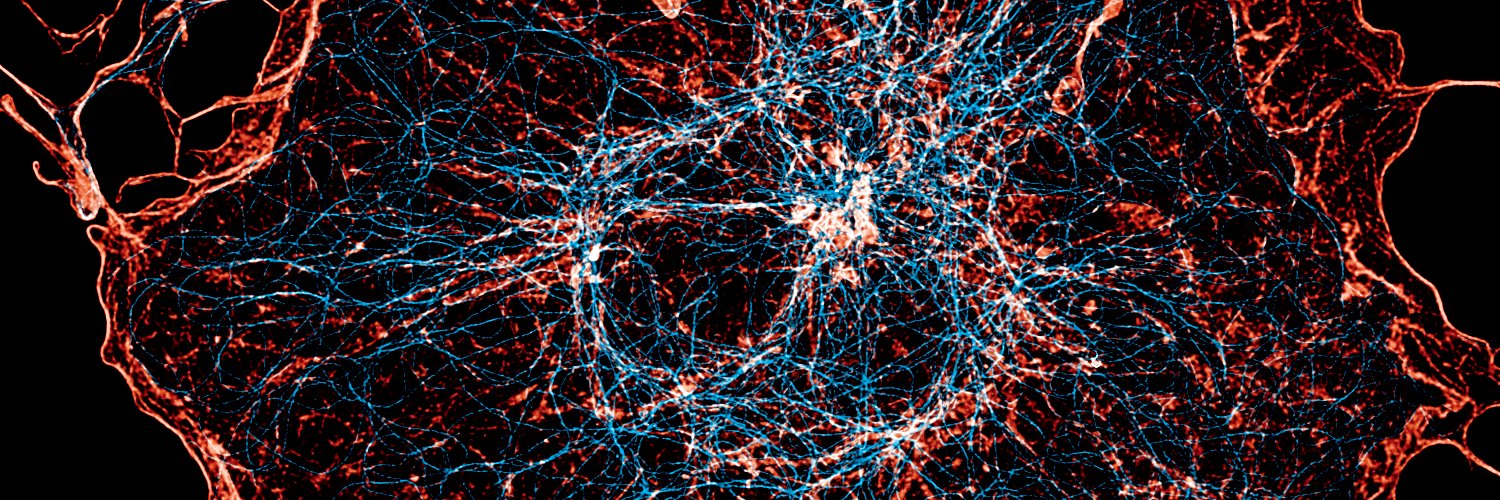
🔬 Thrilled to share our latest findings investigating the role of α-synuclein aggregation in mitochondrial dysfunction! I We have unveiled findings using our new Light Inducible Protein Aggregation (LIPA) system. Dive into the details: https://t.co/pYmaXTn7WI #sciencenews #neuroscience #Parkinsons
Key Findings:
- Tool Innovation: LIPA allows for the spatiotemporal control of α-synuclein aggregation, differentiating between monomeric overexpression and aggregation effects.
- Mitochondrial Dynamics: Aggregates dynamically interact with mitochondria, triggering it's depolarization, reducing ATP production, and inducing fragmentation. This disruption leads to degradation via cardiolipin externalization-dependent mitophagy.
- Aggregation vs. overexpression: α-synuclein aggregation, not overexpression alone, induces mitochondrial alterations. This challenges previous assumptions and provides a new framework for understanding Parkinson's disease.
- Mitochondrial Disruption Mechanism: LIPA-induced α-synuclein aggregates disrupt oxidative phosphorylation (OXPHOS), suggesting direct interactions with specific mitochondrial outer membrane domains.
- Mitophagy Pathways: LIPA-induced aggregation does not follow the PINK1-Parkin pathway. Cardiolipin externalization emerges as a key player, triggering mitophagy in response to α-synuclein aggregation.
#ParkinsonsResearch #Optogenetics #MitochondrialFunction #LIPA #Alphasynuclein
#ScienceMatters
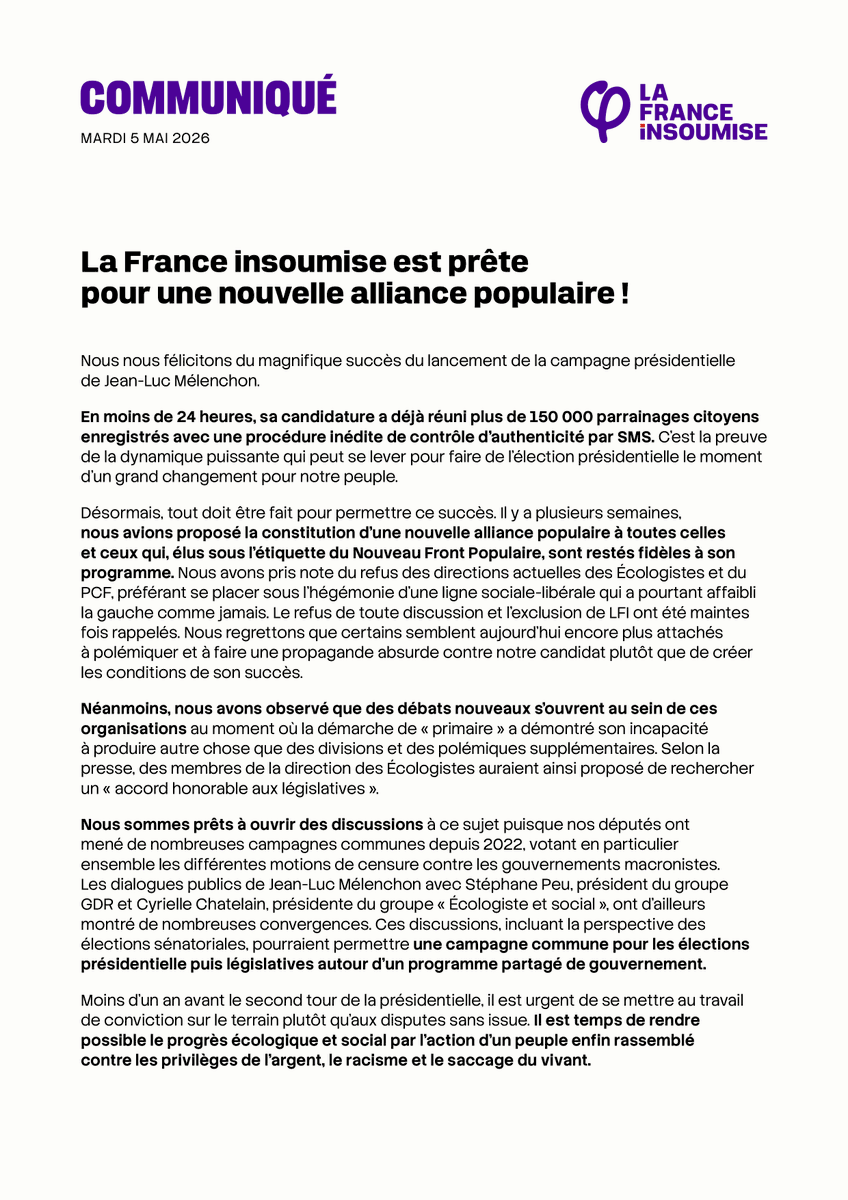
🔴 La France insoumise est prête pour une nouvelle alliance populaire !
Il est temps de rendre possible le progrès écologique et social par l’action d’un peuple enfin rassemblé contre les privilèges de l’argent, le racisme et le saccage du vivant.
Retrouvez le communiqué de la France insoumise : https://t.co/fHN7w8b7xo
Il va être temps d'en parler, d'en re-re-re parler autour de nous tous
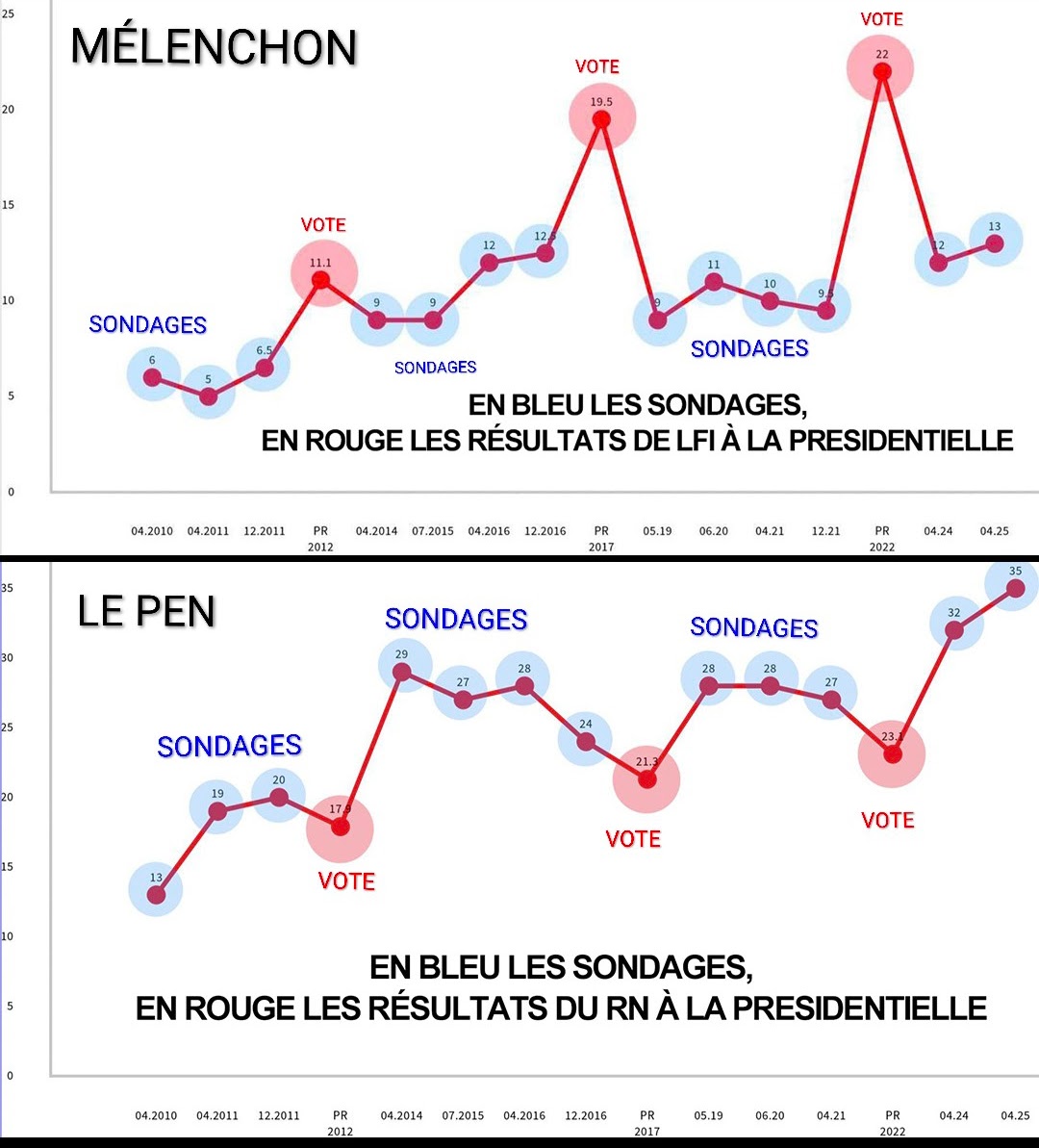
🚨 LES SONDAGES DE MESURENT PAS LA RÉALITÉ : ILS ESSAIENT DE LA FABRIQUER
Faisons connaître ce graphique public, issu d'une commission d'enquête
Que chacun vérifie, lise les dates, comprenne, etc.
The Lipid Brain Atlas is out now! If you think lipids are boring and membranes are all
the same, prepare to be surprised. Led by Luca Fusar Bassini with Gioele La Manno's lab, we mapped membrane lipids in the mouse brain at high resolution.
https://t.co/q3AeqGsIS1
Lysosomal vacuolation has been observed for decades in many diseases.
Today in @ScienceMagazine, we report LYVAC/PDZD8-mediated directional, ER-to-lysosome lipid transfer as an essential mechanism for lysosomal vacuolation.
https://t.co/yrklDE9plq
Did Helicobacter pylori just break the amyloid code? Meet CagA which is nature’s unexpected anti-amyloid weapon! As a neurologist, I never thought I'd say this: a stomach bug may possibly hold a secret about modulating amyloid diseases like Alzheimer's. Zin and colleagues just published a stunning paper in Science Advances (2025) showing that H. pylori’s CagA protein powerfully blocked amyloid formation. From α-synuclein to tau to amyloid-β this bacterial protein acted like a microscopic molecular cop, keeping toxic clumps in check. Could gut bugs someday treat brain bugs? The science is real, and it's fascinating.
Key Points:
- The broad-spectrum inhibitor: CagA from H. pylori inhibited both functional (bacterial) and pathogenic (human) amyloids including α-synuclein, Aβ42, tau, and IAPP. These were inhibited at nanomolar potency.
- There was a distinct mechanism. CagA targeted specific stages of fibril formation. It was elongation for α-syn, and it was primary nucleation for Aβ. This activity did not to occur via classical chaperone activity.
- The gut-brain implications included CagA-positive H. pylori possibly altering gut microbiota and affecting neurodegenerative risk. The changes could be either pathogenic or protective, depending on strain and context.
My take: There were 5 points that resonated w/ me about the H. Pylori story.
1- Not all bacteria are villains. Some, like H. pylori, may even hold keys to future brain disease treatments.
2- A single bacterial protein (CagA) could stop the formation of toxic amyloid clumps seen in Alzheimer’s. COOL!
3- The gut and the brain are more connected than we ever imagined. Gut infections might influence brain health.
4- This discovery may open the doors to new therapies that don’t just remove amyloid, but also block its formation at the source.
5- We are just scratching the surface in thinking about turning a bacterial defense mechanism into a safe, scalable human therapy; though realistically this could take years.
So I ask you, could a stomach bacterium protect the brain?
https://t.co/f228cJoPiY #Parkinsons #Alzheimers #GutBrain #HelycobacterPylori #Amyloid #Neurodegeneration @ParkinsonDotOrg@alzassociation@FixelInstitute
Do you LOVE organelles??
Well I am THRILLED to announce that Nellie has been published in @naturemethods!
Nellie a fully automated pipeline for organelle segmentation, tracking, and hierarchical feature extraction in 2D, 3D, timelapse, multichannel live-cell microscopy
🧵1/N
Digitizing the human proteome in >53,000 individuals with 15-year follow-up and, with machine learning, unraveling nearly 500 disease-causing proteins
https://t.co/VsYD6vG07R @CellCellPress
Thrilled to share a small piece of my thesis work. We developed UltraID-LIPA, a cutting-edge pipeline that combines optogenetics & biotinylation to track early stages of α-synuclein aggregation. We identified key endolysosomal proteins that seems critical in this process! More insights here: https://t.co/3UHWWBTho6.
#ParkinsonsResearch #ProteinAggregation #Neuroscience
🚨New Paper Alert🚨Explore our latest work on the Lysosomal BrainAtlas, now available on bioRxiv! This comprehensive resource maps lysosomal proteins in specific brain cell types and identifies SLC45A1 as a novel neuron-specific lysosomal sugar transporter https://t.co/NW5i3KMxXW
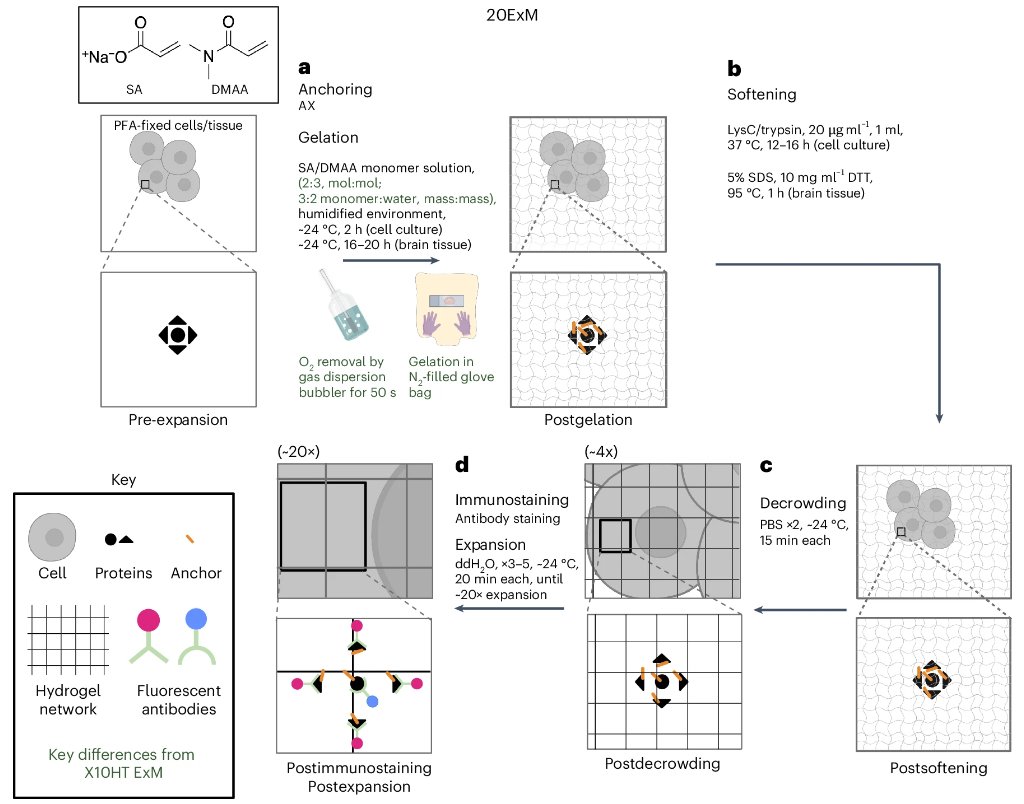
Our latest paper from the Boyden lab describes an Expansion Microscopy protocol that takes samples to 20X expansion in a single step. @eboyden3 https://t.co/lZW7Ho5QNO
Huge update to Convpaint, and preprint out on bioRxiv!
We develop a pixel classifier similar to Ilastik, but built for napari & with technical improvements. Now even works on animals! 1/10
Congrats to my friend and colleague Guosong Hong for his stunning and original discovery, published today in Science, on clearing tissues *in living animals* with a common food dye!
The dye is tartrazine, used in Doritos!
https://t.co/fqVivyH0kI
An earthquake approaches the world of microscopy! We introduce s²ISM, the most comprehensive #ImageScanningMicroscopy reconstruction method, capable of generating images with enhanced resolution, optical sectioning, and signal-to-noise ratio:
https://t.co/AmWWZGEx35
🧵1/7
5 photos des membres de la communauté universitaire comptent parmi les œuvres finalistes des concours La preuve par l'image et Science Exposed @_Acfas@CRSNG_NSERC@Teixeira_Neuro https://t.co/GuWUpZ58pi
Attention organelle enthusiasts!!
I am beyond thrilled to introduce Nellie: a fully automated pipeline for organelle segmentation, tracking, and hierarchical feature extraction in 2D/3D live-cell microscopy.
paper: https://t.co/TfVLFTobd2
github: https://t.co/A4cdRp2gRe
🧵1/N
Exciting news in Parkinson's research! non-invasive intra-venous injection of AAV-PHP viral particles overexpressing human a-syn mimics selective and progressive neuropathology of Parkinson’s disease in rodent brains. Check out the details @MolNeuro : https://t.co/EgOFjfdzwW