@SekoulK@AnneNotInTokyo Like any protectionism, this one is only short-term and has controversial results.
My "solution": do your thing for sheer joy and fascination of doing it. Do things for themselves. Forget about the side effects, such as money or status. That is the only way to coexist with AI.
@SekoulK@AnneNotInTokyo A common mistake in the answers is that most responders compare their performance with AI as they would do with another person. Even there are still gaps in AI performance and coverage, these gaps are closing fast. Sooner or later, whatever you do, you will be outperformed.
@SekoulK A common mistake in most answers is that respondents are comparing their performance to AI, as they would with another person. Performance-wise, at the moment, there are gaps in what AI can do better than a pro, but these gaps are closing fast.
A model’s chain of thought acts like a scratch pad, offering a window into its reasoning. 📝
On the latest episode of our podcast, host @fryrsquared sits down with @NeelNanda5 to explore interpretability – the science of reverse engineering how neural networks learn and think.
Timecodes:
00:00 Introduction
02:41 Motivation for interpretability research
04:01 Mechanistic interpretability
08:14 Chain of thought monitoring
18:14 Interpretability techniques
35:00 Auditing models for safety
48:53 What comes next for interpretability
Only Art and Science raise humanity to the sublime. But the magic isn't in the output. It's in the process of creation and discovery, and the experience of feeling and understanding.
Some considerations that many folks seem not to get:
1. It can be a bubble even if the tech works. (For instance, if the tech doesn't have a high-demand use case.)
2. It can be a bubble even if the tech works and has strong product-market fit. (For instance, if the tech cannot be economically viable.)
3. It can be a bubble even if the tech works, has strong product-market fit, and has a path to eventual economic viability. (For instance, if profitability takes too long to achieve or makes margin/competition assumptions that fail to materialize.)
4. It can be a bubble even if the tech works, has strong product-market fit, and is currently highly profitable. (For instance, if demand has a hard ceiling and growth stops once the ceiling is reached.)
5. It can be a bubble even if the tech works, has strong product-market fit, is currently highly profitable, and has unlimited future demand.
Literally all it takes for something to be a bubble is for lots of people to over-enthusiastically bet their money on it, and subsequently get panicky.
Importantly, bubbles can be attached both to things that are completely hogwash, like the Metaverse, and to world-changing developments like the Internet or railways. Bubbles don't care. They're brought into existence by the thoughts and feelings of investors, not by actual tech or products.
"The bubble has burst" doesn't mean "the tech didn't work" or "people stopped using the tech." It only means that people got panicky, investor money dried up, and valuations collapsed. Internet adoption didn't stop in 2000.
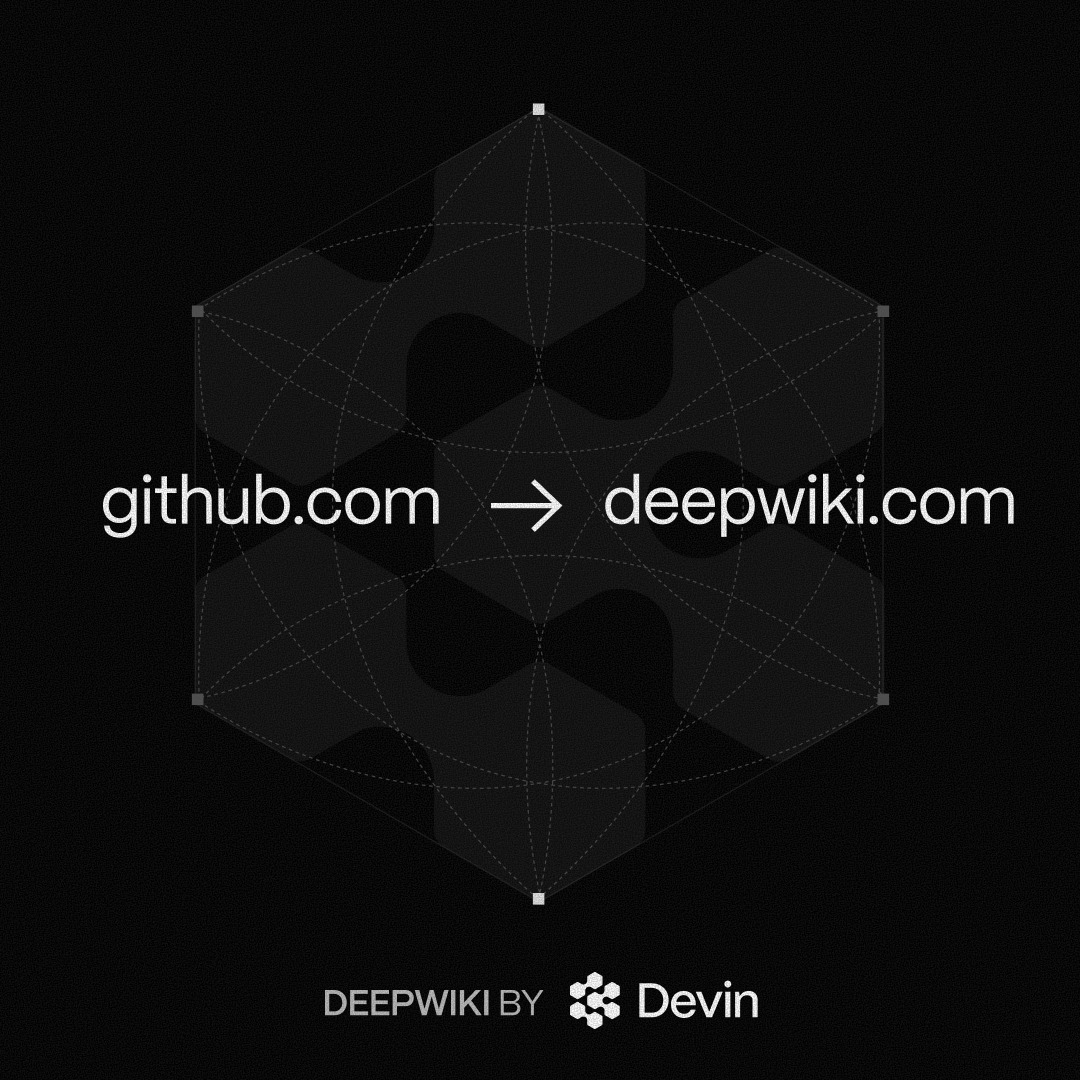
You’ve cloned a repo and spent 40 minutes trying to figure out what it actually does. There’s a faster way. Change github to deepwiki in any repo URL. DeepWiki generates the documentation it should have had all along.
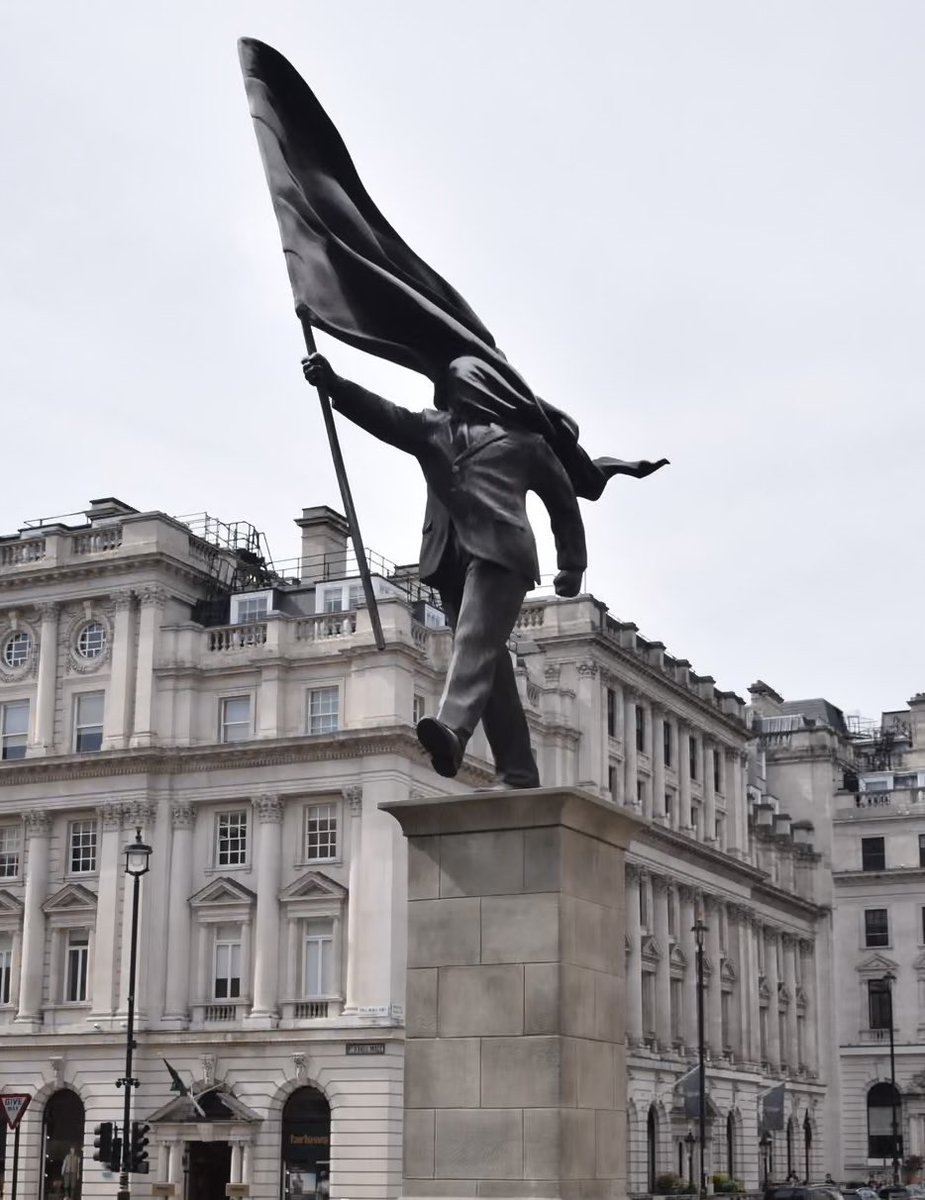
Congratulations to Westminster Council for their acceptance of Banksy’s brilliant statue near Pall Mall. Let’s hope it stays — a welcome note of calmness and humour at a time of growing extremism.
Human biological limits, like our tiny working memory and shallow calculation depth, are actually a feature. They force us to abstract, compress, intuit. If we had infinite resources, we would never have needed intelligence.
"There is a nonzero probability that developing AI kills everybody. There is a much higher probability that not developing AI kills everybody." - Matthew Ginsberg at Google DeepMind
It's basically impossible to predict what emergent properties you might get from scaling up a given algorithm. That's why AGI is much more an engineering endeavor than a theoretical one. It's a process of discovery through building.
Consciousness is meta perception in subjective real time. It relies on a protocol that unifies a latent representational space into perceptually grounded models, using a set of operators that establish semantic coherence.
“Everything good is costly, and the development of the personality is one of the most costly of all things. It will cost you your innocence, your illusions, your certainty.”
- Carl Jung
It is sometimes difficult to put into words what genius is.
But you do feel it when you experience it.
This is Jacob Collier as he improvises with an orchestra performing with the world's first Audience Symphony Orchestra in San Francisco, a gathering of fans from all over North America, conducted by Suzie Collier. In the middle of the show, this happened - no rehearsal, no sheet music, no prior discussion.
Joint Statement: Apple and Google have entered into a multi-year collaboration under which the next generation of Apple Foundation Models will be based on Google's Gemini models and cloud technology. These models will help power future Apple Intelligence features, including a more personalized Siri coming this year.
After careful evaluation, Apple determined that Google's Al technology provides the most capable foundation for Apple Foundation Models and is excited about the innovative new experiences it will unlock for Apple users. Apple Intelligence will continue to run on Apple devices and Private Cloud Compute, while maintaining Apple's industry-leading privacy standards.