Years ago, we at @GPFutures predicted that the United States would try to reduce its involvement in the Eastern Hemisphere. Aside from his actions in Iran, President Donald Trump has largely moved in that direction, as in our model any president would. The Eastern Hemisphere must now face a new reality, one with less U.S. involvement and thus one that necessitates new alliances.
Though alliance-making is happening slowly and painfully in Europe, it is taking place more fluidly in Asia. Japan has significantly increased its military power, and Australia is doing likewise, often in collaboration with Japan. Their intent is to be able to defend against potential Chinese attacks without having to rely on the United States. Other nations such as Indonesia, New Zealand and even Vietnam have followed suit. This is a rational response to American disengagement.
Crucially, this process has expanded to India. This month alone, the Japanese prime minister has visited New Delhi, and Indian Prime Minister Narendra #Modi has visited Indonesia, Australia and New Zealand. He reached agreements on economic cooperation and, more importantly, on defense cooperation during each of these visits. Several months ago, the Vietnamese president visited #India to discuss similar matters and strengthen existing security ties.
When I first read Proust’s À la recherche I came across a passage (in Prisonnière) about a painting so beautiful the author has a character die in front of it. It was, of course, Vermeer’s View of Delft — a painting that makes you audibly gasp every time you look at it.
It is still crazy to think about how one day changed the world.
On October 6, 2023, the Islamic Republic was at the height of its power. It had spent decades developing well-coordinated terror proxies throughout the Middle East. It had effective control of Lebanon via Hezbollah, Gaza via Hamas, Yemen via the Houthis, Iraq via militias, and Syria via Assad. It had encircled Israel and was spreading destabilizing violence and Islamist ideology throughout the region. It killed hundreds of thousands, if not millions, of innocents in that effort. It was also steadily developing a powerful ballistic missile program, heading toward obtaining a nuclear deterrent, and regularly backing terror attacks abroad. Meanwhile, it had completely crushed dissent on the domestic front.
The United States was retreating from foreign interests, so other countries were turning elsewhere. China became a substantial player in both the Middle East and South America. Arab states were looking to form a partnership with Israel to counter the Islamic Republic. Then everything changed on 10/7.
Hamas launched one of the deadliest terror attacks in world history. They massacred 1,200+ people, thus beginning a war they couldn’t win. Hamas was clearly hoping that the Islamic Republic and all its other proxies would jump in, killing any chance of an Israeli-Arab alliance to counter the Islamic Republic. But they only did so to a limited extent, which spelled doom. Israel then systematically took out each of the Islamic Republic’s terror proxies and all their capabilities. They started with Hamas, then Hezbollah, and then strategic strikes on the Houthis (with U.S. help on this one). Leading terrorists for the last 3–4 decades, including Nasrallah, Sinwar, and Haniyeh, are all dead. Then Turkey took advantage of the moment and backed militants to help take out Assad. Suddenly, the entire terror infrastructure that the Islamic Republic had spent decades building was gone. When Israel came for the head of the terror snake, they showed no ability to defend themselves. This inspired Iranians to believe they might finally be able to stand up to the regime.
The regime panicked; in fighting for its survival, it massacred Iranians and decided its only path to survival was to rush toward a nuclear deterrent. Now that might spell the end of the regime because the U.S. retrenchment it had heavily relied on is no longer a reality. This shift isn’t just affecting the Islamic Republic, but the entire world. The Arab Gulf states are no longer as threatened by the instability caused by the Islamic Republic, which also means they do not feel the same sense of urgency to partner with Israel. But it has made them more interested in seeking close relations with the United States at the same time as China’s alliances and strategies are falling apart. The changing environment also led the United States to seize the opportunity to combat China’s growing influence in South and Latin America. That’s what our actions in places like Venezuela, Cuba, and Brazil have really been about. In Europe, Russia became heavily reliant on shifting focus to the Middle East to allow it to regroup and recover from its losses in Ukraine. But it was also building an alliance with the Islamic Republic, which became a major weapons producer for them—and that is now effectively dead. You will notice that Europe’s role in all of this evolution is extremely limited because they can’t seem to even figure out how to deal with their ongoing domestic issues.
In summary, we live in a completely different world than we did on 10/6/2023. Some of it is worse, and no doubt many innocents have been caught in the crossfire, but a lot of evil has also been taken off the board. What happens next is what matters most.
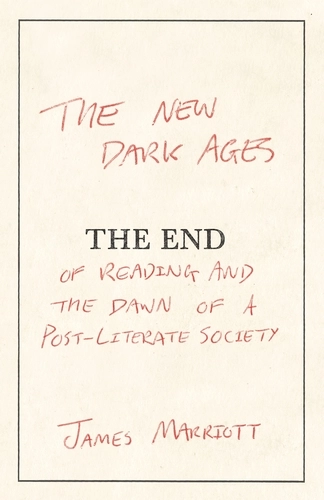
And The New Dark Ages has a cover! Bitter years of book reviewing have taught me not to get too excited and that most books are fated to be ignored. But I am finding it difficult to remain entirely jaded in this instance
“Europe’s last peaceful summer.” Russia may attack NATO sooner than expected
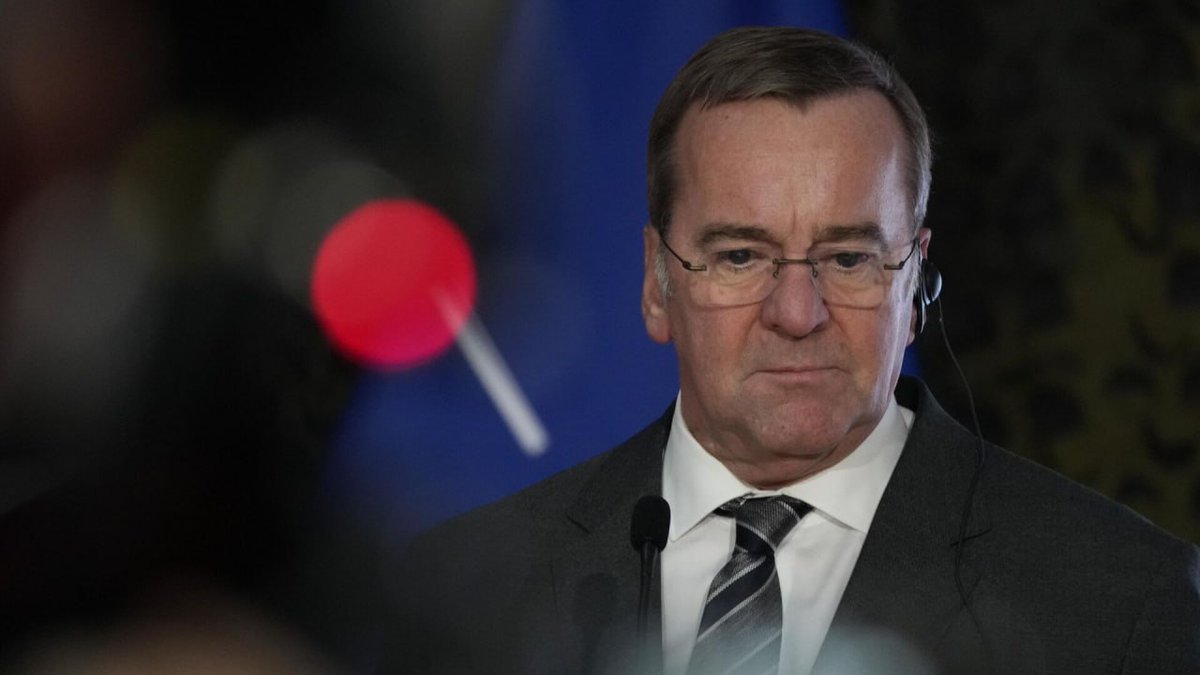
German Defense Minister Boris Pistorius said the past summer may have been “the last peaceful one” for Europe.
“We always assumed that a Russian attack on NATO could happen in 2029. But now we’re hearing assessments pointing to possible escalation as early as 2028, and some military historians even believe we have already lived through the last peaceful summer,” the minister said.
Pistorius argues that NATO armies urgently need modernization and rearmament.
Germany is preparing for this. Starting in 2027, citizens will undergo medical screenings to determine future conscripts in case of emergency. The government also plans to build a large reserve force to strengthen the country’s defense.
Chancellor Friedrich Merz earlier pledged to make the Bundeswehr the strongest army in Europe. Pistorius has said that if attacked, Germany is ready to “kill Russian soldiers.”
According to the German defense minister, peace survives only through strength and readiness to defend.
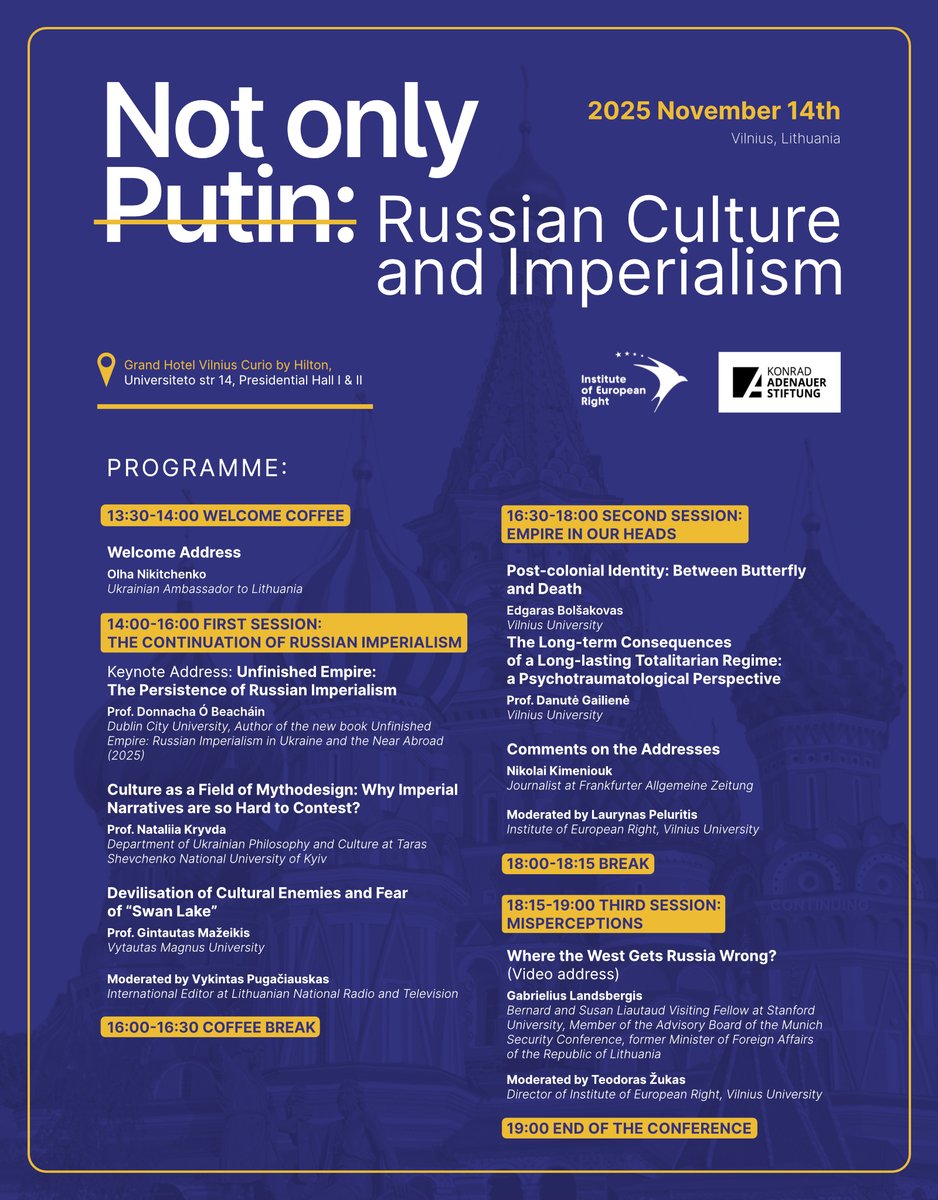
In Vilnius to give a keynote address at the “Not Only Putin: Russian Culture and Imperialism" conference.
A reminder that the imperial mindset long predates and outlasts any one leader.
Imperialism isn’t a glitch in the system - it is the system.
Incredible aesthetics: the Bundeswehr releases a stunning video about the 45th Tank Brigade stationed in Lithuania
The unit’s emblem features the Gediminas Tower and the Hohenstaufen lion — a symbolic blend of German and Lithuanian heritage.
Over the past 20 years, both Chinese and Western followers of China’s politics have noted the rise of “Schmitt fever” among Chinese intellectuals, writes @BennSteil. https://t.co/d9wAWLF1LJ
NATO suspects Russia may be using wreckage of the ferry “Estonia” for underwater espionage in Baltic Sea
Devices may have been installed near the wreck site to enable precise navigation for underwater drones at depths where GPS does not function.
https://t.co/sa66Jg9OtC
⚠️ ISW: Russia is already preparing for war with NATO — and may strike sooner than intelligence agencies expect
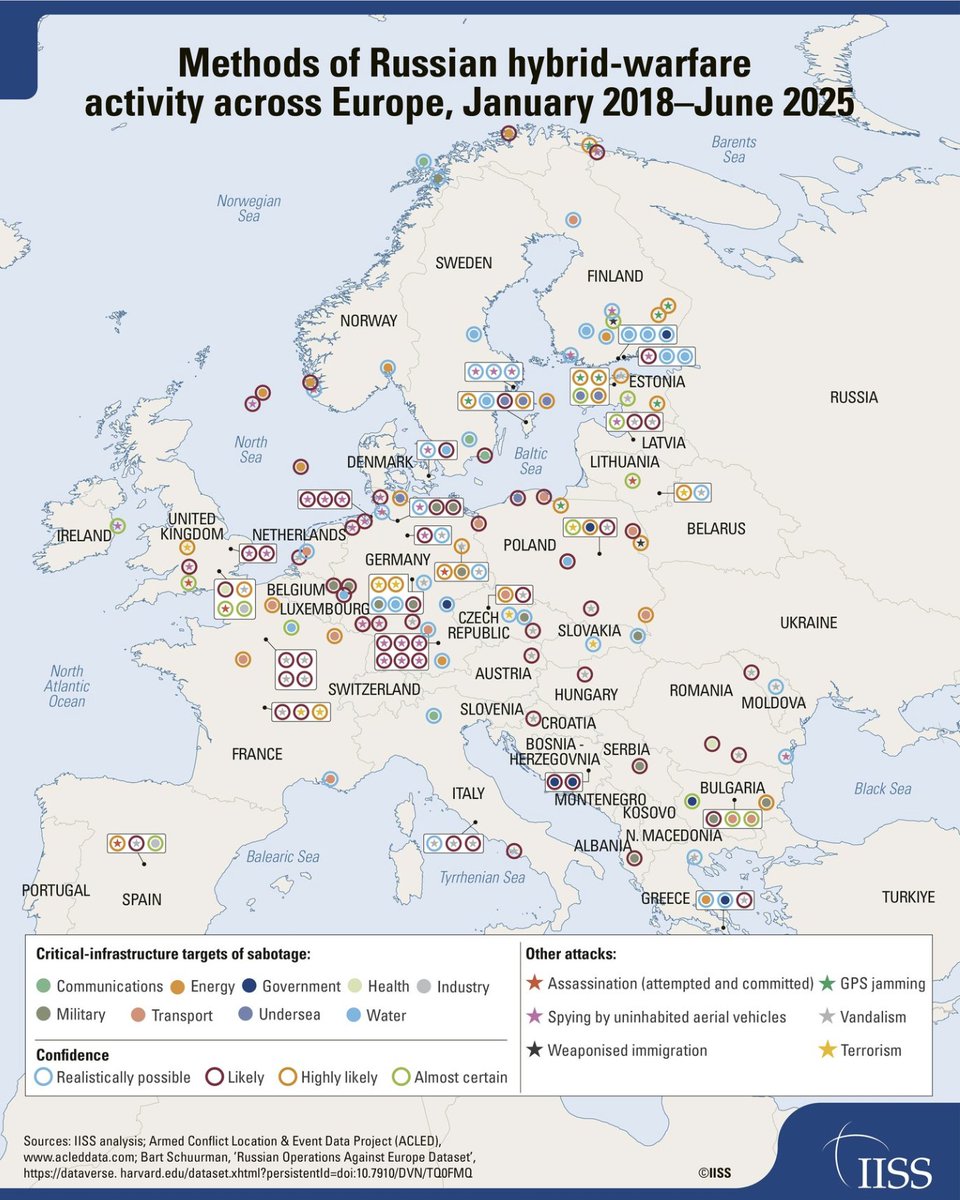
The U.S.-based Institute for the Study of War reports that Moscow has entered what it calls “Phase Zero” — the stage of preparation for a potential confrontation with the Alliance. This includes espionage, sabotage, and unidentified drone flights over military bases and strategic facilities across Europe.
ISW notes that Russia is building up its reserves and developing new tactics for warfare without relying on massive armored forces.
🔻According to experts, the Kremlin is already gaining significant experience in modern warfare and could launch new aggression without waiting for its army to fully recover from the war in Ukraine.
A thread on the battle scenes in Stanley Kubrick's 1975 Barry Lyndon. The film turns 50 this year.
In many ways, I think war films set in this period might have regressed in quality. These battle scenes from 1975 are better than anything we have had since. 1/16
🧵
Honored to moderate a discussion in Vilnius with the always witty and provocative @CarloMasala1 on his new book "Wenn Russland gewinnt. Ein Szenario". A stark look at the threats we face—and what the West must do in response. Event by @KAS_Baltic and @IER_ThinkTank
Germany Plans Massive Armored Vehicle Procurement, Eyes Strategic Rebuild
Berlin is preparing to order up to 5,000 Boxer armored vehicles in various configurations from domestic manufacturers KNDS (formerly Krauss-Maffei, now part of the Franco-German defense group) and Rheinmetall. Additionally, the government plans to procure at least 3,500 Patria Armoured Modular Vehicles (AMV) from the Finnish defense company Patria, according to people familiar with the matter.
The Boxer chassis will be adapted into multiple variants, including up to 600 Skyranger air-defense systems—a product of Rheinmetall based on Swiss-made technology from the former Oerlikon Contraves. Other configurations will include infantry fighting, reconnaissance, and medical evacuation vehicles, the people said.
The Patria AMV is set to replace the German Army’s aging Fuchs armored personnel carriers. Patria is partnering with KNDS and Flensburger Fahrzeugbau Gesellschaft (FFG) for local production. The order could be worth up to €5 billion, with approximately 90% of the manufacturing expected to take place in Germany.
Beyond armored vehicles, the Defense Ministry is also exploring the acquisition of several hundred Leopard 2 main battle tanks from KNDS and Rheinmetall, the people added.
Berlin is concurrently working on a comprehensive drone strategy, which is expected to result in procurement contracts worth several billion euros. Likely beneficiaries include private German firms such as Helsing and Quantum Systems, sources said. I consider this the most important element for the decade ahead.
Personal Outlook
In my view, Germany will be battle ready within 5-10 years (I know, big time window but it is (a) path dependent and (b) a big job on recruitment/training side), while France is unlikely to show comparable progress in that time, sadly (lack of financial resources). The situation in Britain and Italy remains unclear, despite a wave of announced orders. The Nordics, Poland, and the Baltics are all on a clear upward trajectory, and the Czech Republic may follow suit. Hungary has a significant modernization program underway, largely in cooperation with Rheinmetall. I expect the least progress from Romania, while Spain will likely prefer to free-ride under the broader European security umbrella. But the key will be Germany for EU security. It will be much stronger than many expect. And those of you who served and studied war history can put that in context.
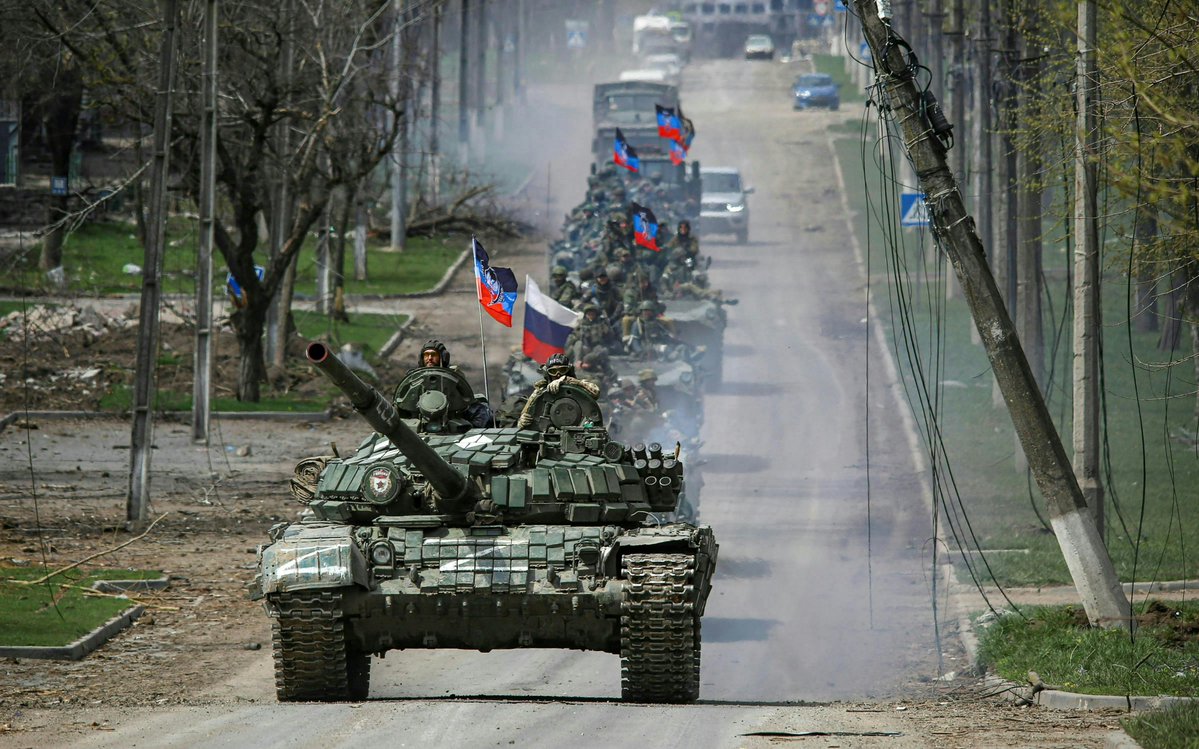
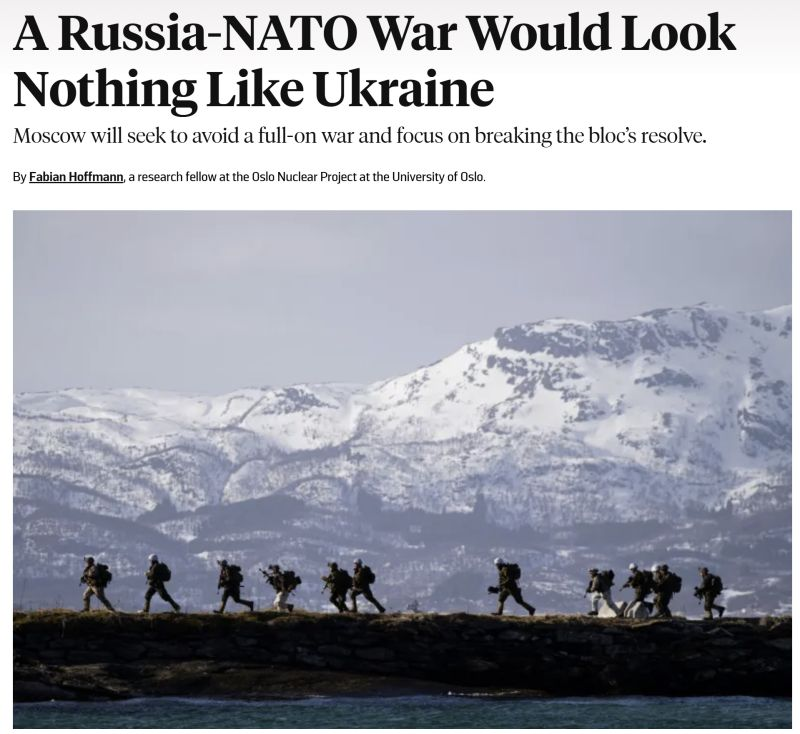
Observers of the war in Ukraine are regularly confronted with a paradox. On one hand, Russia is suffering horrendous casualties and failing—at least by the measure of its initial political objectives. On the other hand, European NATO states are scrambling to rearm in response to what they increasingly view as an existential threat.
These two images of Russia -- the failing army and the existential threat -- seem difficult to reconcile. That is what I explore in my latest article for @ForeignPolicy.
The key to resolving this paradox, I argue, lies in understanding that a war between NATO and Russia would look fundamentally different from the war currently unfolding in Ukraine.
Rather than attempting to seize and hold large swaths of territory, Russia would likely pursue a short, high-intensity campaign aimed at fracturing NATO’s political cohesion. The goal would not be total military victory, but to break the alliance’s resolve to resist.
Generating the forces required for such a scenario is likely manageable for Russia in the short term, particularly once the fighting in Ukraine slows or concludes. Crucially, Russia would not need to restore its full pre-2022 force structure to pose a credible threat in a limited incursion against NATO.
From NATO’s perspective, preparing for such a scenario requires urgent movement toward a credible forward defense posture, the development of a conventional counterstrike capability, and adaptation in the nuclear domain—especially as confidence in the U.S. extended deterrent continues to erode in Europe.