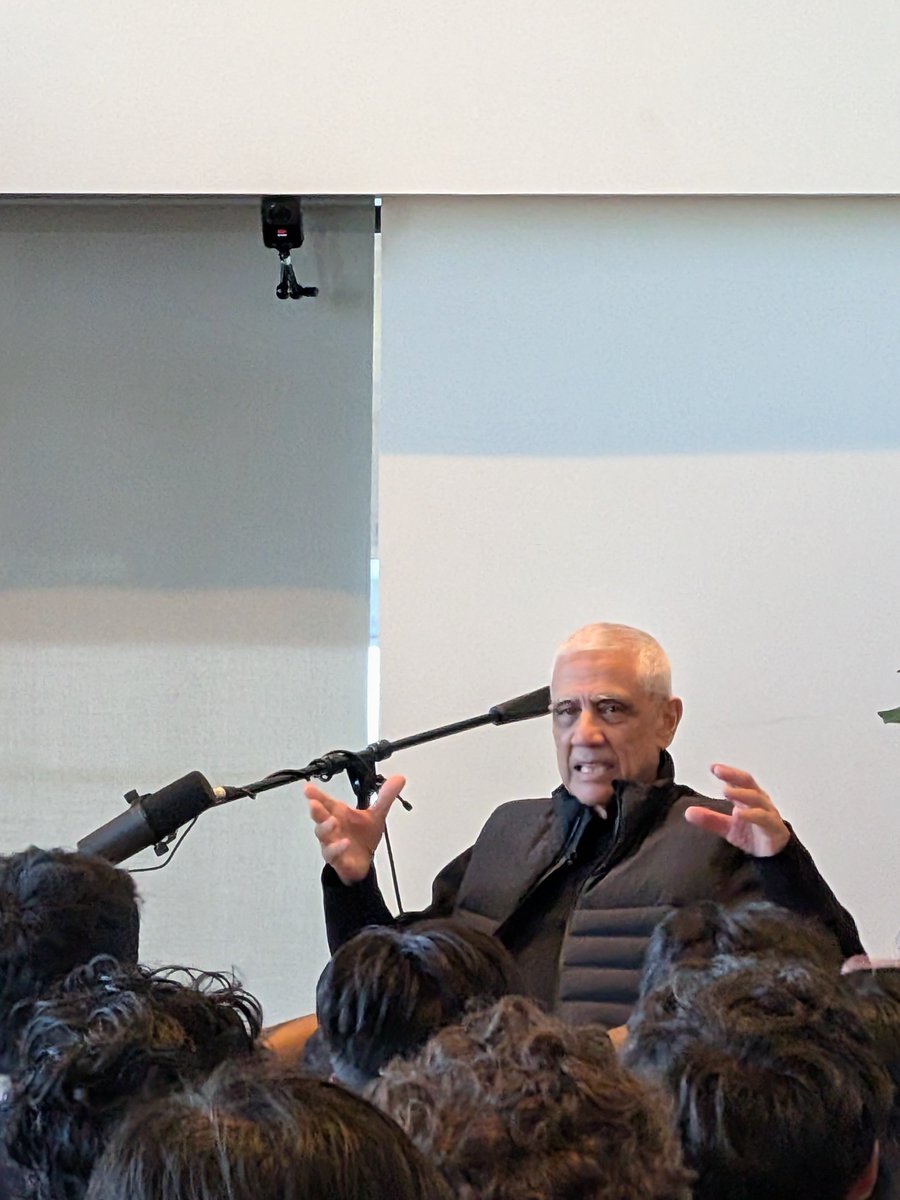
Scenes from the Terra Health Day in San Francisco during the @ycombinator Startup School weekend
Hundreds of builders joined us for a workout, cold plunge, sauna, and inspiring talks with @hybrd_app, @Lotus, and @Hundredhealth
See you at the next one 🏋🏻
Should companies control your health data? Here’s what happened with Garmin:
I’m reading today's news about their API, and I'm sitting here thinking there’s more to this.
We built Terra around connectivity across sources, and the belief that data belongs to the user.
Garmin had an API program for years, and we started working with them about 5 years ago.
About a month ago, they instructed us to make changes to our API. At the same time, they blocked our ability to make those changes by blocking our access to their platform.
We thought it might be a mistake, so we reached out: we needed access restored to make the changes.
Radio silence.
We contacted them at every level, by every means imaginable.
A few weeks later, they confirmed they blocked access because we didn’t make the requested changes.
So they asked us to make changes, blocked us from doing them, and then blocked us for not complying.
So they blocked an entire ecosystem and hundreds of thousands of users from connecting their data.
This created massive chaos.
We are on tens of calls every day, and receive thousands of complaints from users who rightfully ask why.
Since they stopped replying, we asked some customers to reach out to their CEO (his email is publicly listed) and explain the impact.
We then heard from customers that they were asked
a) to pay different $ amounts for API access
b) were forced not to use Terra
c) to sign new terms explicitly ruling out the use of third parties.
So, third parties are blocked? Interesting.
So apps can't use third-party employees, AIs, cloud providers, or any analytics platform? What can they do?
EU Data Act, Article 5, points to the Right of the user to share data with third parties
It’s meant for things like this. So in the EU, the law gives users the right to control their own data.
We then asked them to fulfill their EU Data Act obligations for a number of our users on September 29. We followed up many days later.
Radio silence.
And we come to today. Their new API enterprise and startup program has a similar setup to Terra.
And a reporter speaks badly about us.
Coincidence.
Am I suggesting we have a monopoly on APIs? No. We allow connectivity across sources, and they have a source. But a rational person would think app ecosystems make devices more useful.
What can one make of this?
Companies seem to benefit from disconnected data. Users' rights don’t really matter. But this is BS.
Just because you use a device doesn't give that company the right to your data.
Connecting your data can help you perform better, stay healthier, achieve your goals.
We spent 6 years in this space fighting nonsense like this.
Our mission has been simple: make health data accessible, connected, and useful so developers and AIs can build better experiences for everyone.
Progress only happens when developers can build across platforms, and when people can freely move their data
And users should own their data
New episode 🚨 KJ Dhaliwal (@kjdhaliwal), CEO of Lotus AI (@Lotus) on raising $41M to build the AI doctor, going directly to patients, and why doctors could become the backup.
Some insights from the discussion:
-Not using AI could eventually become medical malpractice.
-A doctor can’t continuously monitor every patient and keep up with all new research.
-AI will take on more clinical work. Doctors will handle exceptions, safety, and patients who want a human.
-Medical benchmarks miss what happens in the real world.
-Why KJ calls healthcare investors “the worst.”
.@AliBrownleetri Brownlee has received his OBE from the Prince of Wales at Windsor Castle, for services to triathlon and charity
Two Olympic golds. London 2012 and Rio 2016. The first athlete to win two individual Olympic titles in triathlon. And years of work helping children get into sport.
Very well deserved.
The honor was announced in the 2025 King’s Birthday Honors
https://t.co/VN0VSGioJ6
The triathlon legend @AliBrownleetri is awarded an OBE by Prince William, Prince of Wales
The only triathlete to win two individual Olympic gold medals
Congrats Al!
The @eightsleep integration is now live on Terra API!
Starting today, members can choose which apps receive their Eight Sleep sleep stages, heart rate, HRV, respiratory rate, snoring, sleep efficiency and more, delivered through Terra API's sleep model.
1/ How wrong can your wearable's VO₂max be? I compared lab tests with rest scores for 21 people. The biggest miss: a very impressive 87 in the lab vs 51.
Apple may have just made one of the most important moves in consumer health.
Not because Health Age or Readiness will be perfectly accurate. They won’t be.
The interesting shift is from wearables recording data to interpreting it well enough to change behaviour.
I really enjoyed digging into the science behind it, especially the population problem, and the fact that inputs like wearable VO₂ max are already estimates.
The real innovation may be making complex health data simple enough that people actually do something with it.
Link below.
@TerraAPI
#DigitalHealth #Wearables #HealthTech #Longevity #SportsScience
Vinod Khosla (@vkhosla) for Terra x @ycombinator Startup School on building what users cannot ask for, ignoring most investors, and making forecasts irrelevant.
Some insights from the discussion:
- Customers can ask for incremental improvements. They could not have asked for AI or fusion.
- Build AI workers, not tools for workers.
- Sam Altman’s hardest problem is not compute.
- Human doctors scored 73%. AI scored 88%. Doctors with AI dropped to 76%.
- AI will make $1T of healthcare expertise nearly free.
- Billing, not accuracy, decides which medical technology wins.
- OpenAI made no sense on IRR. Impact was the reason to invest.
- Entrepreneurs make forecasts irrelevant.
OpenAI had no product plan. Fusion was 50 years away. AI could never replace doctors.
Vinod Khosla looks at what technology can make possible, not what looks reasonable today.
My full conversation with @vkhosla:
0:00 Intro
1:51 When “Do What Users Want” Is Wrong
4:58 Workers, Not Tools for Workers
7:52 The Most Important Founder Decision
10:45 Four Years Destroyed by Polite Investors
12:07 Sam Altman’s Hardest Problem
15:39 Follow the Talent, Not Today’s Failures
16:55 When Every Telecom Company Bet Against TCP/IP
21:13 How European investors ruin companies
23:41 Drug Interactions Kill More Than Breast Cancer
26:44 'I'm getting opinions from doctors, not facts'
30:27 Doctors 73%. AI 88%. Doctors + AI 76%.
36:08 $1T of Healthcare Expertise Should Be Free
38:54 Why the AMA Opposes AI Doctors
41:39 Going Founder Mode on Cancer
44:07 Removing Human Drivers Could Save 30,000 Lives
48:02 Epic Still Runs on a 1960s Language
51:02 Impact Over IRR. OpenAI Made No Sense.
54:17 Light-Rail Capacity Inside a Bicycle Lane
Mo Elshenawy (CTO @wearehims) on why healthcare AI is harder than self-driving, and what actually compounds.
Some insights from the discussion:
- Medicine lacks clean counterfactuals. Self-driving does not.
- Models are commoditizing. Data and workflow compound.
- Clinical guidelines written as code is the real advantage.
- AI should elevate doctors, not replace them.
- The closed loop (providers + pharmacy + longitudinal data) is what pure AI companies still cannot replicate.
- Engagement metrics are the wrong target. Clinical outcome is the only one that matters.
- The long game is not better sick care. It’s true health-optimal care.
final climb of Norseman felt like I was slowly falling apart.
The data says I was doing almost exactly the opposite.
On Saturday, I finished second at the Norseman Extreme Triathlon in 10:18:19. The race combines a 3.8 km swim, a 179 km bike with more than 3,000 metres of climbing, and a marathon finishing at the summit of Gaustatoppen, 1,831 metres above sea level.
It is often described as the world’s toughest triathlon. Whether it is or not is subjective. It was certainly very tough.
The day itself felt messy and unpredictable. Once I looked at the files, however, a much more coherent story appeared. I paced the swim sensibly, completing it alone in around an hour at roughly 1:35/100 m. I desperately wanted to follow the swimmers ahead, but I knew my limited swim training meant I could probably hold their feet for three to five minutes before paying for it.
On the bike, that restraint disappeared, and I was far too optimistic.
I rode the steepest part of the opening climb at around 354 W normalised. Later climbs of a similar character were closer to 285–300 W, a massive decline of roughly 15%. The numbers are fairly blunt: I started too hard.
The most interesting finding, though, came from the run. I averaged 4:15/km over the flat opening 25 km. On Zombie Hill, that fell to 6:43/km, and on the final off-road climb to the summit it dropped to 11:51/km. Looking only at pace, it appears to be a spectacular collapse.
But horizontal pace is a poor measure when the terrain changes so dramatically. My vertical ascent rate was about 726 metres per hour on the road climb and 716 metres per hour over the off-road summit section. A difference of only 1%.
Even during the final grind to the summit, when I was hiking more than running, my climbing rate was still around 766 metres per hour. What felt like a dramatic deterioration was actually remarkably consistent output on increasingly difficult terrain.
That is probably the clearest lesson from Norseman. It does not simply reward the biggest engine. It rewards the version of your fitness that remains after eight, nine or ten hours, and the mental flexibility to adapt when the race you planned is no longer the race you are doing.
Kristian Grue was in a league of his own and defended his title in 9:53:46. Hans Christian Tungesvik finished just 36 seconds behind me, having forced me to find a little more speed in the final kilometre than I thought I had left!
I am at least 5% below my old power for this kind of effort and more sensitive to high-intensity efforts than I used to be. But the residual fitness is still there, doing enough to let me take on adventures like this.
That feels like a pretty good version of retirement.
Link to the full research article below
@TerraAPI
#Norseman #ExtremeTriathlon #PerformanceData
Most people still think cycling to work is the slower option. Better for your health, better for the environment. But slower.
I wasn’t convinced, so I looked at the data.
I matched commute looking cycling activities against both TfL journey times and Google’s rush-hour driving estimates.
The result surprised me.
On 1,628 fully matched weekday commutes:
• Cycling beat @TfL estimates on 92% of journeys, with a median saving of 15 minutes.
• Cycling beat Google’s rush-hour driving estimate on 75% of journeys, with a median saving of 5 minutes.
The busiest commuting corridors into central London were the most striking. Routes from places like Hammersmith, Wandsworth and Clapham to the City consistently favoured the bike, often saving well over 10 minutes.
One result I didn’t expect was that the advantage didn’t disappear on longer commutes. I assumed the Tube would become increasingly competitive. Instead, cycling continued to perform remarkably well. That may reflect a group of committed cyclists, or the fact that people are more likely to ride longer distances when the transport network is disrupted.
There are important caveats. This data only tells me about the recorded bike activity, not necessarily the entire door-to-door journey. Some people may combine cycling with walking or public transport, while the TfL and Google estimates are complete origin-to-destination trips. So this isn’t a perfect race between transport modes.
But the overall pattern is hard to ignore.
For many London commuters, the bike isn’t just the healthier choice.
It’s the faster one.
I’d happily ride even if it took a few minutes longer. I used to commute to school by bike, and still ride E-bikes as much as I can. Fresh air, a bit of movement before work, and seeing London from street level beats sitting underground. It turns out I often get there sooner as well.
What’s your experience? Has cycling changed the way you commute?
Full research linked to below
#activetravel #healthdata #commuting
"If my doctor disagrees with ChatGPT, I change doctors."
@vkhosla about the future of healthcare at the @TerraAPI x @ycombinator startup school dinner:
“AI is the only way to scale medicine to be the highest quality. And it’s the only way to be objective, because humans have biases.”
"There will be more than one breakthrough companies. Healthcare has too many large niches for there to be only one"
The $4 trillion US healthcare system has four rough buckets:
1. Expertise
2. Diagnostics, testing and imaging
3. Drugs and therapeutics
4. Hospitals and critical care
Mental health, primary care, chronic disease management, gastroenterology, neurology and endocrinology will be nearly free.
“All these things will cost $2 an hour, not $400 an hour, delivered by an AI”
“There is zero chance your oncologist remembers the last 5,000 articles on breast cancer that were published, usually in the last year or two. The volume of literature is so high, no human being can keep up.”
"It's better to be brutally honest than hypocritically polite" - @vkhosla
The fireside chat was full of wisdom. Thank you sir and @TerraAPI.
We see great innovations happen from places where failures are not treated bad, encouraging people to take risks.
Always have your own objectives on why you want to start your company/work on something. All are valid. Successful people have clear objectives.
The biggest impact we are gonna see in is healthcare, data shows AI are better than humans in diagnosis and help reduce the false diagnosis and companies backed by khosla ventures showing more than 90% compared to 73% accuracy by humans.
#YCStartupSchool @ycombinator #AIxHealthcare