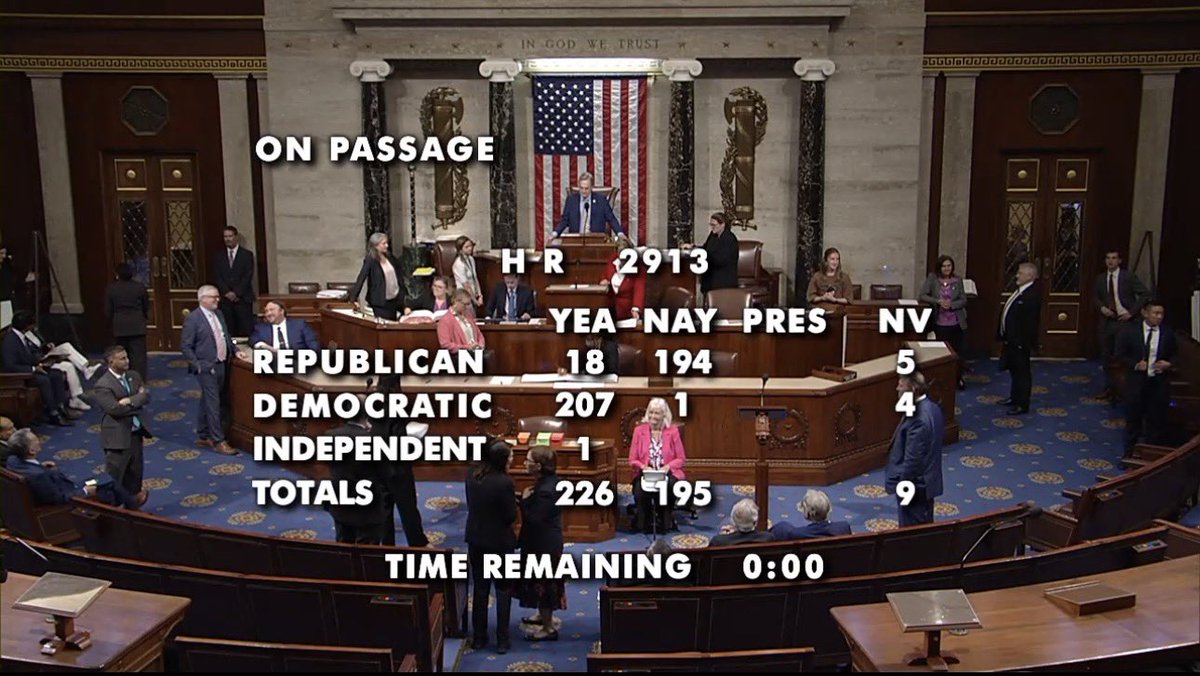
Rep. Michael McCaul: “That’s why I voted for Ukraine bill on the House floor this week, to provide additional assistance and tougher sanctions on Russia.
Anytime I can help Ukraine and punish Putin, I’m in on that fight. And, the fact is that Ukrainians are winning this fight.”
REP. McCAUL: Putin's taking real hit now. Ukrainians surprised everyone with innovation. Fact that they’re pushing Russians back now, while inflicting 30,000 casualties a month on Russians, speaks volumes. We need to put pressure on Russia to negotiate from position of strength.
JD Vance is deliberately rewriting history.
Not every war ends with negotiations. WWII ended with the unconditional surrender of Nazi Germany and Imperial Japan, not with deals or compromises.
Trying to normalize negotiations with a regime that massacred tens of thousands of Iranians is not only a betrayal of the Iranian people, it is also contrary to America’s own interests.
Appeasing a regime built on terror and bloodshed is not peace. History has shown where that road leads.
@POTUS@SecRubio@marklevinshow@LindseyGrahamSC
Bill Clinton: “I killed myself trying to give the Palestinians a state. I had a deal they turned down that would have given them all of Gaza and 97% of the West Bank. You name it. They turned it down.”
The Palestinians never wanted peace.
This must be shared every single day.
🚨 BREAKING: President Trump's Iran deal terms are reportedly as follows
1. Nuclear material will be DESTROYED AND REMOVED
2. Nuclear program DISMANTLED
3. NO funds released until they carry out the terms
4. Hormuz Strait OPEN
5. Iran cannot fund terrorist groups
Trump said the terms Iran leaked are FAKE NEWS. Imagine that.
Make it happen, or force them to submit!
I don’t think anyone actually believed the Iranian statement on what the deal looks like. But I am mesmerized by all the conservatives who believe Iran is willingly going to give up all of its nuclear material because they got a call from the White House insisting it was so.
@marklevinshow A 60 day MOU sounds like just another stalling tactic by Iran - they are hoping to drag things out since it will become harder and harder for Trump to respond militarily, as we get closer to the midterms
🚨Update: Iran’s version of the 14 Points draft memorandum of understanding between Iran and the US per Mer News Agency:
🔺Permanent and immediate cessation of war on all fronts, including Lebanon
🔺The U.S. commitment to non-interference in Iran's internal affairs and respect for the sovereignty of the Islamic Republic of Iran.
🔺Complete lifting of the naval blockade within 30 days
🔺The U.S. commitment to withdraw its forces from around Iran
🔺Reopening of the Strait of Hormuz within 30 days under Iranian arrangements
🔺Suspension of sanctions on the sale of oil, petrochemical products, and derivatives, and full access of Iran to its financial resources
🔺The necessity for the U.S. and its allies to present reconstruction plans for Iran amounting to at least 300 billion dollars
🔺60 days of negotiations to reach a final agreement based on nuclear issues and the complete lifting of primary, secondary, U.S. sanctions, and UN Security Council and IAEA Board of Governors resolutions
🔺Reiteration of Iran's commitment under the NPT treaty not to produce nuclear weapons
🔺During the negotiation period, the US has committed not to add forces in the region and not to impose new sanctions
🔺Release of 24 billion dollars of Iran's blocked funds during the 60-day final negotiation period. Half of this amount must be made available to Iran before the start of negotiations
🔺Formation of a supervisory mechanism to implement the agreement
🔺The final agreement will be approved by a UN Security Council resolution
🔺Final negotiations will not begin before the release of half of Iran's blocked funds, suspension of Iran's oil sanctions, and lifting of the naval blockade, and the final agreement will only cover the fate of enriched materials and enrichment, lifting of sanctions, and Iran's economic reconstruction plan
🔺Discussions about Iran's missile program and support for resistance groups are definitively removed from the agenda!
Donald Trump gave Iran an inch, and they took a mile.
Mere hours after a ceasefire halted the exchange of fire between Iran and Israel, a U.S. helicopter patrolling the coast of Oman was shot down by Iranian forces. Once the intelligence confirmed Iranian guilt, Trump abruptly shifted gears, declaring a U.S. retaliation an absolute “necessity.” It was quite the sudden epiphany. After spending Monday morning demanding Israel turn the other cheek, it took just twelve hours for him to discover that sovereign nations don’t survive by capitulation.
The U.S. carried out a series of strikes on air defense systems, ground control stations, and radar sites near the Strait of Hormuz. In response, the IRGC claimed to have launched strikes on 21 targets at U.S. bases in the region, including sites in Bahrain and Jordan, while Kuwait’s army reported intercepting a separate attack.
But why did Iran target the helicopter in the first place? The answer lies in how Tehran operates on both a strategic and tactical level.
Strategically, the regime clearly has no issue with using military aggression despite the supposed “ceasefire.” Recent statements from senior officials and regime-affiliated media reveal that Tehran believes it is still actively at war. They view military action as a necessary lever to improve their negotiating position and advance broader objectives. Even the supposedly “moderate” Iranian Parliament Speaker, Mohammad Bagher Ghalibaf, bluntly stated that military force and diplomacy are complementary tools—where violence creates favorable conditions on the ground so that diplomats can extract “legal, political and economic achievements” at the table.
Tactically, this strategy manifested directly in the Strait of Hormuz. The U.S. Navy relies on helicopters to intercept Iranian drones and fast-attack craft, opening the possibility of free passage through the vital waterway. By downing a U.S. gunship, Tehran is attempting to deter the U.S. from protecting commercial vessels and forcing the international community to comply with Iran’s maritime protection racket.
The retaliatory American strikes sparked a fierce internal debate in the regime. Behind closed doors, Iranian leadership seriously considered taking out their anger over the U.S. bombardment by launching a strike against Israel.
The IRGC pushed hard for retaliation, but the political echelon balked. The politicians understood that redirecting their fire at Israel could invite an immediate Israeli counterstrike—one they feared wouldn’t stop at air defenses and petrochemical facilities but place their core energy infrastructure in its sights. For the time being, the political echelon’s caution has prevailed, validating the age-old rule of deterrence that Trump only relearned on Monday night: tit for tat.
To read the rest of today's newsletter click here
https://t.co/QgzTKf7Hd8
U.S. forces shot down two Iranian attack drones targeting commercial ships in the Strait of Hormuz just hours after President Trump said he had called off planned strikes on Iran.
The incident comes as Washington and Tehran continue negotiating a potential agreement aimed at preventing Iran from obtaining a nuclear weapon.
Iranian state media claims a draft deal includes sanctions relief, troop withdrawals, and the release of frozen funds, but major nuclear and economic issues remain unresolved and no final agreement has been signed, @Max_Gorden reports.
Victor Davis Hanson: Iran Can’t Be Trusted, and Trump Turns the Tables on Kristen Welker
The FBI’s targeting of traditional catholics, updates on the U.S-Iran war, and the Left’s continued misuse of media; this is “Victor Davis Hanson: In His Own Words.”
As tensions with Iran continue to dominate news headlines, questions are growing about whether diplomacy can still deter the regime’s nuclear ambitions and aggression.
@VDHanson argues that recent events have exposed the failures of past U.S. policy toward Iran, while also highlighting deeper problems at home—from FBI investigations targeting traditional Catholics, to media bias at CBS and NBC, to Trump’s recent callout of NBC's “Meet the Press” moderator Kristen Welker.
On today’s edition of “Victor Davis Hanson: In His Own Words,” Hanson examines the challenges facing America abroad and the institutions losing public trust at home.
Why are we having to read about the MOU from Iranian media and some from Axios? Neither of which are definitive.
We need to see it so we, the people, can discuss it and Congress can as well. Otherwise, we’re dealing in ifs. And if some of what I’m reading is true, I’m concerned about it.