LMAOOOO
MS NOW gives us an amazing slow zoom on GOP Senator Katie Britt and her look of UTTER HORROR as she watches MAGA Senator Eric Schmittstain Schmitt end his career in a most humiliating fashion
She opposes abortion and yet Schmitt just aborted his 2028 VP odds on live TV
#GAGov future linear ad reservations:
🔴$40.5M 🔵$42K
General election campaign aired spending & future reservations:
🔴Jackson: $75.8M
🔵Bottoms: $8.2M ($7.9M in coordination with Project Battleground)
@tnyfrontrow Everyone knows “call me Ishmael” but too few know that within a few sentences on the same first page Ishmael just starts idly talking about “you ever get so bored with it all you wanna kill yourself?”
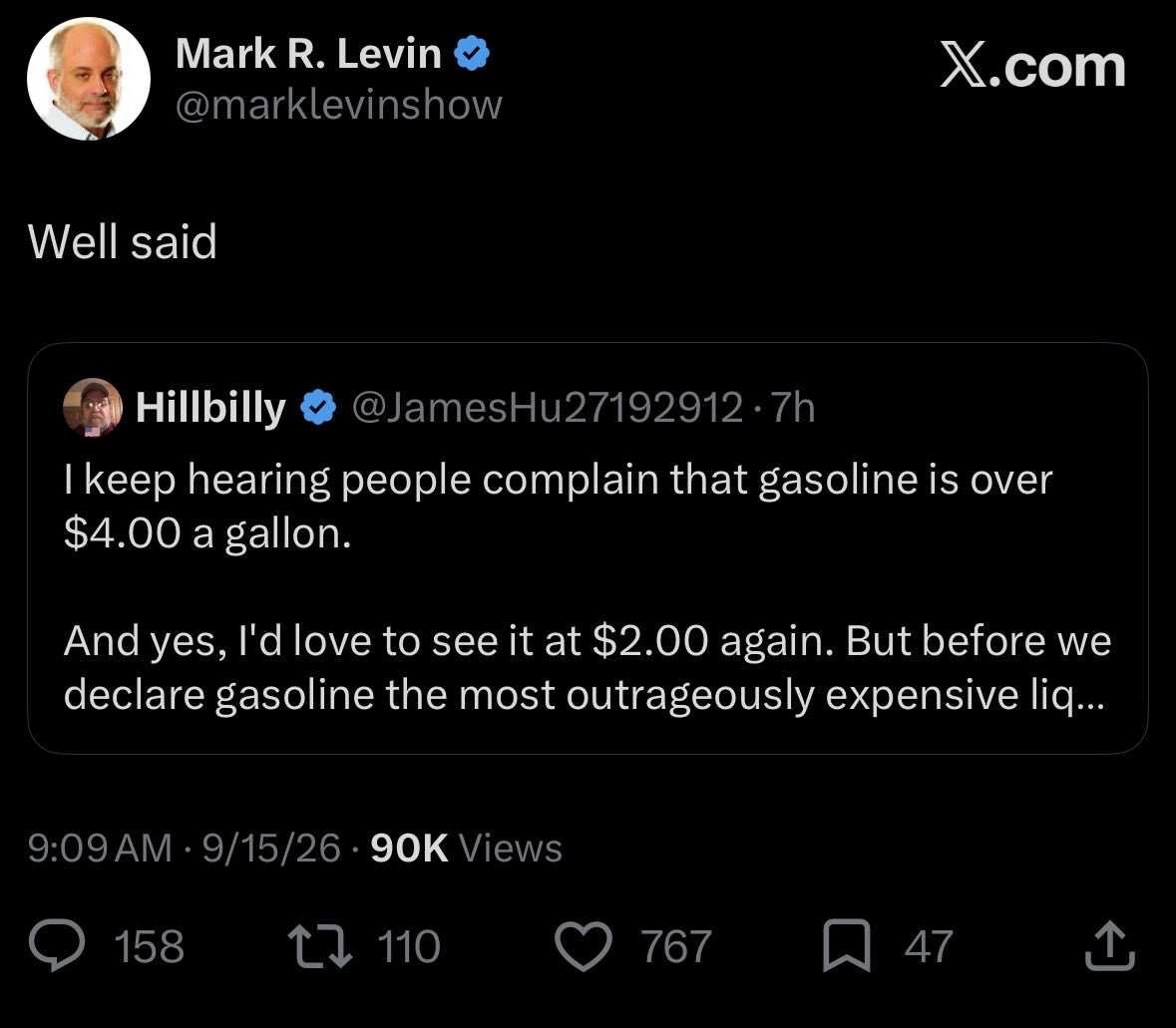
Doing the Louis CK cell phone bit but for gas prices after screaming about it for 18 months is amazing. “What is the price of gasoline compared to man’s conquest of speed and chrome?” This is a motivational speaker at Immortan Joe’s citadel
The “Irish” pop star surrounds himself w/ Actually Irish musicians in an attempt to legitimize his indistinguishable-from-parody appropriation of Irish musical motifs, then concedes to anti-Palestine bullying from his moneyed overlords & expects said Irishmen not to dump his ass
imagine if someone in 2016 told me that in 10 years I’d have more respect for Macklemore than Radiohead. the kind of prediction that medieval kings used to kill their seers for making.
@BrandyLJensen My Moby Dick book club last year went down a storm because every single meeting my friends kept exclaiming they had no idea it was going to be as funny as it was.
@intothecrevasse I don’t think I’ve ever used the word “transcendental” without a heap of irony (and, fittingly, in John C Reilly’s Dewey Cox voice) but this moment feeds my soul
This is one of my single fav shots in any movie. The climax is just one big montage of shrieking girls thrashing about in ecstasy, then you get this one zoom on a girl so overwhelmed she just stands there and mouths "George" with enough muted longing to fill a Brontë novel
Warner Archive’s 2026 releases have just felt like that team trying to get as much great stuff out before one rich dipshit or another gets ahold of them
THE MERRY WIDOW (1934) COMING TO BLU-RAY FROM THE WARNER ARCHIVE COLLECTION ON OCTOBER 27th !
NEW 2026 1080pHD master from 4K scan of the original nitrate camera negative!
Jeanette MacDonald is Sonia, a bubbly widow who owns 52% of every cow and Cowtown in the tiny European country of Marshovia. When she relocates to glittery Paris, suave ladies’ man Captain Danilo (Maurice Chevalier) sets out in hot pursuit. His mission: avert the homeland’s financial ruin by bringing Sonia back on the wings of love. But hang on tight Danilo. Love always flies a delirious course when legendary Ernst Lubitsch, known for sophisticated wit and a style affectionately described as “the Lubitsch touch” is at the helm. A frothy, high-spirited gem based on Franz Lehar’s famed operetta. The Merry Widow set the standard for musicals to come. And it confirmed what MGM’s top brass already knew: Jeanette MacDonald was a major star.
Extras: LA VEUVE JOYEUSE-the rarely seen French-language version of the film made by Chevalier, MacDonald and Lubitsch filmed by M-G-M with an alternate supporting cast including (Presented in HD, from a rare surviving release print). French language with English sub-titles.
This new Blu-ray release also contains the original U.S. Theatrical Trailer for “THE MERRY WIDOW”
Directed by Ernst Lubitsch
Cast: Maurice Chevalier, Jeanette MacDonald, Edward Everett Horton, Una Merkel
BD-50
Running Time: 99 Minutes
B&W
NOT RATED
Subtitles: ENGLISH SDH
Aspect Ratio: 16x9 1.37:1 with side mattes
Audio: DTS-HD MA 2.0 MONO
B&W
NOT RATED
#warnerarchive #classicmovies #physicalmedia #bluray #bluraycollection #classicfilms #classichollywood
@sublimebombast@tnyfrontrow The wheels are gradually turning on late Godard. That box and criterion’s King Lear release are seismic to me. Nouvelle Vague and Eloge d’amour should come sometime soon-ish
Four years to the day since the passing of Jean-Luc Godard, who is still best known and most celebrated for the greatest hits of the sixties while some of his best work, from 1970s videos to films from 1980 on, remains obscure, unshown, unappreciated, and, worst of all, unloved.
It rocks Trump keeps having meltdowns in favor of topics currently polling at about 10-25% approval. Just out here slobbering “we need AI, and Flock? We love cameras so much and pointing them into residential windows. If the DUMBOCRATS had their way we’d never have Animal House”