🇨🇳🇷🇺Chinese tourists are traveling to Siberia and the Far East for sex with Slavic women, according to media reports.
In Irkutsk and Blagoveshchensk, there has been an increase in demand for the services of sex workers from tourists from China. They are buying tour packages that include visits to saunas with prostitutes.
Most often, they request petite women with soft voices and a youthful appearance. However, the Chinese themselves are often strict and rude, which is why the prices for their services are higher.
This year, China accounted for 56.3% of the total foreign tourist flow to Russia.
Somewhere in Algeria. Damn! 🔥🔥🔥
When will the Nigerian government and politicians start building housing estate clusters like this?
Look at the scenery!
Booking Tony Robbins today costs $1 million for a single day. this is a 21-minute tape from inside his own house, filmed over 30 years ago, where he breaks down exactly how to get anyone to say yes. same $1 million material. completely free.
this is a rare, unfiltered tape from decades before this man started charging billionaires just to be in the room with him.
people give you two excuses when they say no, he says. not enough time. not enough money. neither is true. the real reason is they don't believe it's worth it yet, and that's not a money problem, that's a state problem.
so he teaches something he calls attack and confess. instead of arguing with the objection, you confess your own. "I had a chance to go to this thing six months ago and I didn't go until two months ago," he tells the room. "I can't even imagine the time I lost." the room goes quiet. nobody argues back.
he calls it getting someone on the yes train. every small yes you get compounds into the next one, until saying no to the final ask feels harder than saying yes. by the time he asks someone to sign, he says, they've already agreed to it five times over without realizing it.
21 minutes. that's all it takes to walk away knowing the exact two moves people pay $1 million a day to learn: how to read anyone's state, and how to move it. most people spend years in sales guessing at this. he wrote it down on a flip chart in his living room in under half an hour.
a seat in that room cost $125 back then. today it's a $1 million-a-day to sit in front of him.
The tape is free right now, and the answer is in this video.
A top MIT professor just explained the math behind making good decisions when almost everything is uncertain:
Most people try to predict what happens next
The better approach is to model uncertainty, quantify risk, and optimize around probabilities instead
In this lecture, he breaks down the framework behind decision-making under uncertainty:
04:18 - why uncertainty changes the entire optimization problem
15:42 - how expected value actually guides decisions
28:11 - why risk and reward cannot be separated
41:36 - how to compare strategies under imperfect information
55:08 - extensions beyond simple probability models
1:07:24 - real-world applications in finance and economics
This lecture is worth more than 100 risk management tutorials
Bookmark and watch it today
Then read the full guide to making better decisions under uncertainty below
Wall Street pays $600,000 for the skill of selling anything to anyone, and now this 90 minute Cliff Ennico masterclass filmed 13 years ago gives it to you completely free
This is the uncut session. Just raw selling techniques from the man who has helped thousands of entrepreneurs and salespeople close more deals.
You will learn how to sell anything to anybody. You will learn the psychology behind every purchase. You will discover the exact words that turn hesitation into commitment. No gimmicks. No pressure. Just a system that works every time.
This video is rare and gets buried by the algorithm. Save it while you can ⭣
The head of MIT's economics department accidentally destroyed the financial advisor industry in a ninety-minute lecture that derives, on one board, the exact formula every $500,000-a-year Wall Street analyst charges their firm to pretend they know.
MIT charges $87,000 a year to sit in that classroom.
He posted the entire lecture online for nothing.
Millions have opened it. Almost no one paying an advisor 1 percent of their retirement account has watched it to the end.
His name is Ricardo Caballero. He is the head of the MIT Department of Economics, one of the economists the Federal Reserve consulted through the 2008 crisis, and the researcher whose "safe asset shortage" theory explains why global interest rates sat near zero for a decade.
The 90-minute clip in this video is Lecture 19 of his 2023 MIT course. Caballero is teaching a room of undergraduates the equation that decides whether your 401k grows or shrinks over the next thirty years.
The formula on the slide behind him looks like a textbook fraction. It is the exact math that decides whether Apple is worth $3 trillion or $1 trillion, whether the 30-year Treasury pays 3 percent or 6 percent, and whether the house you were about to buy is fairly priced or fifty percent overpriced.
Caballero walks through the entire mathematical foundation of pricing anything with future cash flows in one hour.
Present discounted value. A dollar you will receive next year is worth less than a dollar today. How much less depends on one number: the interest rate. Move that rate by one point and the value of a thirty-year bond moves twenty percent. Almost nobody buying a bond fund knows this.
Expected present value. Nobody actually knows what a company will pay in dividends in ten years. You use your best guess and discount it. Every earnings estimate on CNBC is one guess plugged into this formula and dressed up as analysis.
Bond yields. The interest rate on a ten-year Treasury is not a policy choice. It is the number that makes the price of the bond equal to the present value of every future coupon. In 2022 that math wiped out $6 trillion of American retirement savings in a single year and almost no 401k holder ever heard the phrase.
Stock prices by arbitrage. A stock must return the same as a bond plus a risk premium. Everything else is noise. Apple's $3 trillion market cap is one equation with three inputs: expected dividends, the risk-free rate, and the equity premium. That is the whole game.
Real vs nominal. Every price you calculate can be measured in dollars or in inflation-adjusted dollars. Getting this wrong turns a 7 percent return into a 3 percent return. It is the reason a "5 percent CD" during 4 percent inflation is a 1 percent gift to the bank.
Every hedge fund on Wall Street pays entry-level analysts $250,000 to memorize this equation.
Every financial advisor in America charges you 1 percent of your retirement account per year to plug numbers into it while you are not looking.
The head of MIT's economics department posted the whole lecture on OCW for the price of nothing.
"The most important number in finance is the discount rate. Everything else in the market is a rounding error compared to it."
That is a line Caballero returns to across the course. Almost no ordinary saver has ever asked what discount rate their advisor is quietly using on their portfolio.
The lectures are free on MIT OpenCourseWare. The slides for Lecture 19 are online. Every equation Caballero writes fits on one page.
The math is free. The willingness to spend ninety minutes on one lecture before choosing a mortgage rate, picking a bond fund, or paying a financial advisor for the next thirty years is a much rarer commodity than the confidence to walk in without it.
i am not sure i was supposed to see this. somebody has been doing this to me for years and i only found out today that it has a name.
tony robbins, early in his career, a hotel function room, maybe forty people, tape so old the colour has drained out of it.
he draws three rectangles on a board and asks one question. what is the relationship between these three figures.
the answers come back fast. they are all rectangles. they all have four straight lines. they are all drawn in red. two are upright and one is on its side. there is no relationship.
then he tells them what he was actually doing. he was not asking about rectangles. every person in that room had just announced, out loud, in front of everybody, how their own brain sorts information, and not one of them knew they were doing it.
some people go straight for what is the same. some find what is the same and then one exception. and some go for the difference every single time and cannot stop themselves.
it is that third group that i have not stopped thinking about. he explains the exact sentence you use on them to get agreement, and it works precisely because they have to argue with you.
he had one client who sabotaged everything for two and a half hours. the woman straight after him had a worse problem and was done in thirty.
read that list of answers again. which one was yours.
fifteen minutes, and it is in the video below.
A man spends 50 years teaching at MIT.
He knows his time is running out.
So he records one last lecture — everything he knows, distilled into a single hour.
He died 5 months later.
This is that lecture.
The most important hour you'll watch this week.
Bookmark it for later!
Cc : Respective Author
Joel Peterson literally gave a 1-hour masterclass on negotiation and getting what you want, and it will completely change how you think about trust, relationships, and winning deals.
Stocks, Mutual Funds Or ETFs? 🤔💰
Most Beginners Don’t Even Know The Difference And That Could Be Costing Them Money! Here’s What Each One Really Means, The Risks You Need To Know, And Which May Be Better For a Beginner Before You Invest Your First Naira. 📊💸 #InvestmentEducation
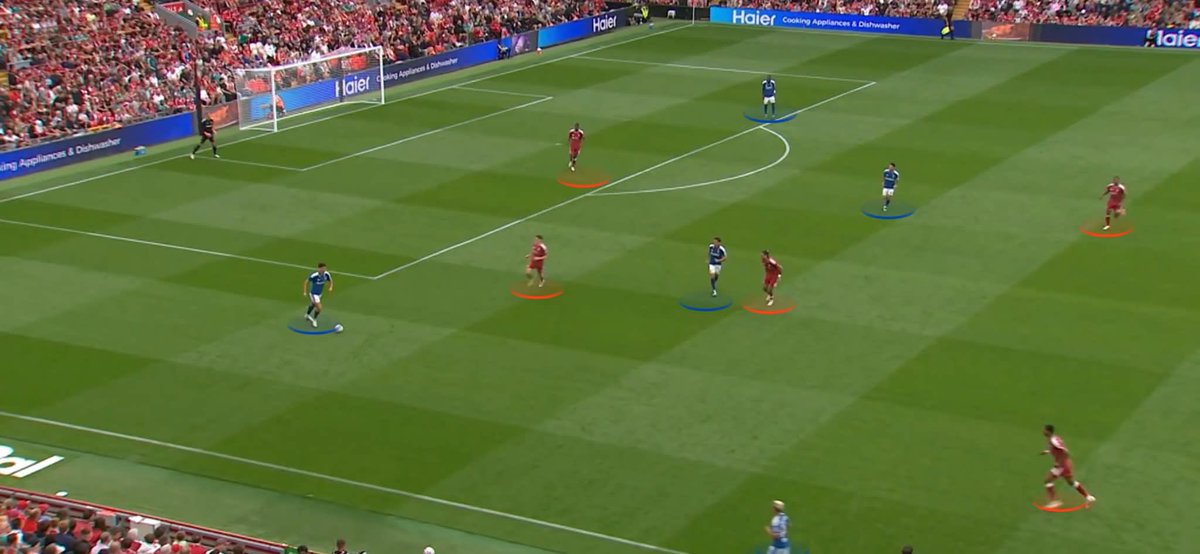
In this analysis, I mainly wanted to focus on Liverpool out of possession. I was looking for successful pressing sequences, as well as identifying the areas causing problems and preventing effective pressure. Thread 🧵#LFC
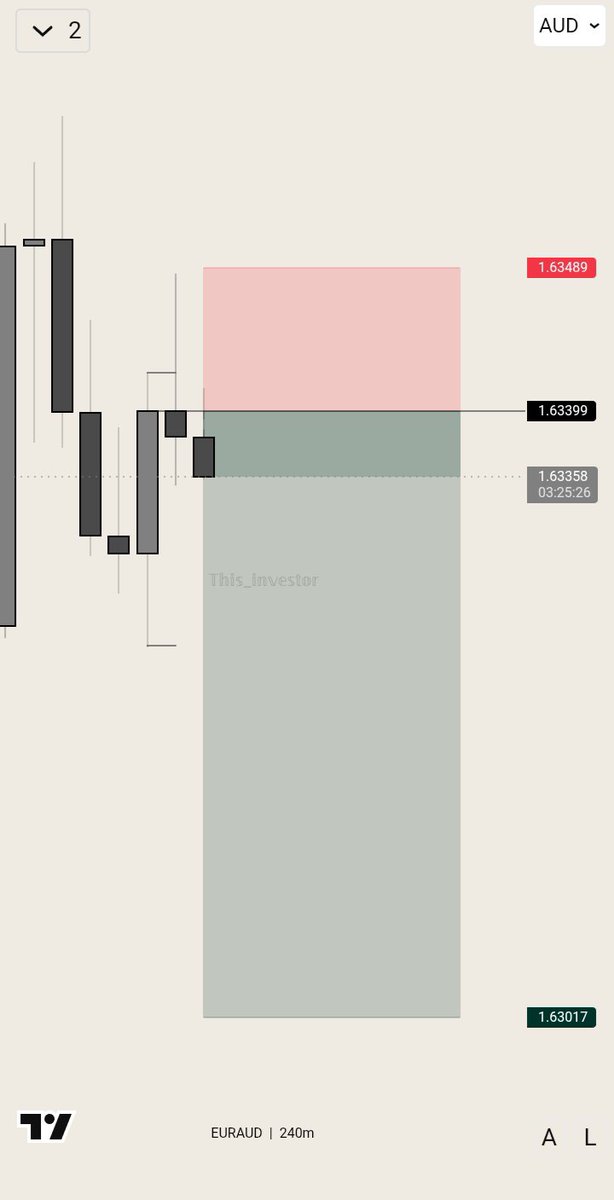
SLK x EURAUD
TP hit 🎯
Patience + discipline = results Trust your setup and let it play out
Join my Telegram channel where I share my directional bias and market analysis
https://t.co/Jkx0YzvG1L
this is insane. i genuinely don't understand why ambitious people aren't shown this lecture before their careers start consuming their entire lives.
clayton christensen spent his career studying why successful companies collapse. in his final class, he asked students to apply the theory to themselves: if you keep allocating your time the same way, what life are you actually building?
he had already seen the answer in his own harvard mba class. everyone looked successful at the fifth reunion; by the 10th, 15th, 20th, and 25th, many were unhappy, divorced, and living far from their children.
work shows you the score immediately. close a sale, ship a product, finish a presentation, earn a promotion, get paid.
an hour with your child may produce nothing you can measure today; it may take 20 years to understand what that hour built. so the next free hour goes back to work, one rational decision at a time.
this is how people build lives they never planned: through hundreds of right decisions that lead in the wrong direction, day after day.
money, titles, and headcount are easy to count. christensen believed a life should be measured by the people who became better because you were there.
he died in 2020.
one question remains: if someone saw only where your time, energy, and attention went this year, what would they think actually mattered to you?
the full 19-minute lecture is in the video below.