Çinli yakın dövüş ustalarının binlerce yılda insan bedeninde tespit ettiği en hassas basınç noktaları:
Kavga anında rakibinizi kolaylıkla yere serebilirsiniz.
“bro so busy trying to not die he forgot how to live”
I’m told hundreds of times a day that I need to live a little. That I’m so busy trying to not die that I’ve forgotten to live.
The psychology powering this sentiment is the most interesting phenomenon happening on earth right now.
Every individual constructs a persona, a character to present to the world. It’s a compromise between what they are and what society demands of them. In current culture, its characteristics are the appearance of living fully, productivity, busyness, enjoying life, pleasure, spontaneity, and being unafraid.
It’s carefully constructed to shield the wearer from the terror of their inevitable death. To make this irreconcilable pain invisible to themselves, they dissolve themselves into the group and enact its rituals.
Sleep under your desk, have a drink, pull the vape, grab a fast food meal, gamble a little, stay up late to watch your favorite show, splurge some, chill out…live a little.
They are living.
At the cellular level, metabolic debt accumulates and repair mechanisms are traded for short term dopamine spikes.
But it’s done together, so it’s normal, and even desirable. No one will die alone if everyone is dying together and all agree to call it living.
The group moves in unison, comforted by the rhythmic movement. When someone declines to participate in their shared rituals, they experience it as an insult and a threat that must be attacked, discredited and mocked.
Subconsciously, they know their rituals are performative and masking something that must be suppressed. But it’s been buried so deep that it’s only a faint whisper, easily silenced by a swipe at the offender.
But then the whisper becomes a quiet voice and asks if they’re afraid. They attack the mirror because they cannot bear the reflection.
In pre-modern societies, death rituals were explicit and honest. They held a funeral, kept a mourning period, washed the body, prayed for the dead and observed burial customs. They faced death and created community rituals to metabolize the grief, fear and loss.
We no longer have death rituals. As explicit customs eroded, consumer culture monetized the void, driving our existential anxieties underground. Thanksgiving debauchery, New Year drunkenness, Halloween indulgence, the wedding open bar, the treat, splurge and cheat day. They are commercialized, camouflaged celebrations staged as group rituals to dull the shared death anxiety.
We previously faced the fear and now we gluttonize on it. Group rituals that name and face death can metabolize it. Rituals that hide from it accumulate the debt and are owned by their creditors.
When I abstain from societal death rituals, I break the spell. The anesthesia only works if everyone does it together. One abstainer reveals to the room that they are drunk.
This is the source of the anger. It’s not my decisions. It’s their reflection in the mirror.
Predictably, the collective seeks to pathologize my non-conformity. They will claim that systematic discipline is just another defense mechanism; a frantic obsession with control to escape the same existential dread. They will argue that preserving the biological vessel is a sterile exercise, a perpetual preparation for a game I refuse to play.
They misunderstand the objective.
Control is maintaining the status quo. I seek an evolutionary jailbreak. Natural selection stops maintaining us once reproduction is done. Accepting that automated slide into decrepitude isn't ‘living’, it’s passive submission to a blind algorithmic process.
I am not opposed to pleasure. I am opposed to the counterfeit. I say no to the dying ritual so that I can say yes to the full offering of consciousness: a vibrant physiological state, cognitive clarity, and deep emotional coloring. Vitality is mastery, not abuse dressed up as freedom.
The reward is a clearer lens, the ability to see what is currently invisible. High resolution consciousness allows for depths of thought, creativity, and experiential variance that are far harder to reach when the brain and body are chronically inflamed, degraded, and sedated. I want to expand the boundaries of the human experience.
On offer in this new future are things that no human has ever tasted before. I’m not deprived by the lack of participating in the rituals, I’m pointing to a joy that the human mind has not yet imagined.
I don’t intend to live a little. I intend to live more than any human who has yet lived and invite you to join me.
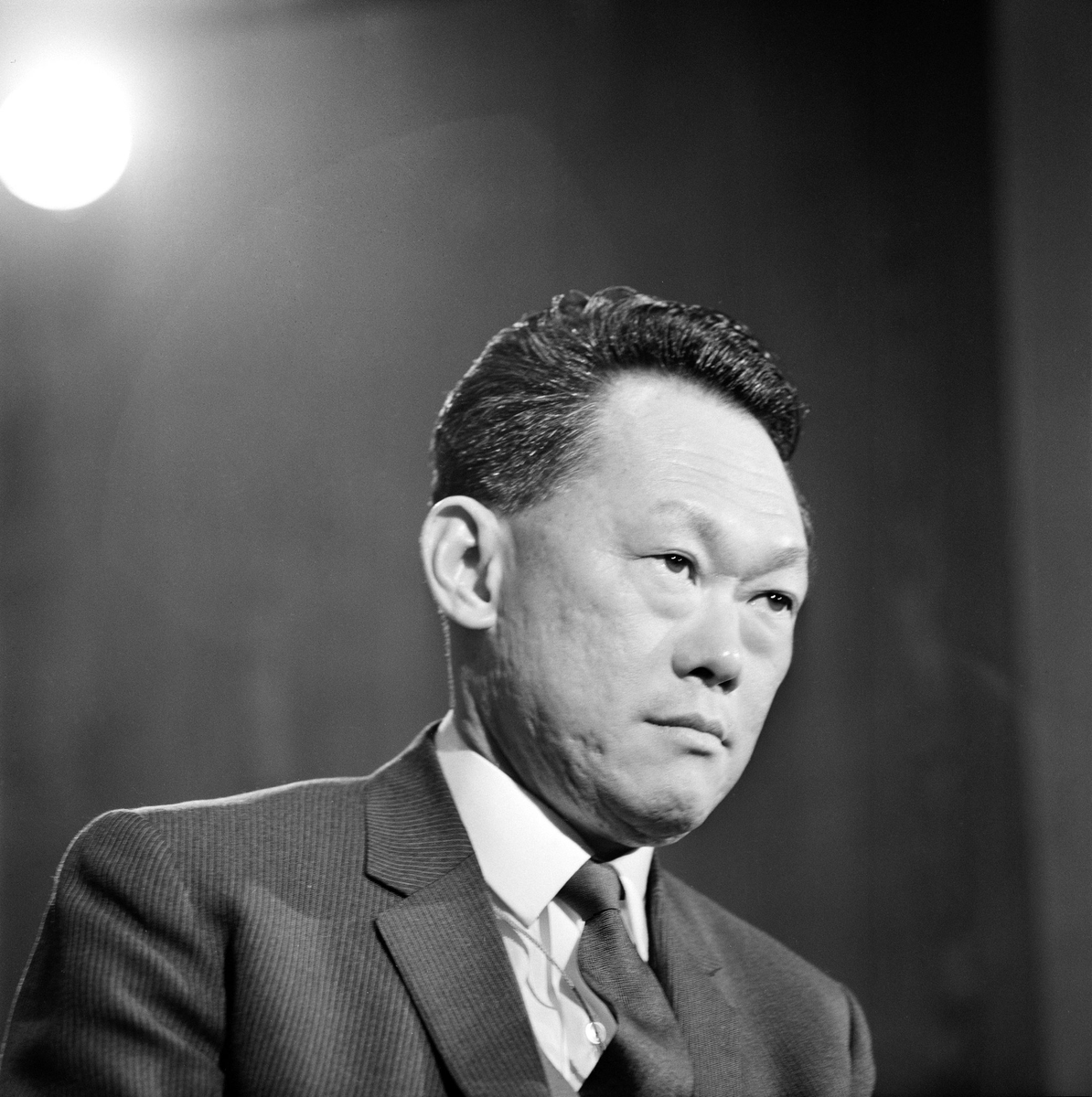
>be Lee Kuan Yew
>born 1923 in Singapore
>British colony
>fourth-generation Chinese
>family is wealthy, English-speaking
>top of every class
1942:
>Japanese invasion
>Singapore falls in 7 days
>the British surrender
>"impregnable fortress" — a joke
>you're 18
>watch your colonial masters kneel
>learn something
>white men are not gods
>power is earned, not inherited
occupation:
>survive under Japanese rule
>learn Japanese, work as a translator
>see brutality, corruption, chaos
>nearly get executed in a random roundup
>luck saves you
>or destiny
>you don't forget what powerlessness feels like
1946:
>war ends
>go to Cambridge
>study law
>graduate with double starred first
>top of your class
>marry Kwa Geok Choo
>she graduates top of hers too
>power couple before the term exists
1950:
>return to Singapore
>become a lawyer
>defend unions, fight the British
>anti-colonial firebrand
>the communists want you
>you use them
>they think they're using you
>they're wrong
1954:
>found the People's Action Party
>coalition of English-educated moderates and Chinese communists
>you need their grassroots
>they need your respectability
>temporary alliance
>you both know it
1959:
>PAP wins elections
>you become Prime Minister
>age 35
>Singapore is still British
>poor, dirty, overcrowded
>no resources, no industry
>malaria in the swamps
>you: "we'll fix this"
1963:
>join Malaysia
>Singapore becomes part of the federation
>finally independent from Britain
>but the marriage is bad from day one
>race riots, political clashes
>Malay leaders don't want a Chinese-majority city
>threatening their power
August 9, 1965:
>kicked out of Malaysia
>not independence, expulsion
>you announce it on television
>you cry
>the only time anyone sees you cry
>"for me, it is a moment of anguish"
>you're now leader of a country nobody wanted
>no army, no water, no hinterland
>just a swamp and 2 million people
>survival is not guaranteed
the problem:
>no natural resources
>not even fresh water
>surrounded by hostile neighbors
>communists infiltrating
>racial tensions everywhere
>how do you build a nation from nothing?
the solution:
>human capital
>if you have nothing, invest in people
>education, discipline, meritocracy
>English as the common language
>no corruption, zero tolerance
>pay officials well so they don't steal
>punish harshly when they do
>caning, hanging, no exceptions
>rule of law or rule of the jungle
>you choose law
the economics:
>invite multinationals
>make Singapore the easiest place to do business
>low taxes, stable government, no bullshit
>build infrastructure relentlessly
>airport, port, housing
>public housing for everyone
>home ownership creates stability
>people don't riot when they own property
the authoritarianism:
>no free press
>defamation suits against critics
>opponents bankrupted, jailed, exiled
>chewing gum banned
>long hair on men, suspicious
>you run a tight ship
>too tight, critics say
>but the ship doesn't sink
1970s-80s:
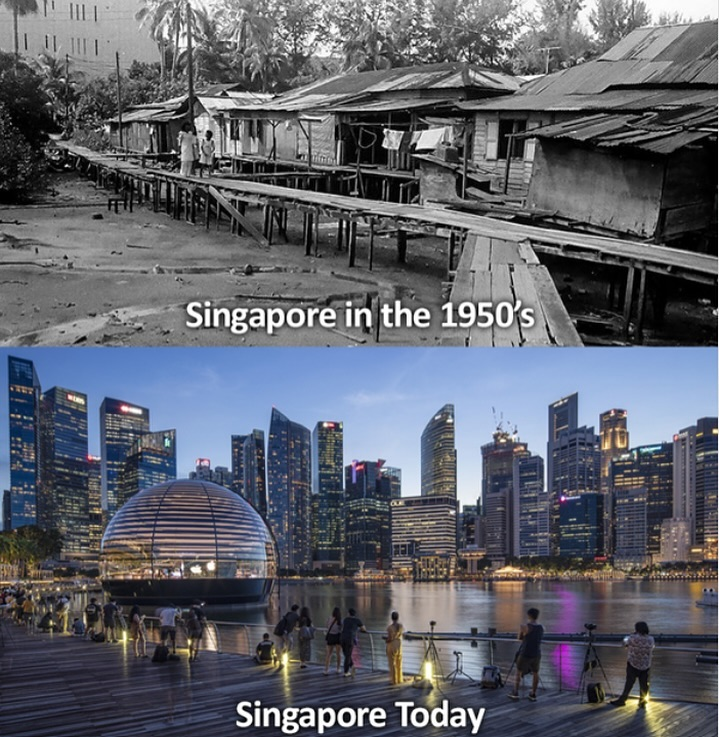
>Singapore transforms
>from third world to first
>GDP per capita explodes
>skyline rises
>slums become towers
>swamp becomes financial hub
>everyone wants to know the secret
>the secret is you
1990:
>step down as Prime Minister
>after 31 years
>but you don't leave
>become Senior Minister
>then Minister Mentor
>shadow over everything
>until you die
the results:
>GDP per capita: higher than the US, UK, Japan
>one of the least corrupt countries on earth
>best airport, best airline, best port
>from fishing village to global city
>in one generation
>your generation
the criticism:
>authoritarian
>no real democracy
>freedom of speech, limited
>you respond: "I'm not interested in being loved. I'm interested in being effective."
>Singapore proves you right
>or proves nothing matters except results
March 23, 2015:
>die at 91
>a million people line the streets
>in the rain
>to watch your funeral procession
>the father of a nation
from Japanese occupation
>to British colonialism
>to Malaysian expulsion
>to building a nation from scratch
Lee Kuan Yew.
the man who turned a swamp into a superpower.
Singapore exists because you refused to let it fail.
In 1998, Warren Buffett gave a 1-hour masterclass on how to never lose money investing.
Here are the 22 most valuable lessons from his lecture:
1. You only have to get rich once. If you have $100 million and can make 10% unleveraged or 20% leveraged, the difference between $110 million and $120 million at year-end means nothing to your life, your family, or anything. But the downside, especially with other people's money, is disgrace, humiliation, and facing the friends whose money you lost. The equation never makes sense.
2. To make money they did not need, they risked money they did have and needed. That is just plain foolish, Buffett says, regardless of your IQ. If you hand him a gun with a million chambers and one bullet and offer him any sum to put it to his temple and pull once, he will not do it. There is nothing on the upside that justifies the downside. People do this financially all the time without thinking.
3. The smartest people in finance went broke, and that is the most fascinating story Buffett knows. Long-term Capital Management had 16 people with possibly the highest average IQ of any business in the country, 350 to 400 combined years of experience, and most of their own net worth in the firm. They still went bankrupt. Buffett says if he ever wrote a book, it would be called why smart people do dumb things.
4. Beta and sigmas tell you nothing about the real risk of going broke. The LTCM team relied heavily on mathematics and believed a six- or seven-sigma event could not touch them. They were wrong. History does not tell you the probabilities of future financial events. The real risk is not volatility. It is a permanent, irreversible blind spot in something crucial, often caused by knowing a great deal about something else.
5. Invest only in businesses you can understand. That one rule narrows the field by about 90%, and that is fine. Buffett can understand Coca-Cola. he cannot value an internet company, and he says if a student handed him a valuation of one on a final exam, he would flunk them. People thought Enron was incredible because it had a good track record, but almost nobody understood how it made money. That was the signal to avoid it.
6. You want a business that is a castle with a wide moat around it. Inside the castle, you want an honest, able, hard-working duke. The moat can be low cost, like Geico in auto insurance, or brand, or patents, or location. But a wonderful castle will always be attacked, so the job of every manager Buffett owns is one thing: widen the moat. Throw crocodiles and sharks into it to keep competitors out.
7. Moats change slowly and invisibly, but they change. Thirty years ago, Kodak's moat was as wide as Coca-Cola's. They had share of mind; the little yellow box meant best in everyone's head. Then they let Fuji into the Olympics and narrowed their own moat. Coca-Cola's moat, by contrast, is wider now than 30 years ago. Every time infrastructure gets built in a country that is not yet profitable, the moat widens a little. You cannot see it day by day, but in 10 years, the difference is enormous.
8. Share of mind beats share of market. When you say Disney, every person in the room has something in their head. Say Universal Pictures or 20th Century Fox, and you have nothing. A mother with two kids will pick the $17.95 Disney video over the $16.95 alternative because she knows it will be fine and does not want to preview ten videos to decide. That little bit of certainty in the customer's mind is worth a fortune.
9. The best businesses have pricing power and require little capital. see's candy sold 16 million pounds at $1.95 when Buffett bought it for $25 million. The entire thesis was whether the price could go to $2.25 without hurting sales. It could, because nobody wants to hand their valentine a box of candy and say, "This year I took the low bid." Today, See's makes $60 million on the same formulas and still takes almost no capital. Compare that to GM, which had to reinvest every dollar into better factories and whose stock barely moved over 50 years.
10. The best businesses earn a royalty on other people's capital. Coca-Cola sells a formula and collects a royalty on every drink. American Express takes a few percent of every dollar you spend. You put up the capital, they take a cut. Low capital intensity is one of the most underrated qualities in a business and one of the surest paths to durable wealth.
11. Define your circle of competence and stay inside it. The size of the circle does not matter. Staying inside, it does. If you know which 30 companies out of thousands you actually understand, you are fine. Buffett understood H.H. brown shoes and Frank Rooney, so he closed that deal in five minutes. If you do not know enough to understand a business instantly, you will not understand it in a month either.
12. Ignore the macro entirely. Buffett has never bought or skipped a business because of a feeling about interest rates, the economy, or any macro forecast. If Alan Greenspan and Bob Rubin both whispered exactly what they would do for the next 12 months, it would not change what he pays for anything. You want to focus on what is important and knowable. The macro is important but not knowable, so you ignore it.
13. Inactivity is the strategy, not a flaw. Wall Street makes money on activity. You make money on inactivity. A broker is like a doctor paid by how often he changes your pills. If everyone in a room trades their portfolio with everyone else every day, they all end up broke, and the intermediary keeps the money. Buffett looks for one good idea a year and rides it to its full potential. He measures Berkshire by how little turnover there is, like a church where the same people fill the seats every Sunday.
14. If you understand businesses, diversification is a mistake. For the 99% who will not evaluate businesses, Buffett recommends a low-cost index fund and extreme diversification. But if you bring real intensity to evaluating companies, owning more than six is a terrible idea. Very few people got rich on their seventh best idea. A lot of people got rich on their best one. Buffett keeps about half his money in what he likes best.
15. Buffett's biggest mistakes are mistakes of omission, not commission. The times he understood a business well enough to act and instead sat there sucking his thumb. He passed on healthcare stocks during the Clinton plan and on Fannie Mae in the mid-eighties, each a multi-billion-dollar miss. Accounting never captures these. The $2,000 he put into a Sinclair service station as a young man, money he lost, has an opportunity cost of about $6 billion today.
16. Focus on what will happen, not when. Coca-Cola went public in 1919 at $40 a share and dropped to $19 within a year. There was always a reason not to buy: the great depression, world war, sugar rationing, thermonuclear weapons. But one share bought then and reinvested would be worth about $5 million. If you are right about the business, you will make a lot of money. The timing is the tricky part, so do not focus on it.
17. When hiring, look for integrity, intelligence, and energy. But if the person lacks the first one, you actually want them dumb and lazy. Because a person with intelligence and energy but no integrity will destroy you. Buffett borrowed this from Pete Kiewit. The trait everyone screens for last is the one that matters most.
18. Here is a thought experiment Buffett gives students. Imagine you could own 10% of one classmate for the rest of their life. You would not pick the highest IQ or the best grades. You would pick the person you respond to best, the one who is generous, honest, gives credit to others, and has leadership qualities. Now imagine you also had to short one classmate. You would pick the egotistical, greedy, slightly dishonest one. The qualities that decide both are not talent. They are character.
19. Every quality on the admirable side is achievable, and every quality on the repellent side is removable. The things that make you want to own 10% of someone are not the ability to throw a football or run fast; they are behavior, temperament, and character, all of which anyone can choose. Buffett's point: you already own 100% of yourself, so you might as well become the person worth betting on.
20. The chains of habit are too light to be felt until they are too heavy to be broken. Buffett sees people in their forties and fifties trapped by self-destructive patterns they can no longer change. At a young age, you can choose any habits you want. Ben Franklin and Ben Graham both did exactly this, looking at people they admired and simply deciding to behave like them. There was nothing impossible about it.
21. Take a job you would take if you were already independently wealthy. Buffett told a 28-year-old at Harvard who wanted a consulting job "to look good on his resume" that it was like saving up sex for your old age. There comes a time to just start doing what you love. Buffett offered to work for Ben Graham for free, was told he was overpriced, and kept pestering him for years. Take the job you would jump out of bed for. You cannot miss.
22. You won the ovarian lottery, and that should shape how you think. Buffett imagines a genie 24 hours before your birth letting you design the world's rules, with one catch: you do not know which of 5.8 billion balls you will draw. Born here or in Afghanistan, with an IQ of 130 or 70, male or female, able-bodied or not. If you could put your ball back and draw one of 100 random others, most people would not, because they are already in the luckiest 1%. Buffett knows he is perfectly wired for a market economy that pays him like crazy, while an equally good citizen leading scout troops and teaching Sunday school is not, purely by luck.
You study yourself obsessively so you never actually have to change.
You learned the words. You can list your flaws before anyone else can, and you say them out loud, "I know I'm avoidant, I know I self-sabotage, I know I push people away", like saying it out loud is the same as fixing it. It isn't. It's how you avoid it.
You confess the flaw so fast because confessing it is easier than dropping it, and if you point at it first, nobody else gets to.
You turned your worst traits into a personality so you'd never have to sit in the shame of actually being seen.
And underneath it, you're terrified. Terrified that if you stopped narrating yourself, you'd have nothing left. That the self-awareness is the only impressive thing about you, because you haven't actually changed a single thing in years.
You've just gotten better at describing why you're like this.
You say "this is just how I am" like it's self-awareness, but it's just you refusing to change. You call it knowing yourself. It's really just building a nicer cage and memorizing the bars so no one can say you don't know you're in one.
The truth you avoid is that awareness was never the end. You treat it like the end so you can feel like you're doing the work while risking nothing.
But the insight that doesn't cost you anything isn't insight, it's comfort.
And the reason you stay stuck isn't that you don't understand yourself. It's that understanding became the excuse you needed to never have to try.
This is all they do in South America. They use 30mins to fight out of 90mins.
The remaining 60mins is played at 2x with tackles flying left & right.
If you check their results, you don’t see much goals. Statpadding there is by the grace of God.
🔐 Update on the Upcoming Verification Process
We know many of you are looking forward to verification - and we’re stepping closer to that moment.
This process is designed to be structured, transparent, and fair, ensuring every qualified Human Node moves forward with clarity. Here’s how the flow will work:
Phase 1: Matching
You begin by tapping “Match Curator.”
An anonymous list will appear, and you can choose a curator to match with.
After selecting, you enter the matching state and wait to be successfully picked. Once picked, your application advances to the submission stage.
Phase 2: Submission
When it’s your turn, a strict 24-hour countdown will start.
You must complete and submit your documents within this time. Missing the deadline may move you to a later pool, delaying your progress.
There are 3 submission levels. After completing all required steps, you press Submit, and your status changes to In Review.
Phase 3: Verification Process
This is the last stage - your application will be reviewed carefully.
This process is more than a technical update - it’s a defining milestone before full verification rollout.
Prepare early. Understand each phase.
Be ready when your turn comes!
#InterLink #ITLG #ITL