@HardTruths25 Fair question. Let me split it.
Numbers, dates, totals: straight from Anthropic’s Senate letter and the export filing, all checkable. “Months not years” is a claim by named researchers, not gospel. The argument tying them together is mine.
Nothing invented. Plenty to argue.
🧵 Two stories broke this month that most read as separate. They are the same story.
Washington barred Anthropic from serving Mythos 5 abroad. Anthropic told the Senate that Alibaba had already copied Claude through 25,000 fake accounts.
One is the border. One is the breach.
The real question is not who should access America’s best models. It is whether model access can be metered at all once the model is live. Until that has an answer, every export order is a lock on a door that capability walks around. 🧵/ END
So the debate is fighting the last war. We argue over who may cross a border the technology no longer respects. Chips move through ports. Capability moves through queries. You can guard the first. The second is already on the other side.
Messi se situe à 5,9 écarts-types (σ) au-dessus de la moyenne des attaquants des 5 grands championnats européens, en buts + passes décisives / 90 minutes.
Explications
En statistiques, la courbe normale dit que :
99,7% des individus sont dans les ±3σ
À 5,9σ, la probabilité d’exister est inférieure à 1 sur 500 millions
Imagine que tu prends tous les attaquants des 5 grands championnats européens, on a des des centaines de joueurs.
Tu les ranges du moins bon au meilleur en buts + passes par match.
La grande majorité des joueurs se retrouvent au milieu, c’est la bosse de la courbe sur le graphique
Les très bons (Haaland, Lewandowski) sont déjà loin à droite de cette bosse.
Messi n’apparaît même plus sur le graphique. Il est tellement loin que la courbe ne le représente plus.
Si tu mesures la taille de tous les hommes français, la moyenne est environs 1m75. Quelqu’un à 5,9σ au-dessus ferait plus de 2m30.
Ça n’existe pas. C’est ça Messi dans le football. C’est une anomalie
Ça veut dire que statistiquement, un joueur comme lui apparaît une fois toutes les centaines de millions de carrières de footballeurs.
Ô ne reverras probablement jamais ça de notre vivant, et c’est les maths qui le disent, pas juste une opinion.
Messi est une anomalie mathématique
🚨 Arsene Wenger on Lionel Messi's hat-trick and becoming the World Cup's all time leading goalscorer:
🗣“What we witnessed today goes beyond another record. It is the continuation of a career that has consistently redefined the standards of excellence in football.
It wasn't simply a hat-trick,it was the quality of the goals, the intelligence behind every decision, and the efficiency with which Messi influenced the game. Those are the qualities that separate truly exceptional players from the rest.
For many years people have tried to compare Messi with other great footballers, but there comes a point where comparisons lose their meaning. He has built a legacy that stands on its own.
What fascinates me most is his evolution. I genuinely don't know whether the young Messi, with his explosive pace and dribbling, was better than the experienced Messi we see today, who controls every moment of the game with his intelligence and understanding. Very few players improve with age the way he has.
The emotion after his second goal revealed another side of his greatness. It reminded everyone of the difficult journey he has had with Argentina,the disappointments, the criticism, and the perseverance that eventually led to glory. That emotional connection with his country continues to drive him.
To score his first World Cup hat trick while becoming the tournament's all time leading goalscorer is an extraordinary achievement. It is another milestone in a career that already seemed impossible to improve.
Perhaps the most remarkable aspect is his longevity. He finished the 2022 World Cup by lifting the trophy after scoring twice in the final, and he has opened the 2026 tournament with a hattrick. At almost 39 years of age, he continues to perform with the same clarity, technical quality, and love for the game that defined him in his twenties.
That is the mark of a truly timeless footballer.”
Canadian Tire just bought what was left of Hudson's Bay for $30,001,670. Look at the last four digits: 1670. That is the year a British king handed this company control of land bigger than India. This summer, it ended as a shelf of beach chairs.
The land was called Rupert's Land, and it was huge. About 3.9 million square kilometers, running from the Rocky Mountains all the way up to the Arctic. For its first 200 years, Hudson's Bay was a government as much as a store. It ran its own courts. It had the legal right to raise an army, and the only person it answered to was the king of England.
In 1870, it sold that entire territory to the brand-new country of Canada for £300,000, about $1.5 million back then. To this day, it is the biggest land deal in Canadian history. The company kept the cash and some of the best farmland, and went into the store business instead. Its first department store opened in 1881.
For the next hundred years, the Bay was just part of life in Canada. The kind of store your grandparents shopped at. As recently as 2018, it still pulled in $9.4 billion a year.
Then it started bleeding money. In its final year, ending January 2025, Hudson's Bay lost $329.7 million. It was down to its last $3.3 million in cash while owing more than $2 billion. Shoppers had moved online. The huge downtown stores sat half empty, and the debts just kept piling up. The banks stopped lending. In March 2025 it filed for protection from the people it owed, the step companies take right before they go under. On June 1, all 96 stores closed for good, and the more than 9,000 people who worked there lost their jobs. A company older than Canada was finished.
What is left is the shelf in that photo. Canadian Tire paid $30 million for the Hudson's Bay name and the famous green, red, yellow and indigo stripes, then put them on a small summer collection: canoes, beach chairs, a pickleball set, some striped blankets. So a company that once ran a chunk of a continent now lives as a display rack between the car parts and the camping gear. And the price it sold for, $30,001,670, quietly ends in the year it was born.
Integration failures manifest differently across societies, but the underbelly is often the same: parallel structures, alienation, and crime. From France’s banlieues to the Mafia’s rise in America, history has seen this story before.
Yesterday's riots in France after the PSG Champions League win are nothing new. We have seen this before. Many times. And every time the conversation stays on the surface, Nobody wants to say what is actually underneath.
France has failed at integration. For decades. And this matters because France is also a former colonial power it brought millions of people from its former colonies into the country, created communities, and then largely left them to figure it out in banlieues with no jobs, no real future, and no genuine sense of belonging.
The numbers tell the story clearly. Second generation immigrants aged 19-29 face 30% unemployment in France nearly 40% if their parents came from Algeria or Morocco compared to 20% for children with both French-born parents. Only 23% of second generation immigrants with African-born parents get a permanent contract for their first job, versus 32% for young workers with French parents. 18 months after signing integration contracts and completing required French courses, 57% of Afghan signatories reported still being unemployed. And the number of Republican Integration Contracts signed actually dropped 10.5% in 2024. The system is not just failing in some areas it is going backwards.
France is consistently rated among the worst countries in the developed world for immigrant integration.
I keep repeating this and I will keep repeating it: integration is the most important thing any country welcoming immigrants must get right. Not the numbers. Not the paperwork. The actual integration language, employment, social inclusion, a real future.
And here is what every country needs to understand. There is no one-size-fits-all solution. But every immigration policy needs to come with clear pros and cons, clear expectations from both sides, and clear consequences. You cannot be too soft open the doors, take no responsibility for what happens next, and then act surprised when the banlieues burn. But you also cannot be drastic mass expulsions, closed borders, zero nuance. Neither extreme works. What works is structure.
Some people integrate fast. Others struggle. That is normal and expected. But if someone arrives in a country and genuinely has nothing no work, no path forward, no sense of place you have created a problem, not solved one. And if someone repeatedly violates the laws of the country that gave them an opportunity, there have to be consequences. Including return. That is not inhumane. That is what a functioning state owes its own citizens.
You cannot demand respect for a system that never included you. But you also cannot keep burning cars in a country that took you in and then blame the country for everything.
Both sides have obligations. And right now in France, neither side is meeting them. The state abandoned these communities for fifty years. And now it harvests the result every time.
Europe needs to learn from this.
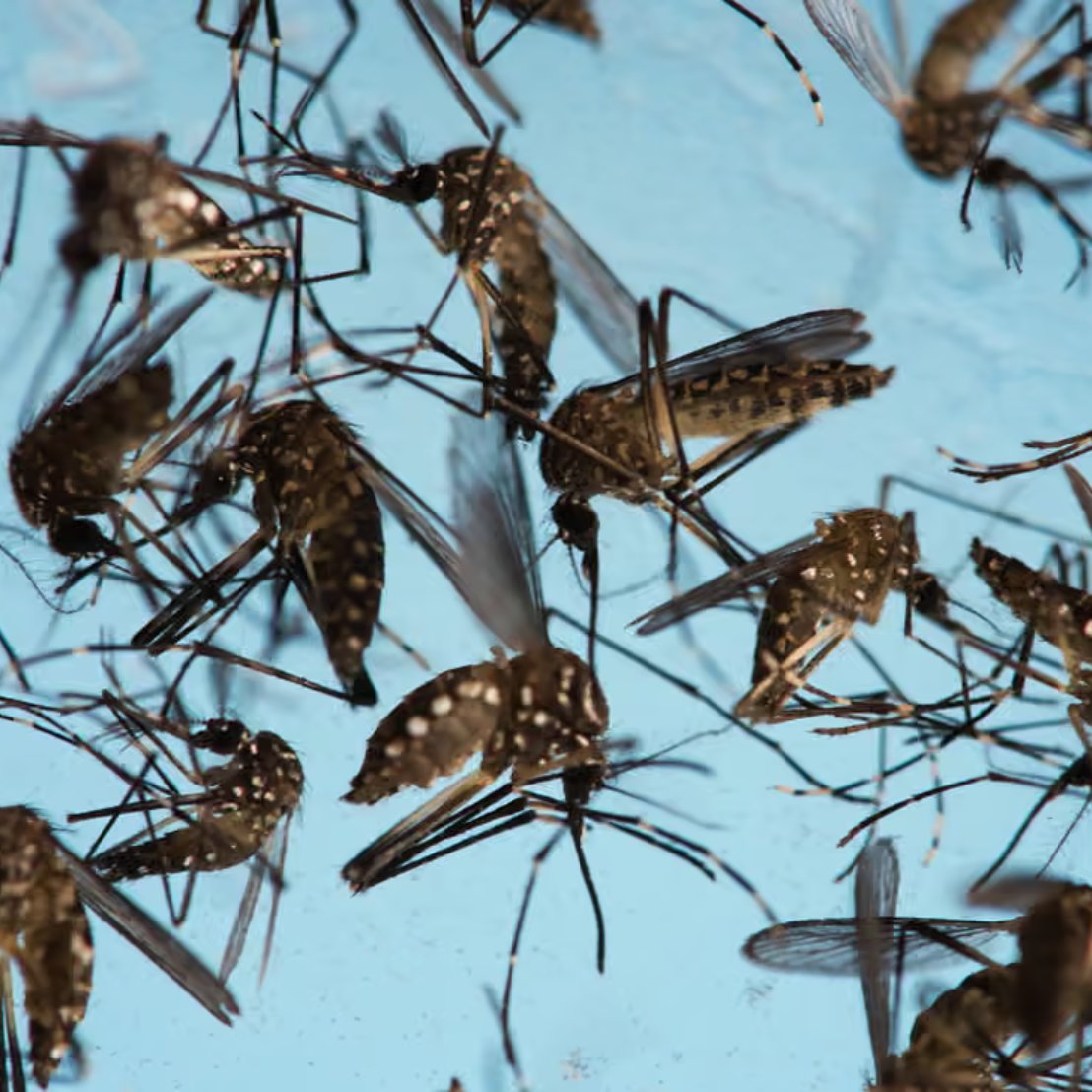
BREAKING: Google is planning to release 32 million mosquitoes across Florida and California.
The company has asked the EPA for permission to proceed, with the public given until June 5 to respond.
The mosquitoes are infected with Wolbachia bacteria, which stops them from reproducing and slowly collapses the wild population from within.
Google's previous Debug Project trial in California's Central Valley nearly eliminated mosquitoes from three test sites entirely. A separate trial in Singapore cut dengue cases by 70% within 12 months.
Google has now released over 1 billion mosquitoes across four continents. This new proposal is the largest deployment in US history.