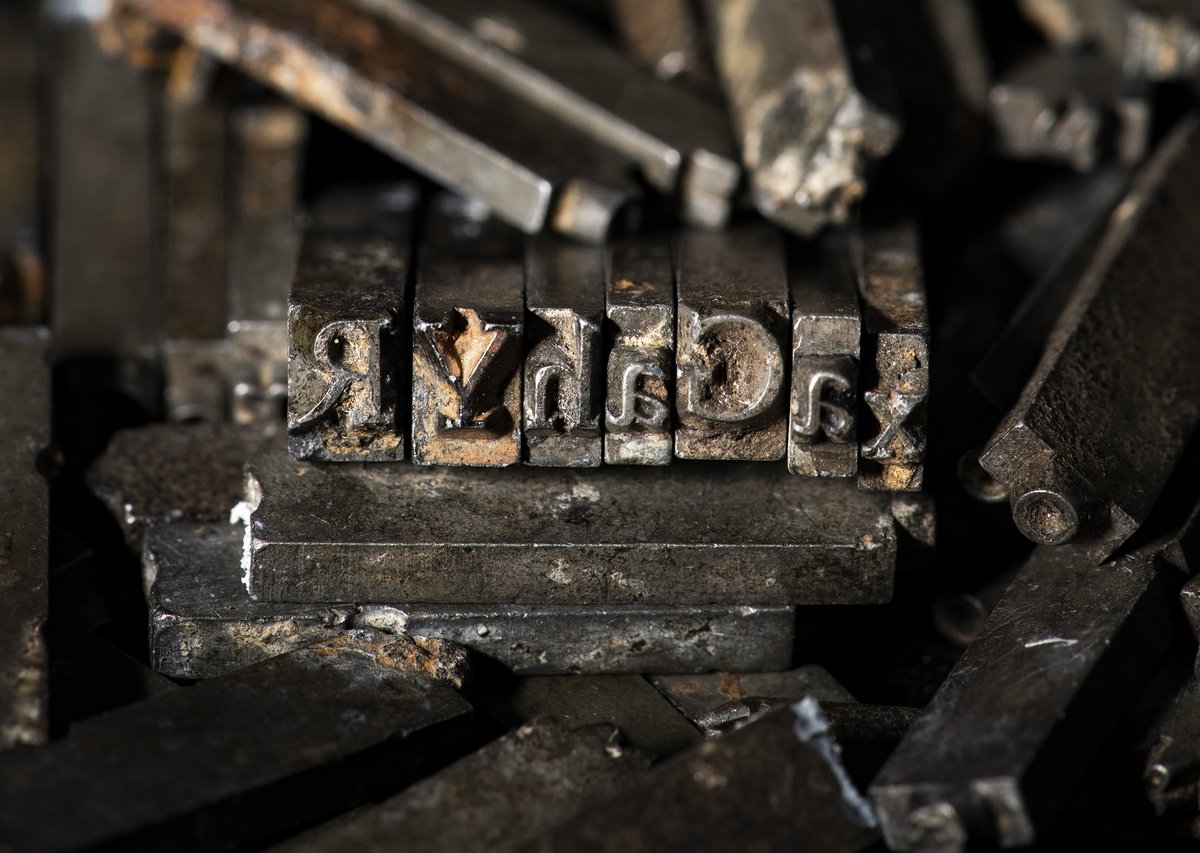
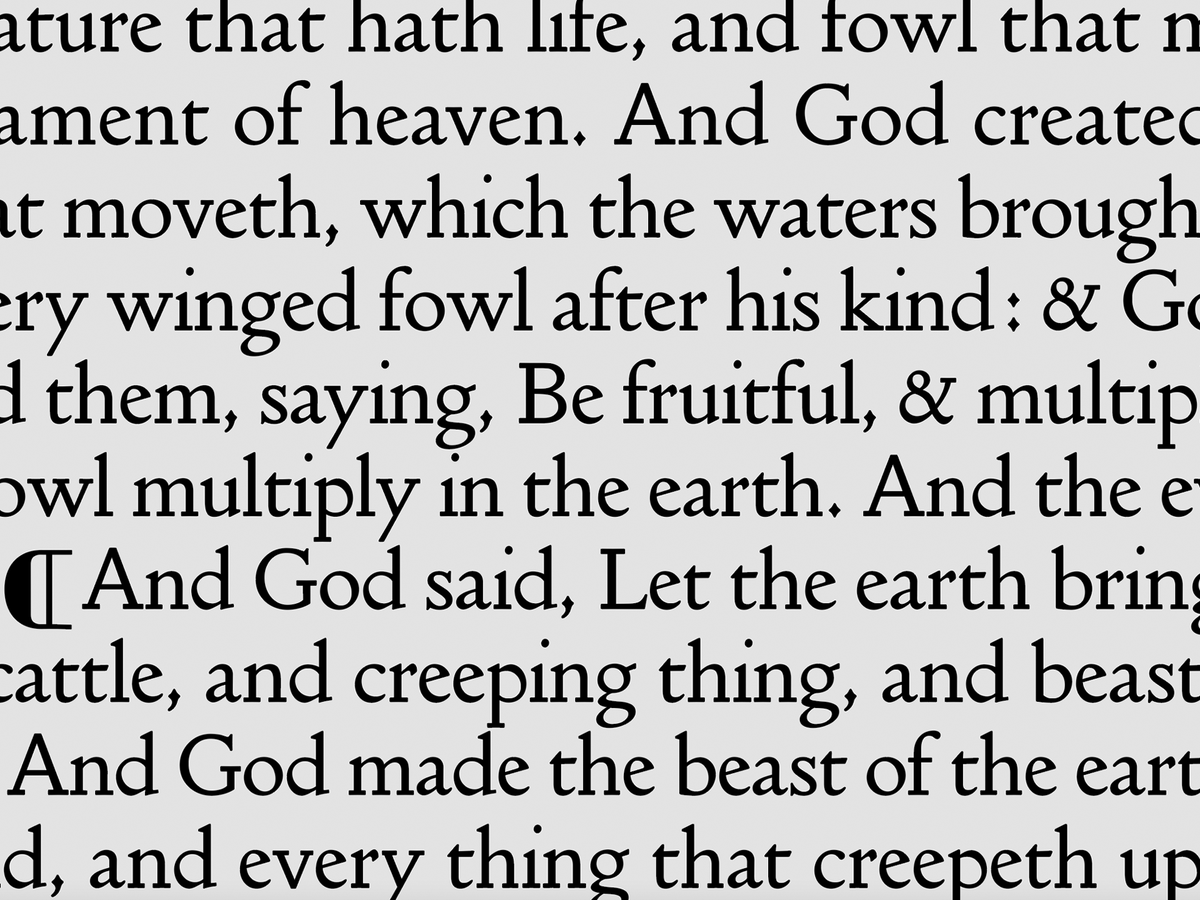
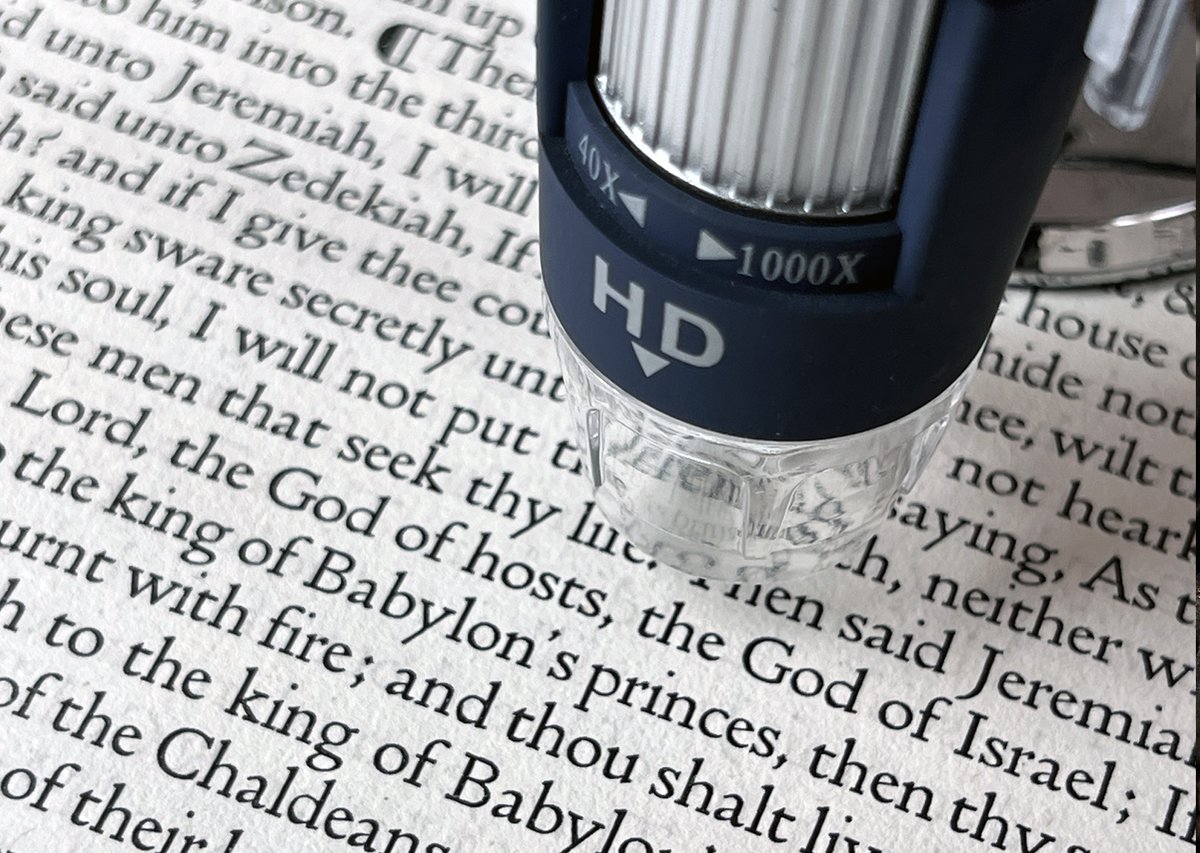
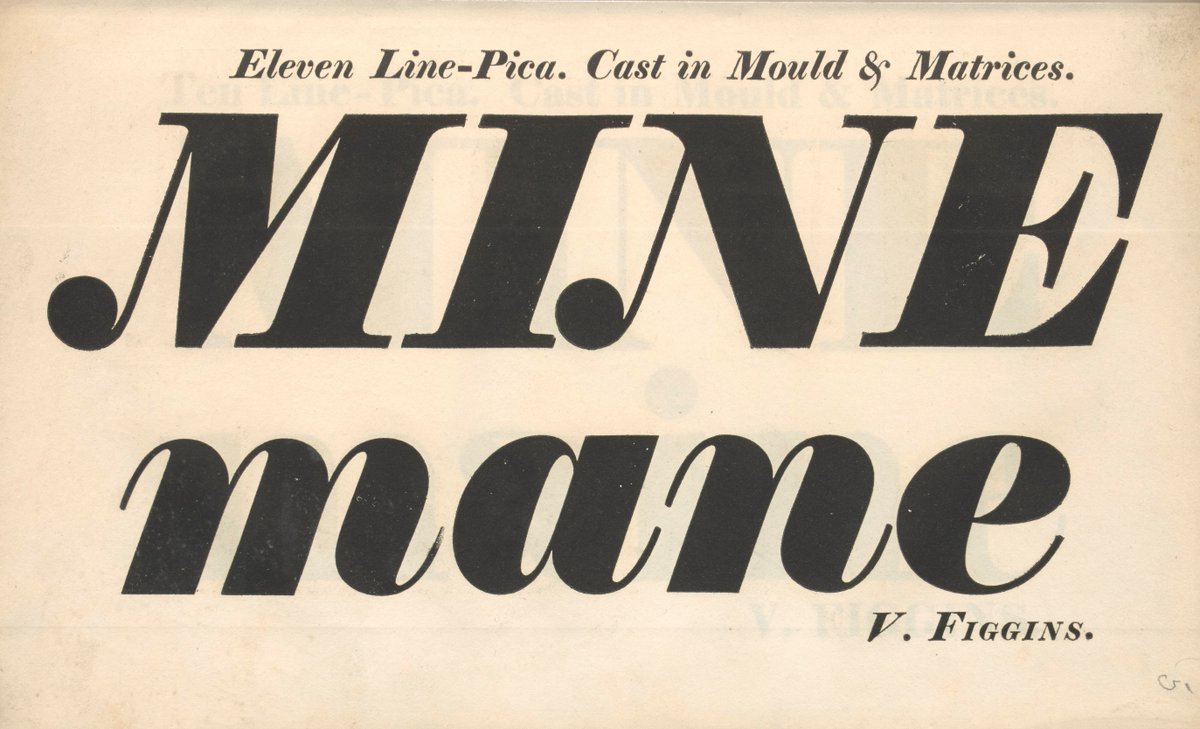
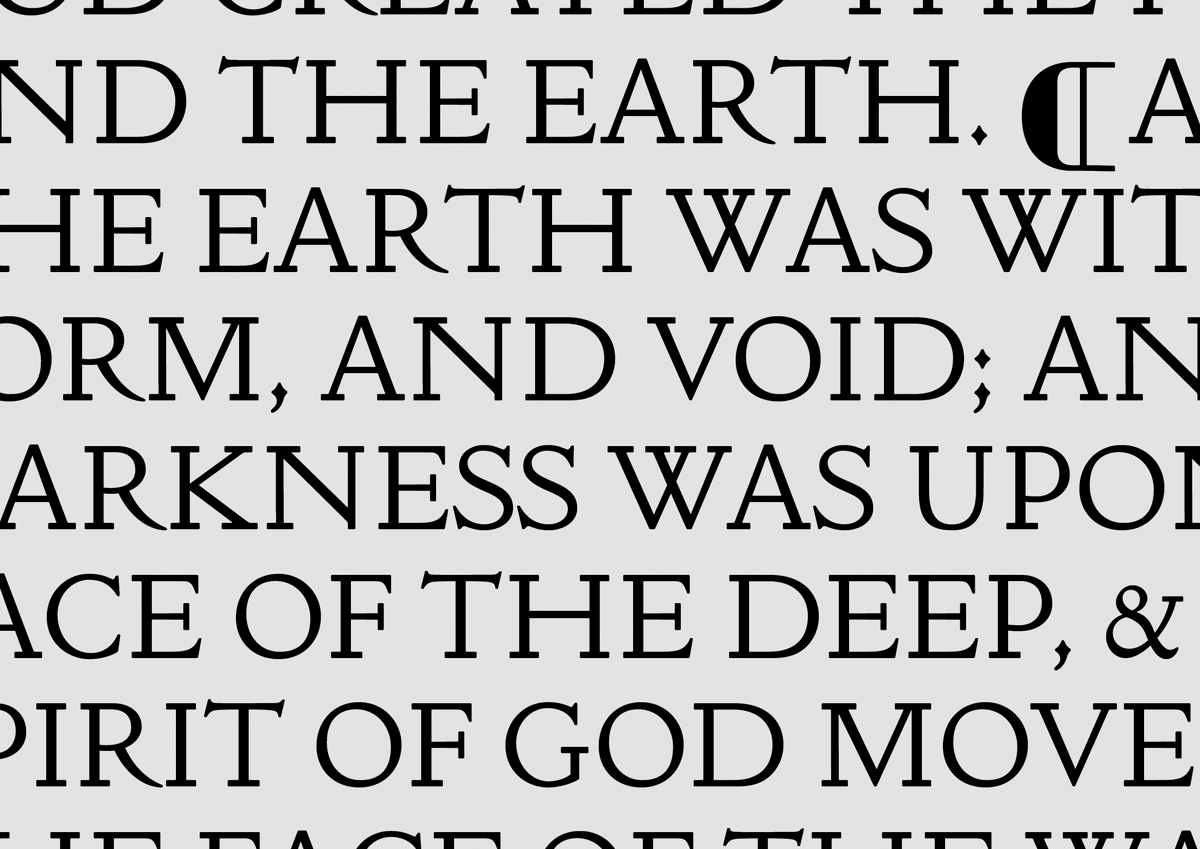
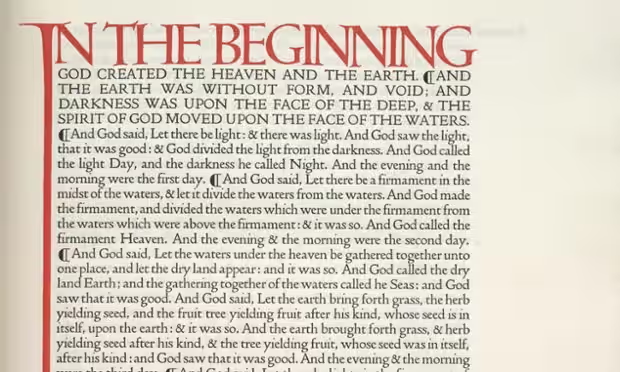
ICYMI, updated DOVES TYPE version 4 is now available at https://t.co/kCc6PBgvxk
There are now two fonts:
• DOVES TYPE TEXT for book/text sizes
• DOVES TYPE HEADLINE optically adjusted for larger sizes
The Machine Stops is a short story by E.M. Forster from 1909, voted one of the best short stories in science fiction.
It describes a world where humans live in isolation underground in identical pods, communicating with each other through an early internet, fearful of travelling any distance.
All the needs of the people are met by a giant machine. Over time they begin to worship it as God, forgetting it was built by people. Direct experiences of the world are shunned by the subterraneans as unnecessary and dangerous. Instead they use social media to communicate and to experience life, never leaving their solitary cell-like rooms.
The story focuses on two characters, Vashti and her son Kuno, who live on opposite sides of the world. Vashti is happy with her contemplative life and her virtual communications with others. However her son Kuno rebels and travels to the forbidden surface to see people living there in the wild. The Machine threatens Kuno with homelessness for his actions, but later he is moved closer to his mother where he prophesises the end of their world: "The machine... stops."
And then, of course, it does.
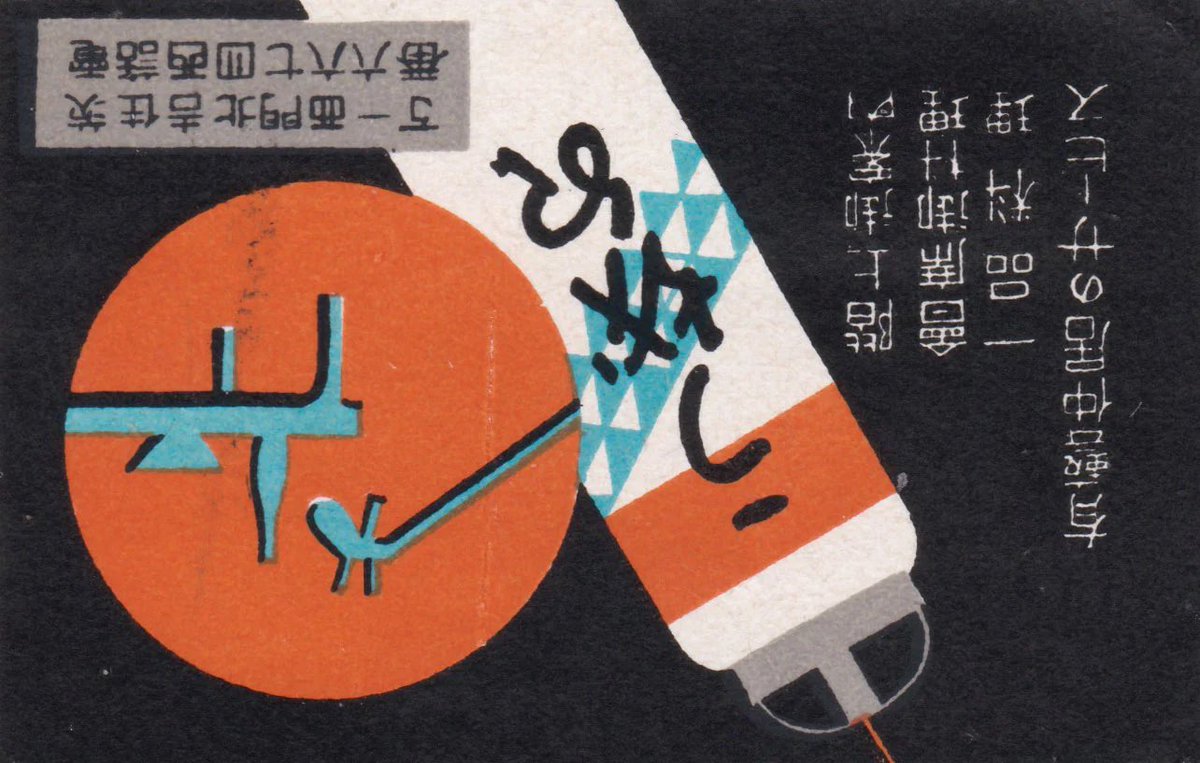
One of the few filmed versions of Forster's story was made in 1966 for Out Of The Unknown, the BBC2 science fiction anthology series. It was extremely challenging to produce, requiring a number of complex sets as well as a working monorail. However the result was intriguing: a futurism that also harked back to the Edwardian period - a fitting motif for Forster’s tale.
Featuring the work of José Luis García-López, the style guide was created in 1982 to standardise the look of the superheroes in the DC Comics universe, and has long been a sought after collector’s item https://t.co/ic9R68L1BF
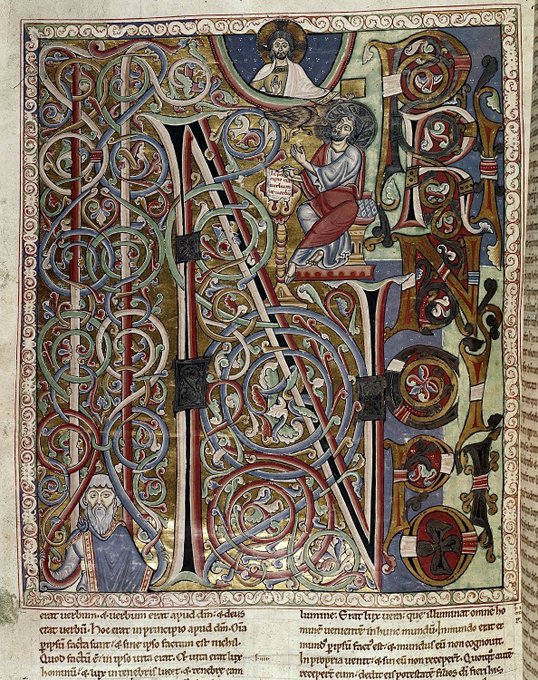
27th December is the feast of St John the Apostle and Evangelist who is depicted at the beginning of his gospel, sitting with his symbol, & writing the opening words of the gospel.
BL Harley MS 2799; the 'Arnstein Bible'; c.1172 CE; Germany, W. (Arnstein); f.185v @BLMedieval
@PulpLibrarian Basically there are some digital versions out there, including an opensource version that calls itself Davida, but I'm not sure if it's legit. But if you had the inclination, it could be done no problem
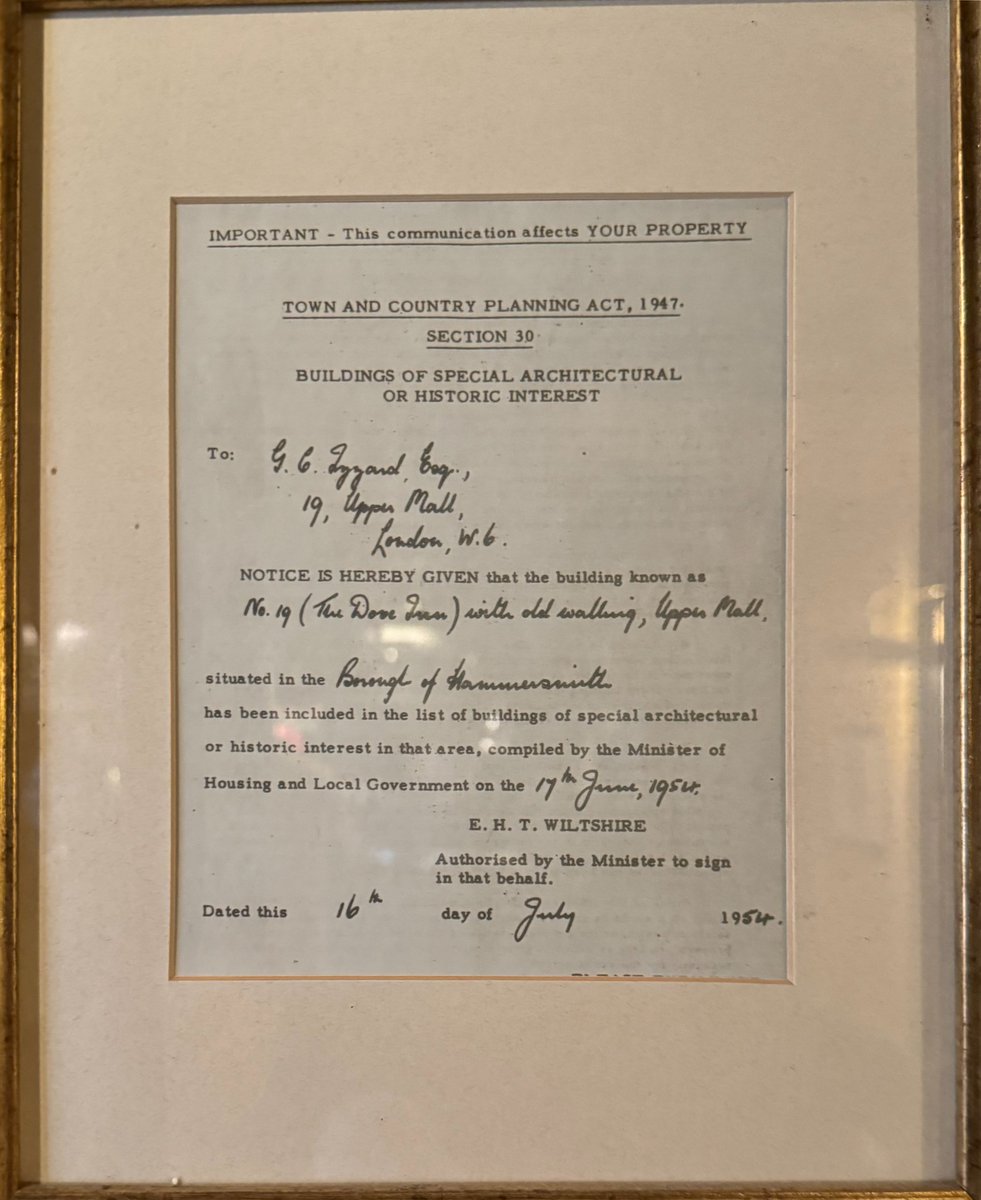
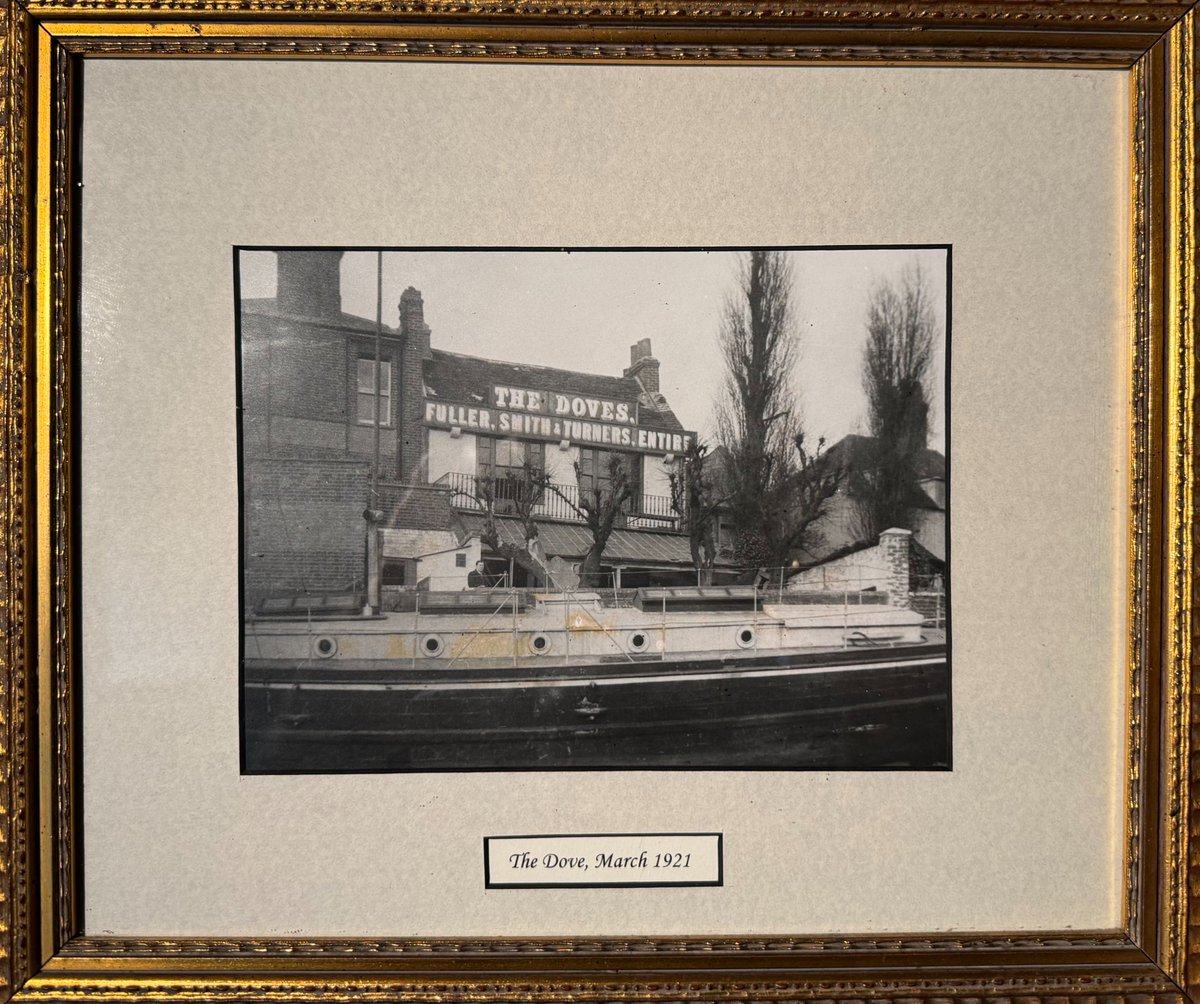
@justindquirk @OldLondonW14 I took these last time I was there, on walls around the front bar. The latest I could find when it was still The Doves was 1921 – there are a couple more, from 1897 & 1910. By 1954 it was The Dove. I asked the bar staff when the name was changed but they didn't know
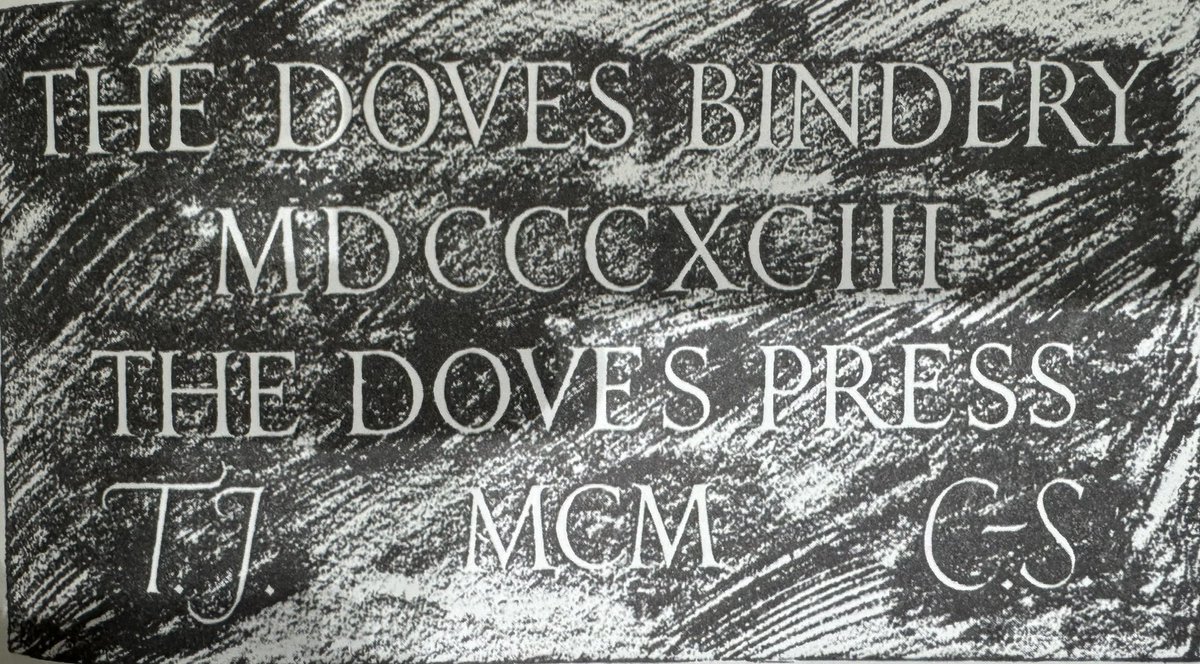
@justindquirk @OldLondonW14 Doves Bindery established next door, 15 Upper Mall, 1893. Doves Press was originally at 1 Hammersmith Terrace 1900. No 15 became the Doves Press & Bindery, 1909. Yes, named after the pub which changed from Doves to the Dove sometime between mid 192Os & ‘50s (idk when exactly)
I often feel this way walking around London, the feeling that people have been walking these streets for hundreds of years and still will be hundreds of years after I'm gone is so strong
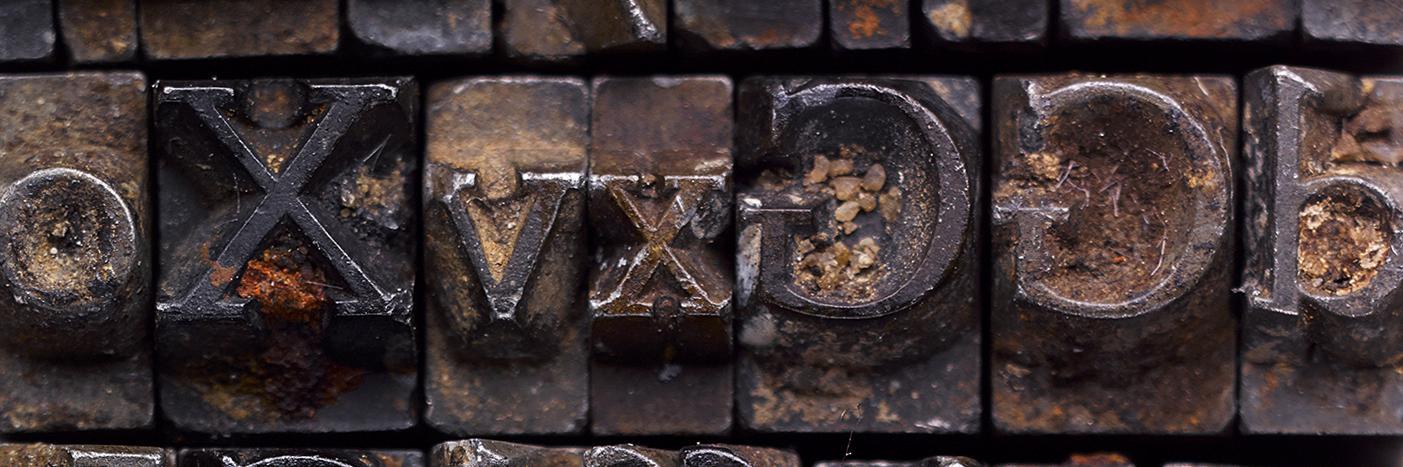
The Doves type I salvaged back in 2014 is still on display @EmeryWalker_org until the end of May. Nice piece on the show here from @artnet https://t.co/Dk4t8OvHXl
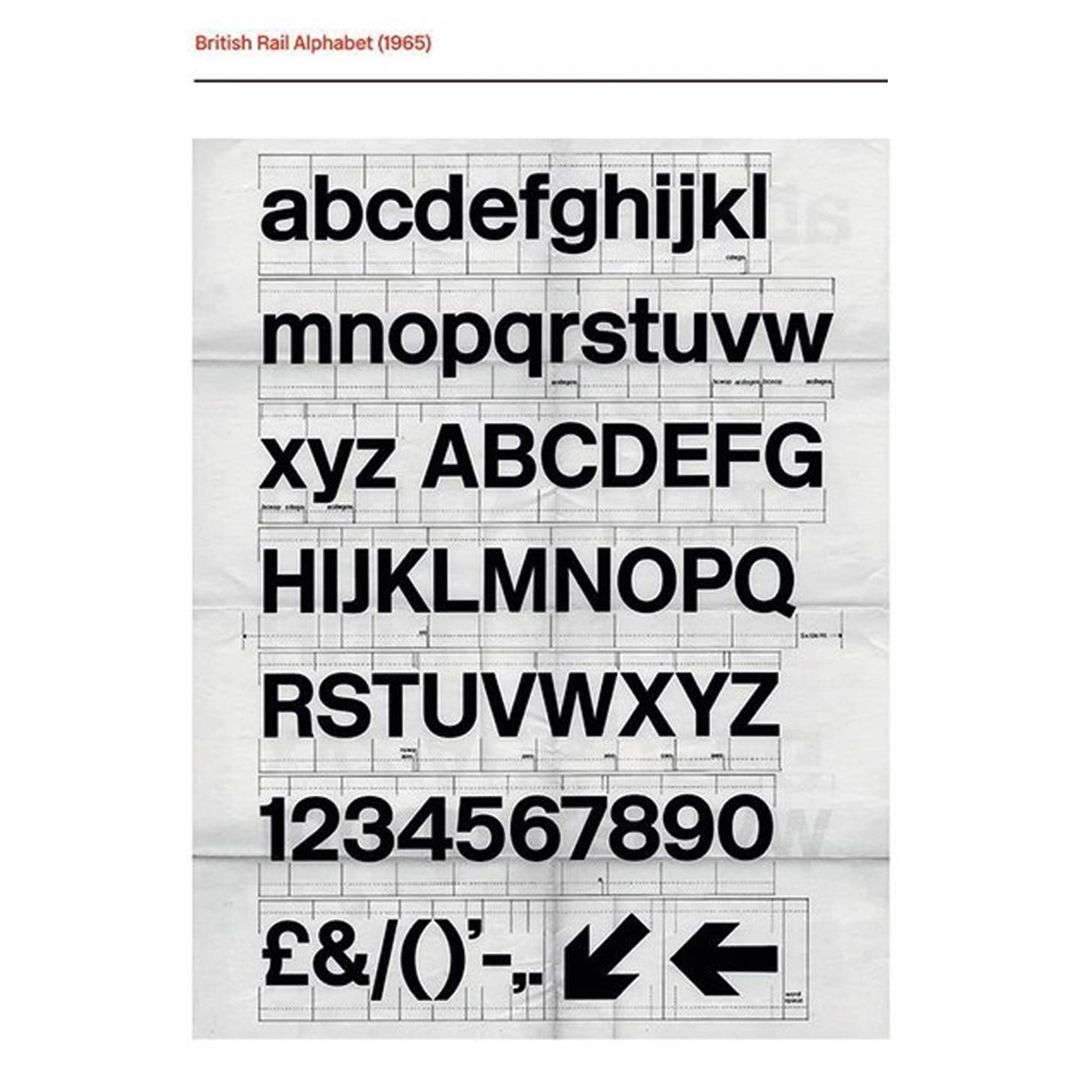
Happy birthday to British graphic designer Margaret Calvert, who was born #onthisday in 1936 🚸
Whether it is the design of the UK’s road signing system or wayfinding at railway stations and airports, Calvert’s work has shaped much of our national visual identity.