advances in imaging have revolutionised prostate cancer diagnostics, opening access to targeted non-invasive treatments like focal therapy https://t.co/KFH50duXfj
a reminder that prostate cancer diagnostics have advanced significantly rendering the PSA test a starting point from which further tests measure the scale & severity of disease with increasing accuracy https://t.co/wHY7luXMhp
The committee said it would continuously evaluate new evidence as it comes in, which could yet lead to wider screening programme https://t.co/5cBchZd0zl
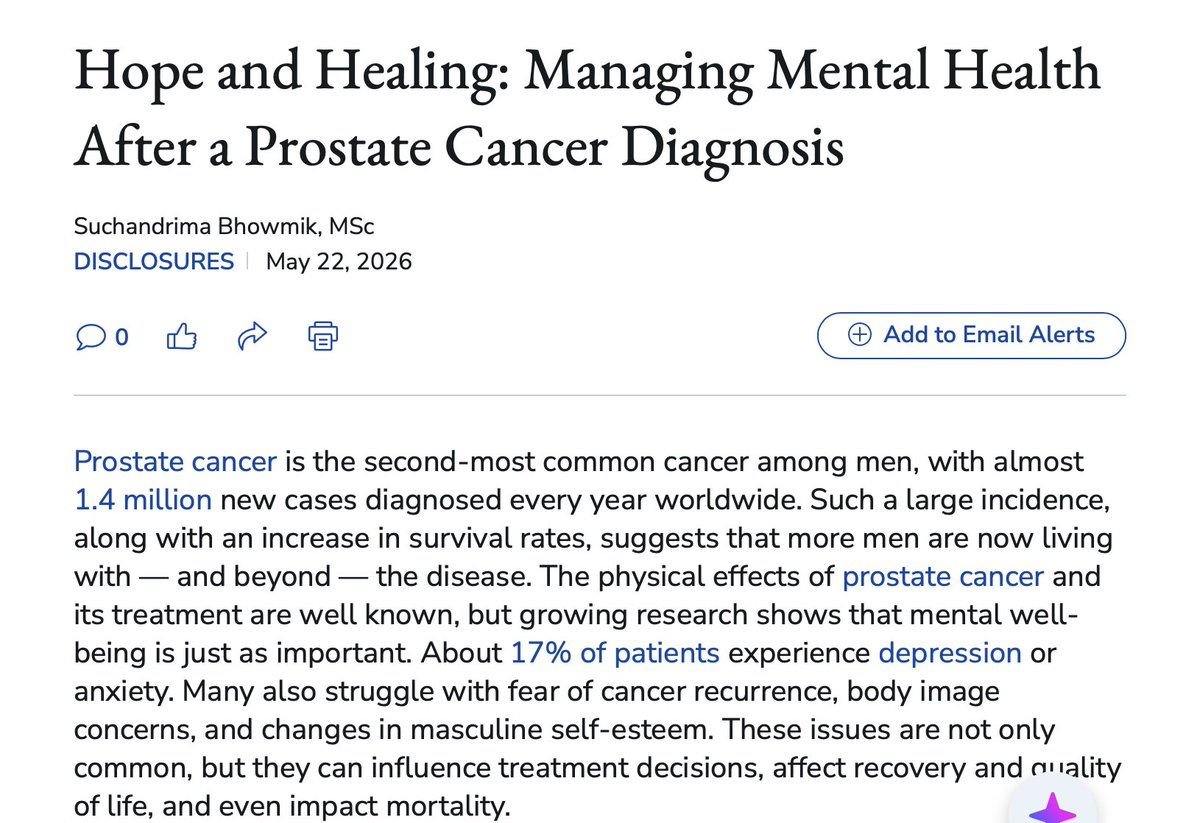
mental health struggles after a prostate cancer diagnosis are not only common, but they can influence treatment decisions, affect recovery and quality of life, and even impact mortality https://t.co/5d3apc5xAh
urine biomarkers estimate the chance of clinically significant cancer; they are best used in selected cases to support decision making, not replace other tests https://t.co/iEQQpIllKc
focal therapy is fundamentally about patient selection -
better imaging, improved biopsy techniques & a deeper understanding of tumor biology allows us to accurately identify which patients are ideal candidates @brunonahar https://t.co/YKh0Iloek7
8 in 10 men experience ED after certain prostate procedures.
Most never tell their doctor.
The cancer conversation has come a long way.
This one needs to catch up.
chatbots support patients in ways that many doctors find difficult - acting less diagnostician, more health coach @DrHelenOuyang https://t.co/LVIRd6HAlF
the success of cryoablation as a treatment modality depends on the tumour position & the clinical setting. The important point is that treatment should be matched to the cancer, not chosen because one technology sounds newer or more advanced https://t.co/PNvgitBvvg
analysis from @Telegraph@lauradonnlee shows just 28% of men received answers within target timeframe of 28 days, versus 67% for breast cancer https://t.co/f1gtsb5Pdm
Overall, patients appear to prioritize avoiding bowel and sexual side effects after prostate cancer treatment. However, a subset of older patients may have strong preferences against surgery or the prolonged use of a catheter @urotoday https://t.co/gcRuLRNy7q