@theoliveranwar I feel people always forget the fundamentals of weight loss is this^!!!
Energy balance determines body weight.
Intake vs. expenditure decides the direction.
@amandaperera The first thing I learned when doing nutrition was:
Nutrition isn’t about extremes.
Too much damages.
Too little weakens.
Balance sustains.
@paulsaladinomd Why hydrate after taking creatine?
Creatine pulls water into muscle cells to improve performance.
If you don’t hydrate properly:
• You may feel bloated
• You may cramp
• Performance can drop
Creatine works best when your hydration is on point.
@hannahapexfit Mindset for weight loss & fitness:
Stop chasing intensity.
Start chasing consistency.
You don’t need perfect days.
You need repeatable habits.
Train to build strength.
Eat to support recovery.
Sleep like it matters.
Results follow discipline, not motivation.
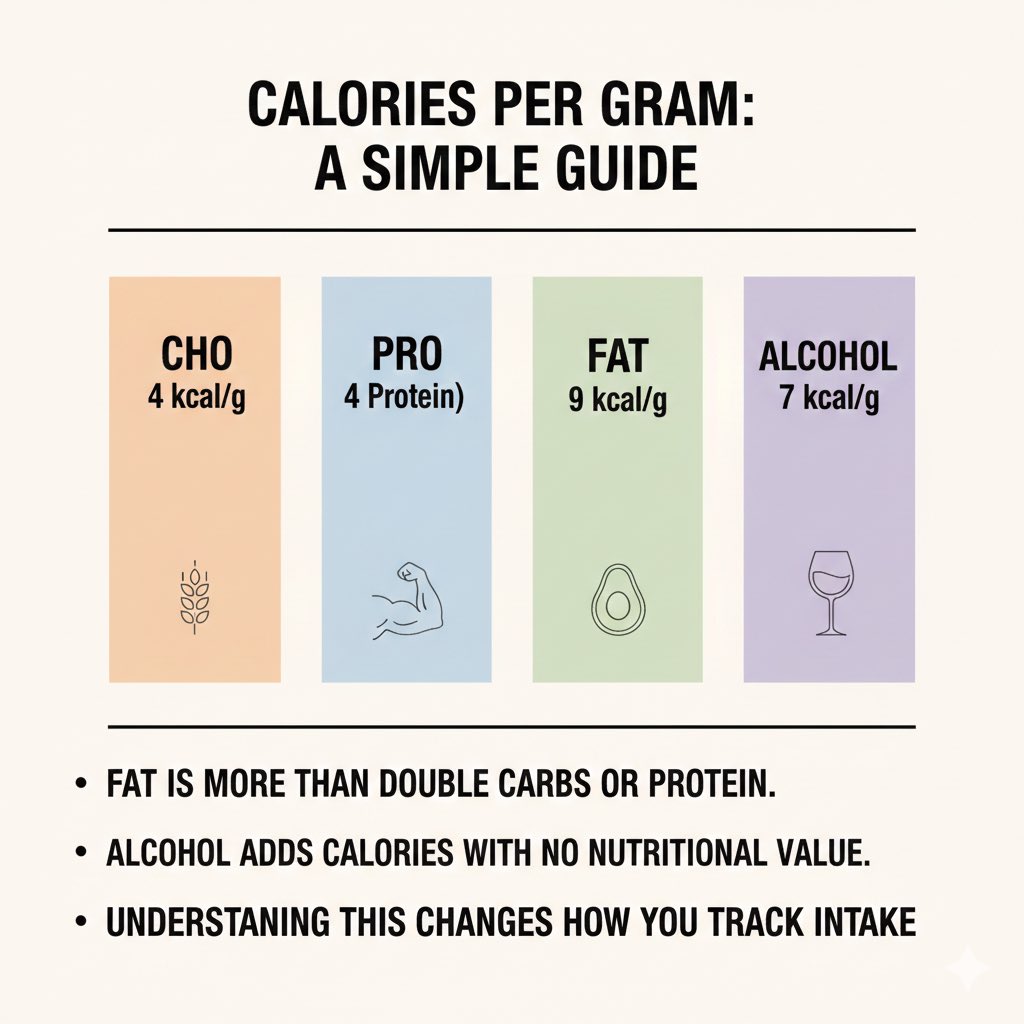
Calories per gram:
CHO (Carbohydrates) – 4 kcal/g
PRO (Protein) – 4 kcal/g
FAT – 9 kcal/g
Alcohol – 7 kcal/g
Fat is more than double carbs or protein.
Alcohol adds calories with no nutritional value.
Understanding this changes how you track intake.
#health#Nutrition
@Fitness_G0d Why you need high-fiber foods in your diet:
• Improves digestion and bowel regularity
• Keeps you fuller for longer
• Slows blood sugar spikes
• Supports gut health
@_AshleyRichmond Protein every meal + early sleep + strength training = better weight loss.
Why?
• Protein increases fullness and preserves muscle
• Sleep regulates hunger hormones and recovery
• Strength training maintains muscle and metabolic rate
@dr_ericberg Best seafood for brain health:
• Salmon – rich in DHA (key brain fat)
• Sardines – high omega-3, low mercury
• Mackerel – very high omega-3
• Oysters – high in zinc for nerve function
Aim for fatty fish 2–3x/week.
Your brain runs on what you feed it.
@_AshleyRichmond Why add salt to water?
• Replaces sodium lost through sweat
• Supports hydration and muscle function
• Can help prevent dizziness during long workouts or heat
Agreed especially on the white rice!!
White rice is high GI → raises blood glucose quickly.
For diabetics, that rapid spike can be harder to manage and may lead to larger insulin demands.
Frequent spikes make blood sugar control more difficult over time.
your 30s pre-diabetes checklist:
- stop eating like you're 19
- shed 5-10% body weight (usually more)
- white rice in high quantity isn't "healthy" just because it's clean source
- lift heavy 3 times a week (build muscle)
- walking 10k steps doesn't undo 5 rotis
- bakery snacks should not be a part of your routine
- moderate your carbs (immediately)
- eat veggies and fiber before you touch the roti
- keep protein in each meal
- clock 7-9 hours of sleep (non negotiable)
don't take it lightly if your blood work is already haywire. don't procrastinate. act immediately. start small but start.
As we age, muscle loss increases.
Severe loss can lead to sarcopenia — common in older adults.
Light resistance training + adequate protein intake
can significantly slow this decline.
Move your body.
Protect your muscle.
@dr_ericberg Folic acid (a B-vitamin) is crucial in early pregnancy for proper spinal cord and brain development.
✅ Typical recommendation:
Women who are planning pregnancy or could become pregnant are advised to take 400–800 mcg (0.4–0.8 mg) of folic acid daily.
Caffeine: helpful or harmful?
Pro:
Boosts focus, energy, workout performance.
Can slightly suppress appetite.
Con:
Can disrupt sleep, raise anxiety, and build dependence.
It’s also mildly diuretic — meaning it increases urine output.
Dose and timing matter.
New to dieting?
Prioritise protein.
Eat mostly whole foods.
Stay consistent.
That’s enough to start.
Starting with protein will achieve satiety faster -> reducing Carb Intake
Common weight loss mistakes that keep people stuck:
• Eating too little → leads to low energy & overeating
• Only doing cardio → no muscle support
• Strict weekdays, reckless weekends
• Changing plans too often
• Relying on motivation
#Weightloss isn’t complicated.
@CoachDanGo If you’re not losing weight, you’re not in a calorie deficit.
Different bodies don’t break the laws of thermodynamics.
Metabolism can adapt.
Water can fluctuate.
Hormones can influence appetite.
But sustained energy deficit = weight loss. Always.