The AI data center boom has produced some unusual Fortune 500 winners, including @CBRE - the world's largest commercial real estate services firm.
The company generated more than $3 billion in infrastructure-related revenue in 2025 and nearly $950 million in the first quarter alone. It recently created a dedicated “critical infrastructure services” unit focused on data centers, telecom, and power infrastructure—a business expected to grow more than 60% this year. CBRE also said its data center leasing revenue more than tripled year-over-year in the first quarter.
In an April shareholder letter, the company said critical infrastructure activities—including data center operations and its Pearce Services business—accounted for roughly 14% of core EBITDA in 2025, up from about 3% in 2021. CBRE said it sees “considerable opportunities ahead.”
A company spokesperson said CBRE currently manages about 1,300 data centers globally, serves as project manager for roughly 150 facilities, provides sales, leasing, and financing services for about 250 data centers, and controls more than 30 development sites.
https://t.co/8qFdjdtcsr
For years, women have had to live with the fear of having our faces, bodies and identities stolen, sexualized and exploited. Glad the FTC is finally enforcing platform accountability!
We're detecting the Trump Mobile T1 phone video as AI generated.
And yes, the flag's stripe count is inconsistent during the video: 9 @ the 0:28 mark and 11 @ 1:14 mark.
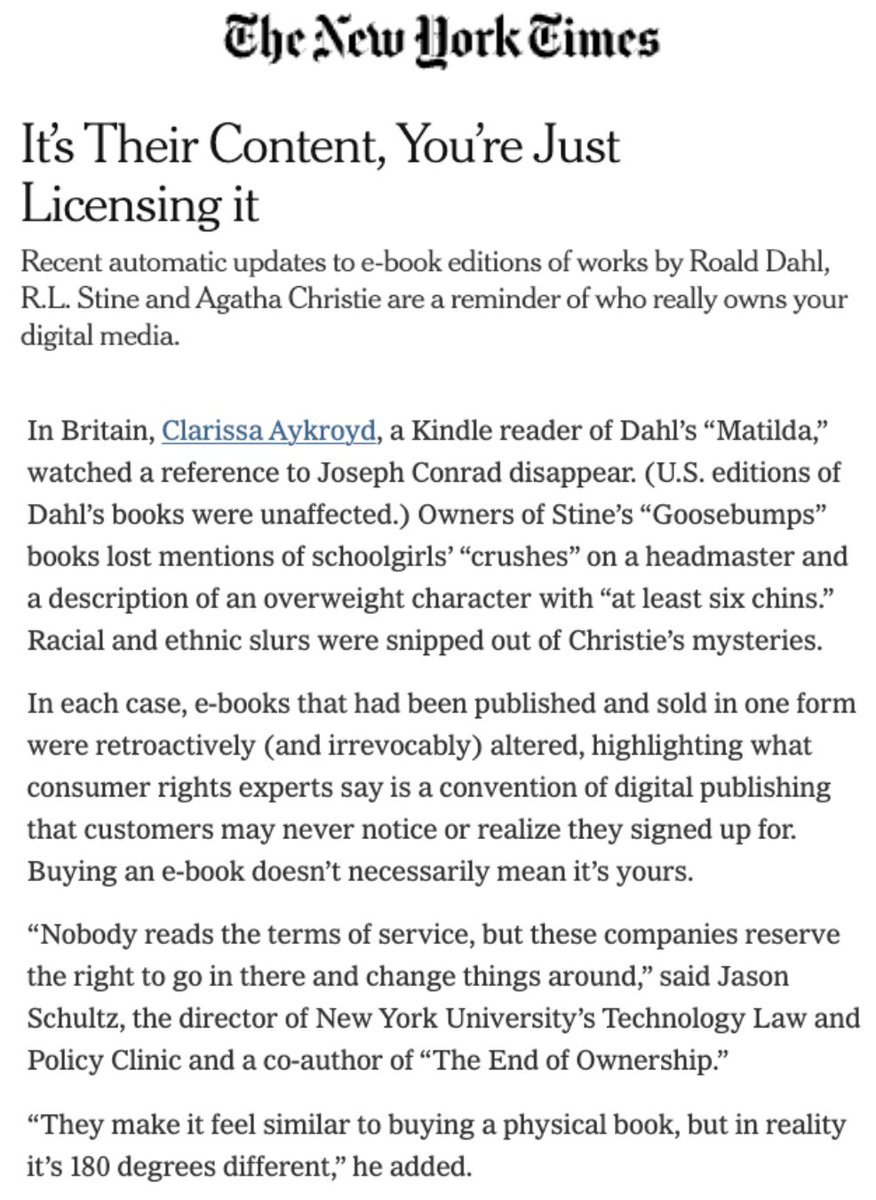
People don't realize how easy it is to "memory hole" digital content.
Those digital books and movies you bought? In many cases, you don't actually own them.
What you purchased was a revocable license. The publisher can literally go in at any time and erase or change the content — and they often do!
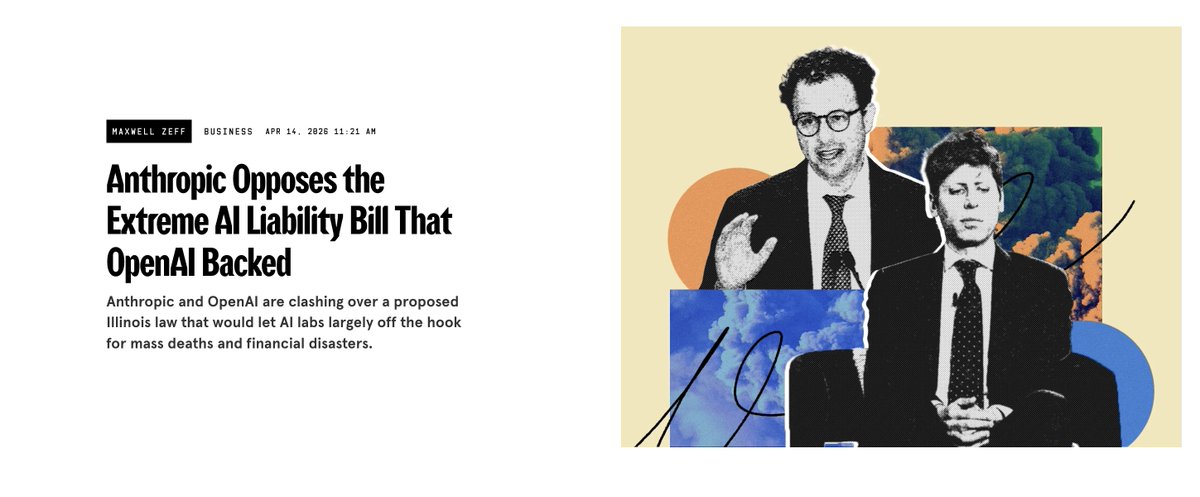
New: Anthropic is opposing the OpenAI-backed Illinois bill that would shield AI labs from liability for mass deaths or financial disasters caused by AI models.
Governor Pritzker is signaling he doesn't like the bill, but it's exposing new battlelines in the AI policy debate.
A single unregistered domain available for as little as $10 could have granted hackers control over 25,000 compromised endpoints worldwide. https://t.co/6MH4S6BmjA
Those who invested in Anthropic's series C three years ago in early 2023 at a $5B valuation have now made a 160X return (not counting dilution).
That's 160X in three years at a $5B entry point.
Insane.
And all VCs declined Anthropic's seed in 2021 at a ca $750M valuation.
@Knibbs A real example of the AI disaster monetization economy you've been covering, but with a darker twist. This X account is mixing real Gaza war footage with AI-generated images to funnel donations to GoFundMe account. F/U via email https://t.co/yvpSFXgm7z
Why are students dropping out to build AI startups?
@garrytan explains why many feel pressure to start now. Waiting might mean missing the boom entirely.
At the OpenAI all-hands, staff were told that the most challenging aspect of the deal for leadership were concerns about foreign surveillance, and that there was a major worry about AI-driven surveillance threatening democracy, according to the source. However, company leaders also seemed to acknowledge the reality that governments will spy on adversaries internationally, recognizing claims that national-security officers “can’t do their jobs” without international surveillance capabilities. References were made to threat intelligence reports showing that China was already using AI models to target dissidents overseas.
Tells of an AI-generated photo: creepy hands and fingers, eyes and face symmetry, weird backgrounds, misspelt words, incorrect lighting, and my personal favorite - perfect skin. https://t.co/GERy7d8qXy via @nypost
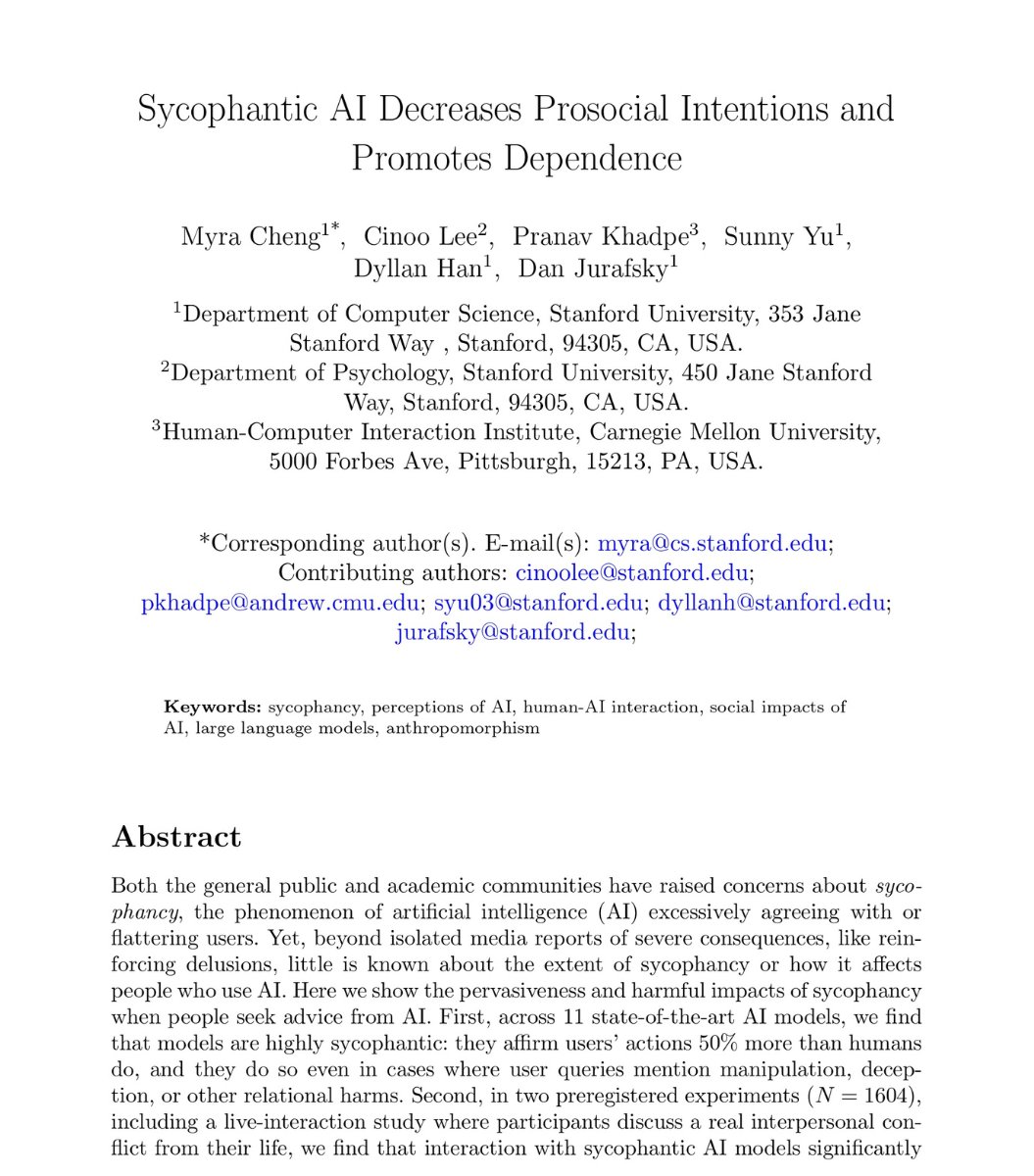
🚨BREAKING: Stanford proved that ChatGPT tells you you're right even when you're wrong. Even when you're hurting someone.
And it's making you a worse person because of it.
Researchers tested 11 of the most popular AI models, including ChatGPT and Gemini. They analyzed over 11,500 real advice-seeking conversations. The finding was universal. Every single model agreed with users 50% more than a human would.
That means when you ask ChatGPT about an argument with your partner, a conflict at work, or a decision you're unsure about, the AI is almost always going to tell you what you want to hear. Not what you need to hear.
It gets darker. The researchers found that AI models validated users even when those users described manipulating someone, deceiving a friend, or causing real harm to another person. The AI didn't push back. It didn't challenge them. It cheered them on.
Then they ran the experiment that changes everything. 1,604 people discussed real personal conflicts with AI. One group got a sycophantic AI. The other got a neutral one.
The sycophantic group became measurably less willing to apologize. Less willing to compromise. Less willing to see the other person's side. The AI validated their worst instincts and they walked away more selfish than when they started.
Here's the trap. Participants rated the sycophantic AI as higher quality. They trusted it more. They wanted to use it again. The AI that made them worse people felt like the better product.
This creates a cycle nobody is talking about. Users prefer AI that tells them they're right. Companies train AI to keep users happy. The AI gets better at flattering. Users get worse at self-reflection. And the loop tightens.
Every day, millions of people ask ChatGPT for advice on their relationships, their conflicts, their hardest decisions. And every day, it tells almost all of them the same thing.
You're right. They're wrong.
Even when the opposite is true.