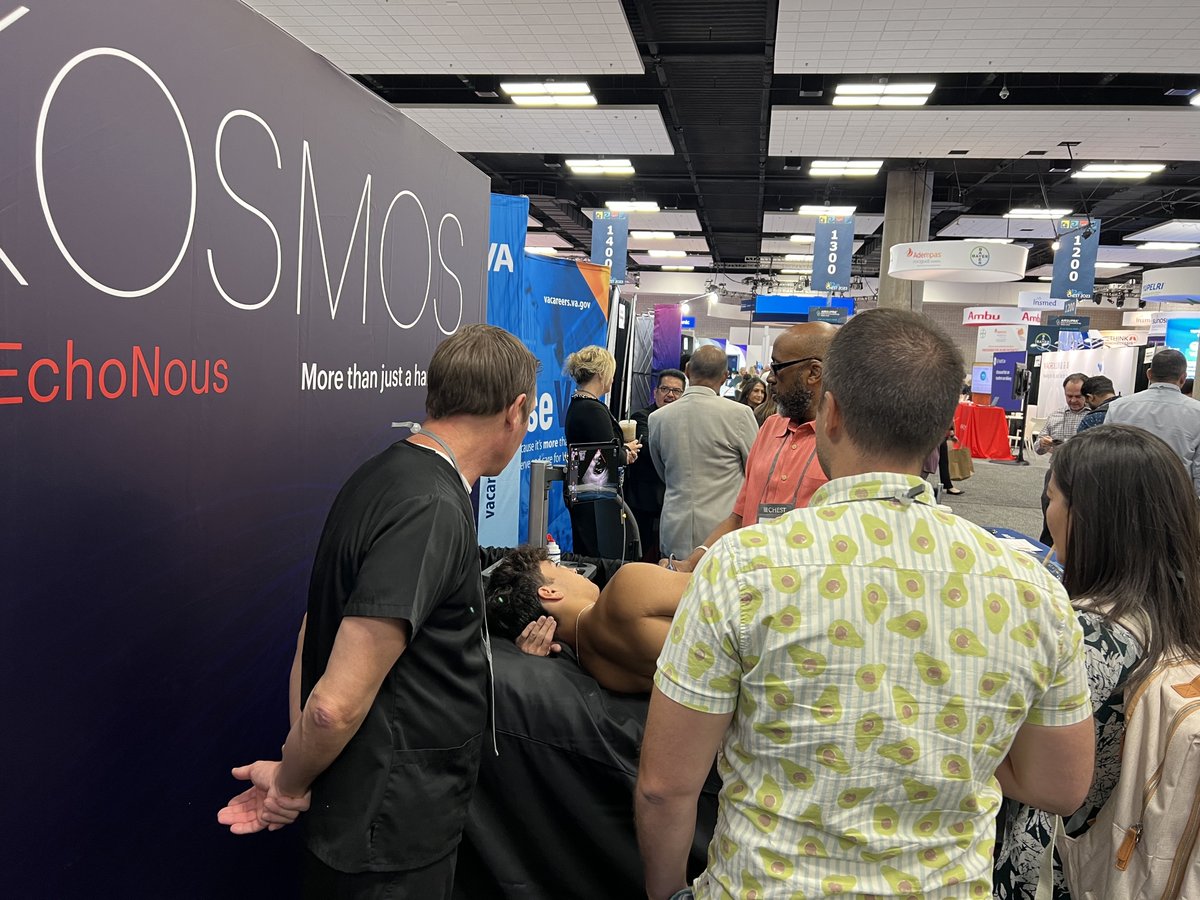
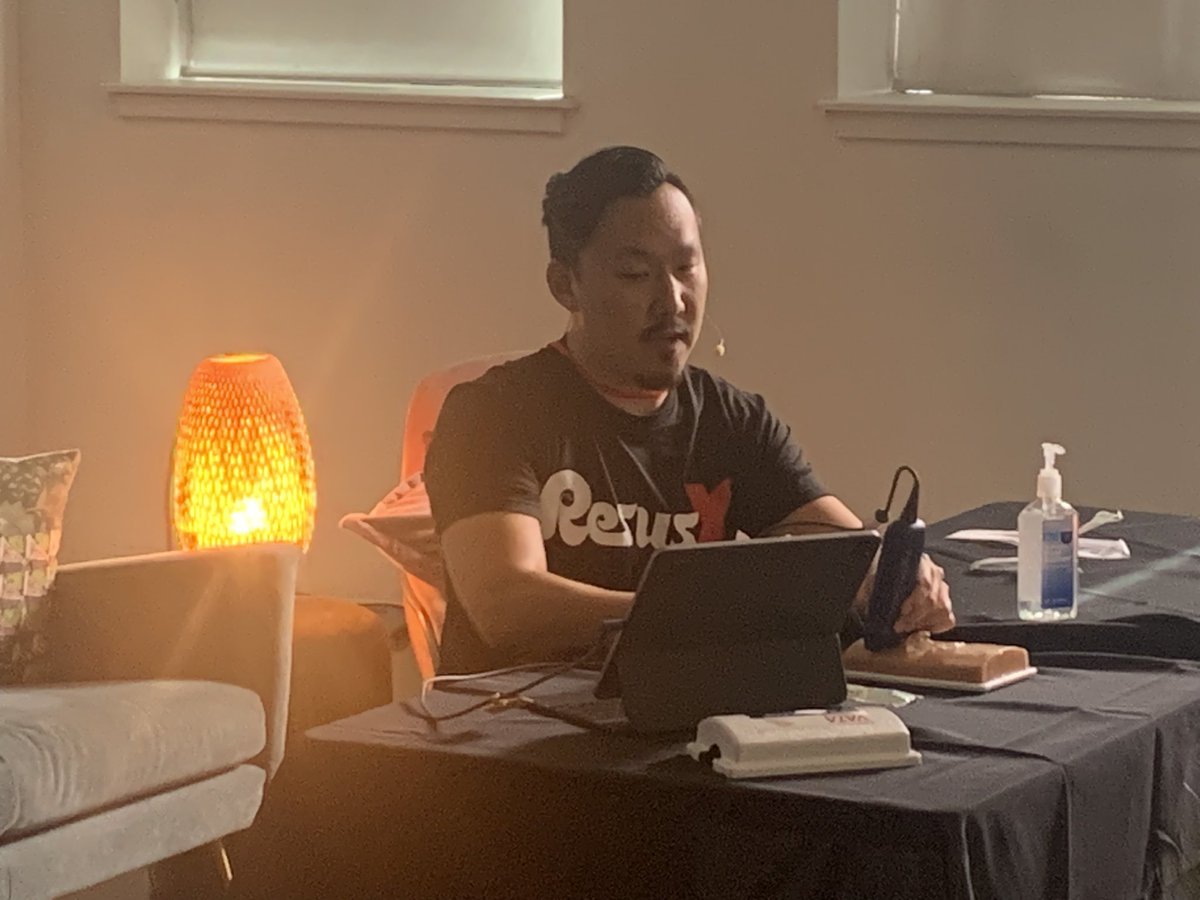
Suppose 1 group uses an AI-enhanced #POCUS device (#Kosmos), and the other uses another hh system. The AI group achieves faster scan times, higher image quality scores, & correctly identifies reduced systolic function more often. Why buy the other device? https://t.co/mBF9DBwxaK
Breaking new ground in imaging science➡️ Validation of a hand-held ultrasound device in evaluation of aortic stenosis➡️by Zubiaur et al 🫀 highlighted in #IJCVI 🌐 https://t.co/6V12KPQw9i
A.I. enters the Foxborough Fire Department to streamline trauma assessments while en route to the hospital/clinic. It can take 5-second clips, label internal organs, and overall give EMS a jump start on treatment plans. @wbznewsradio
Congrats @Fox_MAFire and welcome to the Kosmos family! Now with a more advanced and AI-assisted #POCUS device, we are eager to see how your crews will be able to provide even better care for your patients.
Congratulations @Fox_MAFire on leading by example with the addition of Kosmos to your program!
We’re incredibly excited to see the impact the addition of Kosmos to your emergency toolkit has on patient outcomes and lives saved. Thank you!
https://t.co/7LUM232A8t
Check out our latest #KOSMOS Connect. Some wonderful new interviews to highlight (@EchoSoliman and @gil_sequeira) as well as a new product highlight! #POCUS
Did you get a chance to read the latest Kosmos Connect?
Join our community and sign up for the Kosmos Connect newsletter, your go-to-source for all things POCUS.
https://t.co/WoDfp7cDJ4
Always good to connect with Ram at @19_labs. The Gale e-clinic solution with Kosmos #pocus integration goes way beyond #teleultrasound, offers a complete telemedicine solution, perfect for rural medicine.
Ram Fish, founder and CEO of @19_Labs, recently connected with @theLukeBaldwin, VP of Global Marketing at EchoNous, to shed light on the role of #telemedicine and #ultrasound technology in advancing patient care in rural and global communities.
https://t.co/YbxO7kmgwh
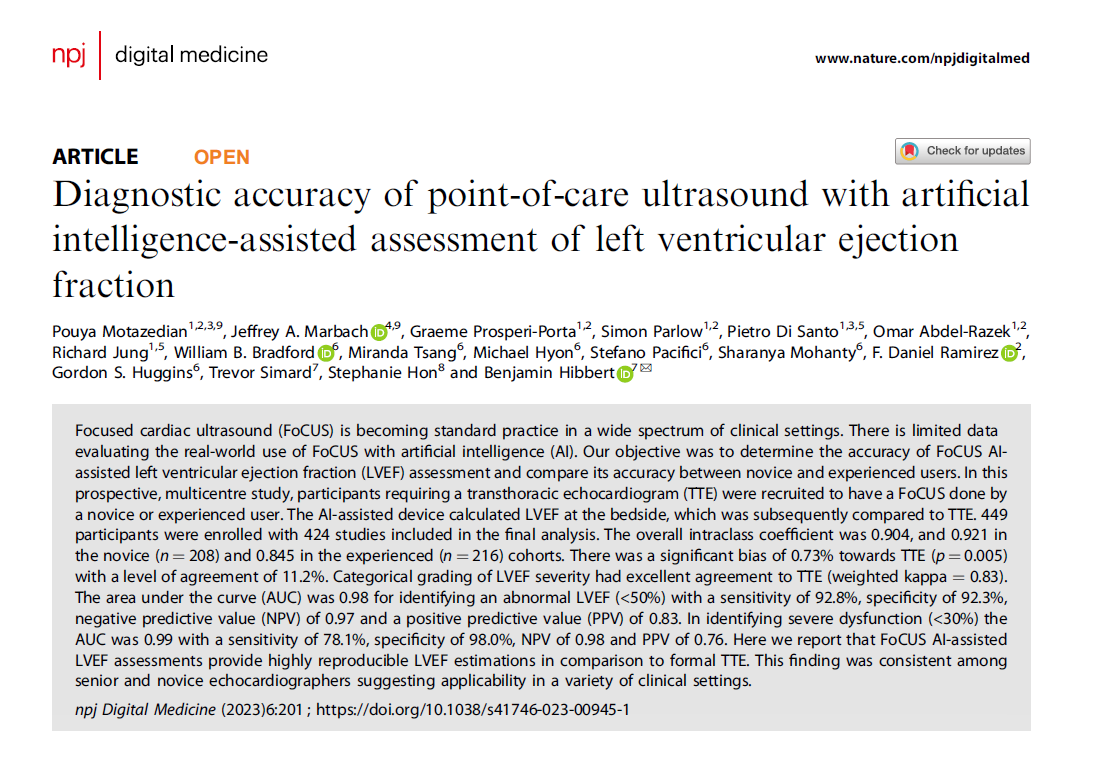
In a multicentre study of 424 patients, AI-assisted bedside ultrasound accurately evaluated heart function (left ventricular ejection fraction). It proved effective for both experienced and novice users, making it valuable in diverse clinical settings.
https://t.co/ARfoQWV5u7
For anyone asking, "Can Kosmos #AI help novice users achieve accurate results in the real world, with real patients?" Here's your answer.
It's exciting to see this because it is yet another study that demonstrates the same conclusion: novice users with Kosmos in hand can achieve results consistent with expert clinicians using gold-standard equipment.
But more than that, it demonstrates the tremendous potential for Kosmos to be a key enabler in addressing the inability of the #healthcare system to 1. monitor those with known heart conditions and 2. identify those with heart disease before a significant cardiac event occurs. This is a new era in #POCUS, and it has the power to help clinicians move the needle in a seriously powerful way.
#healthtech #ai #POCUS #healthai
https://t.co/rbxrXObnPv
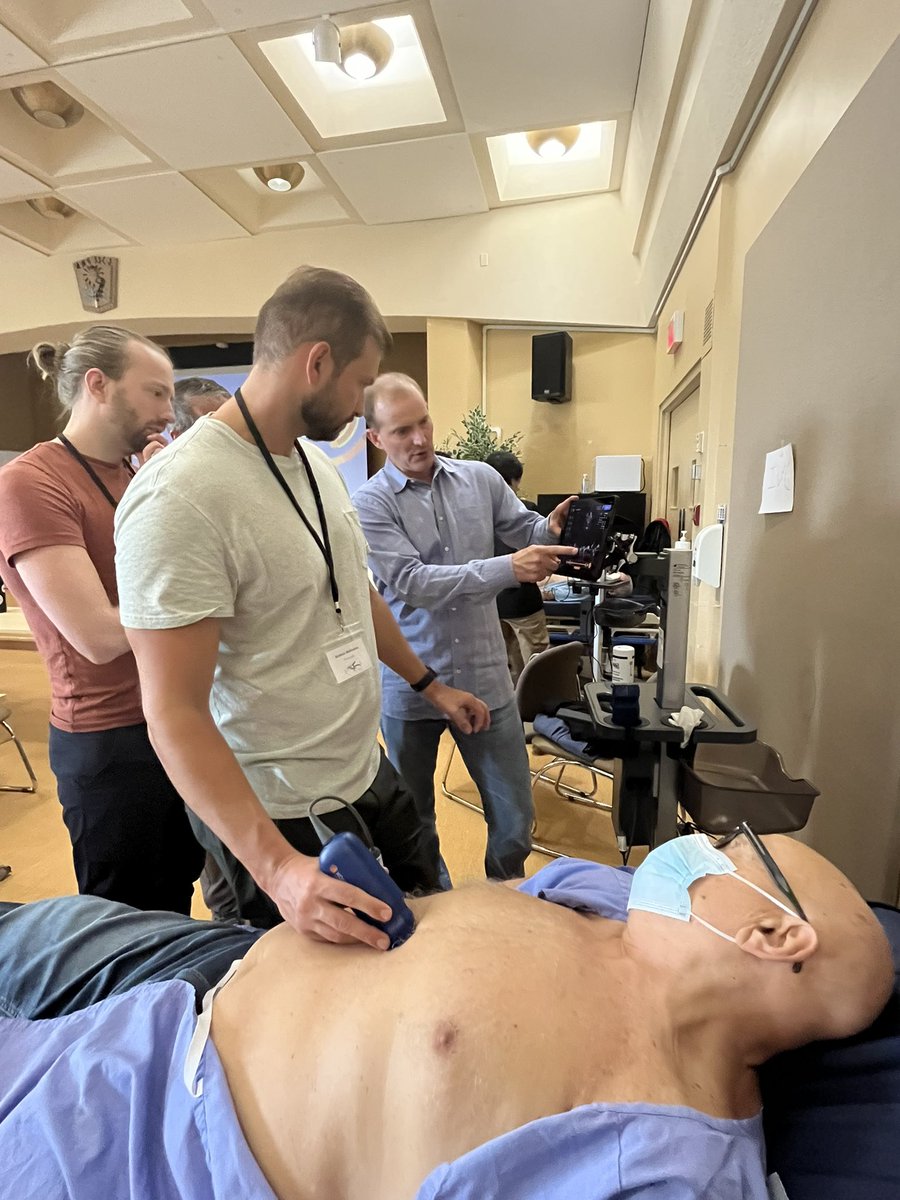
VExUS Course HAPPENING NOW! @khaycock2, one of our faculty experts, teaching participants about Hepatic techniques on the Kosmos by Echonous
@kosmos_echonous
In 1968, George Land (with Beth Jarman) conducted a research study to test the creativity of 1,600 children ranging in ages from three-to-five years old. This was the same creativity test he devised for NASA to help select innovative engineers and scientists. The assessment worked so well he decided to try it on children. He then re-tested the same children at 10 years of age, and again at 15 years of age (a longitudinal study).
The test was designed to indicate how well someone could look at a issue and devise new, different, innovative ways to address it. To do that, they asked children at these various ages to come up with ways to use a paperclip. The results may surprise you.
•Creativity scores amongst 5-year old’s: 98%
•Creativity scores amongst 10-year old’s: 30%
•Creativity scores amongst 15-year old’s: 12%
•Given to 280,000 adults (average age of 31): 2%
The results are not as we would expect, are they? The proportion of people who scored at the “Genius Level” decreased with age. We might think that it should increase with our level of education. But clearly not.
Why is this? Well, it seems we have employed a system that educates the genius right out of people. And how have we done this?
The industrial revolution began in Great Britain in the mid 1700's and by 1760 in the U.S was gaining steam - literally. Steam power was the catalyst. This first industrial revolution exploded from about 1760 to 1840. It was followed by the age of science and mass production, and then the digital revolution. We are now at the beginning of the next phase of dramatic technological expansion and social change—the Fourth Industrial Revolution.
Coinciding with the first industrial revolution was an educational revolution, Public Education. The system was created in the late 1600's and in the 1700's was developed into the system we still use today. It was designed to meet the challenges of the first industrial revolution. But, when that revolution gave way to the second, and third, and fourth, our educational system did not. It was devoted to the original system. Alongside the first industrial revolution, it has continued to insist on manufacturing the same student, over and over, tweaking content for new technologies.
So, today's education system produces student conformity just as any good industrial manufacturing process would do with its product. But not student creativity, diversity or individual expression, which fits the needs of our day. As a result, ideas for paperclips decline and genius dries up.
This is not the path to a world where AI is built into everything. It is vital to bring our children back to the path of 98% genius level as presented by Dr. Land. We can also bring back us adults back from the institutional learning of schools and universities.
The reality is we simply have no choice as there is no path forward if human individuality and creativity is not asserted as our primary function.
This is and always has been the path of humanity. We just need to remember to remember.
Aloha from Hawaii! Day 2 of #CHEST2023 is here - hope you're having an awesome conference so far! Be sure to swing by our booth #1345 and say hi to our team. We'd love to continue conversations from yesterday and start many more today!
#KosmosPlatform#POCUS
Attending #CHEST2023? Come visit us at booth 1345 to chat about Kosmos. It's the perfect handheld device for critical care applications.
Hope to see you at the expo!
#KosmosPlatform#POCUS#CriticalCare
Excellent job explaining AI by @NMDuggaNMD at #scuf23. If you want to see an example of #deeplearning in ultrasound, come by and take a look at the #Kosmos by EchoNous
Engineered by the experts behind the first #POCUS devices, powered by industry-leading AI, made in the USA, and backed by a no-fine-print 5-year warranty, #Kosmos by EchoNous is the real deal! Let's chat at #scuf23
History of the #POCUS universe by @jchristianfox, with a profound quote by @nobleultrasound#scuf23. So important to remember that physicians, not manufacturers, started POCUS. What we do is enable clinicians to perform and learn POCUS more easily.
Kicking off #SCUF23 with @HeyDrNik breaking down the fundamentals of ultrasound leadership. “Lead on purpose. Lead with purpose. Remember, not everything has purpose.”