@MarioNawfal There is no fighting between Eritrean Army and ENDF. It is all propaganda.
Please use the correct map and check the facts on the ground to provide your audience genuine information
ERITREA: ANCIENT AND NEW
A Thursday Reflection
#Eritrea is mourning the passing of His Grace Abune Lucas, Administrator of the Office of the Patriarch, Member of the Holy Synod of the Eritrean Orthodox Tewahdo Church and Archbishop of the Southern Region, Adi-Keih. His passing is a moment of sorrow for the faithful and the wider Eritrean community.
It also draws attention to the enduring place of the Church, its spiritual institutions and their custodians in our country's history. Debre #Libanos, where he was laid to rest, is not simply a burial place. Like Debre Bizen, Debre Sima and other ancient monasteries across Eritrea, it forms part of a much older inheritance of faith, learning, memory and cultural continuity.
There is something profoundly revealing about standing before an ancient monastery in #Eritrea. Perched on a mountain, overlooking valleys and landscapes that have witnessed centuries of human history, these institutions seem almost indifferent to the passage of time. Their stone walls, manuscripts, traditions and accumulated memories speak of generations long gone, yet remain very much present.
I was fortunate enough to visit Debre Libanos some years ago. I remember the mummies discovered there and the arrangements governing access to the main building, where women were not permitted. I was content to remain with the women in the smaller church midway up the ascent, taking in the beautiful scenery and reflecting on the history surrounding us. It is an experience that has stayed with me.
Debre #Bizen, traditionally dated to the fourteenth century, became an important centre of monastic scholarship and manuscript preservation. Debre Libanos, associated with the early Christian monastic tradition of Semenawi Bahri, is linked to an older religious heritage.
Debre #Sima and other ecclesiastical institutions form part of a landscape in which religious, cultural and intellectual life developed over many centuries. Their significance lies not only in their age, but in their endurance. Through changing political authorities, successive administrations, wars and invasions, they have preserved an inheritance that cannot be confined to the chronology of any modern state.
#Eritrea's historical depth is also reflected in its archaeological landscapes, ancient settlements, languages, diverse communities, maritime connections and cultural traditions. Archaeological discoveries at Sembel, in the greater #Asmara area, reveal settled communities dating back to the first millennium BCE.
Further evidence from Adulis, the ancient Red Sea port city where recent excavations have uncovered even earlier traces of human activity, illustrates how these lands were connected to wider African, Arabian and Mediterranean worlds through centuries of trade and cultural exchange. Eritrea's history is not the story of one civilization, religion, community or period. It is a tapestry woven from diverse peoples, cultures, beliefs and experiences.
And then there is #Asmara, Eritrea's beautiful capital, where history, culture and architecture come together in a city unlike any other. Anyone who has walked its streets cannot fail to be struck by its magnificent architecture: elegant façades, imposing public buildings, broad avenues, cinemas, theatres, churches, mosques and carefully planned urban spaces. Different periods, influences and styles have come together to create an extraordinary architectural landscape.
In 2017, UNESCO inscribed Asmara on the World Heritage List as Asmara: A Modernist African City, recognizing its exceptional modernist architecture and urban planning, particularly from the Italian colonial period of the 1930s and 1940s. UNESCO's recognition did not create Asmara's heritage; it acknowledged an exceptional legacy that had endured long before its inscription.
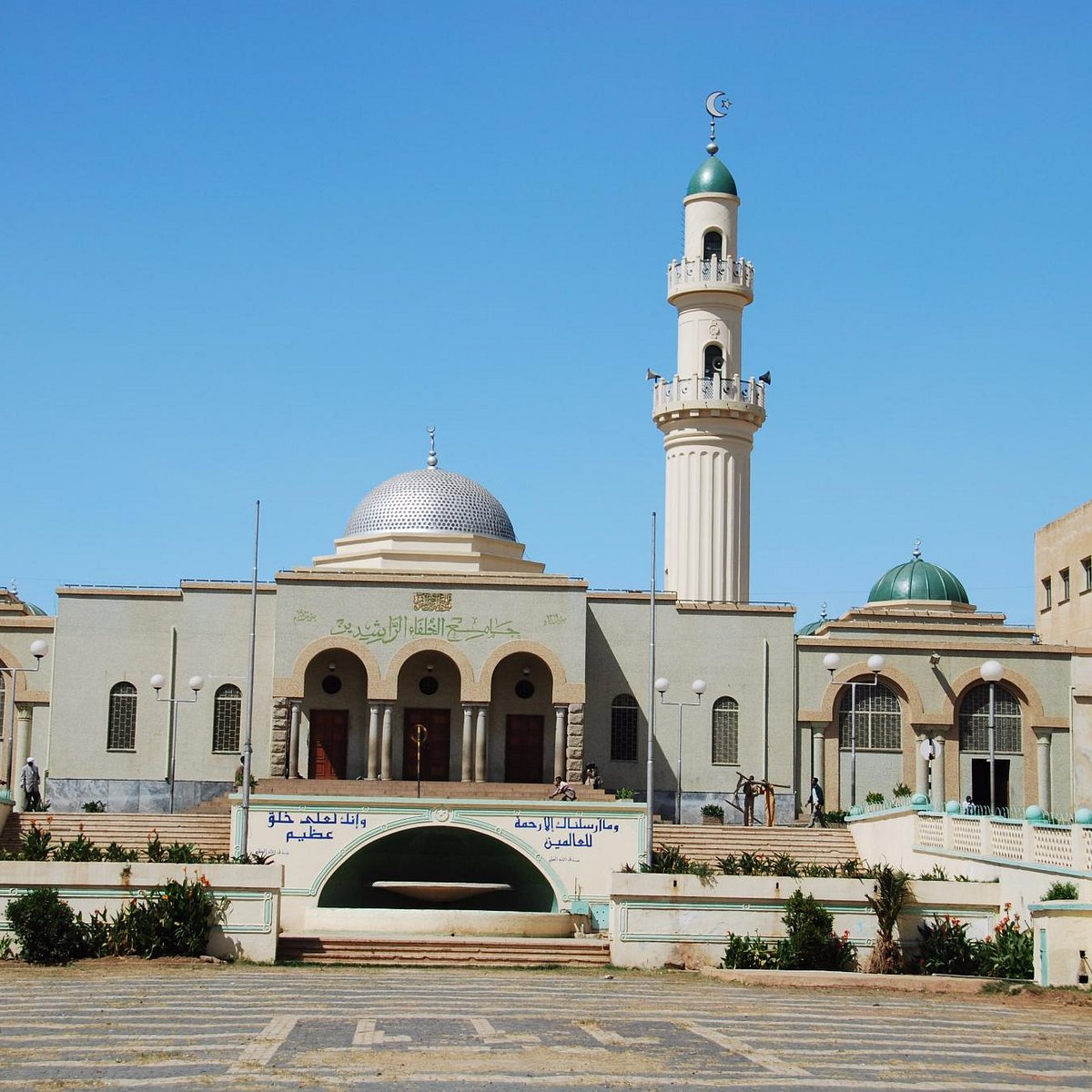
The Cathedral at the centre of Asmara, completed in 1922, is now more than a century old. Its imposing bell tower and Lombard Romanesque character have become defining features of the city's skyline. The Church of Our Lady of the Rosary, the Al Khulafa Al Rashiudin Mosque, the former Fiat Tagliero building, Cinema Impero and countless other structures contribute to Asmara's distinctive architectural identity. But there is something important to remember when admiring these buildings… the buildings predate Eritrea's independence. The people of Asmara and their history predate them.
Before modernist architecture transformed the city, there were already communities, families, neighborhoods, markets, places of worship and established social and cultural life. Asmara was not an empty landscape upon which an architectural experiment was imposed. It was an inhabited place with a history of its own.
The architecture we admire reflects a particular period in the city's development; it does not mark the beginning of Asmara or the history of its people. Colonial architecture can be preserved and appreciated for its historical and artistic value without confusing the legacy of colonial construction with the origins of the city and its inhabitants.
The same distinction applies beyond Asmara. Successive foreign powers that occupied or administered Eritrea constructed buildings, roads, fortifications, military installations, administrative centres and other infrastructure across the country. Some remain visible today and form part of Eritrea's built heritage.
They tell us about the ambitions and priorities of those who built them, but their presence does not make Eritrean history begin with their arrival, nor does it make the history of the country the history of its occupiers. An occupying power may leave its mark on the landscape; it does not thereby become the author of the land's history.
And then there is #Assab. Today, Assab is discussed in terms of strategic geography, maritime access and the economic requirements of landlocked #Ethiopia. Yet, long before it became the subject of contemporary geopolitical calculations or the site of a modern deep-water port, people lived in this region, sustained communities and livelihoods, and maintained their own social and political institutions.
#Assab was not an empty coastline awaiting European discovery. It was home to established Afar communities, including the Ankala, whose old settlement at Assab Saghir and traditional presence across the wider Dankalia coast are documented in historical sources. These communities were part of the wider Afar world, with established connections across the Red Sea and surrounding territories.
#Assab was #Eritrean under the 1952 federal arrangement. Its subsequent annexation by #Ethiopia, following the unilateral termination of the federation in November 1962, must be understood in that historical context. Annexation did not erase the identity of the region or the history of its inhabitants. Assab's strategic importance cannot be separated from its history, and its history cannot be reduced to the interests of those who may wish to use it.
#Assab's history begins with its people, not its port. Its strategic importance, infrastructure development and commercial potential do not alter its historical identity or its place within #Eritrea. A port can be constructed, a harbor modernized and infrastructure developed to transform a town's commercial importance. None of these developments creates the historical existence of the people who live there or establishes sovereignty over the surrounding territory. Building a port, a road or other infrastructure does not confer sovereignty over the land on which it stands. Construction is not a deed to sovereignty.
Eritrea is ancient and new at the same time. Ancient in its peoples, civilizations, cultures and historical roots; new as a modern sovereign state, born of a long struggle for self-determination and internationally recognized in 1993. Independence did not begin the history of the Eritrean people; it opened a new chapter in it. Eritreans did not come into existence with the end of colonial rule, the termination of the federation, liberation in 1991 or the 1993 referendum. These were milestones in the political history of the modern state, not the origins of the people who made it possible.
Long before modern statehood, our forefathers built communities, cultivated the land, worshipped, traded and crossed the seas. The modern Eritrean state emerged through a turbulent history of Italian colonialism, British administration, federation with Ethiopia, its unilateral termination and the annexation of Eritrea in 1962.
The liberation struggle was the assertion of the people's right to determine their own future. 1993 marked the emergence of #Eritrea as an internationally recognized sovereign state, not the creation of the #Eritrean people or their historical identity.
#Eritrean identity is not a recent discovery, our historical presence is not a diplomatic invention, and our sovereignty is not a concession granted by anyone else. Our monasteries, archaeological sites, historic cities and coastal communities bear witness to the depth and diversity of our historical experience. They remind us that while Eritrea is a young sovereign state, the society and people it represents have much older roots.
#Eritreans did not fight for independence to become a people. They fought for independence because they were a people, with a history, an identity and the right to determine their own future. That history continues through their independence and theirsovereign statehood…
#ThrowbackThursday #ThursdayThoughts #Thursdaywisdom
Eritrea’s sovereignty is non-negotiable. It is not up for debate, bargaining, or preconditions.
We do not seek what belongs to others, and we will never surrender what is ours. 🇪🇷
#Eritrea#Sovereignty#RespectEritrea
@MussieSibhatu23@AbrahamNCEW Entertaining this sinister idea is more divisive politics than anything .
Eritrea has clearly defined boundary and nine ethnic groups who share the same value and stand together in good and bad times.
Eritrea is strong enough to defend it sovereignty. No need to depend on others.
@reda_getachew Ethiopia has always been the main destabilising force in the HOA, thanks to your sinister agenda.
Your government has been campaigning to invade sovereign port and entering illegal MOM with Somaliland which violates sovereignty.
Blaming other for your crook deeds is absurd.
@semira_khalid GERD is in your territory but Assab is Eritrean sovereign port . There are international treaties, rules and regulations as well as UN and AU charters to protect Sovereignty of nations. Violating international rules & charters will have undesirable consequences to your nation.
Massawa - Pearl in the Red Sea ምጽዋዕ, romanized: Məṣṣəwa Tigre (Tigre_language)
ባጸዕ, Eritrea is located at a very strategic place along the Red Sea coast. The port city of Massawa is located approximately midway along Eritrea’s 1000 km Red Sea coastline. The port city is one meter above sea level and is subjected to some of the harshest temperatures on earth, compounded by high humidity. The Red Sea has modern ports such as Suez, Jeddah, Port Sudan, Assab and etc. One of these and perhaps the most ancient is the port city of Massawa. The name Massawa is originally derived from Arabic word (Mussawwaë) and later adapted to the Tigrigna word `Metsiwa. From the 8th century onwards, the name Badiè appeared in several texts of Arab authors. The name Badié derives from the Tigre language referring to the ‘beauty and attractiveness of Massawa’’. Some elders also state that Badié also means in Tigre language bitter or salt water. Even today the local population still commonly calls the island Batsé North of Massawa is the white sandy beach of Gurgusum. The beaches are clean and uncrowded. It is a good place to sunbathe, for swimming, sailing, (scuba) diving or snorkeling.
Although the places of interest all are within a distance of less then 5 kilometers of the Dahlak Hotel and Hotel Central, the usually high temperatures do not invite the visitor to walk for more then 30 minutes. It is essential to take a water bottle on every trip when traveling to or walking in the surroundings of Massawa (and the Dahlak Islands). ♥️🇪🇷
#Massawa #ERITREA
@MussieSibhatu23 Entertaining this idea is not healthy to Eritreans or Tigrayans
I'm not sure why you contemplating this as a solution without considering z potential consequences to z existence unity of 🇪🇷|ns
Ignoring the feelings of our 9 ethnic groups to promote narrow agenda is opportunism
History has already delivered its verdict: there can be no lasting peace in the #Horn of #Africa when sovereignty is violated, internationally established borders are challenged, and hegemonic ambitions are placed above international law.
This is a powerful and timely articulation of #Eritrea|s historical experience, principled position, and unwavering commitment to sovereignty and territorial integrity. Peace and stability in our region must be built on mutual respect, sovereign equality, and respect for internationally recognized borders, not territorial revisionism, coercion, or the pursuit of strategic interests at the expense of another nation's sovereignty.
#Eritrea seeks neither what belongs to others nor relinquishes what is rightfully its own. This is a position firmly anchored in sovereignty, territorial integrity, sovereign equality, and respect for international law. #Eritrea has no claims over the territory, resources, or sovereign rights of any other nation, and expects the same unequivocal respect for its own.
Its ports, coastline, islands, and territorial waters are not bargaining chips to be traded away or instruments to be appropriated in pursuit of another country's strategic or economic ambitions. Nor can one state's perceived needs confer rights over another state's sovereign territory. Economic interests and legitimate commercial arrangements can be pursued through cooperation and mutual agreement; sovereignty, however, cannot be claimed, negotiated away under duress, or acquired through threats and coercion.
This is ultimately a matter of principle, historical justice, and national dignity. #Eritrea|s commitment to peaceful relations and regional cooperation remains firm. But peace cannot be secured through appeasement, territorial concessions, or the subordination of one nation's sovereign rights to another's ambitions. Peace must begin with respect for sovereignty, and stability must rest on the recognition that what belongs to one nation cannot become the entitlement of another.
The rule of law must prevail over the law of the jungle!
@DanielTeklai_ER@rakudaredsea Ethiopia must accept and respect Eritrean sovereignty & territorial integrity.
Apologises for the rhetoric & war propaganda in violation of our sovereignty the last three years, before initiating any kind of commercial access discussion based on international rules & regulation
@NewAbeba@ethiopiansone No one gave our independence. We earned it by defeating the Ethiopian army in 1991, subsequently holding a free and fair referendum in 1993 where 99.8% voted in favour of independence. Therefore TPLF had no legal grounds or capacity to have a say on Eritrean independence.
The sovereignty of Eritrea is absolute & non-negotiable! 🇪🇷
As Amb. Sophia Tesfamariam firmly stands: Eritrean independence, dignity, and territorial integrity always come first. No compromises—united and strong for our nation's future! 💪🇪🇷
#Eritrea#SophiaTesfamariam
@dany_daba Ethiopia has no moral, legal, historical facts or capacity to alter the internationally recognised Eritrean boundaries.
Your rhetoric and hollow propaganda will have no space in our ears. For z best of Ethiopia you better look back & resolve your internal crises.
#RespectEritrea
A people forged by challenges, strengthened by struggles, united by courage, and driven by hope. We may bend, but we never break; we may fall, but we always rise. Our strength is our identity, and resilience is our legacy!