🇫🇷 📊 FLASH | Les Français estiment en moyenne qu’il y a 6 cotisants par RETRAITÉ actuellement, contre 1,8 en réalité, avec une estimation de 13 chez les sympathisants de LFI, 10,4 au PS, 6 au RN et 3,4 chez LR. (sondage Ifop pour Yomoni)
📊 | Here's a breakdown of Max Verstappen's first 250 races in Formula 1.
Max Verstappen celebrates his 250th Formula 1 Grand Prix with a win at the 2026 Singapore GP
#F1#SingaporeGP
C'est à chialer de rire "bah non c'était pas plus facile... j'ai pas acheté de maison..." Chantal corrige : ben si.
"Oui mais de vacances, j'avais quel âge, 30 ans, vous voyez bien..."
Caricatural.
🚨🇫🇷 FLASH | Louis, un mineur de 17 ans, est mort après avoir été LYNCHÉ puis retrouvé inconscient sur un chantier à Narbonne dans la nuit du 19 au 20 juin.
La victime, qui résidait dans un foyer à Carcassonne, présentait de nombreuses blessures au visage. Transporté à l’hôpital dans un état critique, l’adolescent avait été placé dans un coma artificiel.
Selon les premiers éléments de l’enquête et une vidéo de l’agression filmée par l’un des membres du groupe, les violences auraient été d’une extrême brutalité et pourraient être liées à un acte de vengeance. Un des agresseurs aurait nargué l'adolescent inconscient.
Cinq suspects, mineurs et majeurs, ont été identifiés, notamment grâce à des images de vidéosurveillance, puis placés en GARDE À VUE. (L'Indépendant)
Roland-Garros a commencé hier et personne ne sait qui est Roland Garros.
Ce n'est pas un joueur de tennis. C'est un aviateur. Né à La Réunion. Mort à 29 ans.
En 1909, il assiste à un meeting aérien en Champagne. Il achète un avion, apprend à piloter seul, et décide que le ciel sera sa vie.
Le 23 septembre 1913, il tente l'impossible : traverser la Méditerranée sans escale. 780 kilomètres au-dessus de l'eau. Son moteur tousse. Il arrive à Bizerte avec un réservoir presque vide. La France l'acclame.
Quand la guerre éclate, il n'est pas mobilisable. Né outre-mer, il ne doit rien. Il s'engage quand même. Il invente un système pour tirer à la mitrailleuse à travers l'hélice. Fait prisonnier en 1915, il s'évade trois ans plus tard et retourne au combat.
Le 5 octobre 1918, son avion est abattu dans les Ardennes. Il avait 29 ans. Le lendemain, c'était son anniversaire.
Dix ans plus tard, son ami donne son nom à un stade de tennis.
Vous connaissiez l'homme derrière le tournoi ?
Changer de sport à 37 ans.
Quitter son trône de roi du kickboxing.
Partir affronter le meilleur poids lourd de l’histoire de la boxe.
Lui infliger une leçon monumentale pendant 10 rounds.
Voir l’arbitre sauver Usyk à 5 secondes de la fin du round.
Respect RICO VERHOEVEN. 🇳🇱👑
J’ai quelque chose à vous annoncer.
J’attends un enfant.
Un “bébé miracle”, que je n’osais plus espérer.
Je vous en parle aujourd’hui car je ne peux plus le cacher (j'ai bien entamé le deuxième trimestre et ça commence vraiment à se voir).
Une campagne présidentielle enceinte puis avec un nourrisson, ça n’est à ma connaissance pas beaucoup arrivé dans l’histoire politique française et même à l’étranger.
Cela soulève forcément beaucoup de questions, et s’annonce comme un défi, j’en ai conscience.
Mais j’ai décidé de ne pas m’excuser de cette bonne nouvelle même si elle est vertigineuse.
Comme beaucoup de femmes, j’ai vécu le drame silencieux des fausses couches (pour rappel, cela concerne ou concernera 1 femme sur 3 dans sa vie).
Et comme on en parle très peu dans le débat public, rien n’y prépare.
Comme beaucoup de couples, nous avons connu avec mon conjoint le parcours du combattant des PMA et FIV (1 couple sur 5 est concerné par l’infertilité en France).
Je refuse que ce sujet reste un tabou alors qu’il concerne et fait souffrir tant de monde.
Alors nous allons en parler.
Politiquement.
Et agir pour mieux protéger et accompagner les femmes et les futurs parents, tout en soutenant et comprenant celles et ceux qui font le choix de ne pas avoir d’enfants.
Je l’ai promis à toutes celles et ceux que j’ai croisés dans les couloirs du CHU de Lille et qui m’ont dit : “ça nous fait plaisir de vous croiser ici. On se sent moins seuls”.
Ils/elles me faisaient promettre d’évoquer médiatiquement le sujet.
Je leur avait dit qu’un jour je le ferai.
Quand je serai en mesure de le faire.
On m’avait beaucoup dit : “Il ne faut pas se décourager”. Ça finit par arriver”.
Mais après des batteries de tests, de tentatives, d’interventions, d’injections, d’échecs, nous avions décidé une pause.
Pour que le corps puisse se reposer, se remettre, souffler.
Et c’est à ce moment-là, hors parcours, que c’est arrivé.
Je n’avais pas prévu de mener une campagne présidentielle enceinte.
Mais cela permettra sans doute pour une fois que certains sujets totalement invisibilisés soient enfin mis sur la table.
Dont les réformes à porter dans le cadre de la loi de bioéthique.
Alors je vous le dis clairement :
À toutes celles et ceux qui errent dans des parcours de traitement de l’infertilité : vous n’êtes pas seul·es.
À toutes celles et ceux qui n’y croient plus : vous n’êtes pas seul·es.
À toutes celles et ceux qui vivent des débuts de grossesse mouvementés et logistiquement compliqués et qui les gèrent sans trop pouvoir en parler : vous n’êtes pas seul·es.
À toutes les femmes qui ont pris comme une gifle l’injonction d’Emmanuel Macron au « réarmement démographique » : vous n’êtes pas seul·es.
Et pour que la solitude que l’on ressent dans ces situations ne s’ajoute pas au poids physique et psychique, on va en parler et se mobiliser.
Au mois d’avril, Anne-Cécile Mailfert sortira un livre qui évoque ce sujet.
"La panique démographique. Une réponse féministe."
La conclusion ?
Lâchez la grappe aux femmes.
Soutenez-les au lieu de les culpabiliser et de les stigmatiser.
Et n’oubliez jamais, amis passionnés de leçons de morale démographiques, qu’une société plus égalitaire, moins violente, et compatible avec une parentalité réellement partagée ne produira certes pas mécaniquement plus d’enfants, mais qu’elle seule rendra ce choix plus désirable, plus libre.
C’est le sens de la politique écologiste et féministe du vivant que je porterai à la présidentielle : une politique qui part de la vie réelle, qui protège ce qui permet de vivre - nos corps, nos liens, notre environnement - et qui fait en sorte que chacun puisse choisir librement d’avoir un enfant, ou pas, dans une société plus juste, plus douce et plus vivable.
Je vais prendre le temps de répondre sérieusement parce que ce tweet est un excellent résumé de pourquoi le débat économique tourne en rond en France. C'est un raisonnement qui a l'air logique, qui sonne juste intuitivement, et qui est faux. Et comprendre pourquoi il est faux c'est comprendre 80% de l'économie.
L'argument repose sur un axiome : "seul le travail crée la richesse." Ça vient de Marx, qui l'a lui-même hérité de Ricardo et Smith (ironie du pseudo). C'est la théorie de la valeur-travail. Et c'est le socle de tout le raisonnement. Si cet axiome est vrai, alors oui, logiquement, le capitaliste "vole" le travailleur. Si cet axiome est faux, tout l'édifice s'effondre. Spoiler : il est faux. Et on le sait depuis 1871.
Premier problème : la valeur ne vient pas du travail, elle vient de l'utilité. Si je passe 10 000 heures à peindre un tableau que personne ne veut acheter, j'ai travaillé, mais j'ai créé zéro richesse. Si je trouve un diamant par terre en 2 secondes, j'ai créé énormément de valeur sans presque aucun travail. La valeur d'un bien est déterminée par ce que quelqu'un est prêt à payer pour l'obtenir, pas par le temps qu'il a fallu pour le produire. C'est la révolution marginaliste de 1871 (Jevons, Menger, Walras), et aucun économiste sérieux dans le monde ne la conteste aujourd'hui.
Deuxième problème : "le capital ne fait que multiplier la productivité du travail." C'est présenté comme si c'était anodin. Mais multiplier la productivité du travail c'est littéralement la chose la plus importante de l'histoire économique humaine. Un ouvrier avec une pelle déplace 1 tonne de terre par jour. Le même ouvrier avec une pelleteuse en déplace 500. La différence c'est quoi ? Le capital. Quelqu'un a investi de l'argent pour concevoir, fabriquer et mettre à disposition cette pelleteuse. Sans ce capital, l'ouvrier est toujours à la pelle. La pelleteuse n'est pas tombée du ciel. Elle existe parce que quelqu'un a renoncé à consommer son argent aujourd'hui pour l'investir dans un outil productif. Ce sacrifice s'appelle l'épargne, et sa mise en oeuvre productive s'appelle le capital. Et c'est ça qui transforme une heure de travail humain en quelque chose de 500 fois plus productif.
Troisième problème : "il y a toujours un travailleur pour actionner la machine." Oui. Et il y a toujours quelqu'un qui a conçu la machine, quelqu'un qui a financé sa fabrication, quelqu'un qui a identifié le besoin du marché, quelqu'un qui a organisé la production, quelqu'un qui a trouvé les clients, quelqu'un qui a pris le risque que tout ça foire. Le travailleur qui actionne la machine est un maillon indispensable de la chaîne. Mais il n'est pas le seul maillon. Et dire que seul son maillon compte c'est nier l'existence de tous les autres.
Quatrième problème : "le milliardaire s'accapare les fruits d'un travail qu'il n'a pas réalisé." Le milliardaire n'a pas réalisé le travail manuel. Mais il a réalisé autre chose : l'allocation du capital. C'est-à-dire décider où investir les ressources pour qu'elles produisent le maximum de valeur. Et c'est un travail extraordinairement difficile et rare. Si c'était facile, tout le monde serait milliardaire. Pour chaque Elon Musk qui réussit, il y a 10 000 entrepreneurs qui ont tout perdu. Le milliardaire qui reste milliardaire c'est celui qui alloue le capital mieux que les autres, c'est-à-dire celui qui prédit mieux que les autres ce dont la société a besoin. Quand il se trompe, il perd tout. Quand le salarié se trompe, il touche quand même son salaire.
Et c'est ça la réalité que cet axiome de départ masque. Le capitaliste ne "prend" pas au travailleur. Le capitaliste fournit au travailleur les outils sans lesquels son travail ne vaudrait presque rien. L'ouvrier à la pelleteuse est 500 fois plus productif qu'à la pelle. Le "profit" du capitaliste c'est une fraction de ces 499 unités de productivité supplémentaire qu'il a rendues possibles en fournissant la pelleteuse. Sans lui, l'ouvrier a toujours sa pelle et sa tonne de terre par jour.
La vraie question c'est pas "est-ce que le milliardaire mérite sa fortune." C'est "est-ce que le système qui produit des milliardaires produit aussi une amélioration des conditions de vie de tout le monde." Et la réponse, factuelle, empirique, répliquée sur 200 ans de données dans tous les pays du monde, c'est oui.
Et un dernier mot pour les plus jeunes qui lisent ça. Je sais que le marxisme est séduisant quand t'as 18 ans. J'y suis passé aussi. L'idée que le monde se divise en exploiteurs et exploités, c'est simple, c'est beau, ça donne un sens, ça désigne un ennemi. C'est confortable intellectuellement. Et quand t'as jamais eu de thune, quand tu vois des gens riches et que tu comprends pas comment ils le sont devenus, c'est tentant de conclure qu'ils ont forcément volé quelqu'un.
Mais la réalité est plus complexe et plus intéressante que ça. Et le meilleur service que vous pouvez vous rendre c'est de lire les deux camps. Lisez Marx, oui. Mais lisez aussi Hayek, Bastiat, Mises, Friedman, Sowell. Lisez les marginalistes. Lisez l'histoire économique réelle des pays qui ont essayé le socialisme. Pas les versions romancées, les faits. Confrontez les théories au réel. Et faites-vous votre propre avis avec toutes les cartes en main, pas avec la moitié du jeu.
On passe presque tous par une phase où on croit que le système est contre nous. Et puis un jour tu te mets à créer, à entreprendre, à prendre des risques, et tu comprends. Le capital c'est pas ton ennemi, c'est l'outil qui te manque. Et le capitalisme c'est le seul système qui te laisse aller le chercher.
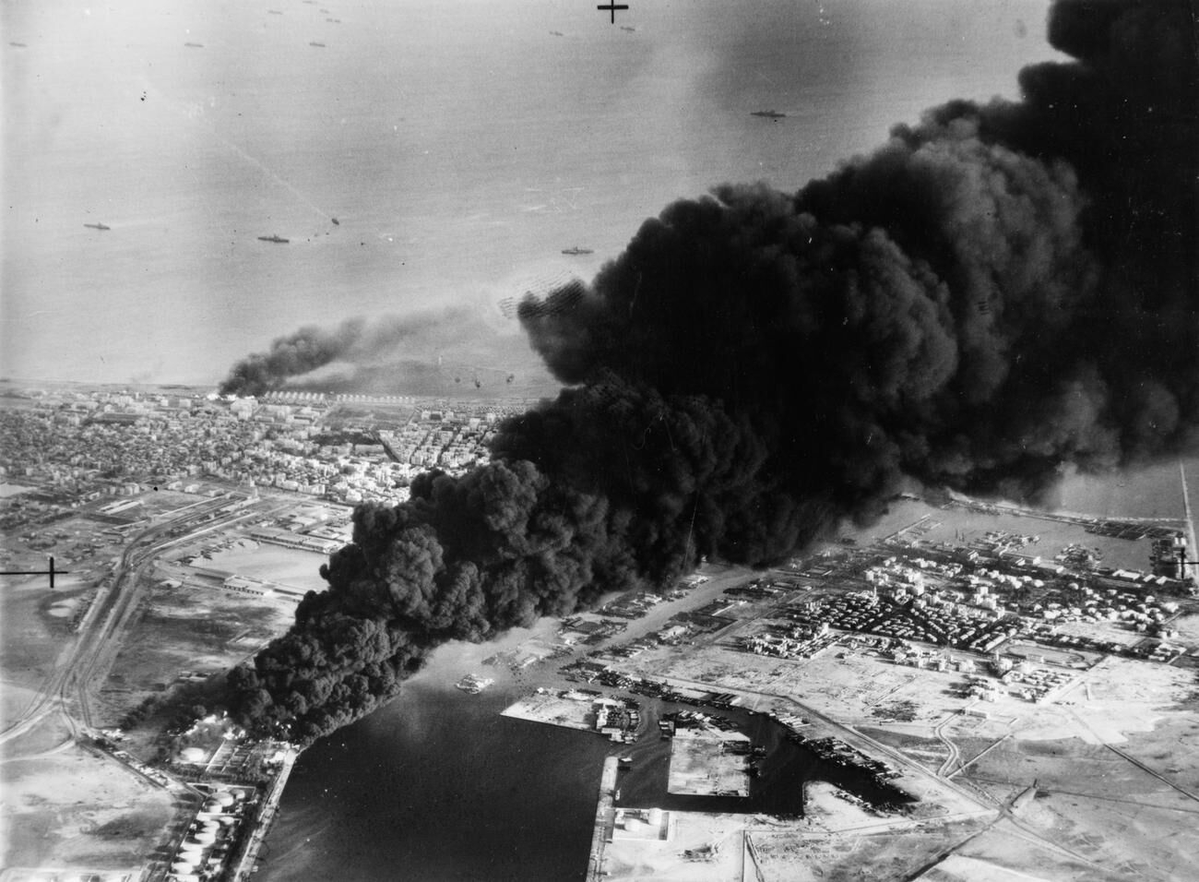
In 1956, the UK 🇬🇧 and France 🇫🇷 requested America's help to secure the Suez Canal.
America 🍔 replied "FUCK OFF", humiliated its allies, made a deal with the enemies of the West, and destroyed European empires.
Here is the whole story:
In July 1956, Egypt nationalized the Suez Canal, controlled until then by Britain and France. They prepared a joint response with Israel, expecting at minimum passive support from Washington.
That support never came. The United States refused to endorse the operation and moved rapidly to block it. The method was not rhetorical; it was financial and immediate. Washington threatened the stability of the British currency, refused emergency assistance, and signaled that it would not tolerate a prolonged intervention. At the United Nations, it backed resolutions calling for a ceasefire and withdrawal. The message was explicit: stop, or face systemic consequences.
The effect was brutal. British and French forces had achieved their immediate military objectives on the ground, but the operation collapsed under American pressure. Within days, both governments were forced into a humiliating retreat. Two European powers that had dominated global trade routes for a century were publicly compelled to reverse course by their principal ally.
This was not a minor disagreement inside an alliance. It was a rupture that exposed a hierarchy. The United States did not merely refuse assistance; it actively sabotaged the operation. From a European standpoint, this amounted to a direct betrayal of shared strategic interests.
The consequences were immediate and long-term. Suez marked the definitive end of independent British and French power projection. After 1956, neither country could conduct a major external operation without American approval. Political elites in both capitals understood that their room for maneuver had narrowed to what Washington would tolerate.
Decolonization accelerated sharply. The signal sent to colonial administrations was clear: the metropole could no longer guarantee control if challenged. In Africa, the Middle East, and Asia, independence movements gained momentum as the credibility of European authority collapsed. The imperial framework, already under strain, unraveled faster after Suez.
The American role in this shift was decisive. Washington opposed the maintenance of European colonial structures because they conflicted with its own strategic objectives. It sought access, influence, and alignment in newly independent states. European empires were obstacles to that expansion. By forcing Britain and France to withdraw in Suez, the United States demonstrated that it would not support the preservation of their overseas systems.
What followed was a redistribution of influence. As European control receded, American economic, financial, and security networks expanded into the same regions. Oil arrangements, military partnerships, and monetary dependence increasingly aligned with US structures. The old empires disappeared, but their space did not remain empty.
Suez was therefore not only the end of a crisis. It was the moment when Western leadership shifted definitively across the Atlantic. Britain and France lost the capacity to act autonomously on the world stage, and the United States established the terms under which the rest of the West would operate.
Des nouvelles de Max Verstappen sur la Nordschleife ? 🇳🇱
Il vient de s’adjuger la pole position de la NLS2 avec près de 1,9 seconde d’avance sur le deuxième et 2,8 secondes sur le troisième ! ⏱️
#NLS
Japanese PM Sanae Takaichi's reaction as Trump says "Who knows better about surprise than Japan? Why didn't you tell me about Pearl Habour?"
Undoubtedly the worst American diplomatic gaffe in post-war US-Japan history.
💬 «On a mis des employés en vacances d’office»
Depuis l’entrée en vigueur de la taxe sur les petits colis, l’aéroport de Roissy Charles-de-Gaulle reçoit 50 vols de moins par semaine
Les commandes Shein et Temu prennent désormais un autre chemin
➡️ https://t.co/Vs8eO7Se1r
Ils ont entonné un chant dénigrant le lieutenant-colonel Arnaud Beltrame, qui avait pris la place d’une otage à Trèbes en 2018, avant d’être tué par un terroriste. →https://t.co/XWlXt9nSRz
If you're going to use their carrier as a way to dunk on the French, I don't think you could come up with a less effective method.
France is in a small club, one of only three nations to have a catapult and barrier arrested (i.e., CATOBAR) carrier. Here's why it matters. ⬇️
First, the FS Charles de Gaulle (R91) is nuclear powered. There's only 12 nuclear carriers in the world, 11 operated by the U.S., one by the French, and some under construction by China. A nuclear powered carrier is a massive advantage compared to conventional power. Fast and nearly unlimited range - more importantly, all the space that could be taken up by the carrier's fuel is given over to more jet fuel and munitions.
Second, a CATOBAR carrier has two major advantages from short takeoff barrier arrested landing (STOBAR) "ski-jump" carriers operated by the Chinese and Indian navies. First, catapults allow you to launch airborne early warning and control (AEW&C) aircraft like the E-2 Hawkeye. An AWE&C platform provides massive advantage in command, control, air warfare, self-defense, and overall effectiveness. Second, the combo of the catapult and wires allow strike fighters to carry meaningful payload beyond light air defense load-outs. It's the difference between an anti-air focused role like the Soviet/Russian Kuznetsov class vs. a true strike capability.
Third, the French enjoy a very close and collaborative relationship with the U.S. Navy. French carrier aviators are trained by the U.S. at Naval Air Station Meridian, MS and the collaboration extends so far that French jets have carrier qualified and operated aboard U.S. carriers. In 2018 while the Charles de Gaulle was in planned maintenance, French Rafale crews embarked onboard the USS George H. W. Bush (CVN-77) along with CVW-8 to conduct training and maintain proficiency while their carrier was unavailable. It's difficult to understate how beneficial the close tie-in with U.S. carrier aviation is.
Fourth, the French Air Wing maintains access to a unique capability today, a carrier-based nuclear weapon. The Rafale carries the ASMPA supersonic, nuclear cruise missile. Notably, the French recently exercise the capability, using a French Navy Rafale from Landivisiau Naval Air Base in Brittany.
At the end of the day, the de Gaulle and the French Air Wing are impressive capabilities. If one is using them as the butt of a joke, it's more indicative of one's lack of awareness than it is anything else. Freedom fries jokes lost their cache around 20 years ago. The de Gaulle and its Air Wing are a niche but impressive capability.
Madame Soudais, comme je l’ai expliqué pendant l’audition, je suis en effet fier d’avoir créé mon entreprise, qui emploie désormais 60 personnes à temps plein. Je suis fier de participer à l’activité économique de notre pays, fier de créer de l’emploi, fier de payer des impôts pour permettre le fonctionnement de l’État et fier de gagner de l’argent grâce à mon travail, moi qui n’ai hérité de rien.
L’objectif de toute entreprise privée est de faire des bénéfices, pour pouvoir investir, prendre des risques, se planter, recommencer. Cela n’empêche pas de produire des contenus de qualité, bien au contraire. L’indépendance financière est le meilleur moyen d’être réellement libre.