Gratitude. These awesome & enthusiastic people who came from different parts of Southeast Asia, filled the workshop with so much energy to discuss about #giantclam conservation. Thanking you all for putting trust in my team & I to kickstart my dream! March on! #SJINML
Soil biodiversity represents one of the largest carbon stocks on Earth and plays a major role in fighting #ClimateChange.
Our Issues Brief explains how https://t.co/h71VQG4ELy
🌿🌊 Learn all about #seagrass— these unique plants thrive in salt water and play a vital role in supporting a vast web of life.
Discover their importance in sustaining marine ecosystems and protecting #biodiversity.
via @QLDConservation@QldGov
The 1st sighting of the rare bigfin squid (Magnapinna) in the Tonga Trench (Southern Pacific Ocean), filmed by researchers from @deepseauwa@KelpieGeo@InkfishExplore at 3,300 meters in Sept 2024. There have been so few sightings, little is known about these alien-like squids.
🐙 Anyone interested in grabbing one of these tiny blue ringed octopus plushies? They're even cuter in person! (& wayyYyY less venomous) 😆☠️💙
🛍️ Available here: https://t.co/WIpdA5RyWF
Elysia crispata, the lettuce sea slug! Not a nudibranch but a sacoglossan.
This sea slug does something called kleptoplasty, or chloroplast symbiosis. The chloroplasts from the algae they eat is sequestered into their digestive tract and parapodia, work overtime for them 💪
Fresh off the press! Following our success with the Arabian Cowrie, Tay et al. reports another success in captive breeding of the Tiger Cowrie! 🥳 First 50 online copies available for download here: https://t.co/As385ApeEq
#molluscs#gastropods#cowries#mariculture
(If you think this is cool, hit the repost button!)
The female Argonaut octopus, also known as the paper nautilus, is the only octopus known to 3-D print a casing around it's body to protect her future offspring! Isn't she stunning? Learn more: https://t.co/J8MSkleRoA
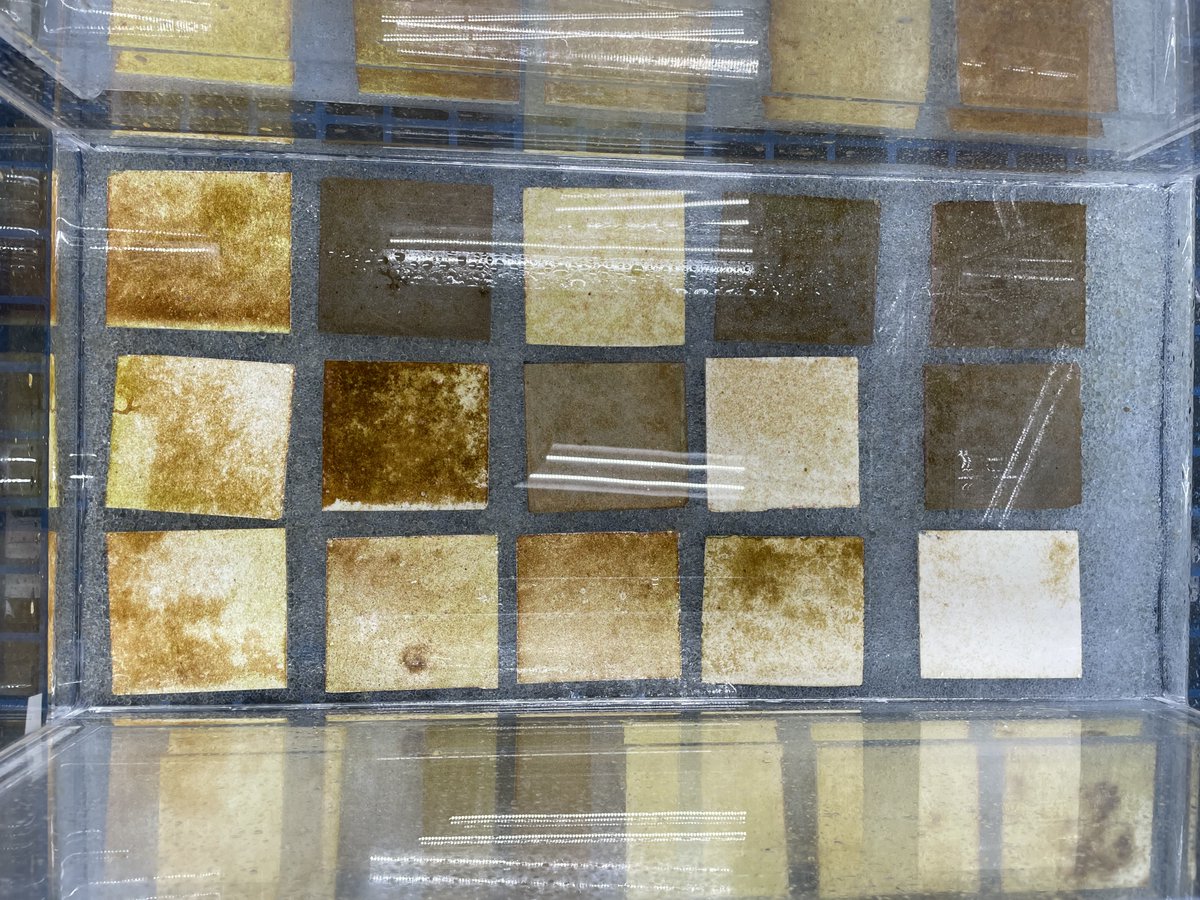
Our new paper just published in Coral Reefs compared the effectiveness of different material types and surface roughness of settlement tiles on promoting coral larval settlement and spat survivorship. 1/
https://t.co/Wx4oIO6kkU
@Reef_Algae_Lab@aims_gov_au@SeaSim_AIMS
Happy #WorldOceanDay ! Why we need to protect the deep sea and its gigantic creatures, cities of whale flesh, and vents of sulphur and stone? Find out in our NatGeo-esque infographic in Science, or read on at our link if you’re text person #scicomm
https://t.co/O9ams6AVrI
Vanishing Giants in Malaysia - Of the 7 recorded species, only 4 giant clams were observed in the Peninsular. Long-term data revealed declining populations. Check out our new paper! Kudos to @likeat92 for leading this mega paper! 💪 #giantclam#molluscs
https://t.co/NO121hdKGU
I’m so happy that (part of) my proposed headline was deemed acceptable by the sub editors ����
In forest ecology, it’s not just about the birds and the bees 🦜🐝
@kwaniefung
https://t.co/8E9gIlpb2B
#forests
Young Explorers Program 2024 Applications are live now through April 5. If you are a #student with a background or passion for #naturalscience, #marineoperations or #media and #storytelling and ages 18-22, apply today. #YEP
More info / the application at https://t.co/9chKQVIvxS
Where are our blue ringed fans at? 🎥 @kevingaca 🗺️:@SeaExplorersPH
👁️ Humans can see light in wavelengths between 380 and 700 nanometers (nm). 🌈That’s the entire rainbow spectrum, from red (700) to violet (380) But ultraviolet (UV) light? – it’s like nature’s secret agent with wavelengths under 380 nm. Totally invisible & off our human visual radar!
✨🐙✨The Blue Ringed Octopus has special cells called iridophores under its skin— think of them as the octopus’ personal disco balls 🪩— They’re like tiny mirrors reflecting light to create a stunning blue-green color! Chromatophores, unlike iridophores, rely on pigmentation for coloration; iridophores manipulate light reflection to create color!
* Normal View: When light hits these iridophores head-on, they reflect light at about 500 nm. That’s smack in the middle of the visible spectrum, giving us that gorgeous blue-green color we see on the octopus.
* Change the Angle: Things get interesting when the angle of the light changes. If the light hits these cells at an angle, the wavelength of the reflected light shifts towards shorter wavelengths.
* UV Light Show: These shorter wavelengths are in the UV range, less than 380 nm. We can’t see this with our naked eyes, but for many creatures that can detect UV light , the octopus’s rings might look totally different!
So, the blue-ringed octopus isn’t just showing off for us humans; it’s also sending signals in a light spectrum we can’t see.
When they’re just chilling, their muscles hide the iridophores, keeping their bling under wraps. But when they sense trouble, they throw the ultimate UV RAVE 🕺🪩💃
Chromatophores of the blue ringed octopus’ act as a backstage crew, working the lights and shadows! They’re found beneath & around the iridophores, darkening the area around the rings- like a smokey eye. This makes the blue pop even more. It’s all about that contrast, folks! High contrast equals high visibility equals a very clear “Do Not Disturb” sign.
But the real kicker? This transformation happens faster than you can snap your fingers (.3 secs) If ya manage to read this far comment “Rave” below! (C’mon super fans!)