🚨The Larva Labs digital sculptures that you’ve been sleeping on.
$1.5B traded. Below 1 ETH. More than just 3D Cryptopunks.
Meet Meebits ❚ ❚ - John Watkinson & Matt Hall’s art that’s still early [thread 🧵]
“DA layers really differ across three dimensions: performance, programmability, and AI-native design — because on-chain AI can’t operate in a world measured in mere megabytes per second.”
@sachitakahara catches up with @michaelh_0g, Founder of @0G_labs, to break down how 0G compares with Celestia, Avail, and EigenDA: why throughput needs to increase by orders of magnitude, how to move beyond the broadcast bottleneck, and why a decentralized storage network is essential for ultra-fast data ingestion and retrieval.
“After moving from Berlin to Silicon Valley, I found myself bored at a new school — so I started spending time at my dad’s SAP Lab: fast internet, endless reading, and the beginning of my love for technology.”
Our host @kenzixbt sits down with @michaelh_0g (@0G_labs) to trace his origin story — from early curiosity and a growing obsession with tech to his path into Web3, and ultimately, the founding of his company.
“Back in 2016–17, crypto felt like a true idea factory — hundreds of experiments, zero gatekeeping, and pure creative energy.” Our host
@dikshaarden sits down with @michaelh_0g, Founder of @0G_labs, to explore one of the most exciting parts of building in Web3: a culture shaped by experimentation first. They also dive into how tokenization creates new ways to fund and sustain projects — including open-source work — beyond the limits of the traditional Web2 business model.
This week’s episode features Michael Heinrich (@michaelh_0g), founder of 0G Labs (@0G_labs).
We dive into Michael’s journey from high school boredom to building 0G Labs, the first modular AI blockchain platform, and how an unconventional path shaped the way he thinks about leadership, focus, and company building.
The conversation explores how spiritual practices like meditation influenced Michael’s mindset as a founder, helping him build with more clarity, discipline, and long-term conviction.
Michael also breaks down the future of decentralized AI infrastructure, and why community-owned data and compute networks may become one of the most important foundations for the next era of artificial intelligence.
We dig into how 0G Labs is building AI blockchain tools and applications that connect decentralized networks, unlock data infrastructure, and make storage, machine learning, and AI systems more open for businesses and builders.
At its core, this episode is about the intersection of AI, crypto, data ownership, and founder psychology — and why the next wave of AI infrastructure may need to be decentralized from day one.
“What if the real unlock for AI x crypto is not speculation — but proving intelligence can be trusted?”
@sachitakahara sits down with @dcbuilder for a deep dive into the intersection of AI and crypto, from DC’s work building the ZKML community to why zero-knowledge machine learning could become a core trust layer for AI on the internet.
They break down how ZKML makes it possible to prove that a machine learning model produced a specific output from specific inputs — without forcing everyone to rerun the full computation themselves.
The conversation also explores why this matters for model accountability, transparency, and verifiable AI at scale, plus the projects pushing the space forward, from Modulus Labs and Giza to EZKL and new research around proof of inference.
“What if a Web3 identity starts less as a brand — and more as a challenge to yourself?”
@kenzixbt catches up with @dcbuilder for a deep dive into the origin of the DC Builder name, pseudonymous identity, and why crypto culture made merit feel more important than background.
They break down how the 2021 analyst wave, DeFi Twitter, and the ability to be judged by ideas alone shaped the way DC entered the space — first as a researcher and writer, then as someone who wanted to become a builder.
The conversation also explores why “Builder” became a social forcing function, how pseudonyms create contrast and memorability, and why in Web3, what you think and what you build can matter more than who you are offline.
“Why does Web3 research feel more alive than any other industry?”
@dikshaarden joins @dcbuilder for a conversation on what makes crypto research so unique: the open debates, the public forums, and the fact that anyone can go from reading an EIP to DMing the people shaping Ethereum’s future.
They break down why Web3 research isn’t locked behind institutions or closed rooms — it happens in real time, across threads, forums, chats, and communities where ideas can move fast and still go deep.
The conversation dives into how this openness changes the role of a researcher: not just observing the space, but actively entering the flow of proposals, technical debates, and protocol-level thinking before they become mainstream.
This week’s episode features DC Builder (@dcbuilder), Research Engineer at the Worldcoin Netwrok (@worldnetwork).
We dive into Worldcoin’s mission to democratize digital identity and finance worldwide, and why proving personhood could become one of the most important primitives for the next era of the internet.
The conversation explores the challenges behind verifying real humans at global scale — from web of trust systems to biometrics — and how Worldcoin approaches identity, privacy, and fair wealth distribution.
DC also breaks down the role of Semaphore, zero-knowledge proofs, and privacy-preserving infrastructure in making digital identity usable without turning it into surveillance.
We also dig into the emerging ZKML space, the intersection of crypto and AI, and why machine learning, verification, and decentralized systems may become one of the most exciting frontiers in Web3.
A deep episode on identity, trust, ZK, AI, and the infrastructure needed to make the digital world more human.
Selling crypto to cover expenses hurts: you trigger taxes and lose exposure.
DeFi borrowing fixes both. Instead of selling your ETH, lock it as collateral, borrow USDC instantly onchain, spend like cash, and stay long — no taxable event in the U.S.
And now, do this directly through Coinbase👇
~~ Analysis by @punk0439 ~~
This is an integration I can happily recommend to my family and friends, as @coinbase is one of the most trusted and easy-to-navigate crypto exchanges, while
@Morpho is one of the most proven and dependable DeFi lending protocols.
With this integration, you can now borrow against your ETH without leaving the comfort of the Coinbase app. Assuming you already have some ETH holdings on Coinbase, you just:
1. Click on your ETH balance to bring up your Ethereum dashboard.
2. Scroll down to the "Borrow" tab and press "Start."
3. Review the primer info—your Borrow up to amount (based on your ETH deposited to Coinbase), the Variable rate (the fluctuating interest Morpho will charge on your loan), and the Liquidation LTV (the "loan-to-value" point at which your underlying ETH could be liquidated for repayment)—and then press "Continue."
4. Input the amount of USDC you want to borrow, then click "Review loan."
5. Check that your loan details are satisfactory. When ready, press "Borrow now," then "Accept and continue." Your loan will be submitted, though it may take a minute or two to finalize in Coinbase's UI.
That's all it takes to get started!
If you open a loan, navigate to your Coinbase "Cash" tab and in the "Borrow" section you'll see a "Manage Loans" button. Go here for the "Repay" option to pay back the USDC you borrowed over time.
These ETH-backed loans have a flexible term, so you don't have to pay back specific amounts per a specific schedule. Just repay whenever in whatever amounts suit you, though keep a close eye on your loan health to avoid liquidation.
Also, keep in mind that USDC borrowed on Coinbase can't be used for buying crypto on Coinbase, so this particular avenue is meant for cashing out and spending.
As far as DeFi onramps go, this integration is about as simple and safe as it gets. If you or someone you know hasn't gotten around to borrowing against ETH yet, this is certainly a good place to start.
After 7 years, Aztec’s Ignition mainnet is live.
Yet zero transactions or apps work yet. The chain is deliberately empty – because true protocol-level privacy can’t be rushed.
Here’s how this phased, decentralization-first launch positions Aztec as the leading private L2 on ETH👇
~~ Analysis by @KieranSolberg ~~
What's Actually Running
Think of Ignition like Ethereum's beacon chain from 2020. The governance and consensus infrastructure is operational, but the execution layer remains offline. The team is running what amounts to a live stress test with real money on the line.
Each sequencer staked at least 200K $AZTEC tokens to participate. They're producing blocks, provers are generating validity proofs, and the whole system is settling on Ethereum, just without any transactions.
The goal of running Ignition with real economics for 2-3 months will (hopefully) surface any remaining issues before transactions go live in early 2026, while setting the network up to be decentralized from day one.
The Decentralization Push
In Aztec's eyes, launching an L2 with a centralized sequencer from the get go rarely translates to decentralization down the road.
Centralized sequencers generate $40-150M annually in fees. Once you're locked into those cash flows, decentralization means making transactions slower and more expensive. The tension never resolves.
Instead, @aztecnetwork will launch fully decentralized from day one across three dimensions:
➢ Ownership is decentralized through $AZTEC token holders who control network parameters, fee schedules, and protocol upgrades.
➢ Block Production runs through 617 decentralized sequencer nodes using proof-of-stake. These nodes order transactions and produce blocks. To prevent any single party from gaining control, a small committee of sequencers is randomly selected to validate blocks before they are submitted to Ethereum.
➢ Proving is permissionless from the get-go. Provers generate the zero-knowledge proofs that cryptographically confirm all transactions in a batch are valid. They aggregate blocks and submit a single, final proof to Ethereum for verification, guaranteeing the integrity of the entire rollup.
When transactions go live, Aztec will qualify as a Stage 2 rollup, the highest decentralization tier for L2s. Most chains have pushed boundaries in one direction. Hitting all three pillars simultaneously is rare.
In Aztec's eyes, decentralization isn't optional for privacy. Centralized sequencers would face pressure from governments to install backdoors. Privacy requires cryptography plus decentralization, not one or the other.
What Happens Next
There are two major upcoming events, one technical and one token-related.
On the technical side, Ignition will remain live for 2-3 more months with sequencers producing empty blocks while the team monitors for issues. Early 2026 is when transactions flip on. Users will be able to send payments, deploy smart contracts, and interact with applications. By the end of 2026, block times should drop from the current 36-72 seconds down to 4 seconds, faster than Ethereum's 12-second blocks.
On the token side, the pre-allocation for the $AZTEC token sale is currently live, with the sale beginning December 2nd and running for 4 days. The sale uses @Uniswap's continuous clearing auction mechanism, meaning if you bid early, part of your bid clears at early prices and part clears later. This levels the playing field between early and late participants while letting price discovery happen naturally. When the auction ends, it automatically creates a Uniswap V4 liquidity pool at the final clearing price.
To participate in the sale, you must register prior to December 2nd.
For compliance, Aztec is using @ZKPassport, enabling people to prove cryptographically that they're from allowed jurisdictions and not on sanctions lists without traditional KYC. The sale is open to US retail and nearly every country worldwide, with the exception of sanctioned countries on the standard OFAC list.
The current 500 sequencers already staked $AZTEC tokens they purchased in a whitelisted genesis sale. They're earning rewards in $AZTEC right now. However, all tokens, whether from the genesis sale, the current public auction, or insider allocations, are non-transferable until Token Generation Event (TGE).
There is no set date for when TGE occurs, rather the community votes on it. However, the earliest date it can go live is February 11th, 2026. Once TGE happens, tokens purchased in the public auction unlock 100%.
7 Years in the Making
Overall, Ignition and the $AZTEC token sale demonstrate both the complexity of successfully executing privacy, as well as the extent to which Aztec is going to get this right.
First you have the need for decentralization from the get-go to ensure privacy endures, a feat unaccomplished by countless L2s launched so far. Then you have the tension between privacy and compliance, which the token sale's integration with ZK Passport helps solve.
Regardless of how mainnet goes, and I'm hopeful all goes well, this launch process shines as a testament to diligent design, demonstrating that forces like decentralization, privacy, and compliance can all coexist.
“What if AI is the rare shot we get to reshape the internet itself?”
@kenzixbt catches up with Karan Sirdesai (@karansirdesai), Founder of @miranetwork, to trace how a self-taught builder went from cold DMs, crypto arbitrage, and working with names like Balaji Srinivasan and Sandeep Nailwal — to betting early on AI before the world fully understood where it was heading.
They unpack why Karan has always taken the road less traveled, how his time at Accel gave him access to frontier AI companies before generative models became obvious, and why the speed of AI’s evolution made him realize this would be bigger than a business wave — it would touch every part of human life.
“What happens when AI becomes the backbone of the internet?”
@dikshaarden sits down with Karan Sirdesai (@karansirdesai) , Founder of @miranetwork, to unpack the future where AI doesn’t just give us information, it starts thinking, acting, and making decisions for us.
They break down the upside of “infinite hires,” 90% of our cognitive work moving beyond humans, and a productivity shift that could make today’s jobs look outdated.
But the same thing that makes AI powerful also makes it dangerous: overreliance, catastrophic mistakes, malicious agents, and a new alpha species humans have never had to coexist with before.
This week’s episode features Karan Sirdesai (@karansirdesai), Co-Founder and CEO of Mira Network (@miranetwork).
We dive into Karan’s journey from university hustle and early crypto experiments to building one of the most important infrastructure layers for reliable AI.
The conversation explores why AI hallucinations are one of the biggest problems holding the industry back, and how Mira is approaching trust, safety, and verification for high-stakes use cases across finance, healthcare, and beyond.
We also dig into Mira’s “aha” moment, born from hands-on experimentation with GPU rentals, AI pipelines, and the realization that multiple models could be used together to verify intelligence through consensus.
Karan shares how his work with Balaji Srinivasan, his non-linear founder path, and Mira’s deep AI + crypto team shaped the mission: building decentralized AI infrastructure that can make artificial intelligence more reliable, trustworthy, and usable at scale.
“What does it take to build when nobody expects you to win?”
@kenzixbt speaks with @ruschimanche, Co-Founder of @movement_xyz, to trace the story behind Movement Labs — from broke Vanderbilt dorm-room founders with $100 to their name, to building one of the most talked-about teams in crypto.
They discuss the underdog mentality that shaped Movement from day one, why competing against polished researchers and established teams created a permanent chip on their shoulder, and how that scrappy internal drive still defines the company today.
From go-to-market and ecosystem growth to the fight for attention, liquidity, projects, and blockspace, this episode explores what it means to wake up every day trying to be number one in one of the most competitive markets in Web3.
“What happens when the limitations of today’s rollup architectures become impossible to ignore?”
@sachitakahara catches up with @rushimanche, Co-Founder of @Movement_xyz, to break down why current optimistic and validity rollups still struggle with slow withdrawals, fragmented state guarantees, and security bottlenecks — and how a new state-focused architecture aims to solve them.
They discuss how economic security and validator-based slashing mechanisms can create near-instant settlement guarantees between rollups, why shared sequencing changes interoperability across L2s, and how native-token staking models could replace traditional fraud-proof assumptions.
The conversation also dives deep into the Move language and Move Prover, exploring why formal verification matters, how tiny arithmetic mistakes in Solidity continue to cause massive exploits, and why runtime verification could fundamentally change smart contract security. From integer overflows to real-world attack vectors, they explain how Move was designed to act like an “auditor at runtime” for blockchain applications at scale.
This week’s episode features Rushi Manche (@rushimanche), Co-Founder of Movement Labs (@movement_xyz).
We dive into Rushi’s journey from a young coder to building one of the most talked-about teams in Web3, and unpack how early technical curiosity, time investment, and hands-on experience shaped the way he thinks about crypto, founders, and product.
The conversation explores the rise of meme coins, why they became such a powerful cultural force, and how Gen Z marketing is changing the way crypto projects capture attention, build communities, and move markets.
We also dig into Movement Labs, the role of the Move language, and how its technology aims to make Ethereum more secure, scalable, and accessible for the next generation of applications.
Rushi shares what Gen Z founders need to understand if they want to succeed in Web3, from building real skills to finding sharp distribution, staying close to users, and moving fast in one of the most competitive markets in tech.
“High-performance infrastructure only matters if it expands what users can actually do onchain — and makes that experience accessible at scale.”
@sachitakahara sits down with @jayendra_jog, Co-Founder of @SeiNetwork, to examine why parallelized execution is becoming increasingly important for the next generation of onchain applications.
From trading and DeFi to high-frequency user activity that simply breaks in low-throughput environments, they discuss how lower fees and greater execution capacity can fundamentally reshape the user experience — especially for smaller participants who are otherwise priced out.
They also explore how this plays out in practice through projects like Bancor’s Carbon DeFi, where Sei has emerged as the ecosystem driving the strongest activity and volume, underscoring how performance advantages translate into real adoption.
“What happens when someone inside one of the most iconic retail platforms of the last cycle sees its limits up close?”
@kenzixbt speaks with @jayendra_jog, Co-Founder of @SeiNetwork, to trace the path that took him from the early days of Robinhood in Palo Alto — through hypergrowth, the IPO era, and the shock of the GameStop moment — to building in crypto.
They discuss how witnessing the mechanics and constraints of traditional financial infrastructure firsthand reshaped his thinking, why the suspension of buys during one of retail’s most defining episodes left such a lasting impression, and how that experience ultimately pushed him toward systems designed to be more open, more resilient, and less dependent on centralized control.
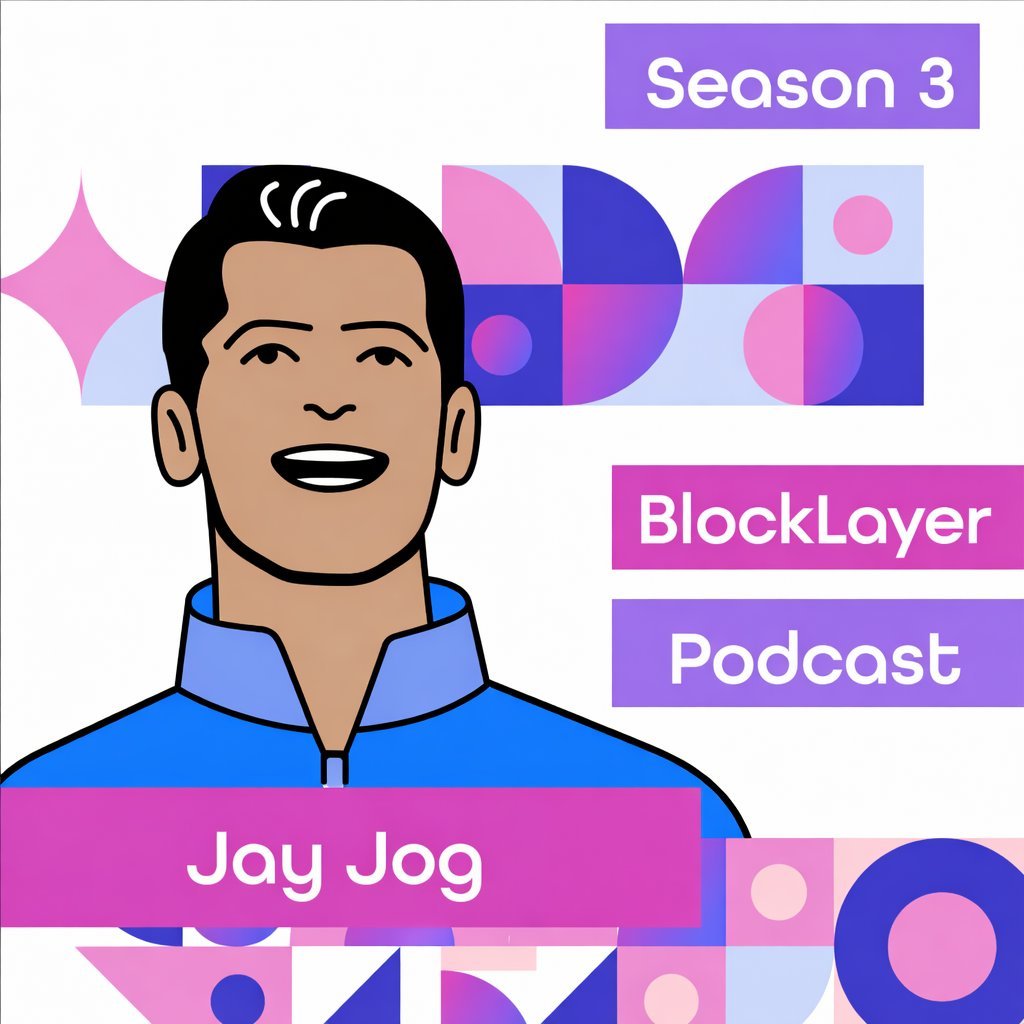
This week’s episode features Jayendra Jog (@jayendra_jog), Founder of @SeiNetwork.
We dive into Jay’s journey from traditional finance at Robinhood to building Sei Network, and unpack how his view of markets, users, and product feedback shaped the way he thinks about blockchain infrastructure.
The conversation explores the parallels between established cities and virtual machines: why dominant systems like the EVM are so difficult to displace, what makes developers stay, and what it actually takes for a new ecosystem to earn attention.
We also dig into the need for higher throughput in Web3, how parallelization can help solve today’s performance limits, and why scalability matters if crypto applications are going to serve real users at a much larger scale.
Jay also reflects on the role of memecoins, not just as speculation, but as community-driven movements that can reveal how culture, attention, and network effects form onchain.





![TheaKaage's tweet photo. 🚨The Larva Labs digital sculptures that you’ve been sleeping on.
$1.5B traded. Below 1 ETH. More than just 3D Cryptopunks.
Meet Meebits ❚ ❚ - John Watkinson & Matt Hall’s art that’s still early [thread 🧵] https://t.co/cYpacWSupA](https://pbs.twimg.com/media/HBeigjxWsAAYKje.jpg)