"The residual human advantages in F1 racing are real but shrinking. In pharma, the equivalent advantages are still large. Partly because biology is (much) harder to model than a racetrack. Part of it is that most organisations haven’t seriously tried to build learning systems that iterate on those judgements faster. We can’t do much about the first, but the second is up to us."
https://t.co/YhOAnysk6r
"Two similar companies run the same programme: same stages, same costs, same timelines, same historical progression rates, same indication. One invests in better tools for its go/no-go decisions; the other doesn’t. How do you value the difference?
@JackScannell13 and Leigham Strategy's answer: standard risk-adjusted NPV is “largely useless” here."
My take on the difference better decision tools make in early stage...
https://t.co/s4WI6sLywk
"Rockstar wasn't only building the big bet (GTA6). Alongside it ran GTA Online: a live game that changes constantly, tests small things on real players, and reportedly still earns up to $1M a day. Pharma has its launch day. It's called Phase 3... The question is what runs alongside it. A second indication tested cheaply, a biomarker checked early, a payer question asked before the readout, not after. Small, reversible probes that tell you something this quarter."
https://t.co/L5PKzgrpNC
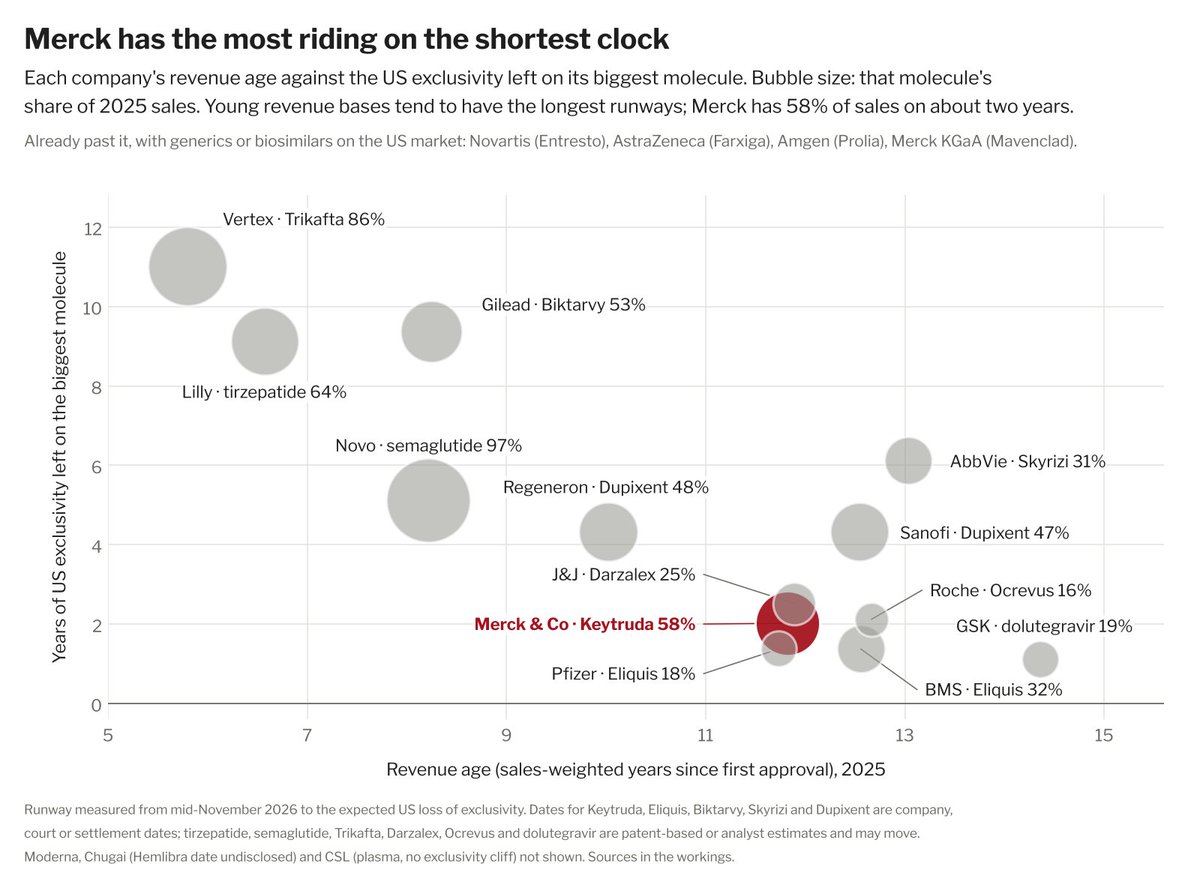
BMS and Pfizer lose Eliquis on the same day, in April 2028. Pfizer has built half its bridge. BMS, a third. Except, more than half of Pfizer's bridge is Paxlovid...
Who's really covered for their cliff? The Aftermath Index, part 3:
https://t.co/xow0J52Vgu
“What are drink-drive limits actually for?
There's no scientifically "safe" number. Impairment shows up from around 0.2 g/L, crash risk climbs steeply, and almost everyone is impaired at 0.5 g/L. Yet limits run from 0 to 0.8. Most of that spread isn't a disagreement about the science. It's a disagreement about what the rule is meant to do.”
https://t.co/jDSW6eNRYC
The adaptation gap: the best of times, the worst of times
"AI has made answers cheap. The judgement that tells us which answers to doubt is learned slowly, and we may be skipping the part where we learn it."
https://t.co/qg1SWqB3Yq
Inspired by a @DrSamuelBHume post yesterday...
https://t.co/ZNMkJU68oO
"None of this is an argument for keeping every interesting mechanism on life support. Opportunity cost is real, and a portfolio that cannot close a door is not being exploratory. It is being indecisive. Brepocitinib is not a parable that every strategic stop hides a future approval. Stops tell you who stopped paying - it doesn’t tell you whether the question is closed."
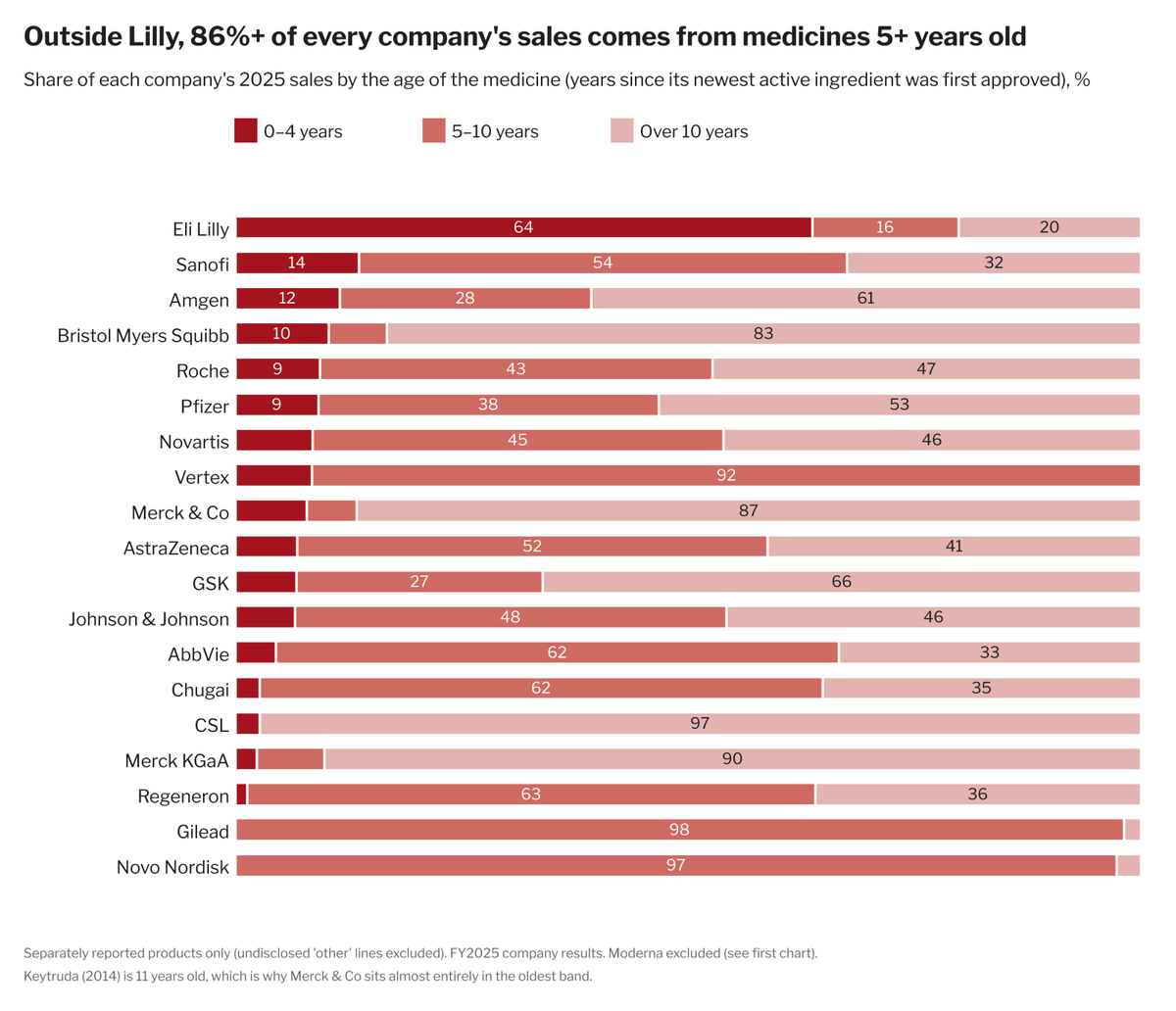
"Lilly made 64% of its 2025 sales from medicines approved in the last five years. Sanofi is second, at 14%. Amgen is third, at 12%. Everyone else in the top 20 is in single figures, and Gilead and Novo Nordisk are at zero.
The revenue age tells the same story, even if it does it more quietly. Lilly’s is 6.6 years. For most of the group, it sits between eleven and thirteen."
@DaveARicks
The Aftermath Index
https://t.co/scu3W4aZnM