Thin Geometry Detection has been quietly keeping Nanite foliage stable under TSR since it shipped - fixing the "boiling" on thin geometry, auto-enabled with Nanite foliage. Finally wrote up how it works. @UnrealEngine
I worked on Lumen Lite which is now out in UE 5.8. It's based on Irradiance Fields with Probe Occlusion, but with automatic probe placement. It is used when the engine is set to Medium GI and Reflections quality.
https://t.co/Y6i4aOGZlN
@aufkrawall_@UnrealEngine We would like to explore the possibility of platform agnostic solution, but addressing the immediate need on hardware without dedicated acceleration is also very important.
Thin Geometry Detection has been quietly keeping Nanite foliage stable under TSR since it shipped - fixing the "boiling" on thin geometry, auto-enabled with Nanite foliage. Finally wrote up how it works. @UnrealEngine
@toncijukic This relaxation is used only in TSR reject shading logic. we would like to keep other vendor upscalers in high performance, so it is disabled for them.
@toncijukic The main coverage is inferred across jittered samples with a variant of Bernoulli distribution and statistical test validation. The incorrect history is majorly rejected by the parallax heuristics. It only applies at geometry edge region with discontinuity.
Heads-up: if you use Nanite foliage with Before-DoF translucency (glass, some VFX), those need special handling through the Temporal Responsiveness node or they will create artifacts over the foliage. Prefer After-DoF when possible, as TSR handles it automatically.
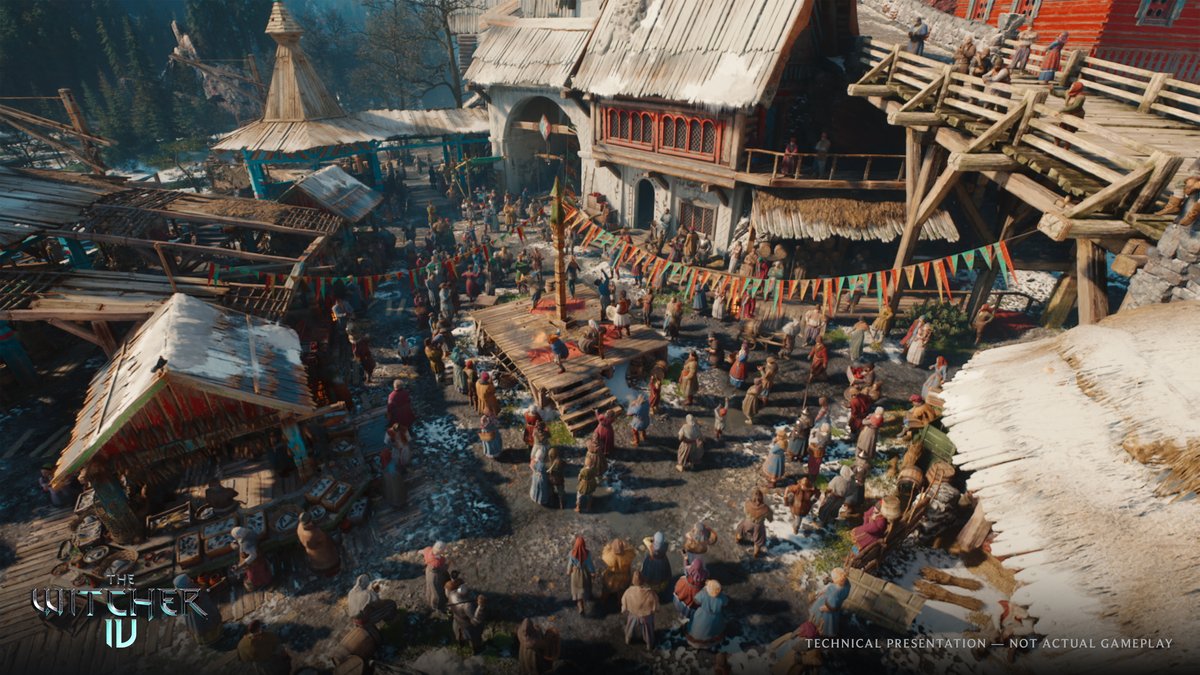
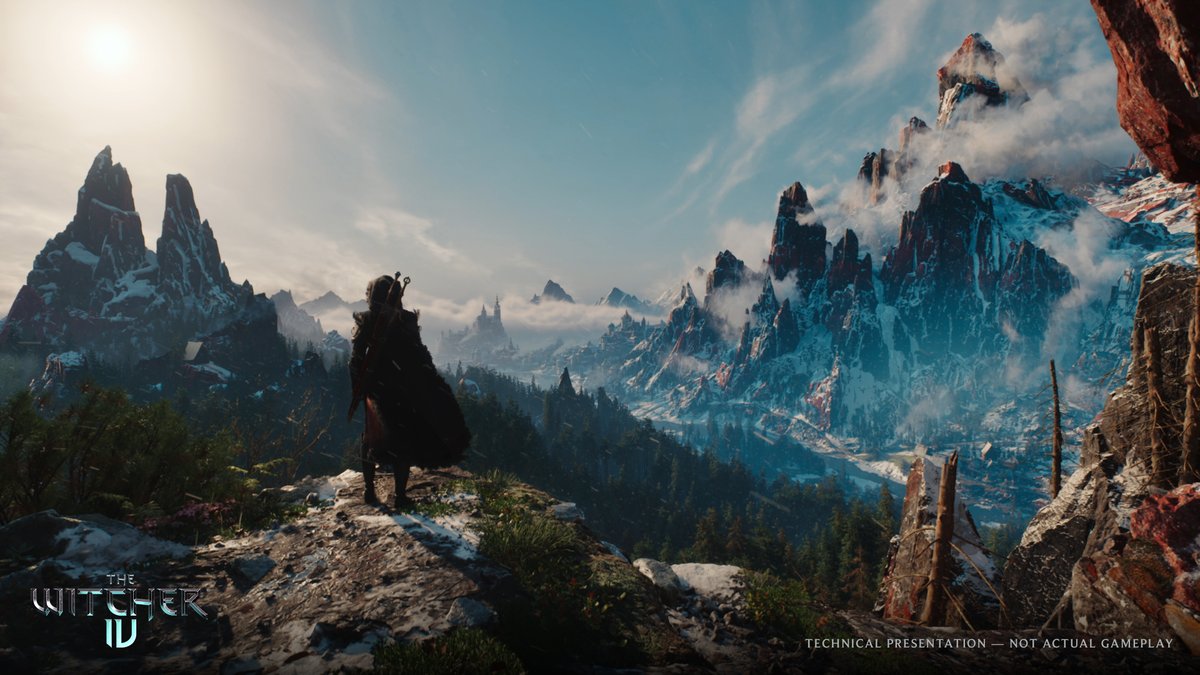
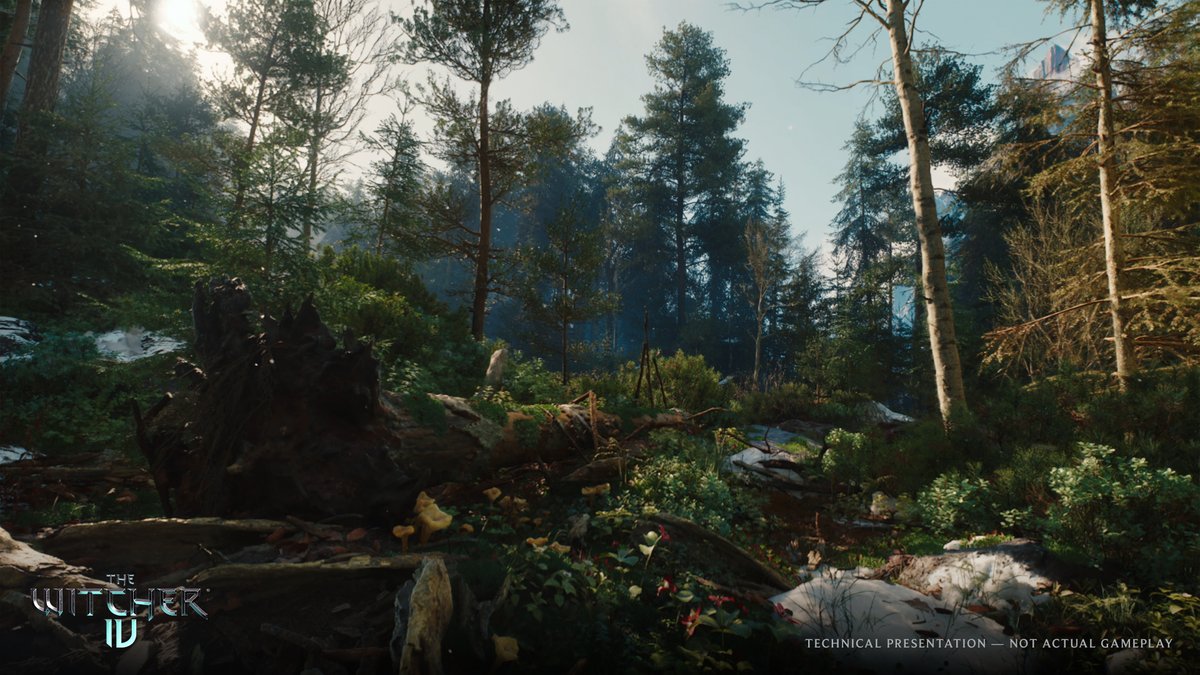
Thanks for tuning in to The Witcher 4 — Unreal Engine 5 tech demo and joining us during the State of Unreal 2025! #UnrealFest
The full presentation will be uploaded and shared with everyone later today, but in the meantime, here's four screenshots straight from the demo to tide us all over. 😍
We want Unreal Engine 5.6 to scale to large and rich worlds while preserving graphic quality and delivering 60 FPS.
What better world to do this in than that of The Witcher?
Tap in: https://t.co/W3KfuoU10w
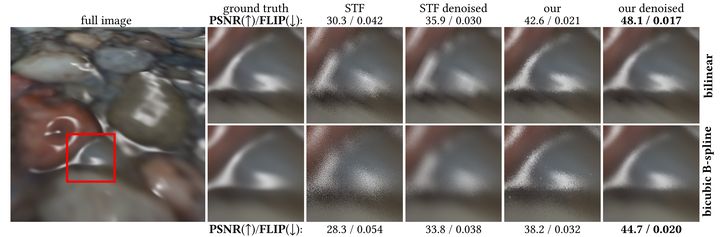
I'm excited to share our latest paper (work with Matt Pharr and @inversepixel ), "Improved Stochastic Texture Filtering Through Sample Reuse" accepted to I3D'2025.
https://t.co/8N9dlSdplT
https://t.co/WTtpMHfHlW 1/
Surely you have heard of Perlin, right? This year, he will come to I3D to give us his presentation "AI and the coming XR Singularity". More info at https://t.co/GgXjJVwH9d
Don't miss it! Register now for the conference: https://t.co/sXDwkTTpKc
#I3D2025
I just pushed a new paper to arXiv. I realized that a lot of my previous work on robust losses and nerf-y things was dancing around something simpler: a slight tweak to the classic Box-Cox power transform that makes it much more useful and stable. It's this f(x, λ) here:
New dithering method dropped
I call it Surface-Stable Fractal Dithering and I've released it as open source along with this explainer video of how it works.
Explainer video:
https://t.co/DvqFVC9VE5
Source repository:
https://t.co/0d0ZKvc9Rh
#gamedev#vfx
My new blog post explains spectral radiometric quantities, photometry and basics of spectral rendering. This is part 2/2 in a series on radiometry. Learn what it means when a light bulb has 800 lumen and how your renderer can account for that.
https://t.co/XdfcK6RmRB
Oldies but goldies: J Allen, Short Time Spectral Analysis, Synthesis, and Modification by Discrete Fourier Transform, 1977. Popularized the use of the spectrogram as the baseline tool for audio processing. https://t.co/Y81vCgJtX8 https://t.co/0lM0mt6HVB