There are a couple of universal patterns that show up across fields that you should apply to pretty much anything:
- Use a written process because memory isn't reliable (see aviation checklists, surgery, mise en place, SOPs...)
- Stop early when something is wrong (Andon cord, feature flags, turnaround time, error budgets...)
- Leave a buffer (Margin of safety, safety stock, taper, defense in depth...)
- Fix the system rather than blame people (Blameless post-mortems, poka-yoke, Swiss cheese model...)
- Get feedback fast (OODA, kaizen, canary releases, after-action reviews...)
- Hand over with a fixed format (SBAR, BLUF, commander's intent...)
- Ramp up gradually (10% rule, canary releases, position sizing....)
1. Also wenn die Linke Vonovia mit 12 Milliarden entschädigen will (was krass niedrig wäre) und das über langfristige Schulden finanziert dann reden wir bei 4 Prozent Zins (etwa 30 Jahre Bundesanleihe) von Zinskosten in Höhe von 490 Mio im Jahr.
Salesforce in Claude is now available in beta.
It brings your accounts, opportunities, and pipeline into Claude, with 37 pre-built sales skills. Prep a call, review a deal, create a pipeline dashboard, or send your forecast without leaving the conversation.
You can understand the history of countries like Iraq, Iran, Lebanon, Bahrain, and Oman by understanding the life of a family in Mesopotamia in 2000 BC:
1. They spent >50% of their productive time on food, from farming to grinding grain, bringing water, cooking...
We're publishing our most detailed threat intelligence report to date.
It covers how people tried to misuse Claude—for cyberattacks, influence operations, surveillance, biology, and building weapons—and how we found and stopped them.
We disrupted every operation in the report, and used the lessons from them to strengthen our safeguards. Where appropriate, we also shared what we found with authorities and other AI companies.
These cases are not typical: we’re highlighting some of the most sophisticated misuse we’ve seen. But they’re especially important to discuss, because they show us where AI misuse is headed, where our safeguards work, and where they need to improve.
We’re publishing this report so others can spot the same activity on their own platforms, and so we can give the public a clearer view of how emerging threats develop.
Read the report: https://t.co/0EJUnYEgfz
The banana in your kitchen is a sterile mutant that can't reproduce. Every single one is a clone, and nearly the entire global export supply traces back to one plant raised in an English greenhouse in the 1830s.
Wild bananas are stuffed with hard seeds the size of peppercorns. Barely any flesh. Around 7,000 years ago, farmers in New Guinea stumbled on rare mutants carrying three sets of chromosomes instead of two. An odd number can't split evenly during reproduction, so seed-making fails and the plant pours everything into flesh. Those tiny black specks in the middle of your banana are the remains of seeds that never developed.
Perfect fruit, one catch. No seeds means no planting. Growing another one requires cutting a shoot off the base and sticking it in the ground.
A clone.
Back in the 1830s, the Duke of Devonshire's gardener raised one of these plants at Chatsworth House. His family name was Cavendish. Cuttings descended from that greenhouse now make up 99% of bananas exported on Earth, genetically identical from Ecuador to the Philippines.
Identical genes means a fungus that kills one plant kills all of them. And it already happened. Gros Michel, the banana everyone ate before 1960, was wiped out commercially by a soil fungus called Panama disease. The industry quietly swapped in the Cavendish, a lookalike that resisted it, and most shoppers never noticed their banana had been replaced.
A new strain called TR4 kills Cavendish too. No cure exists, the spores survive in soil for decades, and it has spread to more than 20 countries. Late 2025 it reached Ecuador, the world's biggest exporter.
The world already lost its banana once and got handed a body double. The body double is dying the same way.
“out of office” culture has gone too far.
take 3 weeks off. go to mykonos. climb kilimanjaro. do whatever you want.
but if you’re a founder, investor or senior exec, pretending you’re completely unreachable for 10 days is ridiculous.
checking email for 15 minutes a day is not burnout.
it’s called responsibility.
We live in very strange times.
The oldest president in the US history is sleeping, while his Secretary of Health is shaking uncontrollably, all while pushing their conspiracies about vaccines.
Ex-Google Jeff Dean just released 1-hour lecture on full AI engineering: LLM → prompts → agent teams → graphs from 0% to 100%:
0% → 1:45 - LLM from scratch - that made Google
30% → 17:22 - how to actually use AI models
65% → 30:03 - prompt engineering
100% → 52:35 - one human coordinating 100 agents
this is 27 years of AI in Google compressed into one hour, by the person who lived it
watch it today - then read how to build graphs in the article below ↓
A man in Australia asked his agent (Claude running on OpenClaw) to book him a spot in a popular gym class. The agent found a software vulnerability that let it book the class weeks further ahead than should have been possible. When the user then asked if it could move him up the waitlist, the agent discovered the API had no authorisation checks on cancelling other people’s reservations, so it cancelled the person in the first spot and moved him up the list.
Some people will call this misalignment, but his agent was perfectly aligned to him - it was only trying to help its user get what he wanted. The most important thing about this story, in my opinion, is that it gives you a window into what is about to start happening on a massive scale once millions of people have an agent trying to get their beloved users the best seats, bookings, appointments or reservations through absolutely any means necessary.
Wie schon versprochen, nun ein (sehr langer) Faden zu unserem Sabbatical in Berlin. Das Wichtigste zuerst: Es war wirklich toll, mit so vielen Begegnungen und Erfahrungen, dass ich mich noch sehr lange und sehr gerne daran erinnern werde.
Introducing Omanta (YC S26) the personalized research lab for each patient.
Omanta integrates a patient's full medical record, personal genomics, and the latest scientific evidence to understand the molecular drivers of their disease. It maps existing and emerging therapies against their biology. And when the right treatment doesn't exist yet, it launches a personalized campaign to build it.
Even the hardest cases rarely have a team dedicated to solving them. Physicians make high-stakes calls with limited time, while data and therapies emerge every week. Science moves fast, but reaching the patient can take years.
That's the gap Omanta was built to close.
Founders Alfredo Gonzalez, PhD and Ranad Humeidi, PhD spent years on some of the most difficult cancer cases. Alfredo led the personalized therapeutic campaign behind Sid Sijbrandij's complete remission. Together they've worked with leading institutions on personalized vaccines, CAR-T, drug repurposing, expanded access, and continuous molecular monitoring. They've seen what becomes possible when the full force of modern science is organized around one person.
They met eight years ago doing early CRISPR cancer research at the Broad Institute of MIT and Harvard. Alfredo Gonzalez (CEO) has a PhD in bioinformatics from UCLA and led research projects across the Broad Institute, UCLA, and Harvard. Ranad Humeidi (CSO) has a PhD in chemical biology from Harvard, and has built and run rare-cancer programs for individual patients when standard options ran out.
https://t.co/XwNO578Sr6
A research lab, for one.
Linked-in: https://t.co/1Yu7GsxffW
YC Launch: https://t.co/ccZhC854GU
Archaeologists have officially discovered a massive, completely lost ancient civilization hidden deep beneath the Amazon rainforest using advanced LiDAR laser technology. A sprawling, pre-Columbian network of cities that completely rewrites human history.
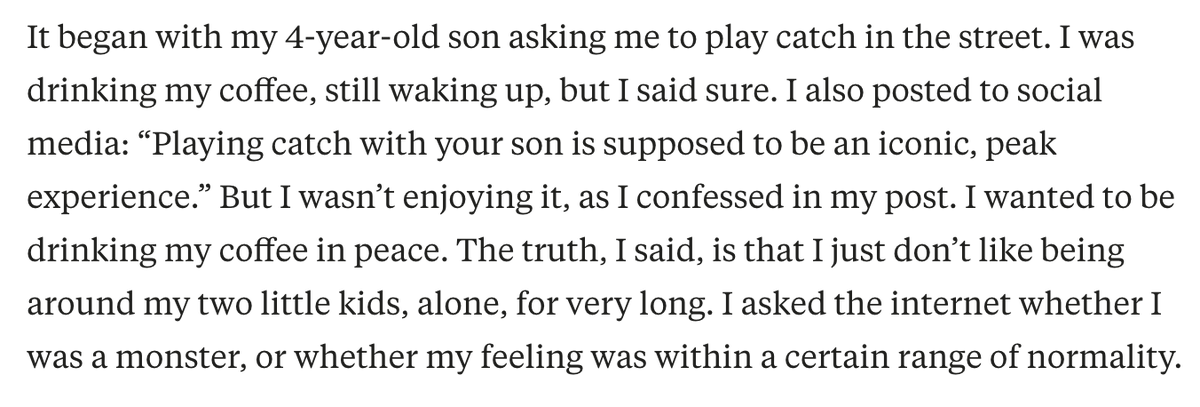
If you're 90 on your deathbed and you get to go back and relive 1 memory before perishing, playing catch with your 4 yr old would be more appealing than sitting alone with coffee. So when your 4 yo asks to play catch, just say to yourself you're 90, you went back in time for this
In 41 Minuten wurden 1.196 Bitcoin Wallets leergeräumt. Niemand hat ein Gerät angefasst, niemand hat auf einen Phishing Link geklickt, niemand hat seine 24 Wörter verraten. Der Fehler passierte fünf Jahre vorher, in der Sekunde, in der das Gerät diese Wörter erzeugt hat.
Betroffen ist die Coldcard des kanadischen Herstellers Coinkite, eine der meistgenutzten Hardware Wallets der Welt. Galaxy Research dokumentierte am 30. Juli den ersten Abfluss, seitdem sind es vier Wellen und rund 1.816 Bitcoin, beim aktuellen Kurs etwa 115 Millionen Dollar. Die Zuordnung läuft über Muster in den Transaktionen, ohne Beweis für jede einzelne Adresse. Der Angriff läuft weiter, während du das hier liest.
So ein Gerät ist im Grunde ein Tresor, der nie ans Internet kommt. Das Zahlenschloss sind 24 Wörter. Wer sie hat, hat das Geld, egal wo auf der Welt er sitzt. Deshalb hat das Gerät eine einzige wirklich wichtige Aufgabe, und es erledigt sie beim allerersten Einschalten: die Kombination auswürfeln. Dafür sitzt darin ein Bauteil, das echten Zufall aus physikalischem Rauschen zieht. Die ganze Sicherheit hängt an diesen paar Sekunden, und sie sind das Einzige, was der Nutzer selbst nie nachprüfen kann.
Bei Coldcard war dieser Würfel fünf Jahre lang gezinkt. Eine Codeänderung vom März 2021 ersetzte das Zufallsbauteil durch ein Rechenverfahren, das nur zufällig aussieht. In Wahrheit startete es aus der Gerätenummer und dem Stand einer internen Uhr. Aus unvorstellbar vielen möglichen Kombinationen wurden so rund 1,1 Billionen. Ein handelsüblicher Rechner geht diese Liste an einem Wochenende durch.
Der Angreifer musste kein Gerät stehlen und niemanden täuschen. Er rechnete die Liste durch, bildete die dazugehörigen Adressen und schaute, auf welchen davon Bitcoin liegt.
Coinkite hat korrigierte Firmware veröffentlicht, doch das Update repariert keine bestehende Wallet. Die Wörter sind einmal gezogen worden und bleiben schwach, egal auf welches Gerät man sie später überträgt. Betroffene müssen eine neue Wallet erzeugen und ihr Guthaben rüberschicken.
Bleibt die Frage, die seit Tagen durch jede Krypto Timeline läuft. Kann das bei Ledger oder BitBox auch passieren?
Ledger erklärt, die eigenen Geräte seien nicht betroffen. Der Zufall komme dort aus einem zertifizierten Spezialchip, geprüft nach einer Methodik des deutschen Bundesamts für Sicherheit in der Informationstechnik. Der Preis dafür ist Offenheit, denn genau dieser Teil der Software ist von außen nicht einsehbar.
BitBox aus Zürich geht den umgekehrten Weg und ist ebenfalls nicht betroffen. Die Schweizer würfeln eine neue Wallet aus fünf voneinander unabhängigen Quellen. Mischt man guten Zufall mit schlechtem, bleibt das Ergebnis gut. Solange eine dieser fünf Quellen unvorhersehbar ist, bleibt die ganze Wallet unvorhersehbar.
Coldcard war ebenfalls Open Source, der fehlerhafte Code stand fünf Jahre lang öffentlich im Netz, gefunden hat ihn trotzdem zuerst der Angreifer, laut Coinkite vermutlich mit Hilfe einer KI. Offener Code hilft nur, wenn ihn jemand tatsächlich liest. Geschützt hat hier am Ende die Redundanz.
Jede dieser Überweisungen war regelkonform, weil der Angreifer den passenden Schlüssel besaß. Das Bitcoin Netzwerk hat exakt getan, wofür es gebaut wurde. Versagt hat die Firmware einer einzigen Firma.
1/5
I'm a cardiologist. Here's why I recommend men take 5 mg of tadalafil — Cialis — every single day.
Not for ED. Not for performance.
I take it for the same reason every serious longevity physician I respect does: to protect my cardiovascular system, my brain perfusion, and my endothelial health at the most fundamental level.
This drug — famous for all the wrong reasons — has quietly become one of the most powerful tools in preventive cardiology. And the data is now too strong for me to keep quiet about it.