nanochat now trains GPT-2 capability model in just 2 hours on a single 8XH100 node (down from ~3 hours 1 month ago). Getting a lot closer to ~interactive! A bunch of tuning and features (fp8) went in but the biggest difference was a switch of the dataset from FineWeb-edu to NVIDIA ClimbMix (nice work NVIDIA!). I had tried Olmo, FineWeb, DCLM which all led to regressions, ClimbMix worked really well out of the box (to the point that I am slightly suspicious about about goodharting, though reading the paper it seems ~ok).
In other news, after trying a few approaches for how to set things up, I now have AI Agents iterating on nanochat automatically, so I'll just leave this running for a while, go relax a bit and enjoy the feeling of post-agi :). Visualized here as an example: 110 changes made over the last ~12 hours, bringing the validation loss so far from 0.862415 down to 0.858039 for a d12 model, at no cost to wall clock time. The agent works on a feature branch, tries out ideas, merges them when they work and iterates. Amusingly, over the last ~2 weeks I almost feel like I've iterated more on the "meta-setup" where I optimize and tune the agent flows even more than the nanochat repo directly.
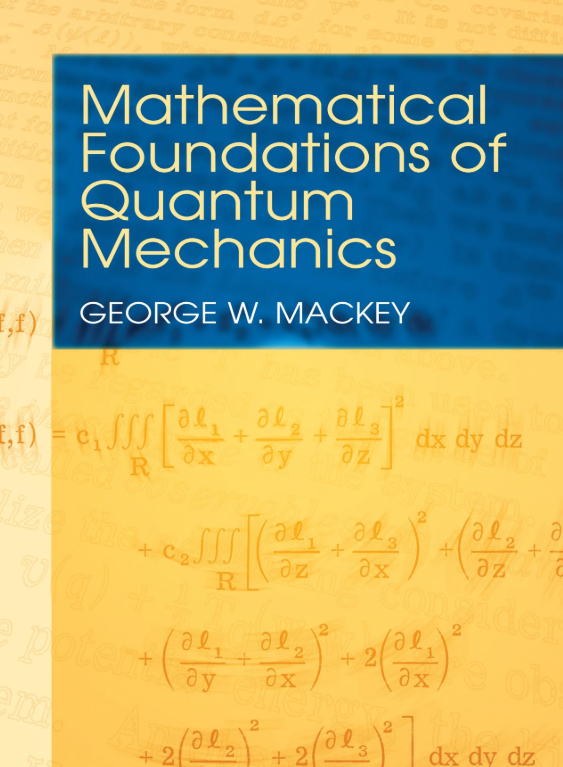
You know what is available for free on Google books right now? It's George W. Mackey's ''Mathematical foundations of quantum mechanics'', a great and short book on the mathematical tools necessary to understand QM.
Rational Design Heterobilayers Photocatalysts for Efficient Water Splitting Based on 2D Transition-Metal Dichalcogenide and Their Janus https://t.co/GKVEbBiVI8
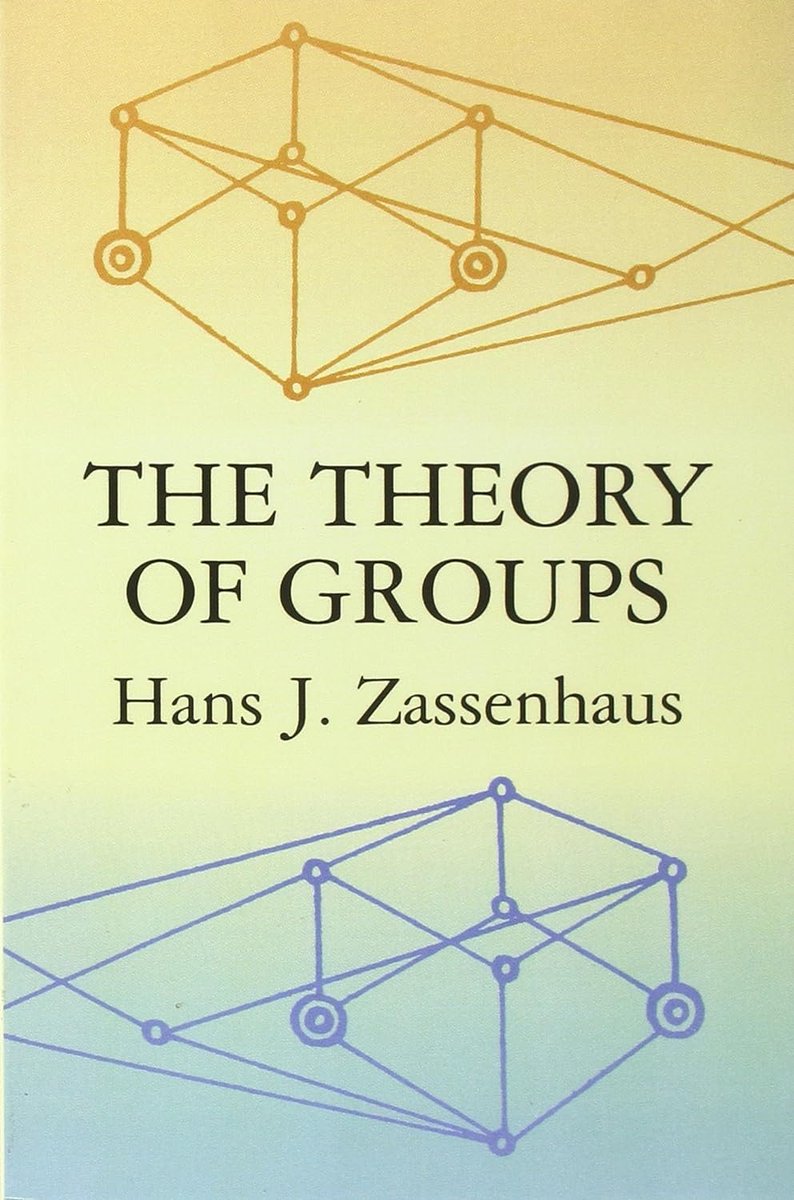
Book of the day:
"The Theory of Groups" by "Hans J. Zassenhaus" (born 28 May 1912)
A well-written, graduate-level text to acquaint the reader with group-theoretic methods and to demonstrate their usefulness as tools in the solution of mathematical and physical problems.
https://t.co/TV18fA6CbU
Want to run DFT workflows using Quantum Espresso but don't know where to start? Tom Demeyere of @unisouthampton has written an excellent blog post about the use of quacc to do so!
https://t.co/fcQTuZXJlS.
Physics Photo Of The Day:
Niels Bohr lecturing on Quantum Mechanics in Iowa, 1950. Bohr is seen explaining the Double slit experiment.
Young's double slit experiment is a demonstration that light can behave like a wave and produce interference patterns. The experiment involves shining a coherent light source, such as a laser, on a screen with two slits cut into it. The light waves passing through the two slits interfere with each other, creating a pattern of bright and dark fringes on another screen behind the slits. The position and width of the fringes depend on the wavelength of the light and the distance between the slits and the screen. The experiment shows that light can act as a wave when it propagates through space, but it can also act as a particle when it is detected on the screen. This is an example of the wave-particle duality of light and matter.
The main features of the experiment are:
॰ Coherent light source: A light source that emits waves of the same frequency and phase. This ensures that the waves from the two slits are in phase when they reach the screen.
॰ Two slits: Two narrow openings in a screen that act as secondary sources of light waves. The distance between the slits is denoted by **d** and is usually much larger than the wavelength of the light.
॰ Interference pattern: The pattern of bright and dark fringes on the screen behind the slits. The bright fringes occur when the waves from the two slits are in phase and constructively interfere, while the dark fringes occur when they are out of phase and destructively interfere.
The position of the fringes is given by
y = nλD/d,
where 'y' is the distance from the central fringe, 'n' is an integer, 'λ' is the wavelength of the light, 'D' is the distance between the slits and the screen, and 'd' is the distance between the slits.
The width of each fringe is given by
β = λD/d, which is also called the fringe spacing.
॰ Wave-particle duality: The phenomenon that light and matter can exhibit both wave-like and particle-like properties depending on how they are observed.
In this experiment, light behaves like a wave when it passes through the slits and interferes with itself, but it behaves like a particle when it hits the screen and produces discrete spots of intensity.
[Image Credit : Des Moines Register.]
@MAUddin222 This article explains well about chirality in Au clusters. It can arise from distorted Au core, or by chiral ligands or chiral arrangement of ligands.
https://t.co/0AEr6sTh2M
Most Read in the past 30 days! Check it out: "Facet Engineering for Amplified Spontaneous Emission in Metal Halide Perovskite Nanocrystals" by @SantuKumarBera7, @sumanbera46, Shrivastava, @npiacs, & Adarsh
https://t.co/R97NRLAe57
CsPbBr3 quantum dots which form fascinating superlattices on TEM by chance!
But it also highlights the problem of hot-injection of halide perovskite QDs. Getting such quantum dots are accompanied by laborious separation processes, luck plays a part too. #FluorescenceFriday
New article online led by Jinghui Gao. Collaboration with colleagues at U. New Mexico reports how Janus particle chains in solution modulate how light passes through the solution.
https://t.co/twNfbMGP2Z
@ProfArmani P/a: It's interesting to know you're a physics professor. Currently, I’m working on the optical properties and the applications of the noble metals with my professor in Vietnam. It will be a pleasure for me to connect with your team. ☺️
@ProfArmani As a HS student who had the opportunity to become a research assistant at the higher education lab, I'm so grateful for your tweet 🥹. Thank you for your thoughtfulness.
A rant.
Every summer, I accept one HS student researcher (paid). W/o fail, (many) people make comments about how the student must be a waste of my time.
When I point out specific things that the student accomplished, they say "their parents probably did it". 1/3
'Crystal-Phase Control of Ternary Metal Oxides by Solid-State Synthesis with Nanocrystals'
One of the most popular papers in ACS Nanoscience Au in 2022.
Find out why. Fully open access 👉 https://t.co/kJc5PU4Qin





![BahramShakerin's tweet photo. [Open Access][SCOAP3 for Books]
Spin in Particle Physics
Elliot Leader
Cambridge University Press, 2001 & 2023
https://t.co/whABSJxopi https://t.co/HC68HPVEez](https://pbs.twimg.com/media/GOCl2KeXcAEXQyU.jpg)


![PhysInHistory's tweet photo. Physics Photo Of The Day:
Niels Bohr lecturing on Quantum Mechanics in Iowa, 1950. Bohr is seen explaining the Double slit experiment.
Young's double slit experiment is a demonstration that light can behave like a wave and produce interference patterns. The experiment involves shining a coherent light source, such as a laser, on a screen with two slits cut into it. The light waves passing through the two slits interfere with each other, creating a pattern of bright and dark fringes on another screen behind the slits. The position and width of the fringes depend on the wavelength of the light and the distance between the slits and the screen. The experiment shows that light can act as a wave when it propagates through space, but it can also act as a particle when it is detected on the screen. This is an example of the wave-particle duality of light and matter.
The main features of the experiment are:
॰ Coherent light source: A light source that emits waves of the same frequency and phase. This ensures that the waves from the two slits are in phase when they reach the screen.
॰ Two slits: Two narrow openings in a screen that act as secondary sources of light waves. The distance between the slits is denoted by **d** and is usually much larger than the wavelength of the light.
॰ Interference pattern: The pattern of bright and dark fringes on the screen behind the slits. The bright fringes occur when the waves from the two slits are in phase and constructively interfere, while the dark fringes occur when they are out of phase and destructively interfere.
The position of the fringes is given by
y = nλD/d,
where 'y' is the distance from the central fringe, 'n' is an integer, 'λ' is the wavelength of the light, 'D' is the distance between the slits and the screen, and 'd' is the distance between the slits.
The width of each fringe is given by
β = λD/d, which is also called the fringe spacing.
॰ Wave-particle duality: The phenomenon that light and matter can exhibit both wave-like and particle-like properties depending on how they are observed.
In this experiment, light behaves like a wave when it passes through the slits and interferes with itself, but it behaves like a particle when it hits the screen and produces discrete spots of intensity.
[Image Credit : Des Moines Register.]](https://pbs.twimg.com/media/FwRV8frWYAARVjD.jpg)


