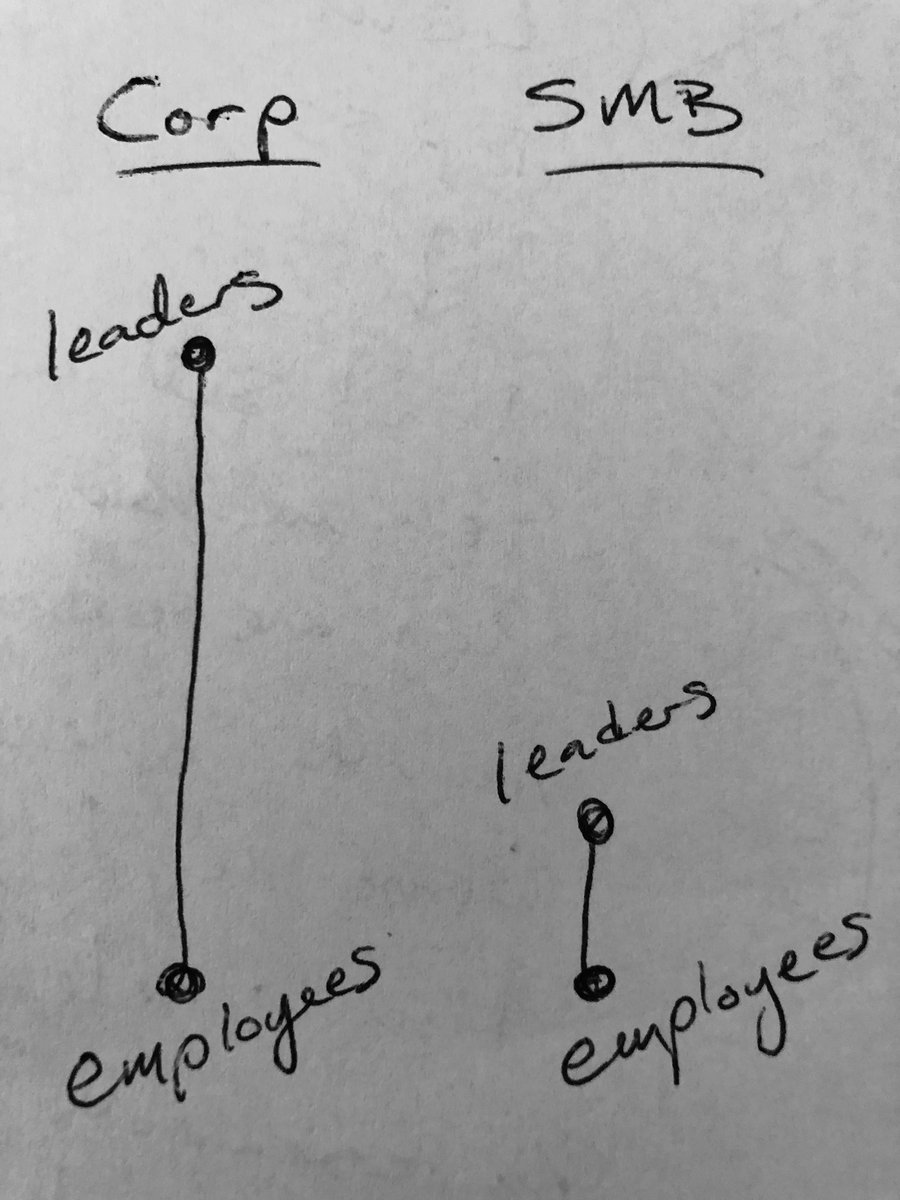
Simple but powerful. #SMB’s have such an advantage in the culture game... but need to move fast to make what they have stick before that line gets longer!
@rotanarotana For larger orgs, key lies in taking a catalytic mechanism approach. Increase recognition/reward for inputs, collabs, experimentation no matter how small. Social tech can make efforts more visible throughout org. Easier to spot, amplify, reward openly 2/2
@rotanarotana Depends on how c-suite is defined. Very large orgs are slow to change. It’s the smaller/growing companies where the greatest hope rests in Transformation (c-suite of one) as many processes and protocols are not cemented. 1/2
@rotanarotana Too often we ignore the elements of design and focus on direct behavior change (training) or indirect change (mission/purpose statements, directives on high). These fail or at best are short-term as people will undoubted follow the larger system 2/2
@rotanarotana You address the systems in an org. It’s very design. Change the systems of recognition, reward, decision-making, communication. Systems guide behaviors and behaviors over time create beliefs. 1/2
So what is Organizational Social Design?
Have you ever been to a really great dinner party? It probably wasn't awesome by chance. More here: https://t.co/x1ITwH3kcr #OD#OSD#OrgDesign
"[Organizations] are always looking for people on the cutting edge of technology, but they have not invested in making sure their current employees have stayed at the cutting edge," - Thomas Kochan https://t.co/H6qywLWelr via @MITSloan / THIS
@tmiket Change the system, changes the behaviors, changes the beliefs. One conversation at a time of course but conversations focused on elements of the org not just the work of the org.
Most corporations don’t remember when they were small. Small is connected. Small helps you be nimble. Small is responsive. Smart Organizational Social Design strategy #OSD + social tech can help big orgs to be “small” again or help small ones stay that way as they grow.
We know that you don’t become healthier by buying a fitness tracker.
And you don’t become a Project Manager because you have the latest project software.
Why then would you think that getting social tech would make your company more innovative and agile?? #OSD
Social forms around an object but is also influenced by objects, the greatest being the organization itself. If you want to change the direction of org social, you need to change the organization.
@SaraSWalters Excellent example. And yes, transparency or better yet openness is key. Conversations happening in bubbles or pockets don’t move orgs forward
As water is the universal solvent, carving through rock, eroding soil and dissolving solids, Conversation is the organizational solvent; carving through silos, eroding distrust and dissolving artificial power structures
We seem to always start from a place of trying to directly change human behavior, a challenge. But if we change the systems the behavior resides in... the context, won’t behavior change follow more naturally? #orgdesignmatters
It’s the mindset that matters and it’s your systems/structure that will ultimately change the behaviors... behaviors that create new beliefs about autonomy, input, and openness.
To see the greater, often invisible, systems at play in your organization you need only look at the collective behaviors of leaders. It really is the little things. https://t.co/ZcFWwIRdb0
Yes, L&D should play a role in nudging change because the reality is that most all org learning & performance issues are #orgdesign issues. Behavior change w/o systems change isn't going to be lasting change #OSD
In plain English - #OSD is how we appreciate/respect your org design but work to tweak aspects of your systems and processes to bring people closer together. Tweak, not replace. Why? Connected people learn from each other, innovate, build trust and grow