I present many hard years of effort between myself, Sir Woof, the groups of @Piero_Canepa@ZhaoGroupNUS and others.
The pitch: Aluminum formate (ALF) adsorbs CO2 really well at elevated temperatures, ignores N2, and is made reeeeeal cheap.
Enjoy!
https://t.co/q8MJ6eOy7Z
#Neutron#diffraction rules! Here is an up-to-date open-access primer to this fascinating technique, written for curious beginners & long-time practitioners. A 1.5 years writing project including 12 authors from 4 continents. Please enjoy and retweet!
https://t.co/Vh5OIltph7
Announcing a very special workshop this summer:
The Future of Materials Discovery - UCL, London 25-26 June
AI is going to change science in a big way. We have an unbelievable line-up of speakers to discuss what the future looks like
Please RT!
https://t.co/89Puy3fYdP
#ChemE#MOFs#separation#membranes#editorial The roll-to-roll process is promising in fabricating large-area MOF membranes for aqueous separations. Congratulations on the joint effort and progress! @NatureWaterJnl https://t.co/tQPtE6ghpW
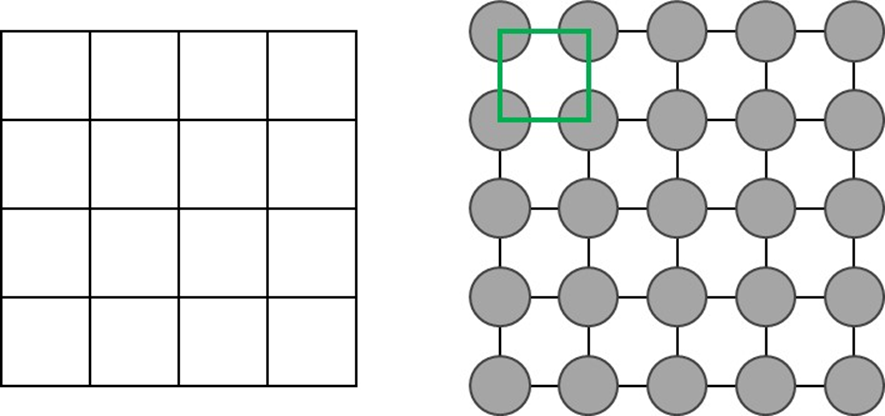
A short explainer on compositional disorder.
Imagine a square grid. Place one circle on each intersection of the grid. The circles are arranged in an ordered pattern, this is similar to the order found in a crystal (although of course real crystals are 3D not 2D)
It was very nice to collaborate with @Robert_Palgrave and students to analyze the autonomous lab paper.Our findings are summarized in the thread here. Most crucial finding imo is that compositional disorder in materials cannot be neglected,as is can lead to incorrect conclusions.
Congrats to @ChemMater 2023 Best Paper Awardees Prashun Gorai, Theodosios Famprikis, Baltej Singh, Vladan Stevanović, and Pieremanuele Canepa for "Devil is in the Defects: Electronic Conductivity in Solid Electrolytes” read more and honorable mentions 👇 https://t.co/aCiqjjDSjc
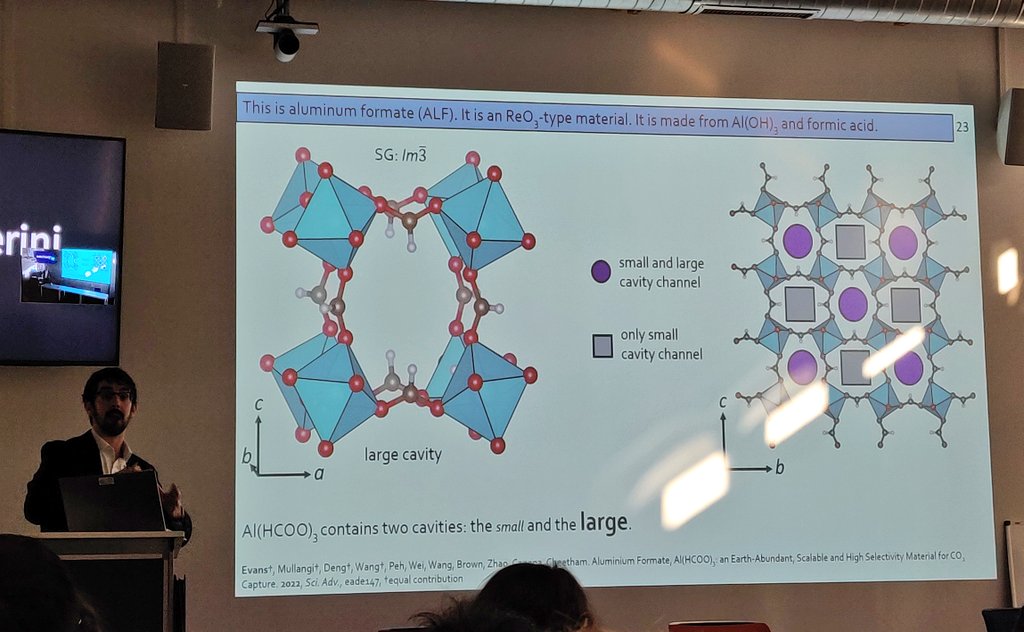
Very inspiring talk by Hayden Evans @TightFives from @NIST during his visit at @EPFL highlighting the multiple applications of Al-formate (ALF) for gas separations.
Congratulations for the great work!
@EnergypolisVS@EPFL_CHEM_Tweet
@taddeima @ZhaoGroupNUS@NIST@J_A_C_S@ScienceMagazine Well its above liquid nitrogen temps, so that would most likely be the system of use. As well as insulation to reduce heating as much as possible. The next steps are engineering focused, as you can tell.
ALF stores #H2 at modest temps and pressures. Given its low cost - it is perhaps one of the most alluring solutions to large scale storage of H2. See our work published in @J_A_C_S and seen in @ScienceMagazine today! #MOFs@NIST
https://t.co/RLINgPkJOU
https://t.co/ONYtaEfrO2
ALF stores H2 at low P/mild T - great for fuel cell pairing.
preprint: https://t.co/uLedyU1UEh
This work was spearheaded by us at NIST, but we have some wonderful technoeconomic analysis from @hanna_breunig +Peng showing ALF's cost competitiveness vs compressed H2.
@CMikeMcGuirk @CozzolinoChem@KM_Hutchins @TEAS_Actinides @LongLabCal@chemgonzalezlab@organomimetic I'd recommend two - The oxford primer "https://t.co/g8kGttCTvY" is pretty good for the great overview - and the more thorough one is this one that Galen Stucky used for his class at UCSB "Crystal Structure Determination by Werner Massa"
PLEASE RETWEET: I have a 4-year PhD studentship available @UoBChemistry on using #compchem to find new wide band gap oxides for optoelectronic applications. Want to increase efficiency in solar cells and power electronics, then this is for you! https://t.co/0gwyjNNCIG