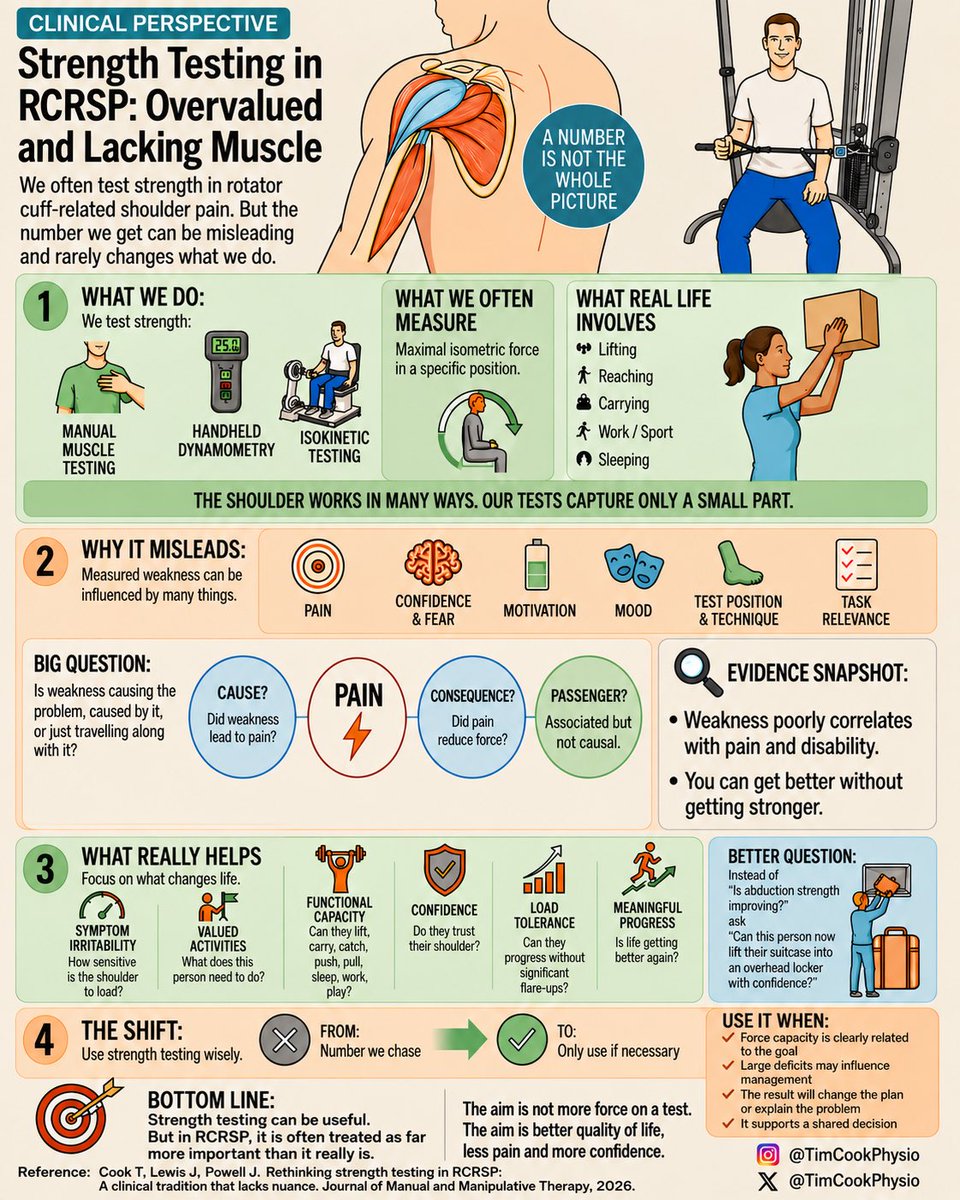
Does a lower strength test explain shoulder pain—or predict recovery? Our paper questions what routine strength testing can tell us in rotator cuff-related shoulder pain. @JeremyLewisPT@JaredPowell12
Paper: https://t.co/Yv8KYBLCmm
#ShoulderPain#Physiotherapy
When does shoulder strength testing change your treatment plan? Our clinical perspective @JaredPowell12@JeremyLewisPT
see link for full text 👉https://t.co/1arHdW2fhN
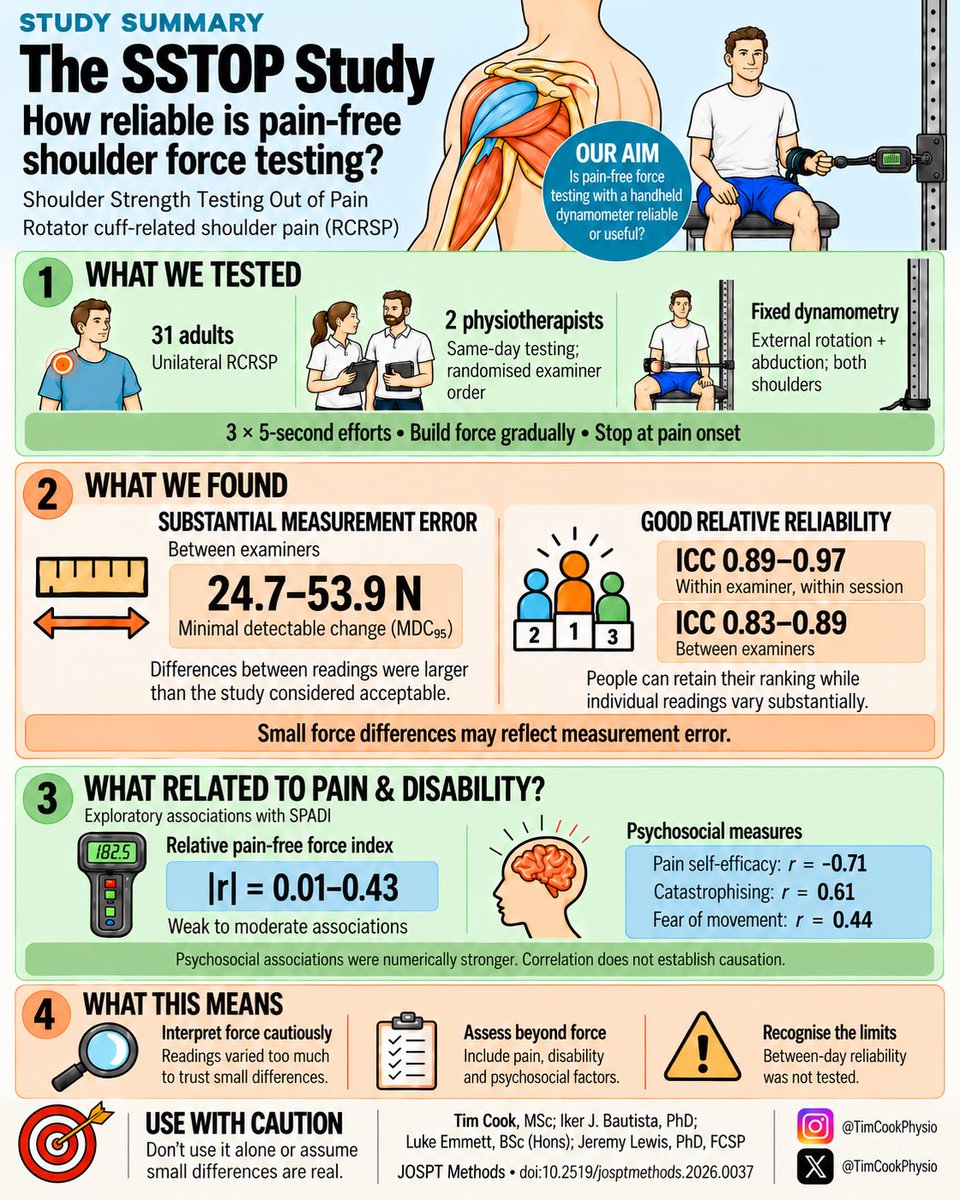
@JeremyLewisPT@King2980@Luke_Emmett Can we trust pain-free shoulder force measurements?
Hot off the press -https://t.co/w0DLTiZ68s
The key finding:
People were ranked fairly consistently, but readings varied substantially—even with the same clinician in the same session.
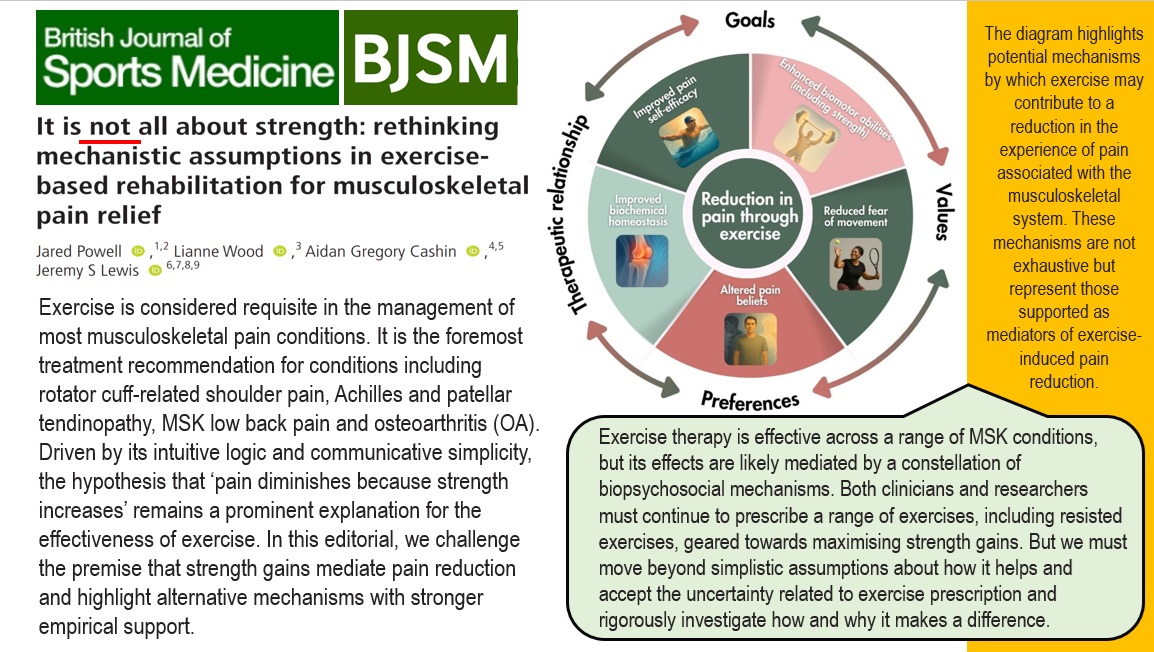
Hot off the press 📝 discussing the role of strength testing in RCRSP - open access: https://t.co/ZVIZGqkkdT
@JeremyLewisPT@JaredPowell12
Thanks to @jmmtonline for the opportunity 🙏
Nearly there, 46 more responses would be great!!! 🙏🙏
Do you see patients with suspected CES?
We are looking for:
1. NHS clinicians, that
2. Work in a primary care setting in England, and
3. Assess or manage people with low back pain
Follow this link: https://t.co/5prbaX3ddw
@JaredPowell12@JaredPowell12 thanks for posting 👍🏻
Can I ask why you favour resistance training? Personal preference? Based on supporting evidence? Thanks
@erikMeira@GregLehman Patients/clients often want fixing too, which probably drives therapists to try and take the role of the fixer somehow🤷♂️
Then when it ‘works’ and a person gets better it’s a self-fulfilling prophecy
@GregLehman@mackinprof@BradSchoenfeld In other words...If I set up a trial comparing two weekly time-efficient resistance training programmes to treat shoulder pain that last 6 weeks - is that long enough to see an expected effect on strength??? Thanks
@GregLehman@mackinprof Thanks! I'm aware of Iverson and @BradSchoenfeld 's work on time-efficient training - do we know the minimal number of weeks we need to train prior to seeing significant gains in strength??