For weeks, some racist Western media outlets published story after story against Professor Jason Arday, at times every few hours, branding him a plagiarist. They hounded him relentlessly, and the pressure became too much for him. He committed suicide in August, aged just 41.
This week, he was cleared of plagiarism yet again. A fresh investigation by the academic publisher Taylor & Francis found nothing to support the allegations. Of the four formal investigations into his work, not one substantiated the charge.
The same publications that hunted him are now silent. They have not corrected their reporting, and they have not had the decency to admit they were wrong.
This is how hard it is to be Black in a deeply racist world, and to succeed where they expect you to fail. Even those who present themselves as the moral conscience of the Western world have nothing to say.
In a shameful act, the Oxford Reform Society has invited Nathan Cofnas, the self-described "race realist" who first raised the plagiarism allegations against Professor Arday, to speak at Oriel College next month. Oriel College, the home of Cecil John Rhodes’ statue.
These institutions are racist. Sadly, Black leaders have failed to build rival institutions that give Black people respect and intellectual dignity.
We are forced to endure disrespect because our leadership has failed us completely. Black billionaires line up to hand money to these institutions in exchange for meaningless honorary titles, instead of building our own.
May Professor Arday's soul rest in peace. You were hounded to your death by publications that today do not even have the shame to admit they were wrong.
Egypt is the most revealing case of all.
Ancient Egypt, with its pyramids, its philosophy, its mathematical precision, its medicine, its legal systems, its art that still stops people in museum halls, is acknowledged as one of the great civilizations of human history.
And for most of Western academic history, it was also systematically, carefully, persistently de-Africanized.
Ancient Egyptians were depicted as lighter than the evidence suggests.
The obvious geographical and cultural connections to the rest of Africa were minimized.
The Nile Valley civilizations that predated the dynastic period were underdiscussed.
Cheikh Anta Diop spent his career arguing that ancient Egypt was an African civilization.
Not Mediterranean. Not racially ambiguous. Not a separate category inserted between "real" Africa and "real" civilization.
African.
The reaction from Western academia was not engagement.
It was dismissal. It was decades of institutional resistance. It was the particular fury of a field that had built its understanding of the ancient world on the careful, necessary, structurally load-bearing separation of Egypt from the continent it sits on.
Because if Egypt is African, then the sentence "Africa had no civilization before Europe arrived" doesn’t just need revision.
It becomes incoherent.
Not just false, but the precise inversion of the truth.
And not just about one dynasty or one period but about the foundational story of Western civilization itself, which drew substantially from Egyptian knowledge in mathematics, medicine, architecture, philosophy.
Which means Western civilization did not bring knowledge to Africa.
It learned from it.
The mummies are still there.
The DNA studies have complicated every clean narrative.
Diop’s work has been increasingly vindicated by genetic and archaeological evidence.
The resistance continues anyway.
But the instinct, the deep structural instinct to separate the civilization you want to celebrate from the continent you needed to be empty, that instinct shaped the field for generations.
You cannot claim the pyramids and also claim the continent that built them had no history.
You cannot do both with a straight face.
They tried anyway.
Great Zimbabwe was built between the 11th and 15th centuries.
Massive stone enclosures. Walls 11 meters high. 250 meters in circumference. Built without mortar, with such precision that the walls have stood for centuries.
A thriving city that at its height housed 18,000 people. A trading hub connected to Swahili Coast networks that moved gold, ivory, and goods as far as China.
When European explorers encountered it in the 19th century, they did not ask: who built this?
They asked: who built this that wasn’t African?
The theories came quickly. Phoenicians. Arabs. A lost white civilization. King Solomon. The Queen of Sheba.
Literally anyone except the people who had been living in and around it for centuries and whose oral histories described exactly who built it and when and why.
It took until the 20th century, and a British archaeologist named David Randall-MacIver working against enormous institutional resistance, to formally establish what the people who lived there had never forgotten:
Africans built it.
Africans built it.
The refusal to accept that was not ignorance.
It was integral to the colonial narrative that justified ruling and dispossessing Africans while declaring them incapable of the very achievements their ancestors had left standing in stone.
The ruins were African. The myth that denied their origins was colonial.
So, the state that illegally attacked Iran and drew the U.S. into the conflict used fake accounts to promote a regime change war? Who would have thought…
I wonder if he knows that there’s 16 other judges in this case. That’s at least an 8-judge scale she - one of the leading experts in genocide law, selected to this case back when Western states were anti genocide - is supposedly “tipping”
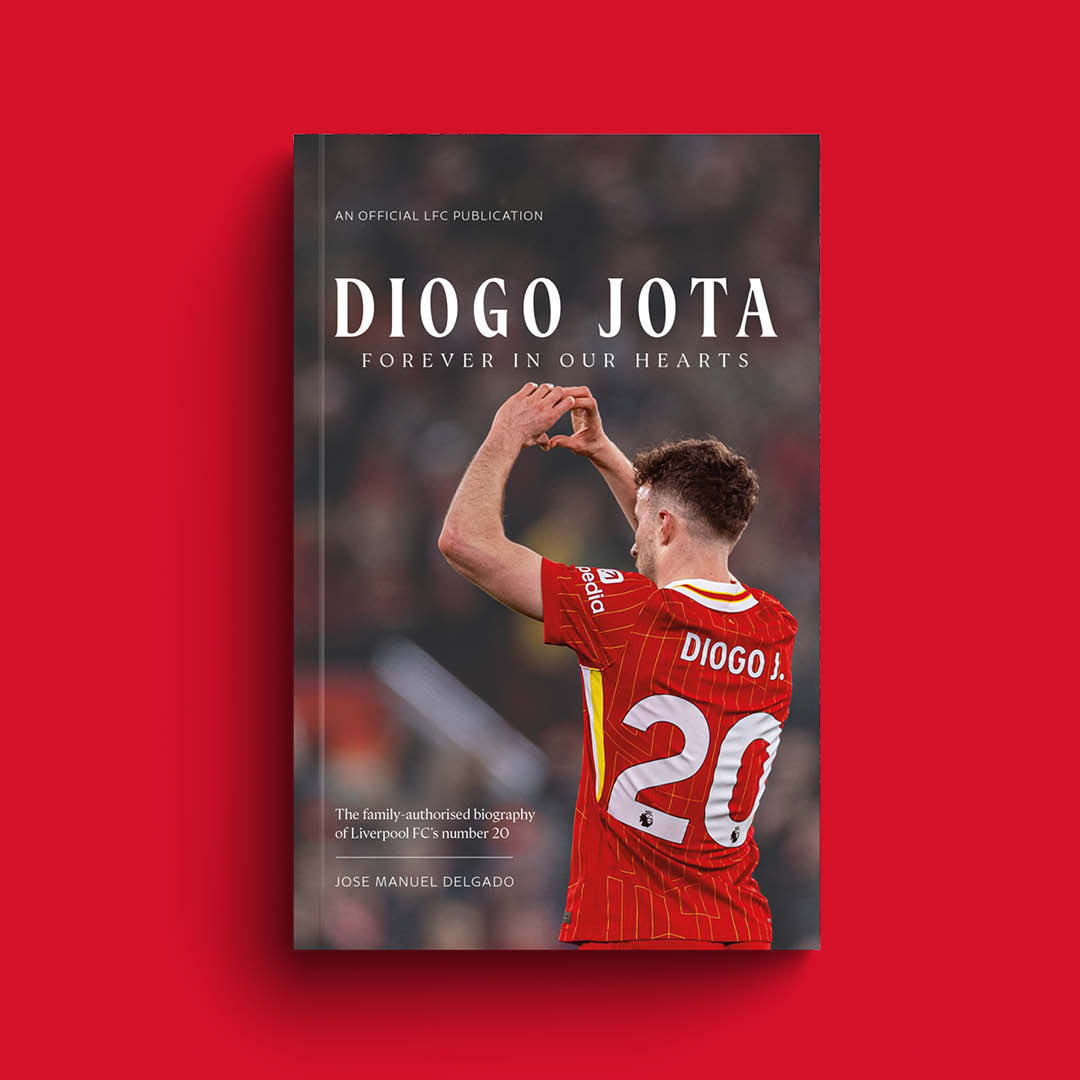
Liverpool FC has announced the release of Forever in Our Hearts, a new biography, celebrating the life, career and legacy of Diogo Jota. Every purchase supports LFC Foundation, with all LFC profits funding a grassroots football programme to be established in his name.
Jürgen Klopp on the loss of Diogo Jota:
“When I heard about Diogo’s accident, I was in shock and I couldn’t even speak. I didn’t ask how, I didn’t ask where; I just stopped what I was doing and tried to come to terms with it. To this day, I must admit, I still haven’t really managed to do that.
“I said yes, that I wanted to talk about Diogo, to think about him. However, now that we’re talking, I can see that I’m not ready for it.
“I’ve spent most of my life talking, but now I’m just hanging by a thread, lost for words.” 💔
[Diogo Jota: Forever In Our Hearts, via @LivEchoLFC] #LFC