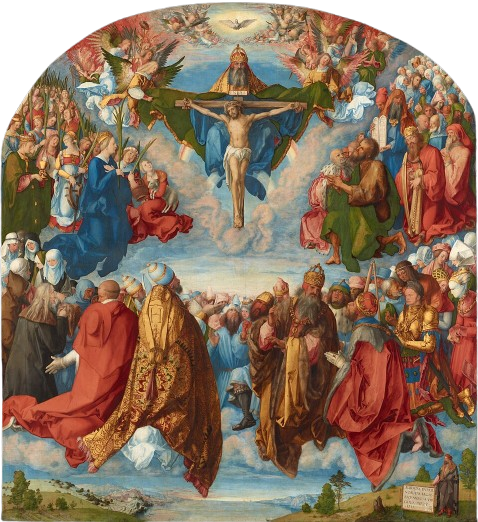
A most joyous and blessed feast of Pentecost to one and all! Come, Holy Ghost, and fill the hearts of Your faithful and kindle in them the fire of Your love!
Why Christian Marriage Was Revolutionary
"To appreciate how unique the Christian view of marriage is, we need to set it against the ancient Greco-Roman culture into which the church was born. In the ancient world, sexual promiscuity among men was widespread and socially accepted. The purpose of a wife was to have legal heirs, but it was expected that men would have sex with prostitutes, mistresses, concubines, and, most of all, with their slaves—male and female, children and adults.
Demosthenes famously said, “We keep prostitutes for pleasure. We keep mistresses for the day-to-day needs of the body. We keep wives for the begetting of children and for the faithful guardianship of our homes.” Wives sometimes protested, but they were told they had no choice but to accept their husband’s promiscuity....
Men could accuse their wives of adultery, but since it was thought acceptable for men to have sex outside of marriage, wives could not accuse their husbands of adultery. Cato declared, “If you catch your wife in adultery, you can kill her with impunity; she, however, cannot dare to lay a finger on you if you commit adultery. It is the law.”
In this historical context, Christianity was nothing short of revolutionary. At its core was a new form of sexual equality. To the shock of the ancient world, both sexes were held to the same moral standard. Christianity condemned promiscuity among men as well as women. It stood out as radically different because it taught that a husband actually wrongs his wife by committing adultery. Jesus said, “Anyone who divorces his wife and marries another woman commits adultery against her. And if she divorces her husband and marries another man, she commits adultery” (Mark 10:11–12).
Such even-handed treatment was genuinely novel."
(From The Toxic War on Masculinity)
#OTD April 16, 1521:
German reformer Martin Luther arrives at the Diet of Worms, expecting a chance to debate the concerns he raised in his 95 Theses, particularly the abuse of indulgences. To his surprise, it is not a debate but a judicial hearing demanding he recant his writings. The next day, Luther defends his conscience before the assembly, declaring, ‘Since then Your Majesty and your lordships desire a simple reply, I will answer without horns and without teeth. Unless I am convinced by the testimony of the Scriptures or by clear reason (for I do not trust either in the pope or in councils alone, since it is well known that they have often erred and contradicted themselves), I am bound by the Scriptures I have quoted and my conscience is captive to the Word of God. I cannot and I will not retract anything, since it is neither safe nor right to go against conscience. Here I stand, I can do no other, so help me God. Amen.”
@DominusAD78@iamjabberwacky@PastorDeberny I know several men who would have been priests but could not be celibate. To make it a requirement for the vocation is a serious error. No one is saying that it is not honorable to live a celibate life. It certainly is, but not demanded by the Lord or the Apostles.
@cgore@PastorDeberny Not very likely. But notice it's "the husband of but one wife." Which may have been clarifying that those participating in the polygamy of Judaism were not to be admitted to the office. The teaching of marriage as a picture of Christ and the Church solidified monogamy.
@ScottRoberts 1. Savior of the Nations Come
2. But not I but through Christ in me
3. O sacred head now wounded
4. Upon the cross extended
5. Oh church arise
@LutheranSage Chemnitz has a good discussion of this in his work on the Lord's Supper. He says that it indeed would be a valid sacrament for a lay person to administer this gift. The question is when is this appropriate. I would say a true emergency would qualify.