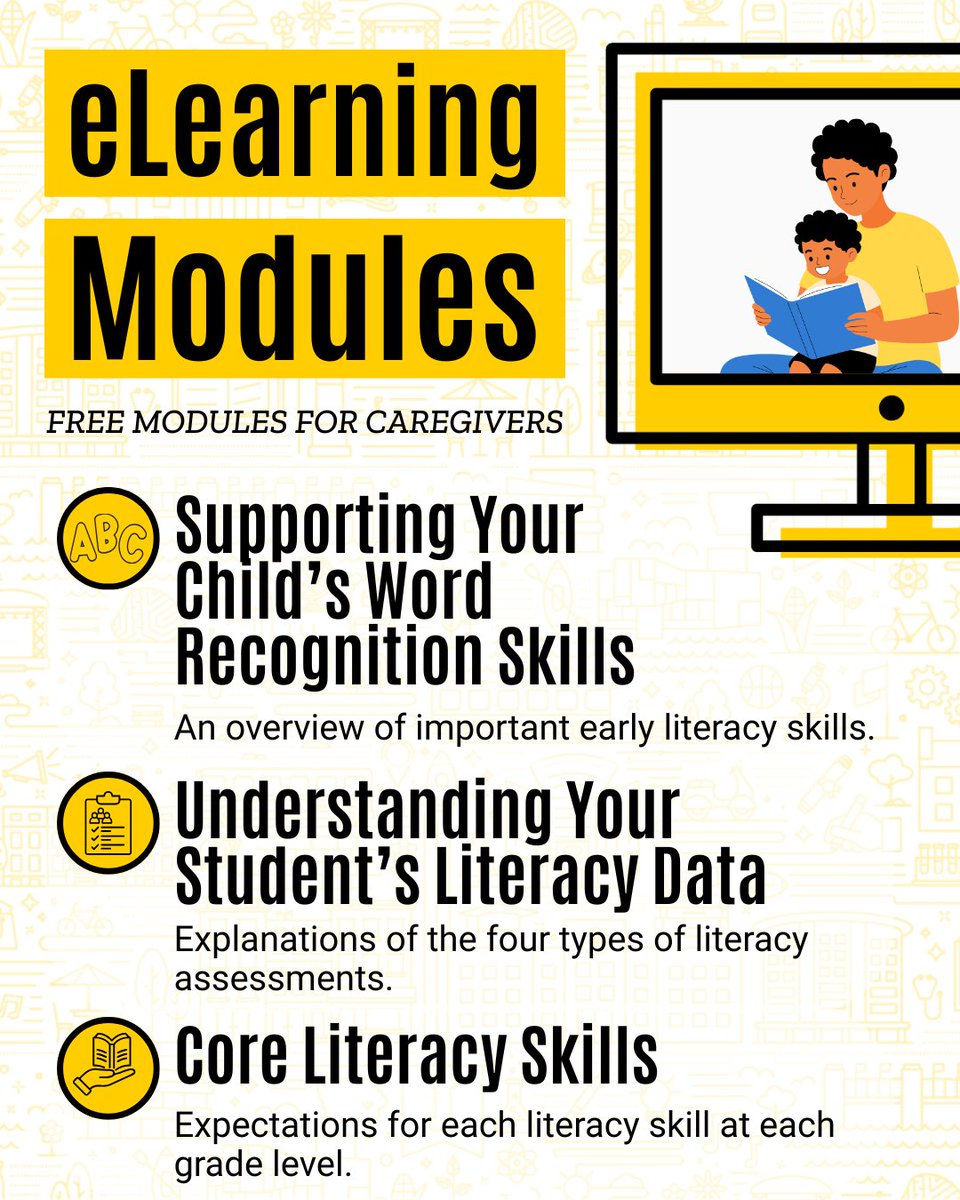
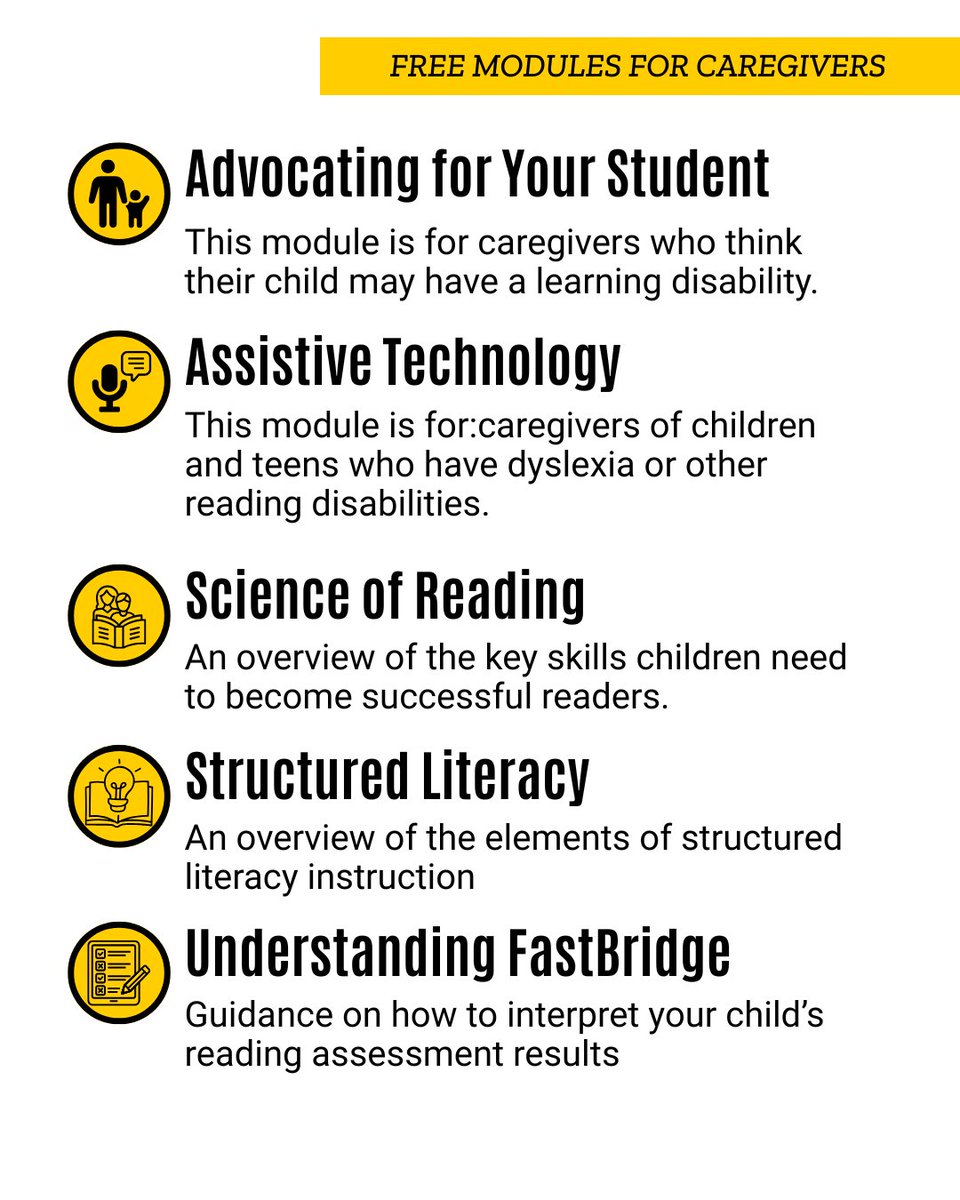
Parents and caregivers who want to best support their child’s literacy development often have questions about what that support should look like. For trusted answers from literacy experts, caregivers can find free, self-paced eLearning modules on the IRRC’s Caregivers Resource Hub: https://t.co/MRvKJSoufF
The techniques for improving retrieval shared during this discussion are ones I am going to come back to time and again this year. This is a weakness of mine in that I sometimes forget that just because a student can do something today and tomorrow doesn't mean that they have internalized this skill and/or content into their long term memory. I need to get better at this and this discussion not only explained how I can do this but why getting something into long term memory matters.
@SoLInTheWild@StamStam193@Helenrey@S_Oberle@bamradionetwork https://t.co/vpXWKkObnu
🔔 Strategies vs Principles 🔔
This is a great, clarifying, post!
Strategies: The WHAT/HOW
Principles: The WHY
“We should develop a deep understanding of the principles of learning that allow us to make thoughtful, context-sensitive instructional decisions [ie. strategies].”
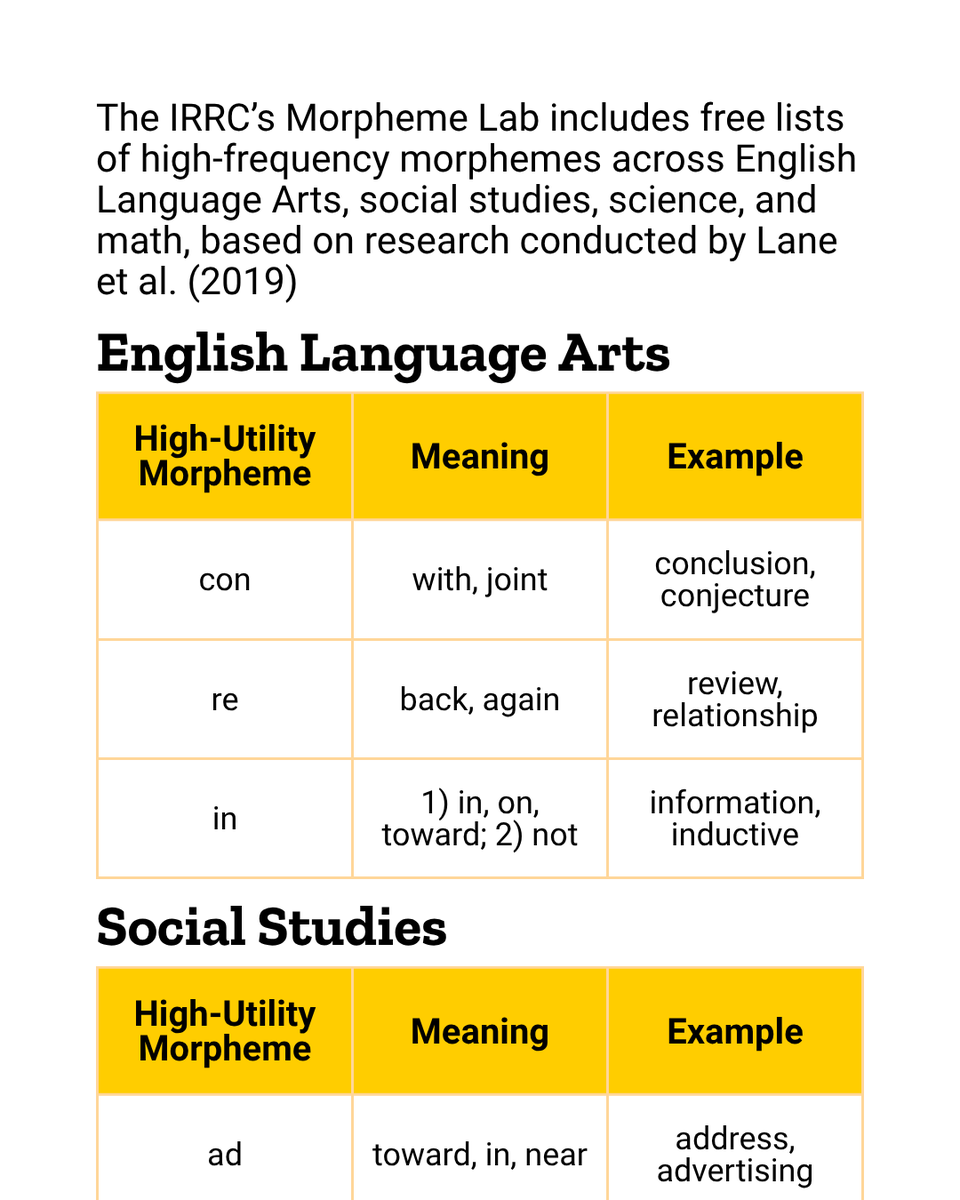
Students benefit the most from morphology instruction when it focuses on high-utility morphemes—word parts that appear frequently in academic vocabulary across content areas. Visit the Morpheme Lab to access lists of high-utility morphemes for each content area: https://t.co/wIp0lUohOQ
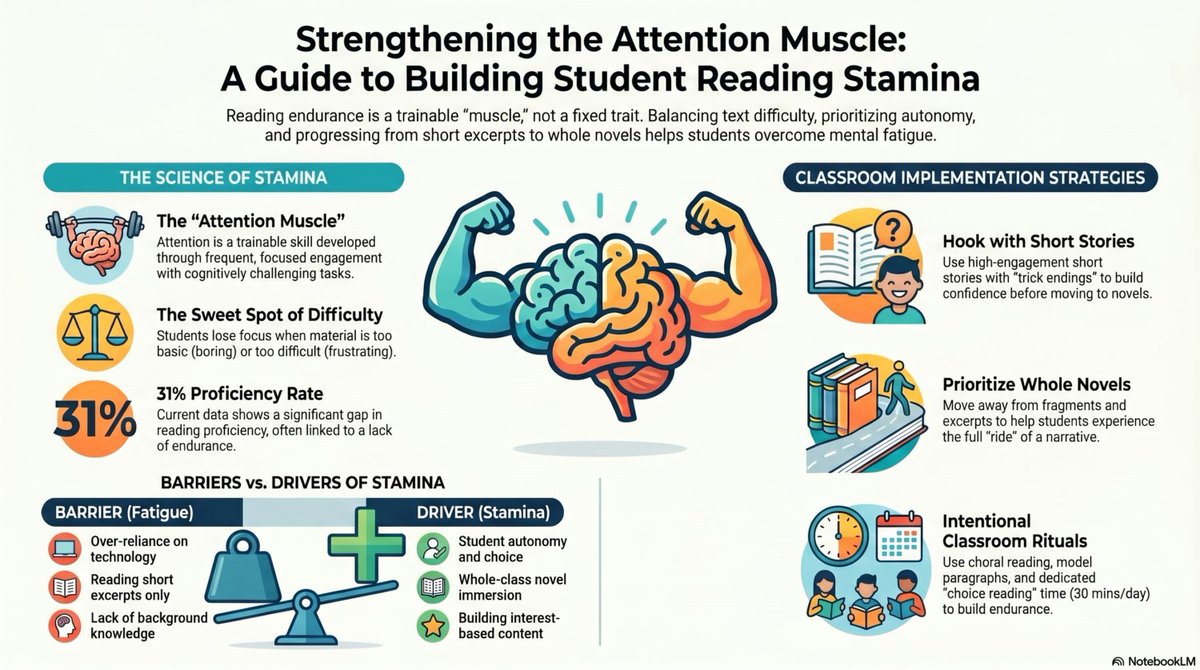
I think reading stamina deserves more attention than it's getting. Many students can read. Fewer can stay engaged with a challenging text for an extended period of time. Most educators agree reading stamina matters. The conversation is about the best ways to build it. I recently moderated a discussion on this topic. If it interests you, I hope you'll give the episode a listen.
@christinalbrown@colbysharp@smorrisey@bamradionetwork https://t.co/Fd29O34zt0
Greg Ashman explains a common problem: teachers claim they already use "explicit teaching" (direct instruction with clear explanations and guided practice), but they're actually doing something quite different. He shares how he thought he was teaching effectively but changed after reading research in 2011. Now he demonstrates one concept at a time, has students practice immediately on whiteboards, and guides them extensively before letting them work alone. School visits help teachers realize their methods differ from true research-based explicit teaching.
https://t.co/u7pyIQBkqk
In this short clip, Nancy Frey explains the difference between classroom management & discipline—and why getting it right shapes the conditions for learning.
Full webinar: https://t.co/YbgjYYn7gF
#education#teachers#classroommanagement#classroom discipline
In 𝘏𝘰𝘸 𝘞𝘦 𝘓𝘦𝘢𝘳𝘯, Stanislas Dehaene—one of the world’s leading cognitive neuroscientists and winner of the Nobel-equivalent Brain Prize—identifies the 4 Biological Pillars of Learning. Without all 4 of these pillars in place, learning is fragile and will not last: 🧵
Daniel Willingham and Barbara Davidson explain why background knowledge is essential for comprehension.
We’re rereleasing this episode along with a listening guide you can use while you tune in.
Podcast Episode: https://t.co/0h05zQ6lUr
Listening Guide: https://t.co/gyC8cAG8Wi
Retrieval practice goes wrong when it becomes a ritual for teachers to perform.
The aim isn’t five questions at the start of every lesson. It’s making knowledge available when it’s needed: recalled successfully, used purposefully, corrected visibly, and strengthened for elsewhere and later.
https://t.co/pR6y7Db170
A fluency drill gives you one thing: a score. Connected fluency practice gives you fluency and vocabulary and comprehension and background knowledge — all moving at the same time, inside the same ten minutes.
@TimRasinski1@SoRclassroom@0Beanie05923291@smorrisey@janhasbrouck
“If we want consistent and effective routines in schools, we must go beyond surface-level instructions and engage with the science of behaviour in the same way we do with learning.”
Use our Vocabulary Listening Guide for professional learning, team meetings, or solo reflection. Listen, reflect, and act! 🤸
🎙️✍️ ➡️ https://t.co/BDXtmmjG9t
One year as a principal, I asked our staff to write their hopes for students on the wall outside our main office. Teachers, paraprofessionals, custodians, our maintenance technician—everyone contributed.
What struck me most wasn’t just the number of responses. It was the nature of them.
There were no hopes for higher test scores or fewer tardies. No mentions of completed homework or straight A’s.
Instead, these were the kinds of hopes that call people into this profession in the first place—the quiet, powerful convictions that remind us why we do this work.
Here are just a few:
That students believe in themselves and have the courage to follow their hearts.
That every child feels valued, supported, and safe.
That students recognize their potential—and use their unique gifts to help others.
That they learn to embrace challenges and understand that failure is not a destination, but a powerful place to grow.
That they treat one another with respect, empathy, and kindness.
That they develop confidence, curiosity, and a love for learning.
That they leave our school not just smarter, but stronger—better readers, writers, thinkers, and human beings.
That they know, without a doubt, how deeply they are cared for.
These were our hopes.
They were not easily measured. They didn't fit neatly into a data report or a spreadsheet. There was no rubric that could fully capture what a teacher means in the life of a child.
And yet, this is the work.
While some may try to define school success by numbers alone, the true impact of education lives in these moments—in confidence built, in belonging felt, in courage discovered.
I was incredibly proud of our staff, but I also know this: these hopes are not unique to our school. They live in classrooms everywhere. In schools across the country, educators are showing up each day, pouring into students, and working to build brighter futures.
There are many important professions in this world.
But I can’t think of a more meaningful one than this.
Rock on,
Danny
Check out this PLC End-of-Year Flight Plan ✈️
It’s a simple tool to help teams:
💡 Focus on the right obstacle
🛠️ Align on strategies to try
🎯 Prioritize what matters most
🚀 Turn conversations into action with short sprints
Remember the obstacle is the way 🙌
Nothing fancy. Just a way to create clarity and actually move the work forward.
If your PLCs are feeling scattered or stuck in discussion mode, this might help.
Fillable pdf: https://t.co/ysPkJb81Iy
Learn more https://t.co/Xf23e4R2Lc
#AdaptivePLCs #PLCs #TeacherTeams #AgileInEducation