HODL'er of ASTS with possibly best opportunity of any stock IF THEY EXECUTE. Other musings. Do your own DD. Not a financial advisor and not providing advice.
$ASTS I updated my banner picture. Why? This picture encapsulates exactly what @AST_SpaceMobile is that anyone can recognize in 5 seconds and why it is so big an opportunity. 5G from space directly to your UNMODIFIED cell phone (completely brand/model agnostic), an end to those pesky dead zones everywhere, connecting the unconnected...all of this and more. For those who want to know more and dive [much] deeper, here is a start 👇https://t.co/Qw9XfH9C8S
SpaceX has just officially announced that it plans to raise $74.4 billion in its IPO, targeting a $135 per-share price and selling approximately 555.55 million shares, according to a new SEC filing.
That would give @SpaceX a target IPO valuation of about $1.75 trillion.
SpaceX: "We expect to receive approximately $74.4 billion of net proceeds from this offering (or $85.7 billion if the underwriters exercise their option to purchase additional shares of Class A common stock in full), based upon the expected initial public offering price of $135 per share, after deducting underwriting discounts and commissions and estimated offering expenses payable by us."
Note: All of these numbers are subject to change before IPO. Filing below:
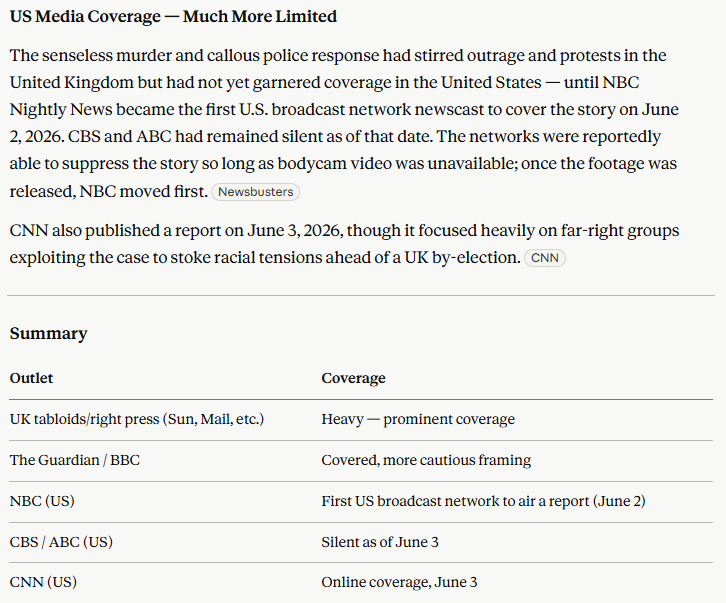
I watched the video. It's insane. He even sounded raspy as he said he couldn't breathe. Cops showed no concern for several minutes as he died handcuffed... until the female cop said his pupils weren't responding. Had the races been reversed, I guarantee it would have front page across every US newspaper.
Did they show or even mention the Henry Nowak footage?
Legacy Media…
CNN: No
MSNBC: No
ABC News: No
CBS News: No
NBC News: No
USA Today: No
New York Times: No
Washington Post: No
Like it didn’t happen.
They don’t want you to see the truth. It doesn’t fit their narrative.
Since the 1980s, the Sahara has shrunk by roughly 8%. Satellite data show widespread greening, a pattern that is playing out across the planet.
Around 50% of Earth's vegetated land has become significantly greener, an area roughly three times the size of the United States.
The dominant driver is not rainfall or land use change, it is rising atmospheric CO2.
Higher CO2 lets plants photosynthesize more efficiently, they lose less water, they tolerate heat and dryness better.
The effect is strongest along desert margins, across the Sahel, the Middle East, Australia's interior and the southern edge of the Sahara.
Rising CO2 is making the deserts, and the planet as a whole, greener.
How do I know the media is brainwashing people?
Obama's ICE Chief received the Presidential Award for Distinguished Service for removing over 900,000 illegal aliens.
Trump's ICE Chief is called a Nazi.
It is the same person.....Tom Homan....
The only difference? The narrative.
$ASTS Scott unfortunately confirmed a 3-6 months delay on commercial service due to BO mishap. Good to remind ourselves that revenue wise the impact will be soft in 2027, because a majority will be government related! That said a setback fot launch cadence, but not for satellite production!
Also the handful of launches still available will be sufficient for beta testing by end of year 2026! Also a key milestone!
Hardware rich can mean last minute opportunities for launch arising as well, but for now this requires patience. Company is on the right trajectory!
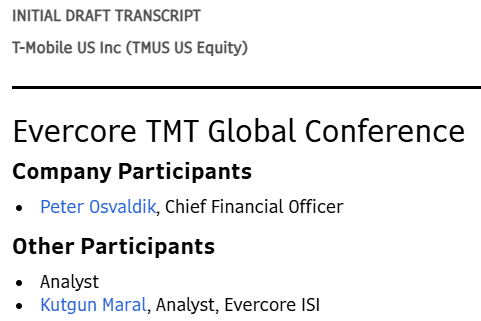
$ASTS: The CFO of T-Mobile was at Evercore today and was asked about satellite service as a potential terrestrial competitor. His response was very defensive and clearly directed towards Starlink (350km orbit, thousands of satellites, V2, etc).
I've never seen T-Mobile respond like this about Starlink. In prior periods, they would have said they're happy with their partnership and that Starlink Mobile is a complementary service. Instead Peter goes into a detailed dressing down of Starlink.
As we've known, not all is well in the Magenta paradise.
Kutgun Maral: Analyst Evercore ISI
Understood. And maybe switching gears a little bit, but still talking about competition. You can fill-in the gaps over here, but I want to talk about satellite. And, there are certain satellite operators that sound pretty confident in their ability to compete with broadband against -- not with broadband, but against terrestrial providers in direct-to-sell. Can you help us understand whether there's a real business case for these satellite operators and especially as they kind of move towards their next-gen satellite launches and/or close on some of their spectrum deals?
Peter Osvaldik: T-Mobile CFO
Yeah. Well, the short answer is No. There's no effective way for them to compete with a terrestrial network and they're not limited by money or number of satellites. They're limited by the laws of physics. And here, let me get into that a little bit more. Two fundamental things that are the problem.
One of those being just signal power. So when you're thinking about a terrestrial network, you've got a site that's probably I'm going to go kilometers now for the second, like a kilometer away from you, obviously has a lot of spectrum and is putting out a lot of power.
Compare that to, for example, a satellite, remember, these are different constellations in the broadband satellites, a satellite that's 350 kilometers up, which is probably as low as you can go. You go any lower, you're going to have a lot of propellant needed to keep the things stabilized, which means you get in a catch-22 cycle of then larger power arrays, which mean more atmospheric drag, which just so 350 kilometers is probably the lowest that you can go.
So now you're trying to send a spectrum signal think about this is like a garden hose, water through a pipe. And you're trying to shoot at 350 kilometers away to a mobile device. It's a lot different than the broadband product, which is shooting to an outdoor large antenna. You're trying to not only shoot a small mobile device, but it's mobile.
And the problem is the basic physics of that water through the -- through the pipe and through the outlet is what we call OpenSignal loss. And this is just the amount of signal loss that you get with no obstruction is not just linear in terms of the distance, it's actually an inverse square.
And you cannot put enough power. You can put 100,000 satellites up with all the spectrum of all three MNO operators and you will never be able to project enough power to overcome that OpenSignal loss of 350 kilometers. What that practically means is by the time you get down to earth where the mobile phones are, you don't have enough signal to overcome things like roofs, glass, modern vehicles. And so you cannot provide a reliable experience to customers in 70% of the time where they spend is in buildings or in cars, modern vehicles.
So you can't service a customer in 70% of the time that they're spending on a mobile device. And again, you can put up all the satellites you want to, the fundamental laws of physics will not allow you to generate a beam signal strong enough to actually overcome obstacles. So that's the first and most basic reason why it cannot be a competitor to terrestrial networks.
The second is capacity. And there's a theoretical limit also to the beam size. When we do estimates around one of the operators out there who is going to have a of V2, a D2C or D2D, however you want to think about it satellite, that beam size is significant. For example, if you think about Manhattan, New York, where you're in New York a lot, that beam size is roughly multiple six to 15 times depending on how you define Manhattan, but multiples the size of Manhattan.
And that V2 service is going to be able to provide a decent service, outdoor service, see the previous conversation I had to about 10 concurrent users. So think about that. A beam size larger than the size of Manhattan that can reliably provide service to 10 concurrent outdoor users. It's just not an experience that customers demand.
And so for those two fundamental reasons, it's just not an over-comeable situation. Now that doesn't mean it doesn't have a place. Like we've long said, it has a great complementary place in outdoor areas, particularly areas like national parks where the economics just don't make sense to build a terrestrial network, but it can be a great added complementary benefit for customers and that's where we see it play-out. That's where we see the hotspots are. If I look at the last week of data, D2D traffic on our network was count the zeros, 0.002% of traffic. And that's because it -- for the first two reasons, I said, it's just not where 70% of people are, but it does make sense in that place where terrestrial networks just don't make feasible economic sense.
And that was the whole purpose of the JV is how do we make this a win-win for satellite operators, for consumers and make it economically viable for the carriers as well. So how do we stimulate competition in this space, give consumers the coverage in those few limited outdoor areas like national parks where, by the way, by pulling our spectrum together, we can take care of the hotspot needs of a Yosemite or a Yellowstone National Park and have it be a great complementary service. That was the whole thought process behind this.
But in terms of a competitor to a mobile network operator, it's just not physically possible. And this is also the reason why we said, well, well, you've given them an MVNO, said, well, it doesn't differentiate you, like there's no differentiation. So no, we're not going to give them an MVNO. It doesn't make sense for us to give them an MVNO The answer is no.
After just getting off a Disney cruise with 4k guests and 1.5k cast members, this is just mind-boggling to me...holy moly! Traveling city on the water. 🤯
Plans released for a $16 billion mile-long ship capable of carrying 80,000 people.
The 'Freedom Ship' would be home to about 50,000 people, with space for 10,000 tourists and 20,000 crew members.
"The Freedom Ship is envisioned as a permanently mobile city at sea designed for long-term residence rather than short-term travel," the company says.
The ship would be about 8 times the size of the current largest ship in the world, the Royal Caribbean’s Icon of the Seas.
The plans include a 15,000-seat stadium, schools, colleges, shops, clubs, a water park, a music hall, museums, parks, and more.
The ship, which would run on nuclear, would be too large to dock and would remain in international waters.
Freedom Cruise International says it would go around the world every two to three years.
Insane.
There is a "why now" moment. Mobile phones had been around for ~30 years, and so what. Then there was a "why now" moment that spawned killer apps. Neural networks had been around forever, so what. Then we figured out how to massively scale compute. Boom, AI as we know it.
The same is happening in space. Pretend I weren't an anonymous cartoon account but instead a Partner at Sequoia saying this with a thin microphone and sitting with my legs appropriately crossed with some futuristic blue lighting splashing across my face to give me the aura of importance. $ASTS
When I'm a billionaire, this slide will be the reason:
$ASTS closed out the week at the third highest close.
Weekly chart is a tough read here with some mixed signals. RSI made a higher high with price and the MACD just flipped to bullish momentum, which since the low has never corresponded with a top.
However, we closed the week with a grave stone doji, which is not ideal. At the same time, there are plenty of examples of reversal candles on the weekly timeframe that have been invalidated/not confirmed that ultimately led to higher highs, as marked out on the chart.
Next week will give more data to analyze that should give more indication on how this resolves.
*NFA
@blueorigin 's New Glenn just exploded during a static fire at LC-36. $ASTS is down 6% after hours. Before you do anything, read this.
No $ASTS satellite was on this rocket. This was a test firing with no payload.
BB8, BB9, BB10 are launching mid-June on a @SpaceX Falcon 9. Different rocket. Different pad. Completely unaffected. The most important near-term catalyst hasn't changed.
The 45-satellite target for 2026 does not depend on New Glenn. ASTS can hit it on Falcon 9 alone.
What IS a legitimate concern: $ASTS wanted multiple launch providers to avoid depending on @SpaceX - who is also their competitor. New Glenn being grounded again means more reliance on @SpaceX for future launches. That's not ideal but it's manageable. ULA Vulcan and ISRO remain alternatives.
What IS NOT a concern: the next launch, the constellation timeline, or the fundamental thesis. Nothing about tonight changes the $740B D2D TAM, the carrier JV, the EU sovereignty decision, or the SpaceX S-1 repricing.
Algo and some retail will see "Blue Origin explosion" and panic-sell $ASTS because of the BB7 association. That's emotion, not analysis.
The thesis hasn't changed. The June launch hasn't changed. Breathe.
$ASTS 🛰️
$ASTS: 🚨BLUE ORIGIN NG4 TO DEMONSTRATE PAYLOAD WEIGHT CAPACITY OF SIX BLUEBIRD SATELLITES
+ At a weight of ~550 kg per @Amazonleo satellite, this is a total payload weight of ~26,400 kg to LEO.
+ AST's composite BBs weigh ~4200 kg each. 4200 kg x 6 BBs = 25,200 kg
Therefore, NG4 is demonstrating their ability to launch @AST_SpaceMobile's required weight capacity equivalent to around 6 BBs, to LEO.
Note that:
- I believe for Amazon they are dropped off at around 460 km and they they orbit raise from there.
- AST's satellites get dropped off a bit higher at ~520 km and then they orbit raise to ~690 km from there.
Watch this space.
Convoy complete.
BlueBird 9 has officially arrived at Cape Canaveral, ahead of the next Falcon 9 launch campaign. 🚀🚀 🚀 🚀 🚀 🚀 🚀 🚀 🚀 🚀
Built in Texas. Broadband from space. Designed to connect directly to everyday smartphones. 🌎📶📱
#ASTSpaceMobile#Broadband #ConnectingtheUnconnected
AST SPACEMOBILE TO POTENTIALLY GENERATE $8.4BN REVENUE IN THE US ALONE 🤯
Based off the Bell Canada estimates of roughly $10 a month for the D2D service, this would mean AST would receive $5 as part of the revenue split, so lets apply this to the US market.
After the announcement of the D2D JV, AST will have access to the three main MNO's, AT&T, Verizon and T-Mobile.
They share roughly 399 million subscribers between them. Roughly 30% of those plans are premium tier. This means approximately 120 million subscribers could have D2D bundled into their plan.
If AST receives the same share in the US as Canada then we could be looking at $600m a month in revenue, across the year this would be $7.2bn. Remember this figure is just from the premium bundles and not any other user who might choose to opt in.
Let’s be conservative on the users that opt in and say 5% opt into SpaceMobile service, this would be another 20m subscribers paying $10 a month ($5 split to AST), this would generate $1.2bn annually for AST SpaceMobile.
This would take the total revenue for the US to over $8.4bn, you can then extrapolate this across the rest of the world and you end up with a VERY BIG NUMBER!
$T $VZ $TMUS $ASTS