Molecular Neurodegeneration Research Group at @NDCNOxford based at @KavliOxford.
Researching Parkinson’s pathogenesis aiming to identify targets for therapies.
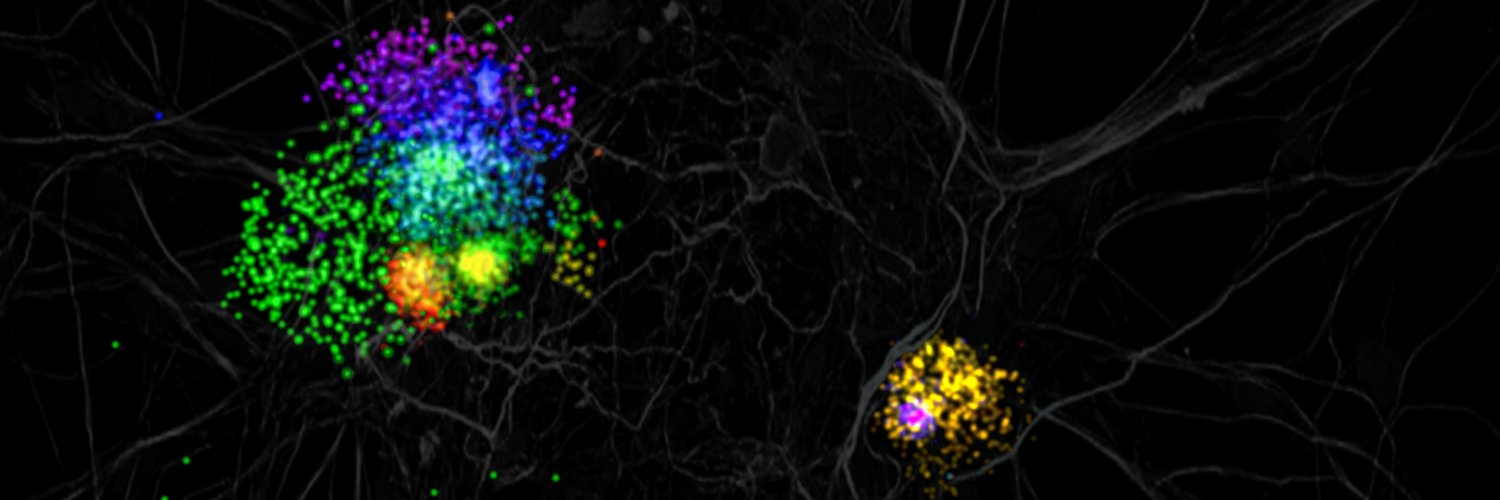
Thrilled to share our latest paper @ScienceTM! We found that human microglia clear intraneuronal α-synuclein aggregates by GPNMB-mediated trogocytosis. https://t.co/IpVn0h8g7c
Many congratulations to Hung-Ju Chueh @TofarisLab@NDCNOxford for completing a very successful DPhil! With a recent first author paper @ScienceTM he has been an exceptional graduate student. Well done Dr Chueh! Thank you to Petros Ligoxygakis and @AnnaMallach for examining.
NEW: Oxford researchers have discovered how specialised immune cells in the brain can remove harmful protein clumps from neurons, opening up potential new avenues for treating Parkinson’s disease.
Parkinson's disease affects more than 10 million people worldwide.
Read more ⬇️
https://t.co/USEAgeZKbx
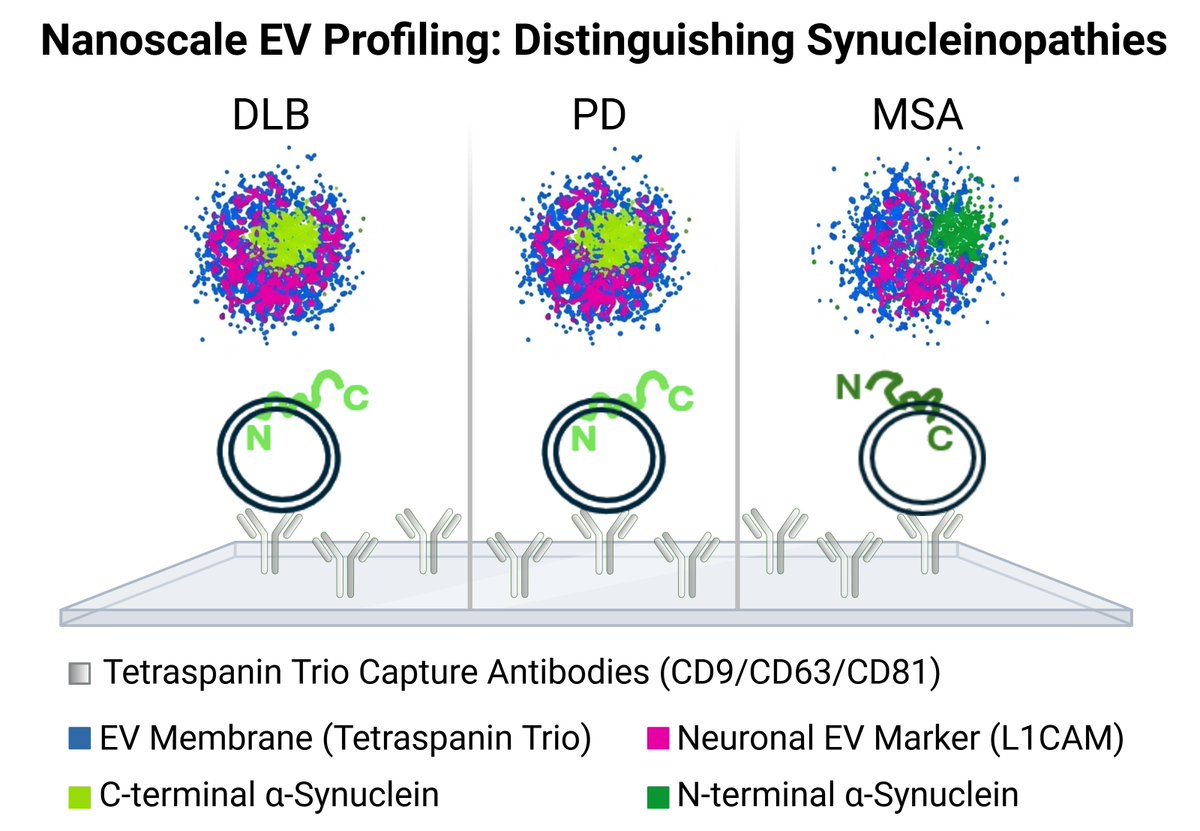
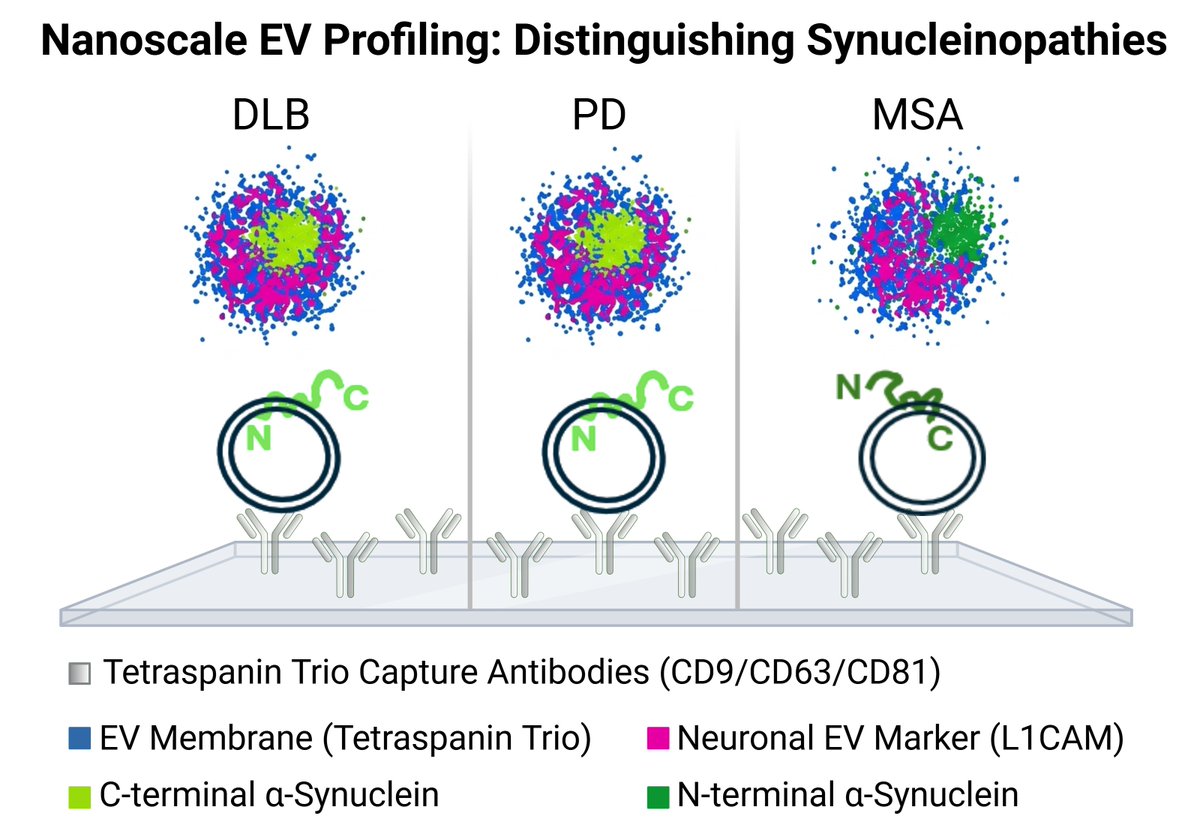
Dutta et al. show that extracellular vesicle-associated α-synuclein differs in conformation and distribution across Parkinson's disease, dementia with Lewy bodies, and multiple system atrophy. https://t.co/E4UCJdpL5z
Another week, another paper for @GeorgeTofaris & colleagues
This week, they report the epitope accessibility & topology of extracellular vesicle-associated α-synuclein proteoforms, rather than their abundance alone, discriminate synucleinopathy subtypes
https://t.co/4GUd4Qi4JQ
Delighted to share our latest @TofarisLab paper in @Brain1878 by @_Suman_Dutta et al. Using dSTORM to map the topology of extracellular vesicle-associated α-synuclein, we identified disease-associated conformers in both brain- and blood-derived EVs.
https://t.co/ihWhXcYa30
Bulk EV measurements can obscure disease-associated molecular heterogeneity.
Using single-vesicle analysis, we mapped distinct αSyn topologies in PD, DLB & MSA, with signatures detectable in brain & blood @TofarisLab@KavliOxford
Published in @Brain1878
https://t.co/3roiCWsnID
Delighted to share our latest @TofarisLab paper in @Brain1878 by @_Suman_Dutta et al. Using dSTORM to map the topology of extracellular vesicle-associated α-synuclein, we identified disease-associated conformers in both brain- and blood-derived EVs.
https://t.co/ihWhXcYa30
Thrilled to share our latest paper! We show that early α-synuclein toxicity in human neurons is mediated by impaired ER co-translational protein translocation, providing a unifying mechanism underlying diverse genetic modifiers in #Parkinson's https://t.co/K5IhHcleul
Thrilled to share our latest paper @ScienceTM! We found that human microglia clear intraneuronal α-synuclein aggregates by GPNMB-mediated trogocytosis. https://t.co/IpVn0h8g7c
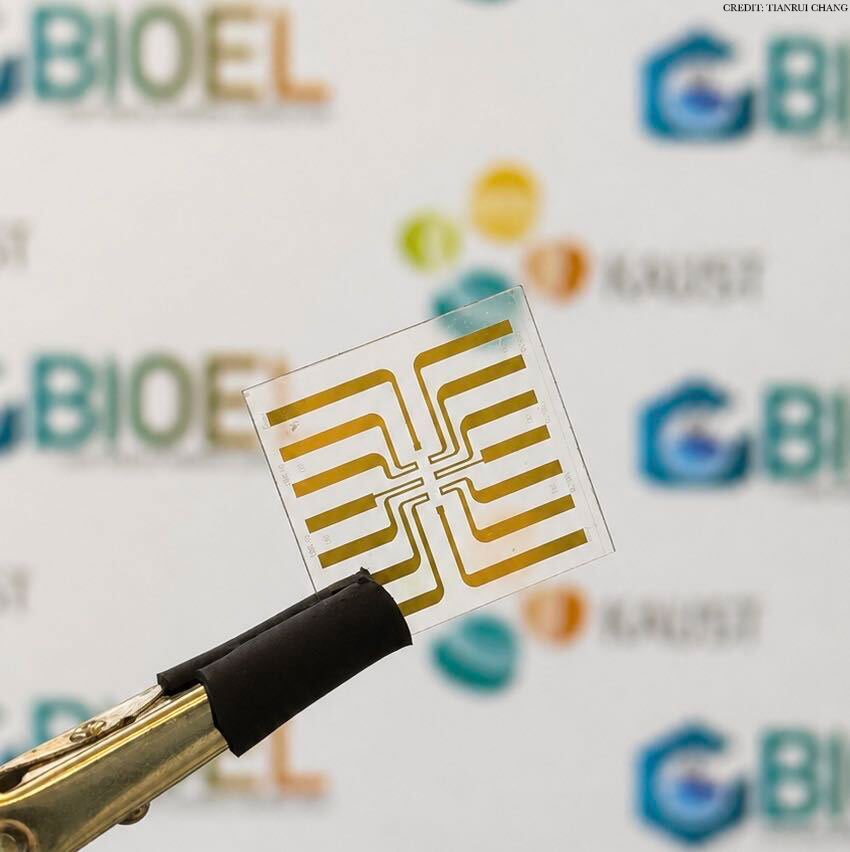
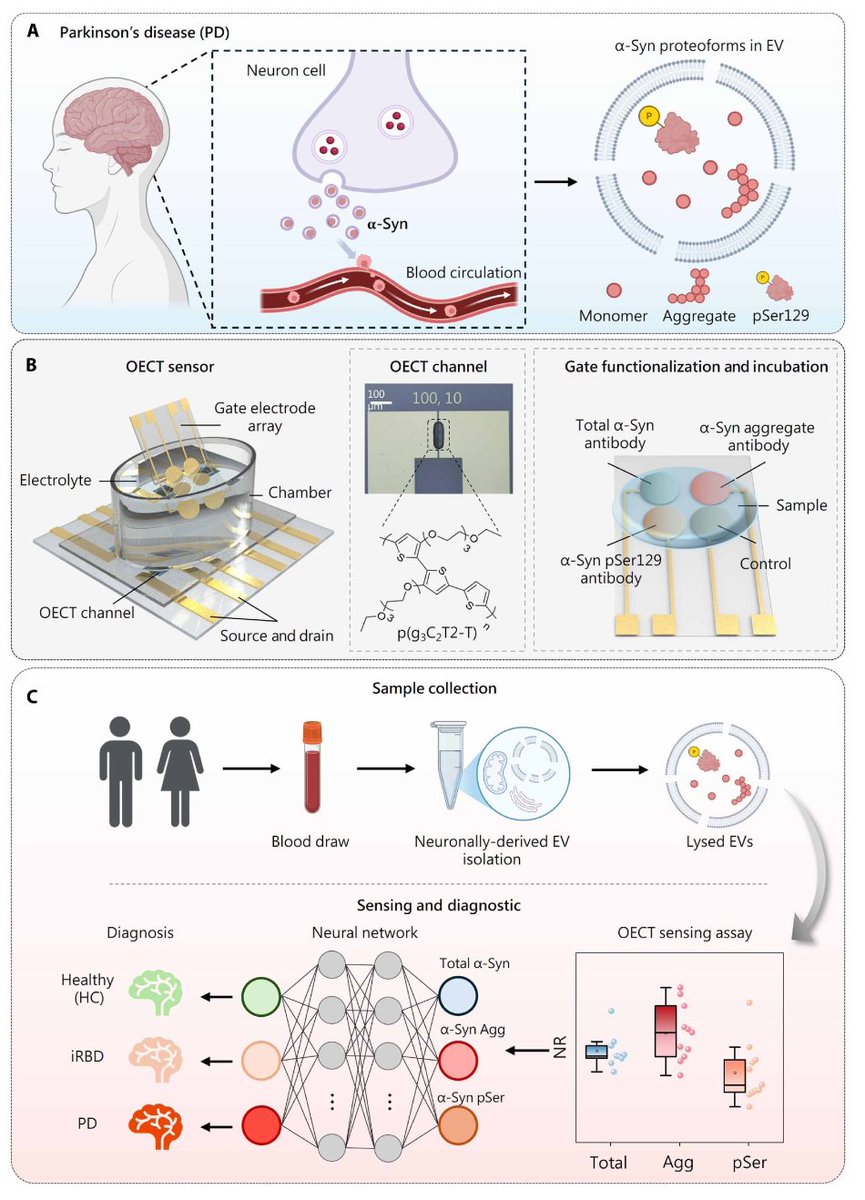
This electronic chip may enable earlier prediction of Parkinson’s disease by detecting elevated levels of alpha-synuclein in the blood.
Learn more in @ScienceAdvances: https://t.co/Lfp67jdVQR
Delighted to share our latest paper @ScienceAdvances with @InalSahika: Electronic profiling of serum neuronal extracellular vesicles by amplifying and resolving multiple α-Syn proteoforms enables early prediction of Parkinson’s disease. https://t.co/nuVW1IwMzK
Don’t miss Prof @GeorgeTofaris talk on Parkinson’s and EVs at the upcoming UKEV Early Career Researcher Virtual Event! 🧠🔬
Organised by our postdoc Dr Rahul Sanwlani.
Call for abstracts is open!
📅 28 Oct at 13h UK time | 💻 Online & free
🔗 https://t.co/cBpiafPjqA
@NDCNOxford
Here is a lay summary of our recent work on how α-synuclein damages neurons in Parkinson’s disease, and how we reversed these cellular defects.
https://t.co/V07oDveWQY
Many thanks to @UniofOxford for highlighting the study.
New research from @GeorgeTofaris & collaborators "offers a unifying mechanistic link between α-synuclein pathology & dysregulation of diverse organelle-associated proteins that are both Sec61A translocon substrates & genetic modifiers of #Parkinsons" risk
https://t.co/MBLzAKvvRK
Thrilled to share our latest paper! We show that early α-synuclein toxicity in human neurons is mediated by impaired ER co-translational protein translocation, providing a unifying mechanism underlying diverse genetic modifiers in #Parkinson's https://t.co/K5IhHcleul
Many congratulations to our talented #DPhil student
@Gordon_Lam97@TofarisLab@KavliOxford@NDCNOxford who received an award from the Henry Lester Trust for his studies using iPSC-based models of #Parkinson's disease. Well done! Keep an eye out for his paper!
Thanks so much to @OxNeurosci for organising such a fantastic day for the neuroscience community last week at @UniofOxford!
Our Master’s student, Emilia Hogg, had the opportunity to present her project and engage with the community, a great experience all around 🧠✨
@NDCNOxford
"During my undergraduate degree, I developed an interest in the mechanisms underlying pathological brain ageing and was particularly drawn to understanding Parkinson’s disease.
🚣Outside of my studies, I enjoy rowing and ski instructing."
🎉We are happy to welcome Emilia Hogg for her Master's project.
@NDCNOxford@KavliOxford
"As part of my Master’s in Clinical and Therapeutic Neuroscience, I am joining the lab to study ⍺-synuclein aggregation and degradation.