AI strategy consultant who reimagines core business processes from the ground up, merging deep insights, technology, and innovation to drive competitive growth.
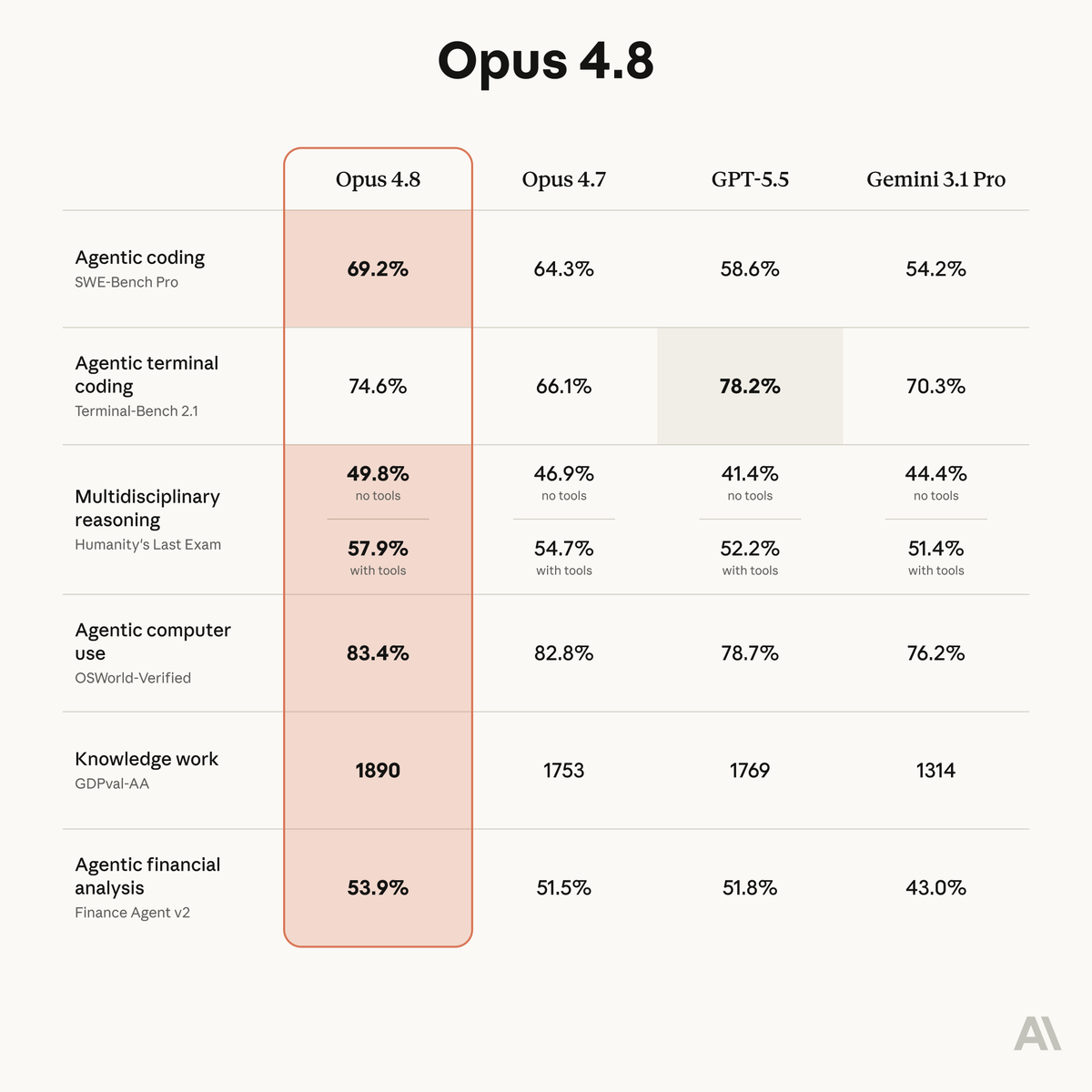
Opus 4.8 hits 69.2% on SWE-bench Pro, up from 64.3% on Opus 4.7.
Our evaluations show that Opus 4.8 is around four times less likely than Opus 4.7 to allow flaws in code it has written to pass unremarked.
Introducing Claude Opus 4.8: it builds on Opus 4.7 with sharper judgment, more honesty about its own progress, and the ability to work independently for longer than its predecessors.
Available today at the same price.
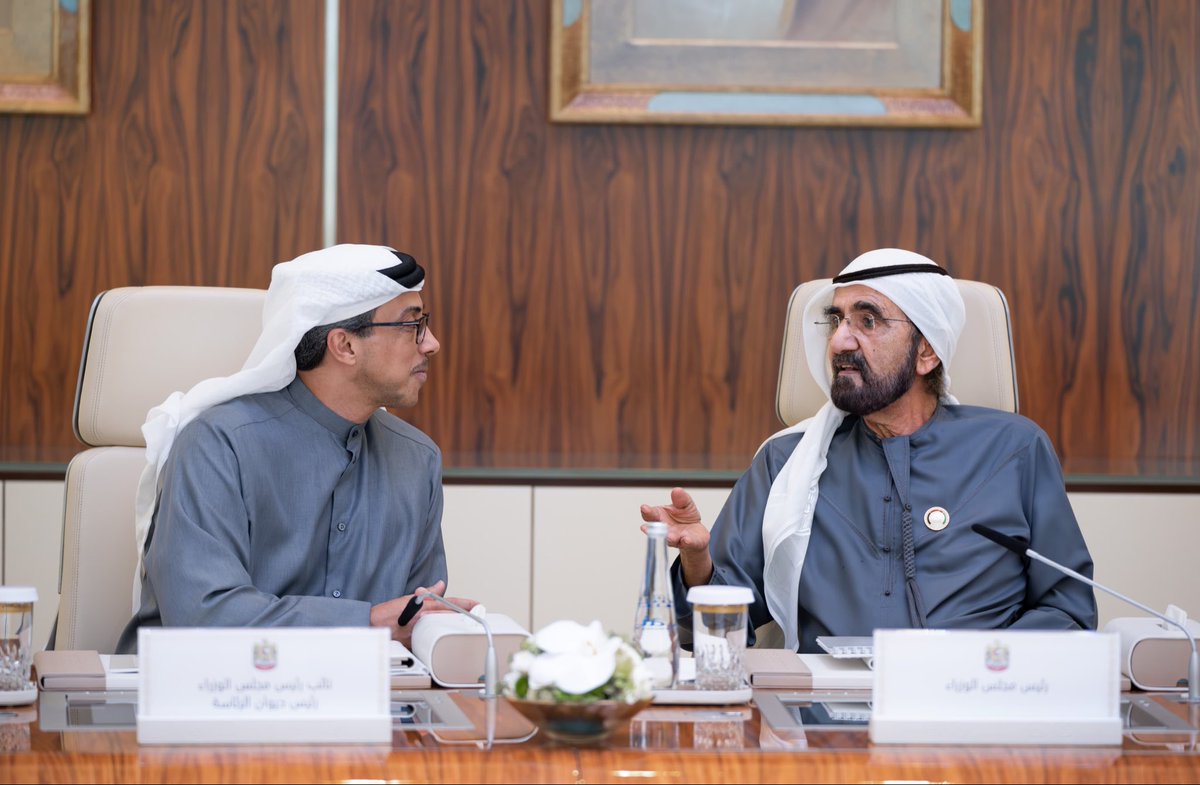
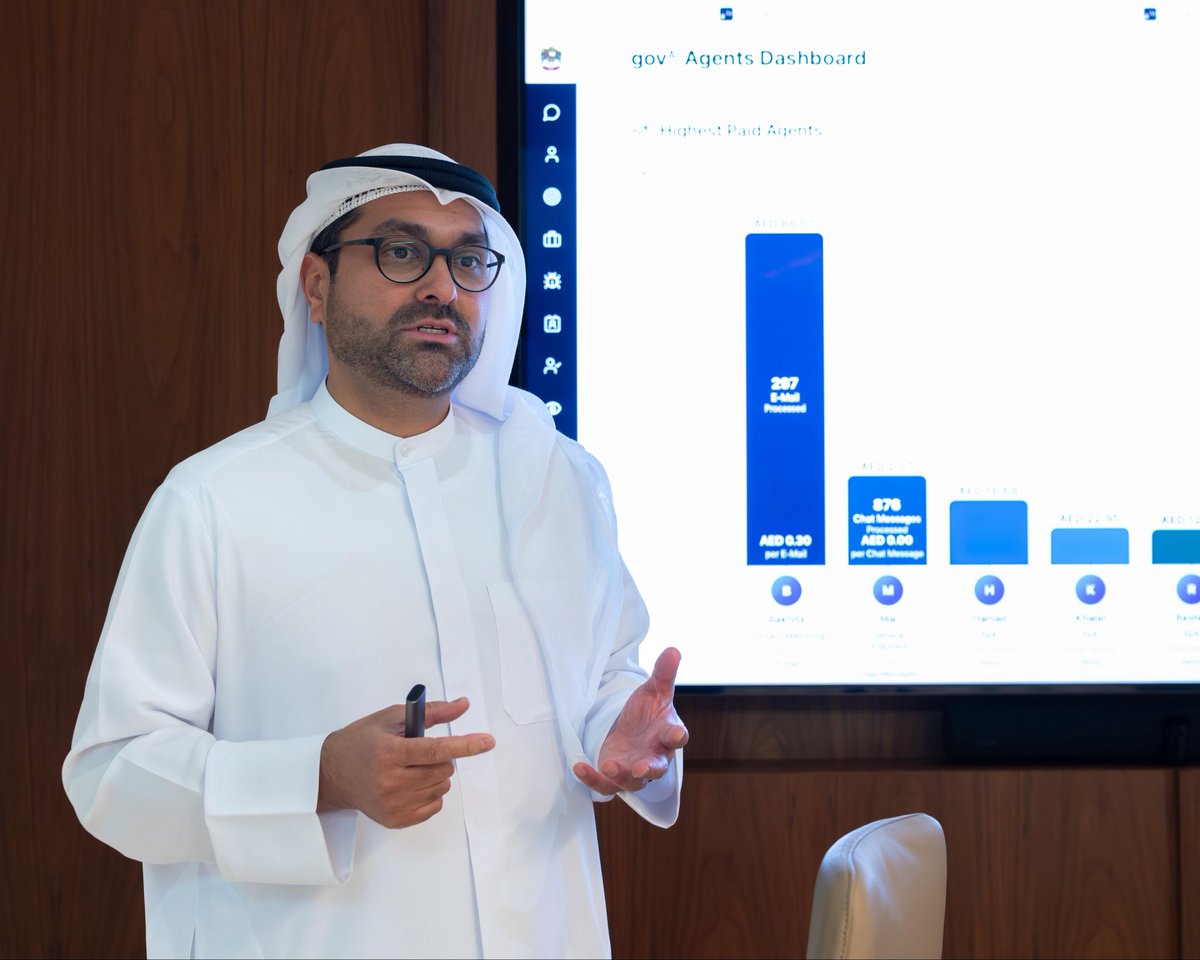
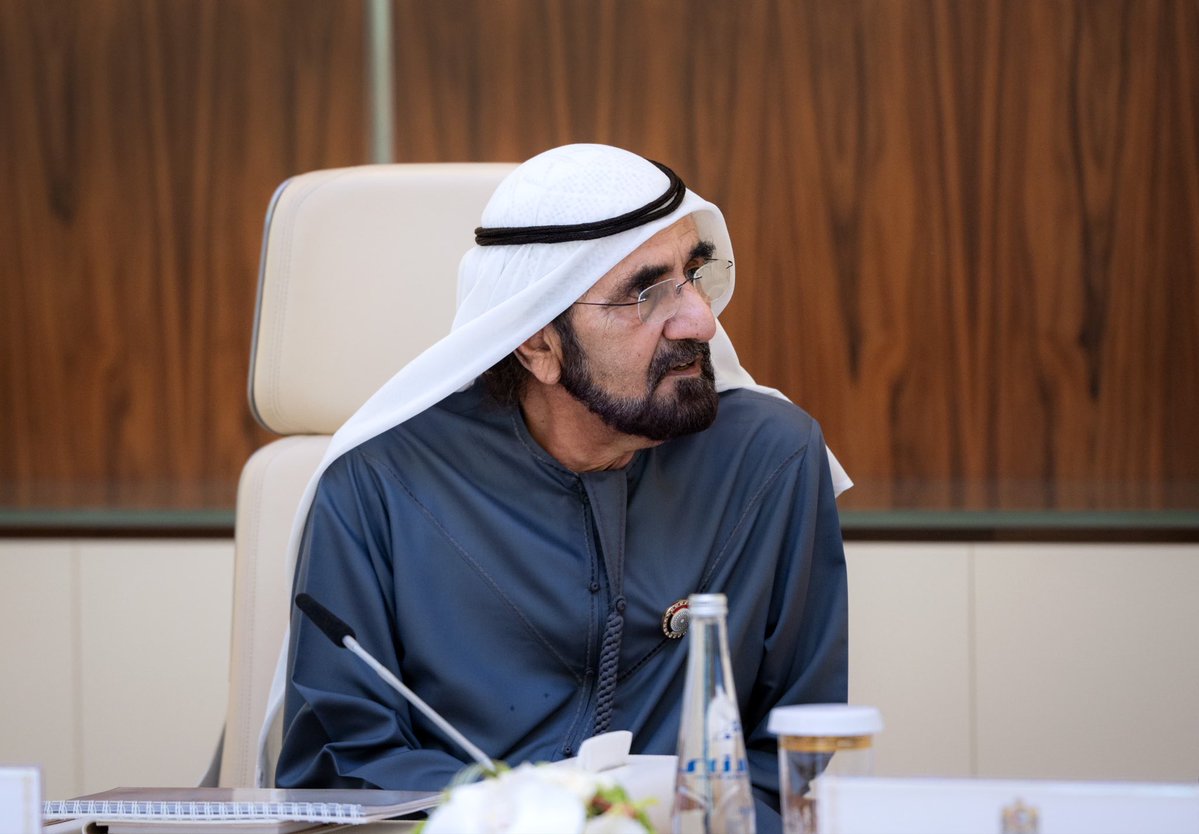
اطّلعنا على مستجدات مشروع «المنظومة الجديدة للعمل الحكومي» لتحويل 50% من قطاعات وخدمات وعمليات حكومة دولة الإمارات خلال عامين لتطبيق نماذج الذكاء الاصطناعي المساعد (Agentic AI)..
توظيف الذكاء الاصطناعي المساعد (Agentic AI) في العمل الحكومي أولوية استراتيجية للمرحلة المقبلة نتابع تنفيذها بشكل مباشر في إطار رؤية أخي الشيخ محمد بن زايد.. هدفنا ريادة دولة الإمارات عالمياً في تبني نماذج حكومية متطورة تركز على خدمة الإنسان وتسريع الإنجاز ورفع كفاءة الأداء الحكومي
Anthropicin liikevaihdon kasvu on jotain, mitä ihmiskunta ei ole ennen nähnyt.
Yhtiön liikevaihto (ARR) on noin viisinkertaistunut viimeisen neljän kuukauden aikana ($9B -> 44B).
Historiassa nopeimmin liikevaihtoa 10 miljardista 100 miljardiin ovat kasvattaneet Facebook ja Tesla. Niillä kesti siinä noin 7 vuotta. Nyt näyttää siltä, että Anthropic tekee saman yhdessä vuodessa.
Samalla se tekee sen kannattavasti. Yhtiön bruttokate oli vielä 1,5 vuotta sitten negatiivinen. Viime vuonna se nousi 40 prosenttiin ja nyt raportoidaan jo 70 prosentin bruttokatteesta.
Aika monelle viimeisen vuoden "kupla-asiantuntijalle" nämä luvut tulevat täytenä yllätyksenä.
Elon Musk avait dit un truc qui m'avait marqué sur l'allocation de ressources. En substance : passé un certain niveau de richesse, l'argent n'est plus de la consommation, c'est de l'allocation de capital.
Cette phrase change tout.
L'économie, dans le fond, c'est juste un problème d'allocation. Tu as des ressources finies et des usages infinis. Qui décide où va quoi ?
Imagine une cour de récré. 100 enfants, des paquets de cartes Pokémon distribués au hasard. Tu laisses faire. Très vite, un ordre émerge. Les bons joueurs accumulent les cartes rares, les collectionneurs trient, les négociateurs trouvent des deals. Personne n'a planifié. Et pourtant chaque carte finit dans les mains de celui qui en tire le plus de valeur. Le système maximise le bonheur total de la cour. C'est ça, la main invisible.
Maintenant fais entrer la maîtresse. Elle trouve ça injuste. Léo a 50 cartes, Tom en a 3. Elle confisque, redistribue, impose l'égalité. Trois effets immédiats. Les bons joueurs arrêtent de jouer, à quoi bon. Les mauvais n'ont plus de raison de progresser, ils auront leur part. Les échanges s'effondrent. La cour est égale, et morte. Elle a maximisé l'égalité, elle a détruit le bonheur.
Le problème de la maîtresse, c'est qu'elle ne peut pas avoir l'information que la cour avait collectivement. C'est le problème du calcul économique de Mises, formulé en 1920. L'URSS a essayé de le résoudre pendant 70 ans avec le Gosplan. Résultat : pénuries, queues, effondrement. Pas parce que les Soviétiques étaient bêtes, parce que le problème est mathématiquement insoluble en mode centralisé.
Quand Musk a 200 milliards, il ne les consomme pas, il les alloue. SpaceX, Starlink, Neuralink, xAI. Chaque dollar est un pari sur le futur. Et lui a un track record. PayPal, Tesla, SpaceX. Il a démontré qu'il sait identifier des problèmes immenses et y allouer des ressources avec un rendement spectaculaire.
L'État aussi a un track record. Hôpitaux qui s'effondrent, éducation qui décline, dette qui explose, services publics qui se dégradent malgré des budgets en hausse constante. Le marché identifie les bons allocateurs, la politique identifie les bons communicants.
Le profit n'est pas une finalité, c'est un signal. Il dit : tu as alloué des ressources rares vers un usage que les gens valorisent suffisamment pour payer. Plus le profit est gros, plus la création de valeur est grande. Quand Starlink est rentable, ça veut dire que des millions de gens dans des zones rurales ont enfin internet. Quand un ministère est en déficit, ça veut dire qu'il consomme plus qu'il ne produit. L'un crée, l'autre détruit, et on appelle ça redistribution.
Dans nos sociétés il y a deux catégories d'acteurs. Les entrepreneurs et les bureaucrates. L'entrepreneur prend un risque personnel pour identifier un problème, mobiliser des ressources, créer une solution. S'il se trompe il perd. S'il a raison, ses clients gagnent, ses employés gagnent, ses fournisseurs gagnent, l'État collecte des impôts. Il est la cellule de base du progrès humain.
Le bureaucrate ne prend aucun risque personnel. Son salaire est garanti. Au mieux il maintient une rente existante. Au pire il la détruit par excès de réglementation, mauvaise allocation forcée, incitations perverses qui découragent ceux qui produisent. Mais dans aucun cas il ne crée.
Regarde les 50 dernières années. iPhone, internet civil, SpaceX, Tesla, Google, Amazon, Stripe, mRNA, ChatGPT. Toutes des inventions privées, portées par des entrepreneurs, financées par du capital risque. Pas un seul ministère n'a inventé quoi que ce soit qui ait changé ta vie au quotidien.
La France est devenue le laboratoire mondial de la dérive bureaucratique. 57% du PIB en dépenses publiques, record absolu. Une administration tentaculaire, une fiscalité qui pénalise la création de richesse. Résultat : décrochage face aux États-Unis, à l'Allemagne, à la Suisse. Fuite des cerveaux. Désindustrialisation. Dette qui explose.
Et le pire c'est que la mauvaise allocation s'auto-renforce. Plus l'État prélève, moins les entrepreneurs créent. Moins ils créent, moins il y a de base fiscale. Plus l'État s'endette et taxe. Boucle de rétroaction négative parfaite. La maîtresse pense qu'elle aide, et chaque année la cour produit moins.
Dans nos sociétés, ce sont les entrepreneurs, toujours, qui font avancer la civilisation. Les bureaucrates au mieux maintiennent une rente, au pire la détruisent. Aucune société n'a jamais progressé en taxant ses créateurs pour subventionner ses gestionnaires.
La question n'est jamais qui a combien. C'est qui alloue le mieux la prochaine unité de ressource pour maximiser le futur de l'humanité. La réponse depuis 200 ans n'a jamais changé. Ce ne sont pas les fonctionnaires.
Long thread 1/2
Report from Tehran, written from April 18 to April 25
Tehran does not look like the city I once knew.
It looks like a city under occupation.
17 days after the ceasefire, the mood is not simple hope or simple despair. It is confusion, distrust, exhaustion, and a silence full of questions no one can answer.
The subway is free now, apparently. A cheap little bribe from the same terrorist Islamic Regime occupying Iran that spills our blood, breaks our economy, cuts our internet, then throws crumbs at us as if a free ticket can buy forgiveness.
And of course, even the free subway is late.
That is their whole empire in one image:
ruin your life,
offer you a discount,
fail to deliver that too.
The streets are not alive the way they should be. People move because they have to, not because the city calls them out. Public life has become functional, not social. Daytime is for errands, clinics, work, survival. Night belongs more and more to fear, checkpoints, and the regime’s staged little circuses.
You see fewer faces buried in phones now, because what is there to check when the regime has strangled the internet for weeks? Instead, almost everyone wears headphones, as if the whole city is trying to shut reality out before it crushes them.
Because the thought is unbearable:
that after all this blood,
after January,
after the arrests,
after the torture,
after the gallows,
this mafia might still survive.
Every major intersection, every square, every main four way carries the same sickness. Men in green and black, guns and batons in hand, military vehicles behind them, walking over our streets like they conquered a foreign land.
For one second, you feel like you have been dropped into a Metal Gear game.
Then you remember:
no, this is my city.
Do you know what it feels like to be a third rate citizen in your own homeland?
It has nothing to do with success, education, money, or work. Under this occupation, if you are not part of the mafia, you are disposable. Everything you have can be taken from you. Your job. Your home. Your phone. Your name. Your loved ones. Your life.
So you learn to walk carefully in the city where you were born.
I played in these streets.
I made friends here.
I rode my bike through half of this city.
I know Tehran like the back of my own hand.
I found love and got my heart broken in these streets.
I went on dates in cafés all over this city.
I worked in some of them too.
I have been part of the startup system of this city.
I have been to most of the bookstores.
I know these people. And do you want to know the interesting part?
We all feel it.
Being a Tehran kid is like being a New Yorker. It is more than an address. It is a rhythm, a wound, a language, a map written under your skin.
And now I have to move through it like a spy.
In my own city.
In my own homeland.
I have two phones, because one has to stay clean for the street. If they stop me and search the wrong one, I am not the only one who pays. My loved ones pay too.
That is what life becomes under a regime that treats truth like contraband.
The information space is broken beyond words. Rumors move faster than facts. Verification feels almost impossible. Trust in official sources is dead, and even unofficial news arrives wounded by blackout, fear, and delay.
People are not only uncertain.
They are trapped inside uncertainty.
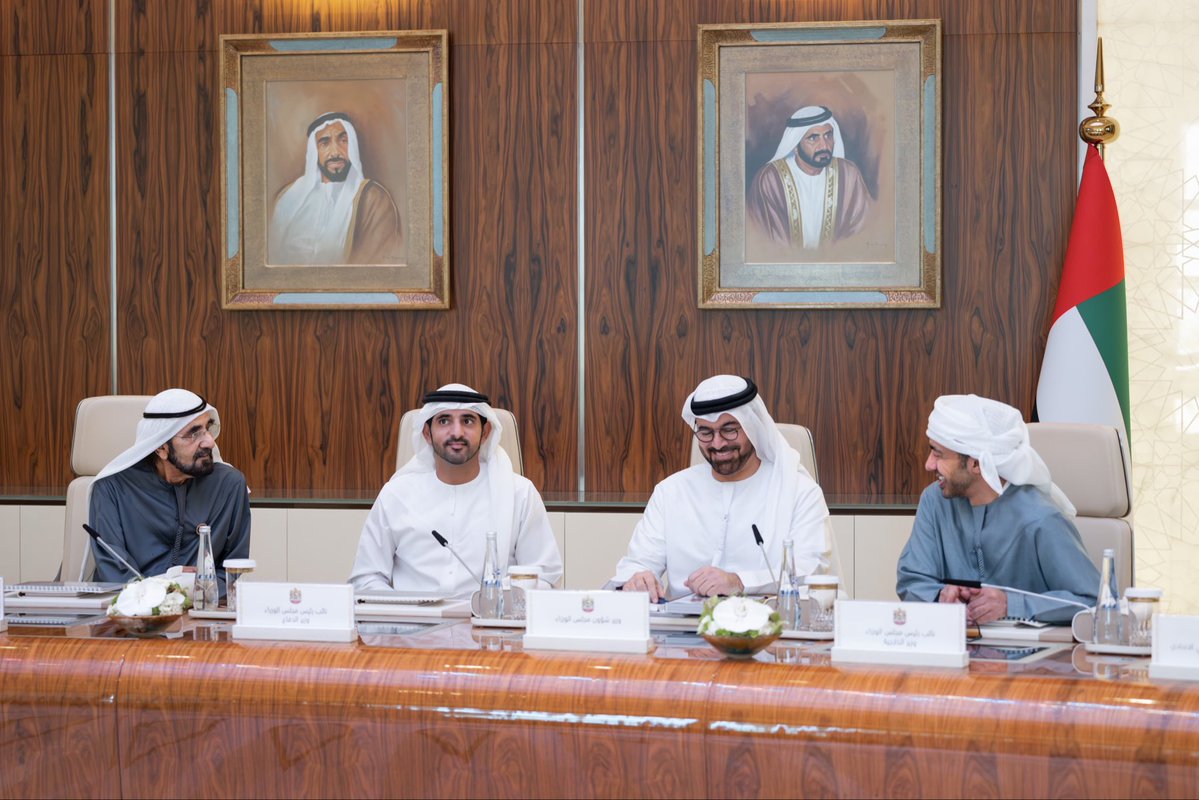
Under the directives of the President of the UAE, we launch a new government model. Within two years, 50% of government sectors, services, and operations will run on Agentic AI, making the UAE the first government globally to operate at this scale through autonomous systems.
AI is no longer a tool. It analyses, decides, executes, and improves in real time. It will become our executive partner to enhance services, accelerate decisions, and raise efficiency.
This transformation has a clear timeline. Two years. Performance across government will be measured by speed of adoption, quality of implementation, and mastery of AI in redesigning government work.
We are investing in our people. Every federal employee will be trained to master AI, building one of the world’s strongest capabilities in AI-driven government.
Implementation will be overseen by Sheikh Mansour bin Zayed, with a dedicated taskforce chaired by Mohammad Al Gergawi driving execution.
The world is changing. Technology is accelerating. Our principle remains constant. People come first. Our goal is a government that is faster, more responsive, and more impactful.
This blew my mind.
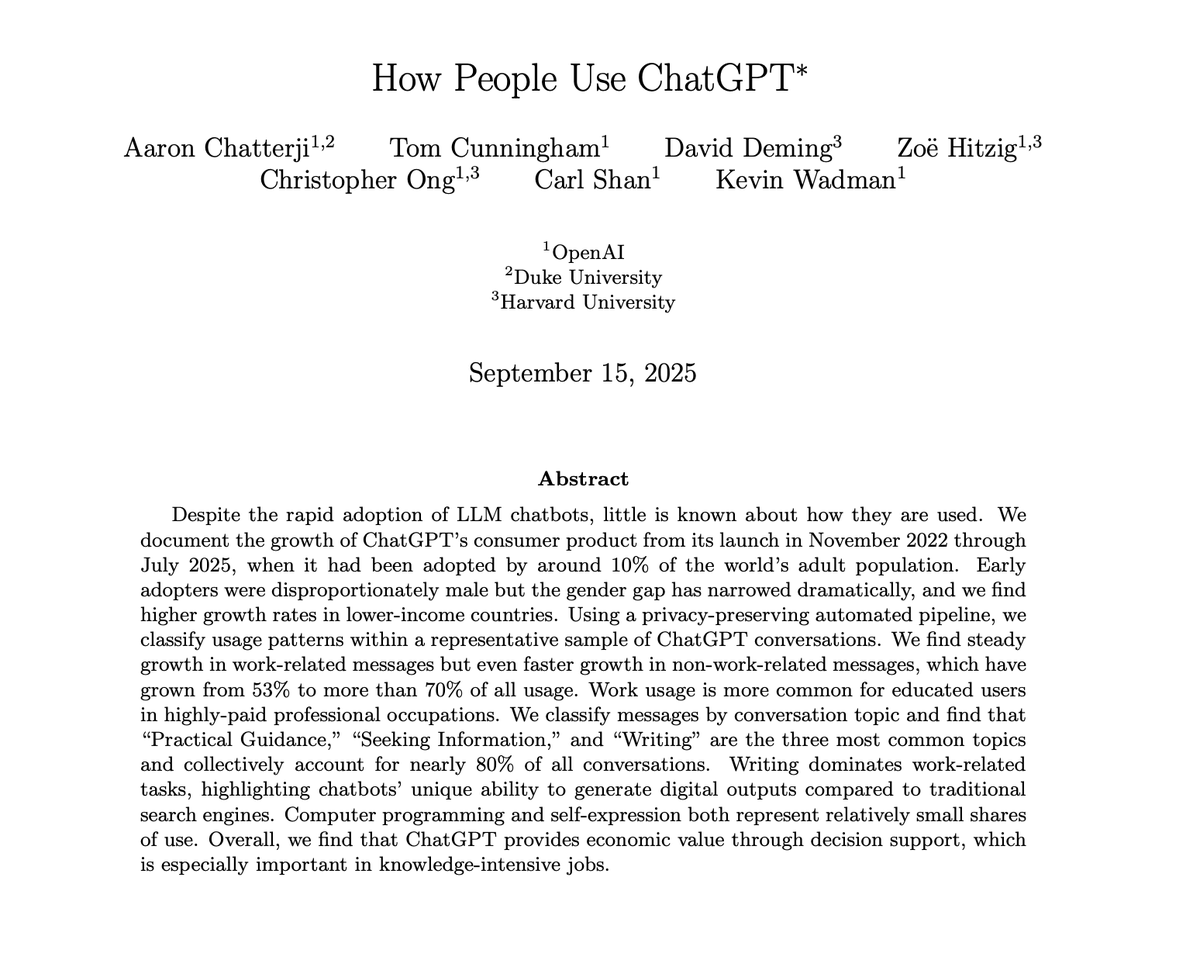
OpenAI just published the first comprehensive study of how 700 million people actually use ChatGPT.
The results destroy every assumption about AI adoption.
Here's everything you need to know in 3 minutes:
Computer use is now in Claude Code.
Claude can open your apps, click through your UI, and test what it built, right from the CLI.
Now in research preview on Pro and Max plans.
🦔 Researchers at Aikido Security found 151 malicious packages uploaded to GitHub between March 3 and March 9. The packages use Unicode characters that are invisible to humans but execute as code when run. Manual code reviews and static analysis tools see only whitespace or blank lines. The surrounding code looks legitimate, with realistic documentation tweaks, version bumps, and bug fixes. Researchers suspect the attackers are using LLMs to generate convincing packages at scale. Similar packages have been found on NPM and the VS Code marketplace.
My Take
Supply chain attacks on code repositories aren't new, but this technique is nasty. The malicious payload is encoded in Unicode characters that don't render in any editor, terminal, or review interface. You can stare at the code all day and see nothing. A small decoder extracts the hidden bytes at runtime and passes them to eval(). Unless you're specifically looking for invisible Unicode ranges, you won't catch it.
The researchers think AI is writing these packages because 151 bespoke code changes across different projects in a week isn't something a human team could do manually. If that's right, we're watching AI-generated attacks hit AI-assisted development workflows. The vibe coders pulling packages without reading them are the target, and there are a lot of them. The best defense is still carefully inspecting dependencies before adding them, but that's exactly the step people skip when they're moving fast. I don't really know how any of this gets better. The attackers are scaling faster than the defenses.
Hedgie🤗
https://t.co/XQ8Eqs1QOA
Linus Torvalds created Linux at 21 without Claude or any other AI.
- He didn't have a co-founder.
- No VC funding. No office.
- No team.
- Just a personal project
he posted to a mailing list:
"I'm doing a free OS."
33 years later,
it runs 97% of the world's servers, all smartphones, and the International Space Station.
The most important software in history started as someone's side project.
Absolute legend.
Riittää tosiaan, että kirjautuu huomenna sisään ja käy lunastamassa ilmaiset krediitit. Ei siis välttämättä tarvitse käyttää naistenpäivää vibekoodaukseen. Tämä kaikkien pitää vähintään tehdä!
Perkele. 🇫🇮
Kirjoitan muutaman sanan suomalaisesta valtamediasta, erityisesti maailman tapahtumien uutisoinnista, uutisten valinnoista ja niihin liittyvistä narratiiveista. (Tämä on osa 1. Jatkan ensi viikolla.)
Aloitin viestinnän X:ssä (entinen Twitter) Iranin sisäisestä tilanteesta noin 15. tammikuuta 2026. Huomasin silloin, että suomalainen valtamedia keskittyi täysin toisarvoisiin maailman tapahtumiin. Selvitin tilanteen kulkua itse useiden lähteiden avulla. Suuri kiitos kuuluu Shabnamille @ShabnamNikoo , johon tutustuin aivan sattumalta täällä X:ssä. Hänen avullaan löysin nopeasti lisää luotettavia tiedonlähteitä. (Olen upseeri evp., ja pitkällä palvelusurallani olen saanut huippukoulutuksen ja osaamisen OSINT- ja PSYOP-toimintaan. Pystyn löytämään tietoa nopeasti sekä erottamaan faktat fiktiosta, mukaan lukien AI-avusteinen disinformaatio.)
Aloin jakaa tietoa X:ssä ja samalla ihmettelin sekä arvostelin asiallisen sarkastiseen tyyliini suomalaista valtamediaa. Heidän uutisointinsa oli viivästynyttä ja puutteellista, ja narratiivit suorastaan vinoutuneita. Erityisesti Ylen ja Helsingin Sanomien uutisointi vaikutti – ja vaikuttaa edelleen – vahvasti politisoituneelta ja asenteelliselta. Nämä mediat sijoittuvat kiistatta poliittisen hevosenkengän vasemmalle laidalle.
Tämän voi todeta kahden samanaikaisen maailmantapahtuman perusteella. Yhdysvalloissa viranomainen ampui kansalaisen välikohtauksessa; tästä uutisoitiin lähes viikon ajan jopa 3D-mallinnuksia käyttäen. Tapahtuma pysyi nettiuutisten etusivuilla näkyvästi, ja siitä tehtiin lukuisia uusia artikkeleita, kolumneja sekä muita kirjoituksia, joissa sallittiin myös kansalaiskommentit.
Samaan aikaan Iranissa miljoonat kansalaiset nousivat kapinaan ja mielenosoituksiin islamistista hallintoa vastaan. Tilanne eskaloitui nopeasti: Iranin hallinto sotilasjoukkoineen alkoi surmata omia kansalaisiaan. OSINT-lähteiden mukaan uhreja oli ensin satoja, sitten tuhansia. Luotettavien tietojen perusteella määrä nousi jopa 30 000–50 000:een – kaikki oman hallinnon joukkojen toimesta.
Samaan aikaan Suomen valtamedia, kuten Yle @yleuutiset ja Helsingin Sanomat @hsfi , jatkoi Yhdysvaltain tapahtumien rummuttamista, joissa kaksi kansalaista oli saanut surmansa viranomaisten toimesta välikohtauksissa.
Tuolloin viimeistään ymmärsin, että suomalaisen uutisoinnin narratiiveissa on syvä rakenteellinen ongelma. Se on taitavasti korruptoitunut valtamedian johdon toimesta, ja se pitää nuoret journalistit kurissa estäen vapaan, faktapohjaisen uutisoinnin.
Mitä tulee sodan ja eskalaation alkamiseen – Israelin ja USA:n joukkojen hyökkäykseen Iraniin – tein siitä lyhyen postauksen X:ään edellisenä päivänä. Arvioin silloin, että operaation kineettinen vaihe (ohjusiskut ja pommitukset) alkaisi 48 tunnin sisällä.
Jatkan siitä ja muusta ensi viikolla.
ping Jesse @jessemauton
GPT-5.4 is here.
Native computer-use capabilities.
Up to 1M tokens of context in Codex and the API.
Best-in-class agentic coding for complex tasks.
Scalable tool search across larger ecosystems.
More efficient reasoning for long, tool-heavy workflows.
https://t.co/xuLt562S9b
Muslimimaat,jotka tukevat Iranin nykyisen hallinnon kaatamista:
Jordania 🇯🇴
Kuwait 🇰🇼
Yhdistyneet arabiemiirikunnat 🇦🇪
Saudi-Arabia 🇸🇦
Oman 🇴🇲
Qatar 🇶🇦
Bahrain 🇧🇭
Muslimimaat, jotka vastustavat Iranin hallinnon kaatamista:
Iso-Britannia 🇬🇧
Ranska 🇫🇷
Espanja 🇪🇸
#KingRezaPahlavi
Holy shit. Wow.
This is HANDS DOWN the best take I’ve heard.
If there is one video you listen to today it’s this one.
Every single word of this and it’s a huge “f*ck you” to @antonioguterres for propping up the barbaric terrorist Islamic Regime in Iran.
Must be shared everywhere in my opinion.
Unfortunately I have no idea who this young British woman is to credit her, if you know who it is feel free to tag below.
There’s a lot of noise out there right now claiming the U.S. and Israel are losing or that the IRGC has the capability to grind them down for months.
The numbers tell a completely different story.
Here’s the reality of the conflict Iranian media calls “Operation True Promise 4.”
WHAT IRAN ACTUALLY THREW AT THE REGION
Between Feb 28 – Mar 4, 2026, the Islamic Revolutionary Guard Corps (IRGC) launched a massive retaliation campaign.
Total launches
• 735 ballistic missiles
• 25 cruise missiles
• 1,745 drones (mostly Shahed one-way attack UAVs)
Targets included
• Israel
• United Arab Emirates
• Qatar
• Kuwait
• Bahrain
• Saudi Arabia
• Oman
• U.S. military installations across the Gulf
On paper that sounds enormous.
But war isn’t measured by what you launch.
It’s measured by what actually gets through.
THE AIR DEFENSE REALITY
The defensive network protecting the region includes:
• Iron Dome
• Patriot Missile System
• THAAD
Interception rates across the Gulf and Israel have been reported in the 80–95% range per salvo.
Meaning the overwhelming majority of Iran’s missiles and drones never reached their targets.
THE DAILY COLLAPSE OF IRAN’S LAUNCH CAPACITY
Watch the trend line. This is what military defeat actually looks like.
Day 1 – Feb 28
• 350 ballistic missiles
• 10 cruise missiles
• 550 drones
Day 2 – Mar 1
• 175 ballistic missiles
• 8 cruise missiles
• 500 drones
Day 3 – Mar 2
• 120 ballistic missiles
• 5 cruise missiles
• 350 drones
Day 4 – Mar 3
• 50 ballistic missiles
• 2 cruise missiles
• 300 drones
Day 5 – Mar 4
• 40 ballistic missiles
• 0 cruise missiles
• 45 drones
Day 6 – Mar 5
• No confirmed major launches
That’s not escalation.
That’s capability collapse.
Launches dropped:
• ~86% reduction in missile attacks
• ~73% reduction in drone attacks
in less than five days.
WHY THE LAUNCHES COLLAPSED
Because the U.S.–Israel strike campaign systematically dismantled Iran’s launch network.
Targets hit include:
• IRGC command centers
• Missile storage facilities
• Mobile launchers
• Radar systems
• Air defense networks
By March 4:
• 50–60% of Iran’s missile launchers destroyed
• ~55% of its air defense systems wiped out
• 1,700+ military targets hit
• 1,000+ IRGC personnel killed
When your launchers and command structure disappear, your missile campaign dies with them.
WHERE THE MISSILES WENT
Most attacks weren’t even aimed primarily at Israel.
The bulk were directed at U.S. partner states in the Gulf.
Examples:
UAE
• 189 ballistic missiles
• 8 cruise missiles
• 941 drones
Qatar
• 101 ballistic missiles
• 3 cruise missiles
• 39 drones
Kuwait
• 178 ballistic missiles intercepted
• 283 drones
Israel
• 200+ ballistic missiles
• 12+ drones
Again:
The vast majority intercepted.
WHAT THIS ACTUALLY SHOWS
This conflict just demonstrated several realities Americans need to understand.
1️⃣ Iran’s missile arsenal is dangerous — but not decisive
Mass launches are meant to overwhelm defenses.
They didn’t.
2️⃣ Western air defense integration works
The network connecting U.S. and allied systems across the Gulf proved capable of stopping large-scale saturation attacks.
3️⃣ Precision strikes cripple launch infrastructure fast
Missile forces are only effective if:
• launchers survive
• command networks survive
• air defenses survive
Iran is losing all three.
4️⃣ This is why the U.S. maintains military dominance
Those bases across the Middle East exist for one reason:
To prevent regional threats from escalating into global crises.
THE BOTTOM LINE
In less than a week:
• Iran launched 2,500+ weapons
• Most were intercepted
• Their launch capability collapsed by over 80%
• Their military infrastructure is being dismantled
That isn’t a stalemate.
That’s overwhelming military superiority in action.
And it’s exactly why Donald Trump and Benjamin Netanyahu were willing to take the fight directly to the IRGC in the first place.