Which way Ontario?
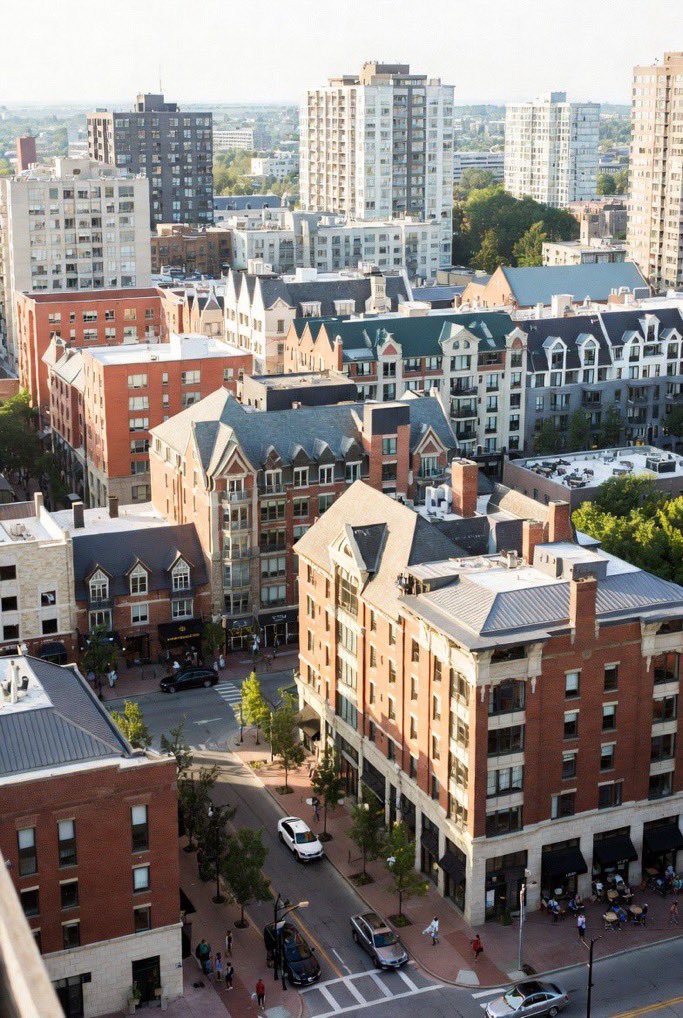
Do we want our housing and streetscapes in our suburban centers to reflect our best and the world’s best places to live?
We can build densely, beautifully, and affordably. But we have to change our approach to building codes and urban planning regulation.
@erinotoole Please keep your word on showing this conversation with relevant politicians, we need better
Ironically, @RM_Transit would be an actually valuable consultant
@EricDLombardi Just registered specifically to vote for you
If Liberal's don't come with actual ideas like Eric, Doug Ford will walk away with another win.
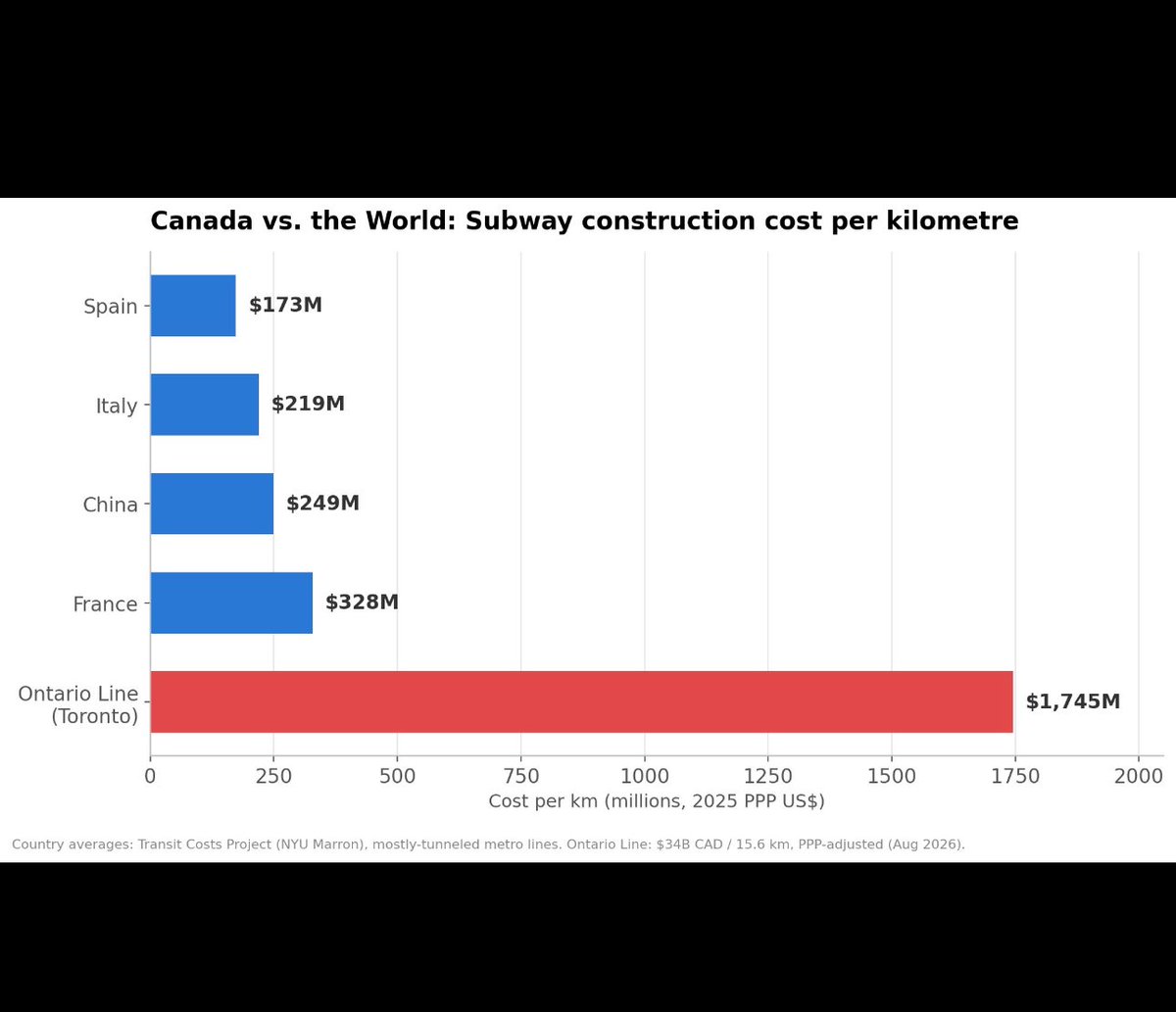
Ontario cannot afford it
The Ontario Liberal Party under my leadership will not be the HR department of Canadian politics.
Instead it will be a popular front for needed change rooted in 𝘭𝘪𝘣𝘦𝘳𝘢𝘭 values.
My focus is reindustrializing Ontario, fixing the economic dysfunctions we have allowed to accumulate for decades, and making this province the most prosperous place in the world.
I am not running to restore last decades Liberal Party of luxury beliefs and platitude politics.
I am offering Liberal and 𝘭𝘪𝘣𝘦𝘳𝘢𝘭 Ontarians a genuine choice that is ambitious about what this province can become.
I welcome people who have voted Conservative, NDP , Green, or for nobody at all to see something in this project worth building together.
The first step to doing things is believing you can do them.
In fifty years, I imagine a Canada connected from coast to coast by high-speed rail moving faster than anything we can build today, unlocking the extraordinary potential of Northern Ontario while turning Southern Ontario into a genuine global megaregion of extraordinary prosperity.
I imagine a society powered overwhelmingly by abundant clean electricity, supporting some of the most advanced and entrepreneurial industries in the world.
Spacious and comfortable homeownership for ordinary people. Beautiful cities, towns and suburbs. The best education anywhere. Excellent healthcare basically on demand. A society prosperous enough to provide broad civic welfare without constantly arguing about scarcity. Pluralistic and free.
Ontario should be an agricultural powerhouse too, in a part of the world increasingly recognized as a climate refuge. We have been given an extraordinary geographic inheritance in our fresh water, fertile land, minerals, energy, the Great Lakes and our proximity to one of the largest concentrations of people and capital on Earth. We can become vastly more prosperous while taking better care of it all.
Seriously, this future is achievable.
The problems we face are serious and real, but they are not arguments for giving up on growth or progress, like far too many have.
Matt Strauss and I certainly do not agree on everything. But rather than being outraged that someone who is Conservative would join the Ontario Liberal Party to support me, perhaps people should be curious about why my vision is finding an audience both inside and outside of the Ontario Liberal Party.
I am willing to engage with people I disagree with, take their arguments seriously, share my own thinking publicly and put forward substantive ideas about where Ontario should go.
That to me is liberalism in practice.
A society that does not imagine a great future for itself will never plan for one. I’m doing that work, and that’s why I’m changing minds.
So if you live in Ontario, sign up for the Ontario Liberal Party as soon as you can and vote for me to be its next leader.
https://t.co/3lZzoaSSKB
This man actually has a vision for fixing the issues in Ontario.
Anyone who tells you it's a matter of reallocating money is lying. Our issues run deep, and require serious people who both understand them and have answers. Eric is as serious as it gets.
The elephant in the room in Canada is that after nearly 2 years of trade wars, our provincial governments have still largely done nothing in terms of reform to strengthen economic competitiveness.
We can’t keep ignoring all the opportunities we have that don’t have anything to do with the US.
- There has never been a better moment to fix broken housing systems in BC and Ontario (land use, permitting, and taxes) for the long haul.
- The cost of building infrastructure is 3-5x similarly wealthy places in Europe and Asia. We will simply not be advanced in the future if we keep wasting so much $ on broken processes, we know what has to change.
- Most interprovincial trade barriers have been unaddressed, and very little progress has been made despite all the MOUs.
- Tax reform has been a clear topic where the Feds and Provinces should work together to make the system more competitive especially for IP and entrepreneurship.
- Many governing programs do get abused, we see increasing skimming off the top, and regulatory capture that has become problematic.
- We know obvious reforms to raise standards in health and education are needed, many of them are free in the long term.
There has never been a moment like this one to do hard things, the public I think, is ready. Our provinces need to come to terms with their obligation to strengthen the country by taking responsibility. It can’t all be on the Feds.
@LFairclo Your "policy", like @NavdeepSBains, is a laundry list of hollow platitudes.
Moving money to different buckets does nothing if all the buckets have holes.
@EricDLombardi has genuine specifics. Try harder.
Of course, many Canadians were hoping for a different outcome, even if it was always going to be hard to trust a deal.
Ontario, we must start focusing on reforms that position our economy for strength in the long term.
There is a role for government to support workers and businesses through any transition, but we can’t only focus on the short term.
Despite the last two years, we have not done the work to tackle the big things:
- Fix our broken housing system, so normal incomes can once again afford homeownership. This will mean more money from paychecks going towards spending and savings, and make it easier for Ontarians to take risks.
- Change our approach to planning and building infrastructure so that it no longer costs 3-5 more than elsewhere, and then build way more of it. The era of process princesses creating cost disease has to end.
- Build an industrial policy around electricity, so people and businesses can count on the lowest prices in the developed world for the long haul (and support the climate transition).
- Invest in research at top universities, improving the pipeline of innovation to startup to globally-scaled business.
- Approach tax reform, permitting reform, and competition reform with seriousness, to improve our productivity growth rates.
- Continue to lower barriers to trade with other provinces and work with the Feds to develop deeper relationships with global allies, with a particular focus on Europe, East Asia, and South America.
The more that we focusing on building what the world needs, the more security we will have to defend our interests in the decades ahead. We should reject the protectionist impulses we see elsewhere as much as possible.
We should be learning from economies like the Netherlands, Switzerland, Taiwan, and Denmark, with advanced industrial bases, major global IP, and high expertise economies.
With talent, land, resources, industry, institutions we can fix, and great people in an open culture, we have an amazing future ahead of us.
Ontario can still win!
@BenMulroneyShow@BenMulroney@fordnation Don't be facetious.
Even if you removed *every* bike lane, traffic wouldn't change *at all*
Toronto roads are simply saturated, and no amount of extra lane space will fix that.
If you don't want to be treated as stupid, don't treat others as such
@sarbjitkaur1@jkenney This is an asinine take.
Our services are crumbling, housing skyrocketed, and entry level jobs vanished. And yes, it was because we *all of the sudden* took in 2-3 million low-skill, low-wage (low-tax) economic migrants and students over 3 years.
Immigration isn't a charity.
I spent the last few days at the @AMOPolicy conference talking with municipal leaders from across Ontario, and one thing is clear…
If we want to fix our housing system, we have to fix municipal finance.
I am the only candidate in the @OntLiberal leadership with a plan to fundamentally change the deal between municipalities and Queen’s Park.
Municipalities would give up roughly $1–2 billion a year in taxes on housing, primarily infill development charges and Toronto’s land transfer tax.
In exchange, they would receive roughly $5–8 billion a year in permanent HST revenue and reduced costs from provincial uploads.
That leaves municipalities roughly $4–6 billion better off structurally, before we begin replacingone-off grants, bailouts and special deals with predictable funding.
That is the point. Municipalities should not have to tax the homes we need and then come cap in hand to Queen’s Park and Ottawa to pay for growth.
My plan would:
✅Give municipalities 1% of the HST.
✅Abolish land transfer taxes, including Toronto’s.
✅Eliminate development charges on infill.
✅Upload housing, homelessness and healthcare costs.
✅Tax land speculation instead of new housing.
✅Give cities better tools to finance growth.
✅Replace one-off grants with predictable funding.
Growth should improve a municipality’s finances, not weaken them.
The province should pay for provincial responsibilities. Municipalities should have revenues they can actually plan around. And we should stop financing local government by taxing the new homes we desperately need.
Fix municipal finance, and we can fix the economics of building housing.
The whole plan and costing.
https://t.co/qR05aYGrAq
@EricDLombardi Please don't actually. You have competence and vision where they have platitudes.
I'd suggest lightly calling them out. You have real ideas; push the onus on them to present real ideas. Ask specifically about transport infra, scaling business, healthcare etc.
We will basically cease to be a highly developed region of the world, in the next 30-50 years, if we do not dramatically repair our ability to build infrastructure at a reasonable cost.
The state capacity challenges we now have resemble developing economies, not advanced ones.
There are so many examples of this in Canada. Are we just so apathetic to garbage governance that it no longer matters? Will we, as a society, ever demand better? What will it take to say, "No más!"?
Ford's subway gravy train—
Cost to build subways per km:
Berlin: $400 million
Milan: $200 million
Barcelona: $220 million
Ford's Ontario Line?
$1.42 billion per km
Costs are up 400% under Ford.
Ford has refused Ontario NDP calls for an inquiry of Metrolinx, the agency responsible for building transit.
#onpoli
https://t.co/P92xZS59tR