FIIA brings its research expertise to Brussels
As of January 2027, FIIA Brussels connects FIIA’s expertise with European policy discussions and provides a platform for dialogue on European foreign policy, security and international affairs.
Read more: https://t.co/2yjFLjFdq3
A decade ago, I defined this as 'politics of pretending' where both sides engage in meaningless shadow boxing and signalling, instead of facing reality and act accordingly. I guess this performance has served some perverse function for both.
"Every autumn, Brussels and Ankara perform the same ritual. The European Commission publishes its enlargement report on Turkey, replete with criticism of the country's democratic backsliding. The Turkish Foreign Ministry then issues a statement rejecting the findings and accusing the EU of bias and double standards, in some years almost word for word the same statement as the year before."
https://t.co/JPohyTVrMj
📣 FIIA is looking for two researchers for two-year fixed-term positions!
🔹 One for the Finland and Northern European Security research programme.
🔹 One for the Global Security and Governance research programme.
Read more and apply by 4 Dec at 16:15 👇
https://t.co/c9iRviXOqL
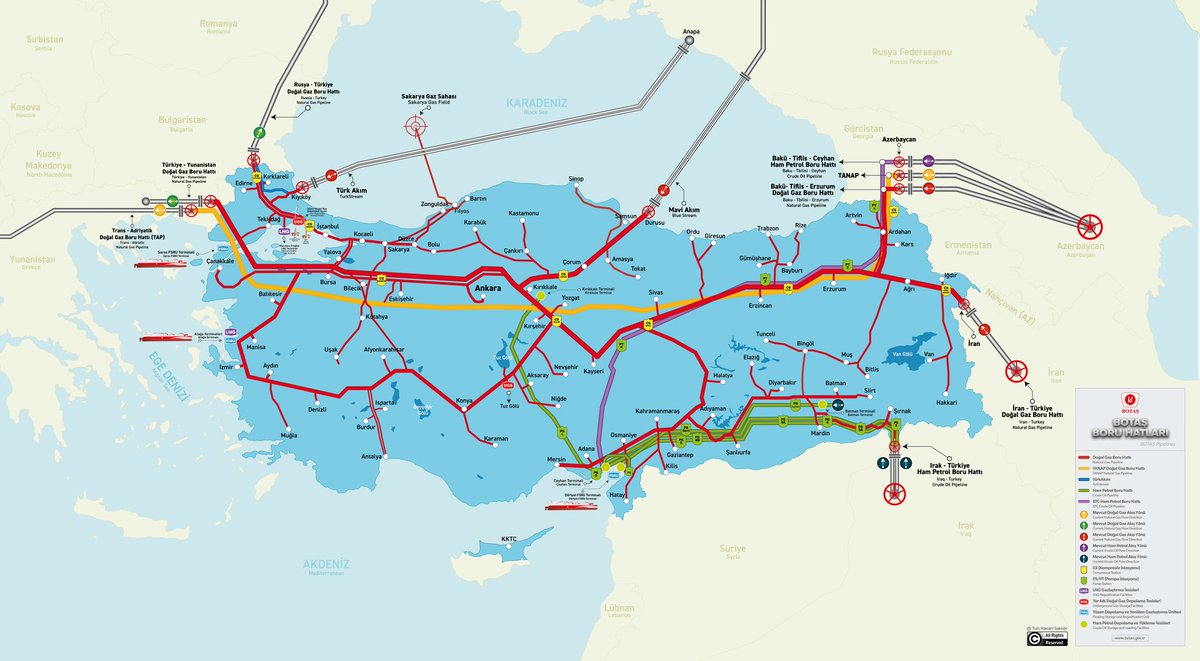
🇷🇺 Russian gas flows to 🇹🇷 Turkey just jumped almost 4 times.
In the first 5 days of November, Gazprom says deliveries to Turkish customers were almost 4 times what they were over the same days in October and September.
October was already up 78% on September.
Gazprom links it to Europe.
It says Europe pulled record volumes of gas out of storage on 28 and 29 October, and again on 1, 2 and 4 November.
Winter came early for European storage.
Turkey is stocking up on Russian pipeline gas before LNG cargoes get bid away by Europe and Asia.
Gazprom is happy to sell every molecule it can.
And Turkey wants to be the gas hub between Russia, the Caspian and Europe.
Every cold week in Europe makes that hub more useful.
Many thanks to @nicolekouroushi for referencing out book "#Turkey as a Third Pole in the New International Order" in this @EagleIntReports piece about "Turkey's Balancing Act Beyond #NATO".
For the #book: https://t.co/czl1DSxpUK
https://t.co/t6ImW8U8mb
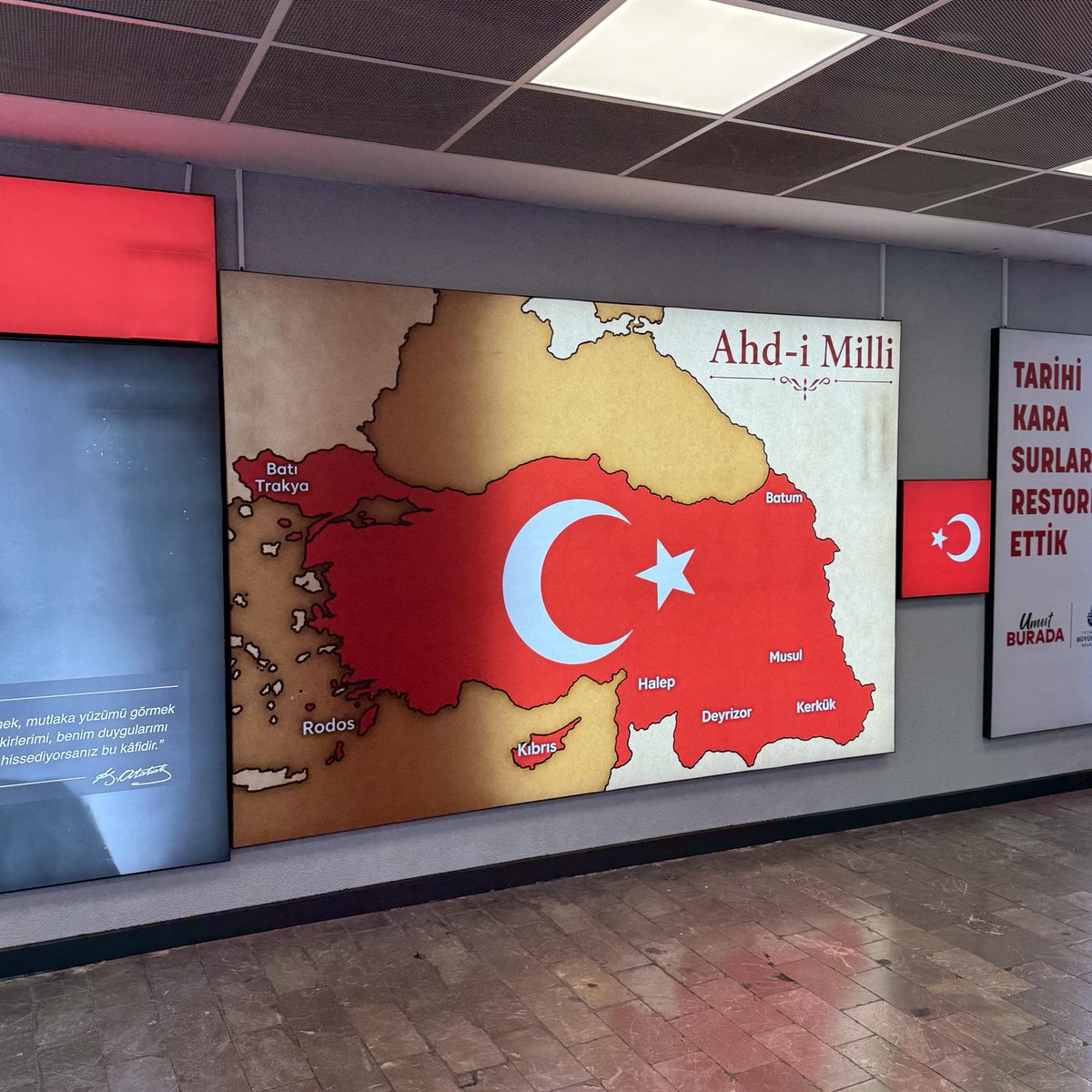
To some degree, this map is a logical 'popularized' next step from now two decades long narrative of 'gönül coğrafyamız' (our emotial geography) currently reproduced by all Turkey's state representatives.
If this map is really within Istanbul's subway station it means that irredentism disease has spread to Turkey. The map is an altered version of "Misak-i Milli" (national oath) and named "Ahd-i Milli" since these new altered concepts look fancier and became quite popular. This is different from claiming disputed islands and territorial water disputes with a neighbouring country and similar what we always see in "Greater Armenia", "Greater Georgia", "Greater Iran" irredentism, which Turkey never had it due to Ataturk's "Peace at home, peace in the world" concept that has been the main pillar of Turkish foreign policy, blocking path to revisionism. Now it is, together with many things, have been revoked. Nothing lasts forever and no concept is holy, but let's see what are the dangers and gains?
-Looking from a logical and strategical view, adding all these areas in an imaginary scenario will make ethnic Turkish population below %50, while the contemporary mindset of specific groups aiming this map also won't allow any kind of a decentralized system that would allow autonomy and self rule to ethnic Adjars, Arabs, Greeks, Kurds and Assyrians in the new lands. Naturally all these population will resist in armed way, supported by their kins and other countries.
- As nearly everyone that wants such "new lands" have never seen those areas in Iraq or Syria. Those areas need HUGE investment, and it is impossible to do it with contemporary Turkish economy. If that will be the aim, original Turkish cities will be neglected and will have massive lack of infrastructure. If not, the new areas will rebel again due to the neglect, while their huge expectations will turn into huge disappointments. Education opportunities to "cement a national(!) identity" will push to make thousands of new schools and teachers added, infrastructure costs will be impossible to be paid, military will be over stretched, law enfocement will never be enough in numbers.
- Most of the local population in those lands do not want a Turkish rule. The image of Ottomans have never been positive and is accused still for their situation today, with lots of bitter stories told among population. Adjara was different in 90s and could be a part of Turkey with plebicite, but ethnic identification today is Georgianized and it is too late. Turks in Western Thrace can be exception and minor areas like Tal Afar, Azzaz, Tuzkhurmatu, Jabal Turkman etc. Ottoman experience failed and revisionists have absolutely no doctrine or strategy to make this possible "Greater Turkey" to work.
- Strategically it will be a nightmare; westwards of Drama is open and have no geographical barriers in Greece, Syrian deserts are extremely challenging and impossible to have a clear control with ISIS and possible insurgencies, north of Baghdad towards Zakho is full flatlands and same applies.
- Soil is not fertile, educating dozens of million citizens is impossible, keeping a centralized and unitary state is impossible, nearly nobody wants to be rules by "Turks", strategically nightmare to defend, and the only gain is the oil and gas, which will never be enough to develop this "new Turkey"
- Leave aside all these, any random Turk that idealize Kirkuk will never spend more than a day there and never move there. The city is in horrible condition and even the most neglected townz in Turkey offer a much, much high quality of life. Deir ez Zor, Raqqa are even worse. Even relatively developed cities like Erbil will never be an attractive areas for the new, revisionist Turks until they are pad big salaries.
- Allowing such maps will remove all excuses to oppose Greeks, Armenians, Arabs, Kurds, Persians, Georgians, or even Bulgarians similar maps that will take place in public areas. Turkey and Turks complain and criticise maps that claim lands from Turkey, but such maps will remove all excuses to complain.
🇦🇪 🇶🇦 🇸🇦 🇮🇷 🇺🇸 “Gulf states have called for a reset on Iran, with the United Arab Emirates urging a “new mindset” and Qatar advocating for a regional “security framework” with Tehran after the war exposed their vulnerability to Iranian attack and tarnished the US’s credibility in the Middle East.”
(…)
“Saudi Arabia has also discussed the idea of a non-aggression pact between Middle East states and Iran since the war erupted, diplomats and analysts said, as part of talks with allies on how to manage regional tensions once the conflict ends.”
https://t.co/tqT8DR6MjZ via @AliVaez via @FT
Israeli human rights org @btselem just published a thorough report on Israel's systematic dismantling of Palestinian life in the West Bank, with over 2,000 testimonies. Something I have been documenting and writing about for years, and care deeply about.
https://t.co/NkIQG7VDv6
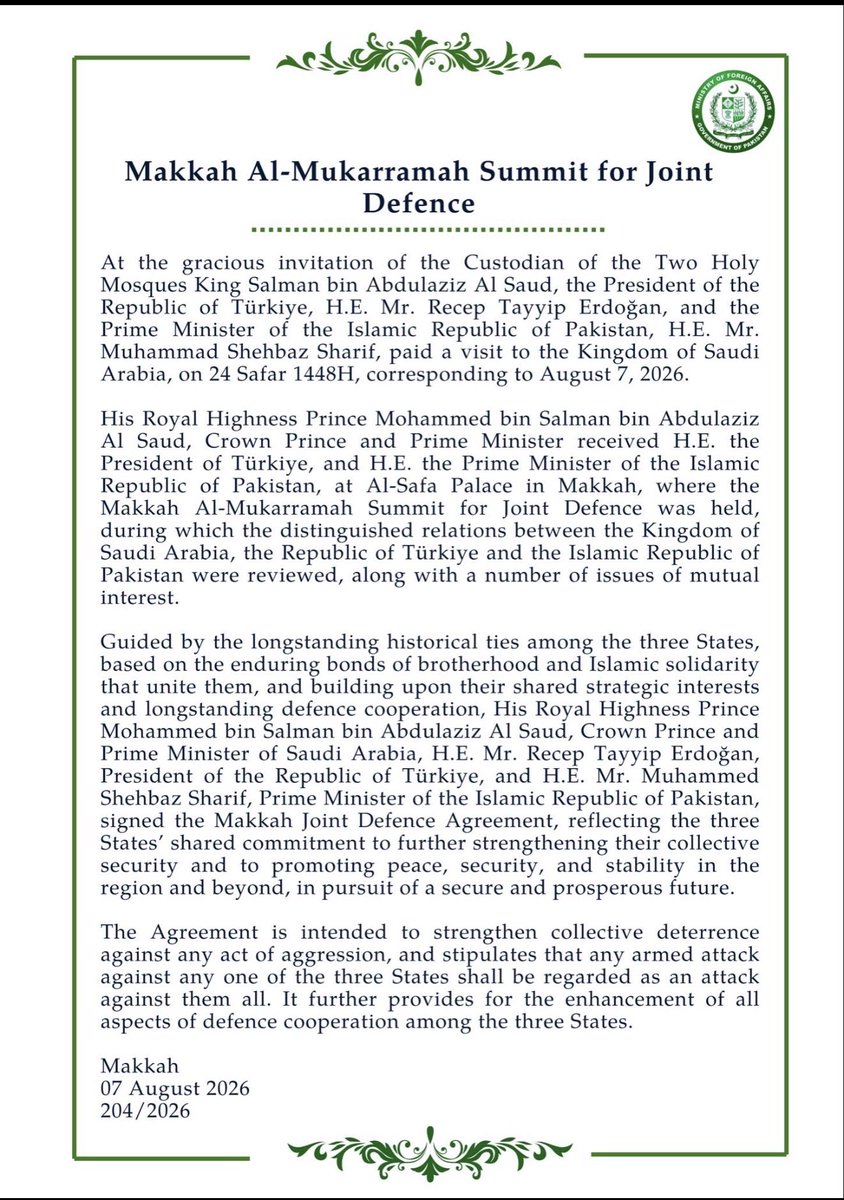
The renewed Houthi threat to Saudi Arabia is an important early test of the Mecca Agreement and of what collective defence will mean in practice.
As I tell @Newsweek, “It would be premature now to call the Mecca agreement a paper tiger. Just as NATO members apply discretion in triggering Article 5, Turkey, Pakistan and Saudi Arabia will decide on a case-by-case basis what the most appropriate level of response is when confronted with an attack.”
“The Houthi strikes do not automatically trigger a certain category of military action. Pakistan and Turkey may respond ultimately, but they are unlikely to telegraph what that action will look like in advance.”
@RUSI_org
https://t.co/EGmWghItME
Turkin presidentti kutsuu Shanghain yhteistyöjärjestöä 'nousevaksi tähdeksi' ja ilmoittaa Turkin pyrkivän järjestön kanssa yhä tiiviimpään yhteistyöhön kaikilla aloilla. Taas yksi esimerkki jo pitkään jatkuneesta monivektorisesta ulkopolitiikasta.
Ahmet İnsel (@ahmet__insel), @goksugoksel'e konuştu:
"'Bu iştene hiçbir şey olmaz' demek, aslında Kürt sorununun çözümünü istememek demektir. Demokratların, solun, sosyalistlerin, sosyal demokratların, eğer kendileriyle tutarlıysalar böyle bir tavır alma ihtimali yoktur diye düşünüyorum. Sorunların, ihtimallerin, endişelerini dile getirilmesi bir demokratik tartışma zemininin var olduğunun işaretidir. Yoksa bir taraf emir vermiş, bir örgütün lideri bir otokratla oturmuş, bir pazarlık yapmışlar, ondan sonra o pazarlığın sonuçlarını ne olursa olsun herkesin kabul etmesini beklemek, o otokratik rejimin özelliği zaten. Dolayısıyla otokratik rejime karşı çıkıyorsak, otokratik yöntemlerle yapılan işlemleri de şüpheyle, endişeyle, eleştirel olarak yaklaşmamak elbette zannediyorum doğaldır"
➡️https://t.co/RXjyrbGJUa
New collective defense agreement signed today between Saudi Arabia, Turkey, and Pakistan, with NATO Article 5-like terms: “An attack on one of the three States shall be regarded as an attack on all of them.” It’s a fluid, tabula rasa era in the Middle East.
Amid the escalation in the West Bank today, reposting this @CrisisGroup report from nearly two years ago that outlines and describes in great detail why settler violence is a systematic mechanism of state violence and why the world is complicit https://t.co/y1iDhdNAWi
Liderimiz Özgür Özel, ‘YENİ Parti’mizin kuruluş evraklarını imzalayarak Cumhuriyet Halk Partisi’nden istifa etti. 91 milletvekilimiz YENİ Parti Kurucular Kurulu’na katıldı.
Başlıyoruz!
One striking claim from Abbas Araghchi’s latest interview: the US - and presumably Israel - had a real plan to break Iran apart.
Araghchi says he personally called Iraqi Kurdish leaders and officials in Baghdad to prevent this scenario - and credits Turkey with playing a key role in stopping it.
https://t.co/tBBPwQrmuh
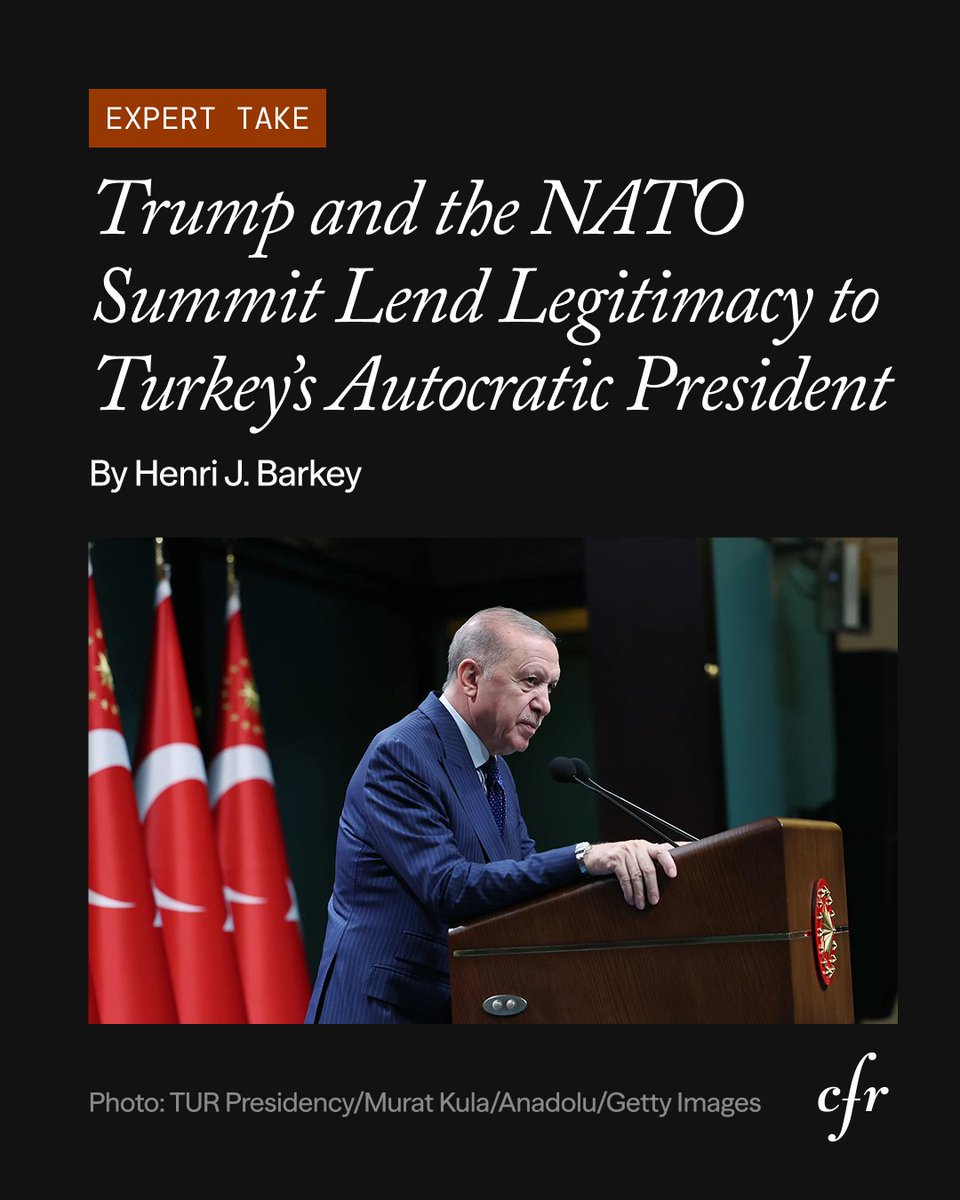
Turkish President Recep Tayyip Erdoğan is poised to use the NATO summit in Anakara on July 7–8 to burnish his own credentials as a global power broker—and to signal his increasingly absolute power domestically, argues expert @hbarkey.
Erdoğan "intends to present himself as 'the indispensable ally' to Europeans and a valued friend to the U.S. president," writes Barkey.
"From almost the beginning of his rule in 2003, [Erdoğan] has envisioned a global role for himself, and at a time beset by conflict and uncertainty, he clearly believes his moment has come. His real goal is to legitimize his worldview and undemocratic rule, and to make the prolongation of his already drawn-out reign appear natural," he writes.
Read his full analysis: https://t.co/DU9qxMiclJ