Jetty from the Poppi founders has officially launched today, and Allison Ellsworth has sights on beating one number: $1,650,000,000
Given that the Poppi earnout seems to be a zero, that’s the final net purchase price PepsiCo paid for Poppi last year.
Allison is funding Jetty with $2.5M of their own money; a similar amount to Peter Rahal’s $2m initial investment into David Bar / Medici Brands.
Contrast that with Poppis first round of funding from shark tank; $400k for 25% - ultimately turning into something like $400m+ of value at exit for Rohan Oza.
So the ability to personally fund the brand at the earliest (and most expensive) stage means that the founders don’t need this to be a bigger number for it to be a more lucrative outcome for them personally,
Jetty launches with bottles and electrolyte powders at Whole Foods nationwide and online at Amazon and Target.
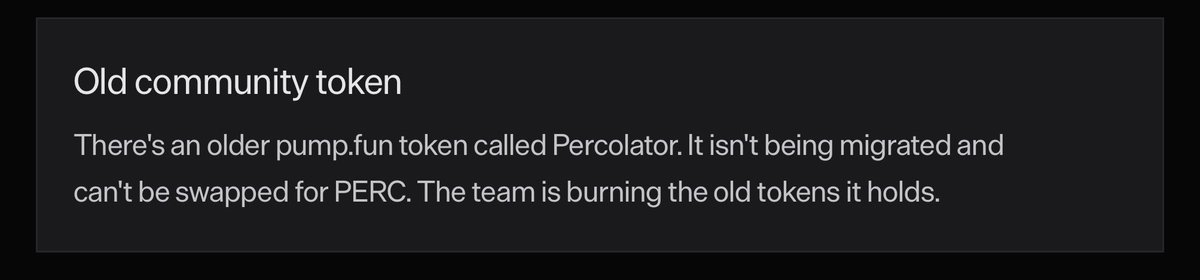
So the Percolator team just rugged all of their early supporters.
Normally I wouldn’t post about something like this, but this situation bothers me, given the lengths I traveled to in order to raise for @CadeMarket while protecting the holders of my token.
If you launch a token and collect trading fees to bootstrap your company, abandoning that token in order to raise capital is a lazy and selfish move.
With Cade, the first fundraising round took SIX months. Without our token, it would have taken a week. But I refused to kill the token and fuck over the people that supported me early and made everything possible.
Not only did I make my life miserable and raise capital in a 100x harder way, I even gave token holders the ability to swap the token for equity via SAFE in the company. The same equity that the venture investors were after.
The irony of the Percolator situation is especially funny, given they are raising on a platform that is designed to favor token holders rights, while literally kicking the holders of the original token in the teeth.
Maladaptive daydreaming about how powerful I’d be if I didn’t have multiple disabling health issues (I fainted at work and my coworker slapped me in the face to try to wake me up)
🚨 ELON MUSK WORKS THE FLOOR AT XAI DATA CENTER
Elon Musk says he makes sure to do some of the hard manual work himself at the xAI data center in Memphis.
He has pulled heavy power cables and worked with fiber optic lines.
He does this to fully understand what his team faces every day.
He walks around the site and talks directly with the people on the job instead of staying in an office.
I was at a San Diego venture capital conference when the dot-com bubble popped. The Red Hat Linux guys were there. The ESA guys were there.
We all watched the NASDAQ dumping on the big-screen TV. The next day, when it rebounded a bit, everyone thought the correction was over.
The NASDAQ continued to dump for years after that.
After visiting a frustrated customer who had canceled his contract, olandria discovered that his facility was a shelter for women and children. With Easter approaching, she wanted to do something special for the families.
“I literally maxed out my card shopping around for those kids, and I got my whole entire office in on it.”
She remembers the customer embracing her and thanking her for going beyond her job responsibilities, even after he had canceled his contract with the company.
Olandria explains that the experience taught her how to lead with compassion, regulate her emotions, and show up for people even during difficult interactions.
“I think I’ve been applying every single skill that I’ve learned from that sales job to my life right now, which is why I feel like my career has been so successful.”
#OlandriaxRichLittleBrokeGirls
Private jet operator Nicholas Air has given a pilot his own five-hour jet card for reaching 10 years with the company, a longevity award it said no other operator extends to flight crews.
Read more ⬇️
This sprint, I am on-call, and I am already thinking of quitting my software job....
I can't do this kind of job for next 20 years....
Probably, for the first time, I want AI to replace all software engineers
MASTERCLASS BY STEVE JOBS $AAPL
He explains the genius of employee stock options back in 1983, long before equity compensation became commonplace in Silicon Valley.
His explanation is a masterclass in aligning employee incentives with the long-term success of a business!
"If somebody came to work for your company, you could let them buy some stock. The problem is they might have to shell out $100,000. If the company went broke, they'd lose all their life savings"
"So when somebody comes to work, let's say the stock's trading at ten dollars a share, you give them the option to buy ten thousand shares at ten dollars. They have four years to exercise that option"
"If the stock goes down or stays the same, they never exercise it. They don't put up any money, they don't lose anything"
"But if it goes to a hundred dollars a share, they can borrow the money to buy it at ten because it's worth a hundred"
"In exchange, we only dole out their ability to exercise 25% a year, locking in people really for four years if the stock goes up"
"Before we went public, over 80% of Apple was owned by the employees. Right now, I'd say over 50% of Apple is owned by the employees"
"I don't think finance is what drives people at Apple. I don't think it's money. But feeling like you own a piece of the company, and this is your damn company"
"We always tell people, you work for Apple first and your boss second"
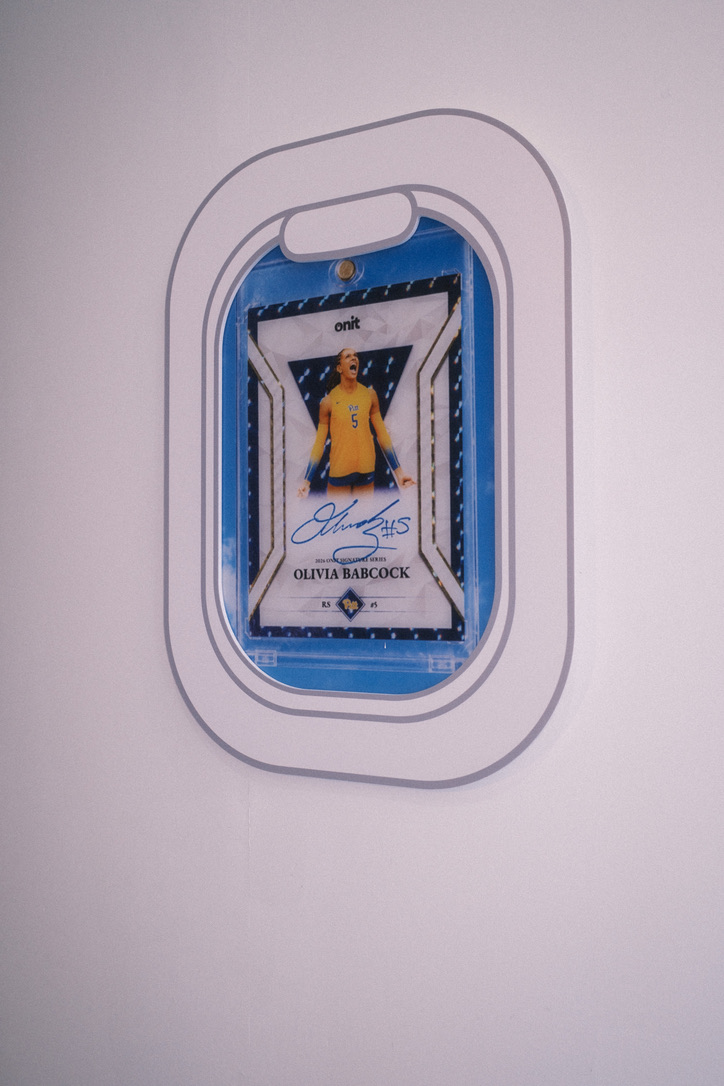
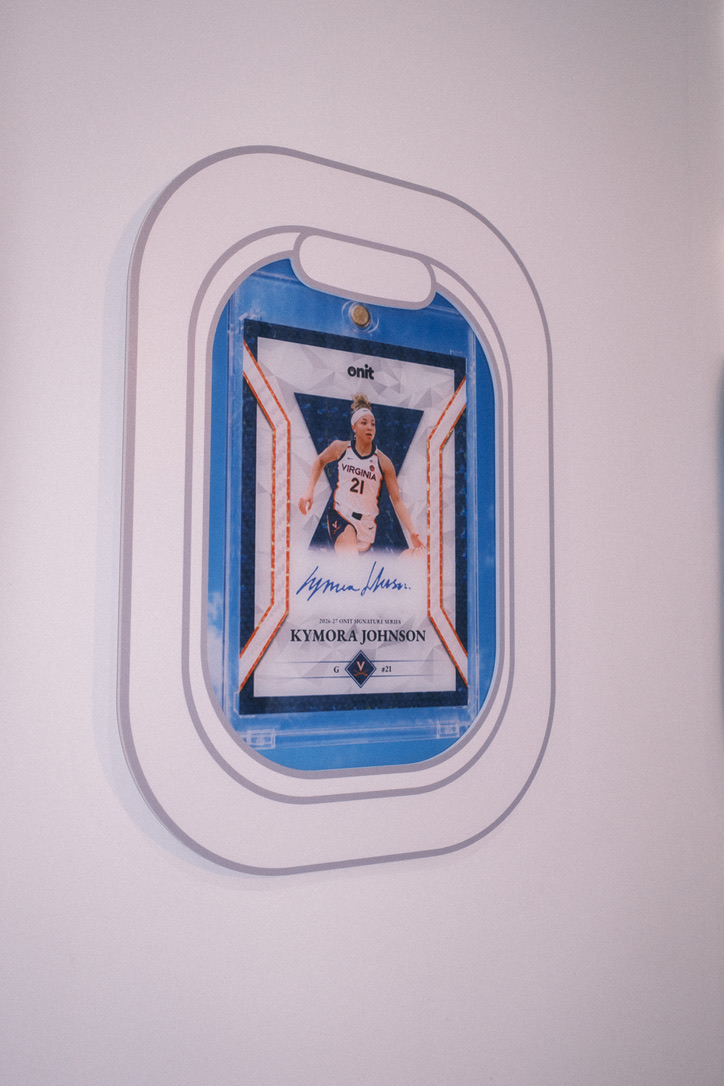
Views from our 776 AGM IRL last week — the team went above and beyond with the portfolio showcase. Here's @onitathlete our trading card company with a full "news-stand" kiosk setup. You know I loved the @KymoraJohnson_ shoutout, too (go Hoos)
Steve Ballmer admits basketball taught him accountability lessons that might have helped him run Microsoft:
After leaving Microsoft, Ballmer bought the LA Clippers. What he found in the NBA was a level of accountability he says business simply can't match:
"Basketball teams and players are far more accountable than any business I've ever known about or run."
His reason is the shot clock:
"Every 24 seconds you're getting a report card. We either scored, we didn't score. The other team scored or didn't score. Every 24 seconds you get a report card. Then the game's over. You either won or lost."
Then he compares it to how companies explain away bad results:
"It's not like even a business. Hey, we're going to get it back next quarter... we got stuff in the lab to fix the situation. No, you can't pretend. You can't hide."
In basketball, everything is measured: how fast players were running, what they were doing, how they played.
"You're not going to find a place of higher accountability."
@Steven_Ballmer says he's "not bashing business." But he admits the lessons he learned on the court "might have been useful for me actually... when I was running Microsoft."
The second lesson applies to players and companies alike:
"I think both basketball players and companies have to get in the weight room. Now, what do I mean about that? By that, you need to develop new skills... You have to be developing new skills before you know you need them necessarily."
His example is Microsoft's own history. Much of what the company does today, he argues, depends on years of hardware investment "through a variety of lenses," from "the old mouse" to Xbox.
"The core capabilities and people and talent building that muscle started with people who worked on things like Xbox."
He isn't certain of the details. But he believes the silicon team now working on "things that will be important for AI and Azure" started on Xbox, "because there was an ability to develop skills... to grow in context."
The people building a gaming console had no idea their skills would one day matter for AI and cloud. That is exactly his point:
"You have to be constantly building new skills and reinventing yourself even before you know what the ultimate application [is]. Otherwise you can't jump into new areas."