THREAD FOR LPs/GPs in VC:
1) I've been talking to VC fund managers (GPs)& the limited partners ("LPs") who invest in them (I'm an LP in numerous VC funds) about expectation for early DPI from seed&pre-seed funds. (DP ="Distributed to Paid In Capital" - i.e., cash $ back to LPs)
Many over-educated founders don’t pitch well. They’ve been trained that smarter is better and more detail shows that you are smarter… so they often complicate the pitch. In startup land, less is more and simplicity wins.
Omg, this is the best marketing play I’ve seen in a long time.
Molson, a beer company and partner for the PWHL, or the Professional Women’s Hockey League, decided to re-vamp the jerseys for the league to announce their partnership.
They saw a problem: many of the women on the team have long hair, so while they are playing… their names are covered.
Molson's solution? Put the players' names on the bottom of the jerseys and their sponsorship logo on the top.
“We covered our name so hers could be seen.”
To make it even better, the campaign was launched on International Women’s Day.
What do you think? Because I think it’s SO GOOD.
The most striking lesson from interviewing 1,500 seed investors.
The best focus on founders.
The good focus on markets.
The worst focus on products.
Markets change, products change, founders remain.
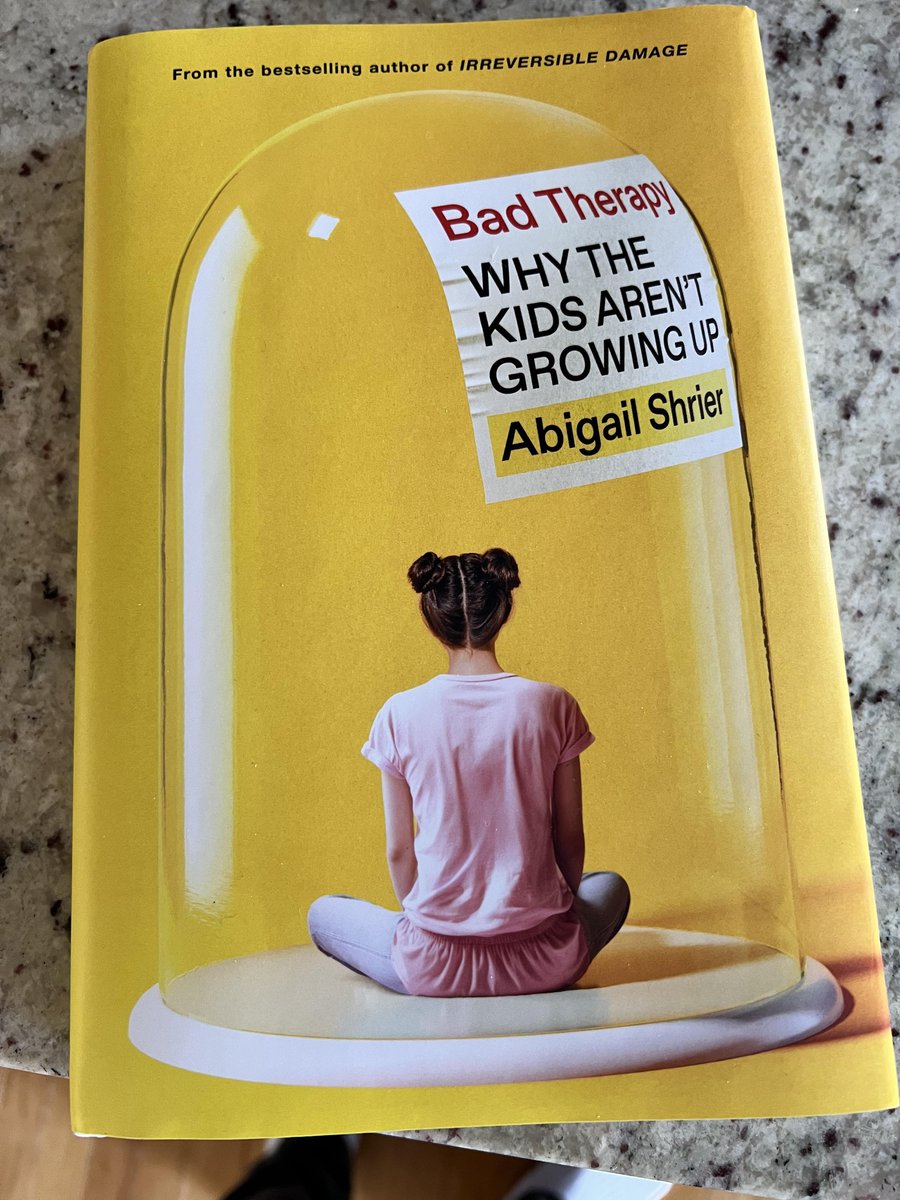
Just finished this book - Bad Therapy by @AbigailShrier
This is one of the most eye-opening books I've ever read. It's a must read for any parent, any teacher, and should be required reading for any school administrator as well.
The book dives into trying to figure out why kids are having so many mental health problems, when there are so many resources devoted to improving mental health outcomes.
Anxiety, depression, suicide, etc are all higher than they've ever been with kids, even though their lives are arguably better than ever before. It just doesn't make sense.
A few key takeaways from the book:
A constant attention on how kids are "feeling" or "thinking" is causing negative outcomes.
Constantly ruminating on your emotions and how you feel negatively impacts your mental health. If all you do is focus on your emotions, you are destined to be anxious or depressed.
We incessantly ask kids how they're feeling, if they're happy, how their mental health is, etc, and this is creating kids who think they're fragile instead of resilient.
Trying to solve every problem for kids has caused a generation who can't do anything for themselves.
We (Gen X) were told to "suck it up" or "you'll live" or "rub some dirt on it" all the time. Many of us came to the conclusion this is "bad parenting" because our feelings were neglected, and we vowed not to do this to our own children.
Because of that, kids immediately over-dramatize everything that happens to them, making mountains out of molehills, and thinking the world must revolve around their emotions and feelings.
You develop confidence and strong mental health by doing things, not by thinking or via therapy.
You can't think your way out of anxiety. You don't gain confidence by analysis of your thoughts or mental health issues.
You gain confidence and eliminate anxiety by doing gradually more difficult tasks, excelling at them, and realizing you are a competent, capable person.
The non-stop attention therapy gives to these small, common emotions we all feel blows them out of proportion to their seriousness (not talking about genuine disorders here, just normal anxieties that millions of people go to therapy to try to avoid).
One of the best ways to decrease your happiness is to chase it.
Our society constantly tells kids they should be "happy" and asks them if they are.
Happiness isn't a state you should be in 24/7. That's not realistic. Joy and bliss aren't permanent states - they are fleeting.
Contentment, stillness, and being even-keeled are much better goals to aim for mentally.
The happiest, most well adjusted kids come from families with loving parents that have strict rules for the household.
This one really set off the confirmation bias in me... I feel really blessed we have 2 well adjusted middle school kids who do great in school, are very respectful and well mannered, and we barely even need to parent them.
But for years, we were very strict with them. Bedtimes, family rules, how we do things, etc. The in-laws and lots of friends thought we were totalitarian.
In reality, we just had high standards. And it's really paying off right now. I found it really interesting that strict rules equals happy kids. Makes sense, though, as kids need to know what their boundaries are.
Constantly surveying school-age kids about their mental health causes more issues than it solves.
Mental health resources is big money. Districts need to validate all the resources allocated towards mental health, and they often do that via surveys.
Asking kids non-stop questions like:
- Have you thought about self harm?
- Have you thought about suicide?
- Have you been so anxious you can't get out of bed?
Etc, etc puts into their heads the idea that themselves, or many of their peers are broken and cannot function properly in the real world.
It normalizes situations that would be incredibly rare at any other time in history.
There's a lot of other takeaways, too, but I'll stop there.
It's a fantastic book. Go pick it up and read it. This isn't an affiliate thing or a promotion thing at all. I just really enjoyed it, and it will further shape the way I parent moving forward.
@schlaf Great program!! I think founders place so much pressure on being 110% all the time and are the hardest on themselves. Really amazing that you are addressing this need.
Less than 24 hours ago, Anthropic announced Claude 3. And some people are calling it better than GPT-4.
Some are "feeling" Claude 3 (Opus) has reached AGI level.
8 incredible examples:
It's a mistake to try to raise money if you're not quite attractive enough to investors. They don't say no immediately. They suck up a lot of your time and hope, and then say no. It's a huge distraction and crushingly bad for morale.
No flag planting here. Armenia is nobody's backyard, but a friendly country and democratic nation whose sovereignty and territorial integrity France supports.
founders and investors obsess over cash runway, but a founder friend recently brought up the idea of 'emotional runway' and i can't get it out of my head
running out of money kills lots of companies, but i think not enough people talk about how running out of willpower kills just as many
Most founders are vigilant about avoiding the classic bad VC—the egotistical, combative know-it-all who’s always looking out for their own interests over the company’s. In reality, these days there’s a much more common bad VC profile founders need to also avoid: the overly agreeable VC who isn’t straight up with their feedback. These types can cause a lot of damage by giving founders the false sense that things are going well when they really aren’t.
When you're a new founder, you're going to get a LOT of invitations to dinners, meetups, conferences, events, etc.
Say no to most of them.
Here's why...