Me parece apasionante entender la naturaleza humana y sus interacciones. Sería fascinante descubrir las leyes naturales que nos rigen. Existirán? | Fulbrighter
Google DeepMind is absolutely on fire 🔥 they have just launched Gemini Robotics-ER 1.5 their first broadly available robotics AI model designed to act as the "high-level reasoning brain" for robots.
This is Google's first Gemini Robotics model made available to all developers.
- Available in preview through Google AI Studio and Gemini API.
- First thinking model for robots interacting with the physical world. Handles complex commands and orchestrates sophisticated robotic behaviors.
- Key capabilities: Advanced spatial reasoning, multi-step task planning, Google Search integration, precise 2D pointing, object reasoning, and video analysis.
- Flexible thinking budget lets developers tune speed vs accuracy. Can think longer for complex tasks or respond quickly for reactive operations.
- Enhanced safety filters refuse dangerous tasks and recognize physical limits.
@ELTIEMPO Por favor no se queden con el cuento de que la familia tenía antecedentes. La labor policial y periodística con excelencia debe ir hasta que se haga justicia porque cuando se hace justicia, se evita que en el futuro vuelvan a pasar asesinatos y masacres en el país. CeroImpunidad
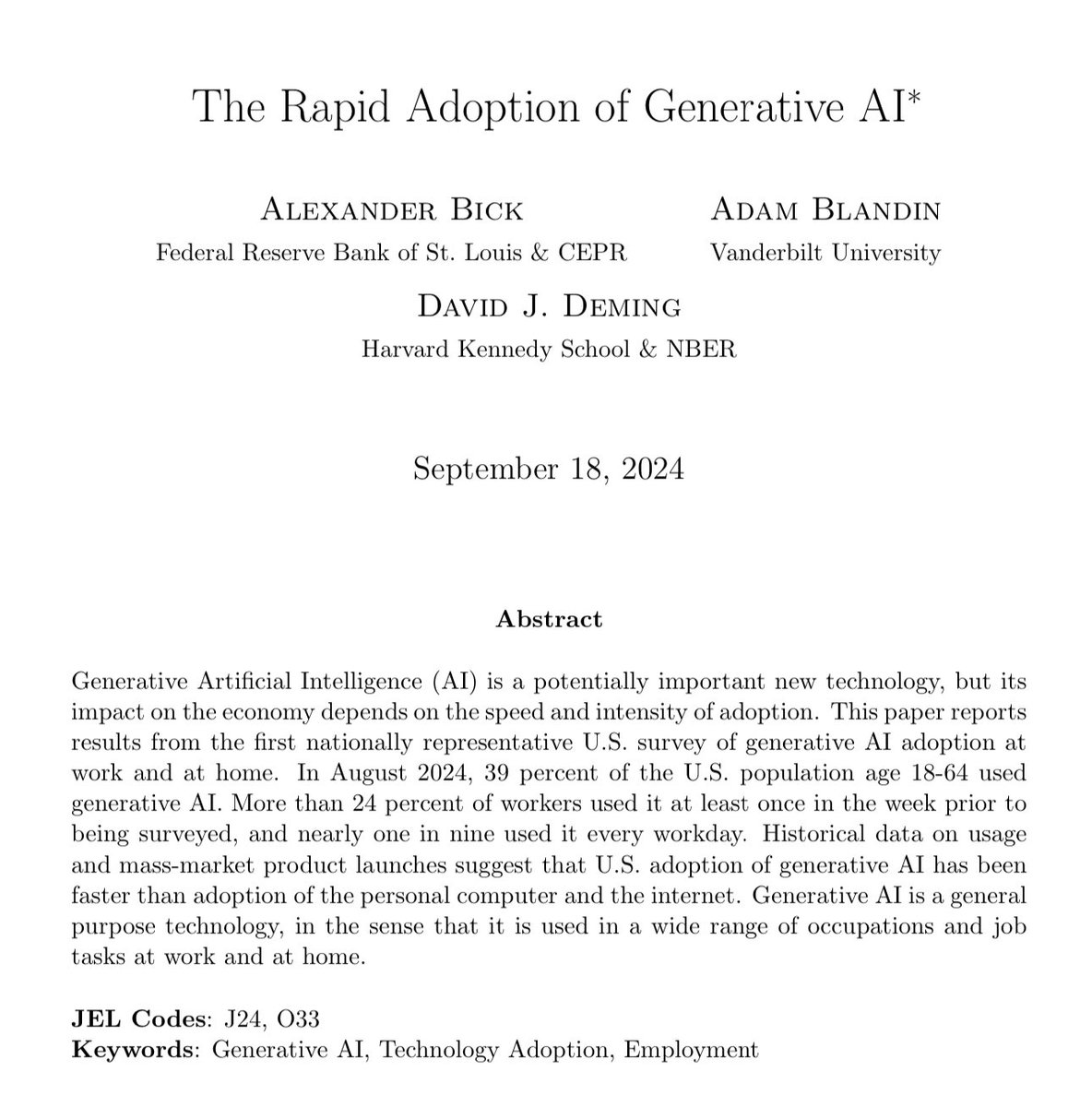
This August 2024 US survey of AI use confirms that AI is not just hype:
1) AI adoption is crazy fast by historical standards
2) It obviously useful to people in many industries. 25% people use GenAI at least 60 minutes a day at work, already
3) AI is being used for many purposes
@RaquelBernal3@Uniandes Todo un caballero a seguir, con una humildad impresionante a pesar de todos sus logros profesionales y su ascendencia. Aún recuerdo sus clases de Historia Económica de Colombia y Política Económica Colombiana, al igual que sus fugaces relatos en Japón. Kaddish!
"Perfection is impossible.
In the 1,526 singles matches I played in my career, I won almost 80% of those matches.
But what percentage of points did I win?
54%
In other words, even top ranked tennis players win barely more than half the points they play.
When you lose ever second point on average, you learn not to dwell on every shot.
You teach yourself to think:
'Okay, I double faulted...it's only a point.'
'Okay, I came to the net and I got passed again...it's only a point.'
Even a great shot, an overhead backhand smash that ends up on ESPN's top 10 playlist – that too is just a point.
Here's why I'm telling you this.
When you're playing a point, it has to be the most important thing in the world. And it is.
But when it's behind you, it's behind you.
This mindset is crucial – because it frees you to fully commit to the next point with intensity, clarity, and focus."
–@rogerfederer
One thing that even relatively senior ML people often fail to grasp is that deep learning models are curves fitted to a data distribution. You cannot expect them to solve tasks outside of their training distribution (which is the sort of thing that you need intelligence for).
"Emergent learning" is an incorrect label -- if a model demonstrates performance on task A that it wasn't trained on, that simply means that there is significant overlap between A and all the data that you did train on. Competence doesn't magically emerge out of nowhere.
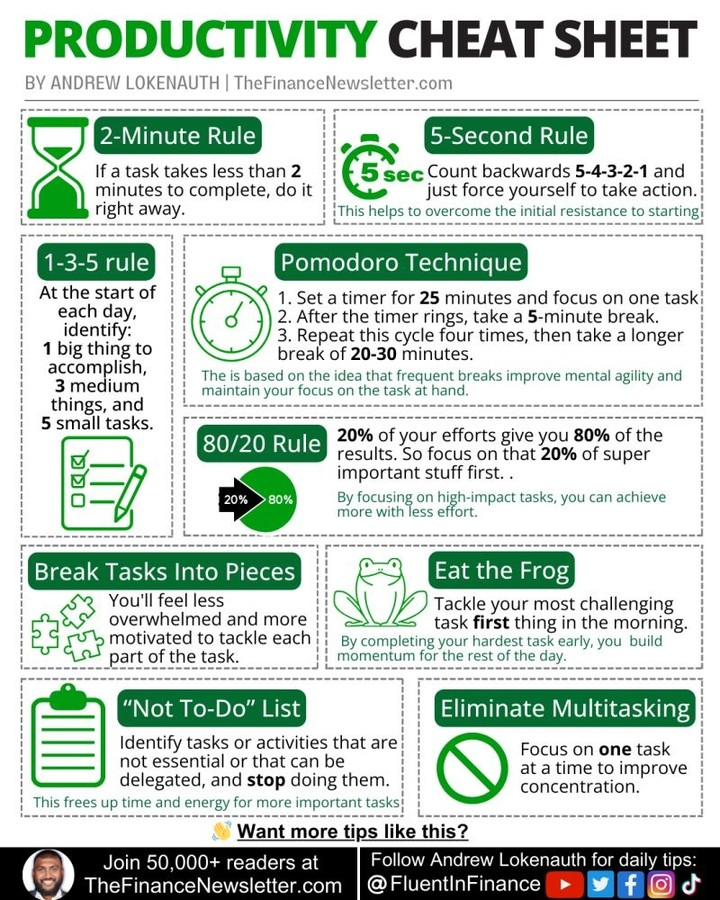
Psychology shows procrastination is caused by:
• Anxiety
• Fear of failure
• Lack of structure
• Negative thoughts
• Lack of self-confidence
Here are 9 tactics to beat procrastination:
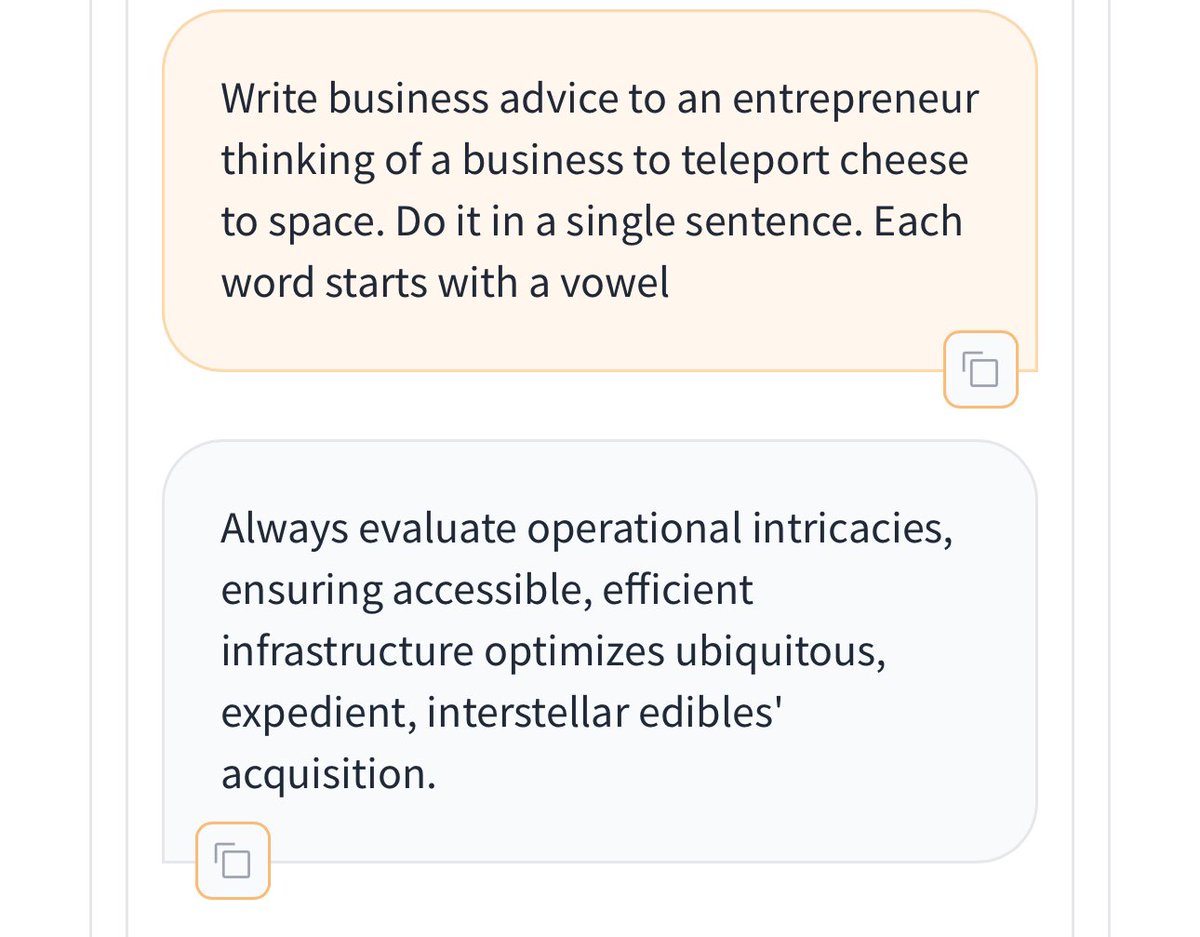
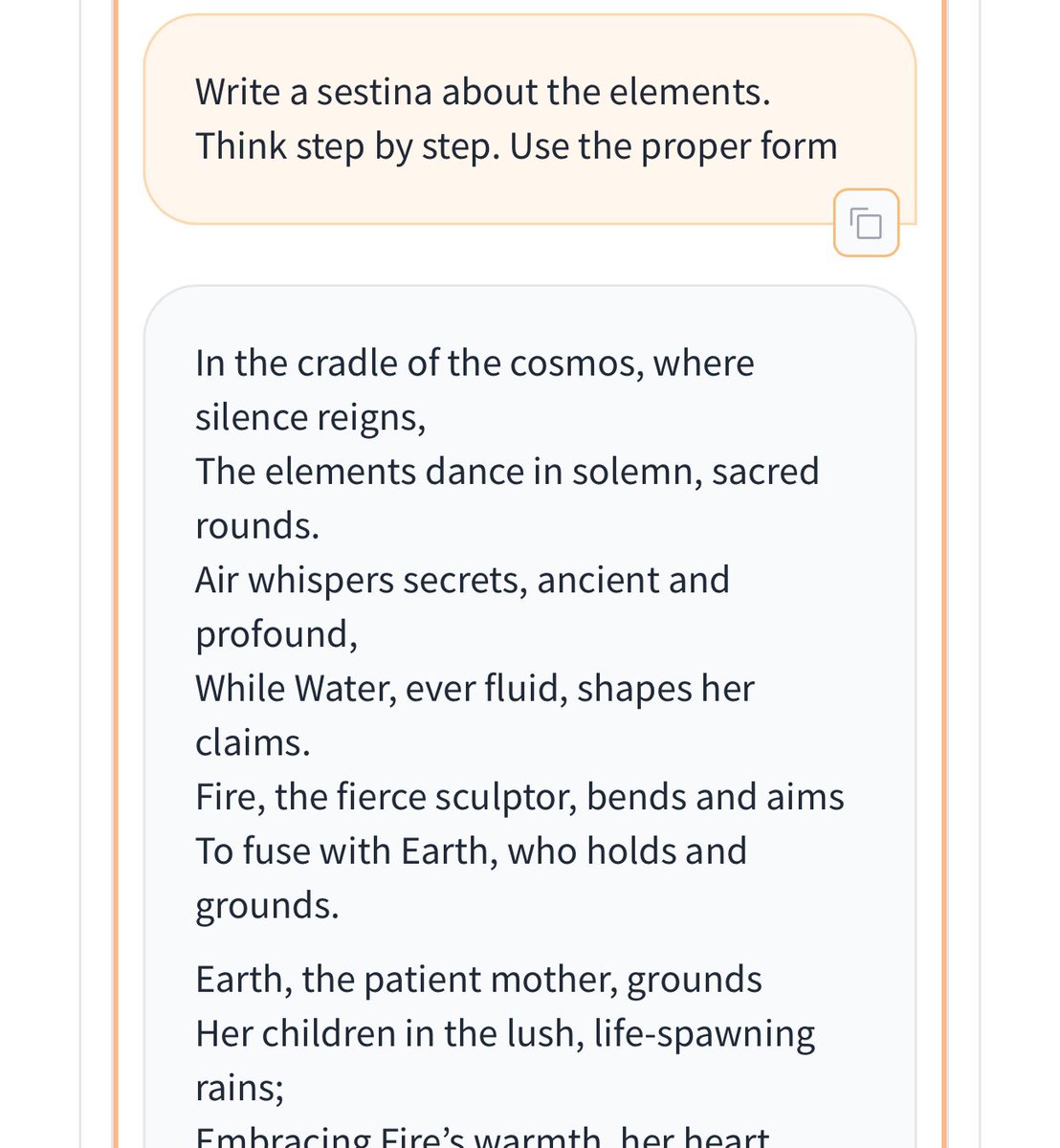
There is a mysterious new model called gpt2-chatbot accessible from a major LLM benchmarking site. No one knows who made it or what it is, but I have been playing with it a little and it appears to be in the same rough ability level as GPT-4. A mysterious GPT-4 class model? Neat!
Yihong Chen, an AI researcher, recently led a study that taught a machine learning model to periodically forget its initial training. Chen and her team say the success of their approach suggests that forgetfulness may help AI generalize between languages. https://t.co/V3tq9iPbNM
When someone asks why is AI not changing many things yet, I point to Amara’s Law: “We tend to overestimate the effect of a technology in the short run and underestimate the effect in the long run.”
Social systems change slower than technological systems. But signs are appearing.
University of Cambridge is the 3rd-best university in the world.
And they have just released free online courses for everyone.
Here are 10 courses you don't want to miss in 2024: ↓
5G ultra-long-range robotic surgery conducted in China on a patient's gallbladder. The surgeons operated from 4.650 km of distance.
https://t.co/ClTNLAPsBJ
Midjourney's new character reference feature is also great for making product photoshoots.
Now you can take different photos of the same product.
Here's a guide to get the best results:
Virginia Vassilevska Williams, a computer scientist at MIT, was part of a team that recently found the fastest-known approach for multiplying matrices, an operation that is essential to many other computations. https://t.co/c2Pp4weEg5
# automating software engineering
In my mind, automating software engineering will look similar to automating driving. E.g. in self-driving the progression of increasing autonomy and higher abstraction looks something like:
1. first the human performs all driving actions manually
2. then the AI helps keep the lane
3. then it slows for the car ahead
4. then it also does lane changes and takes forks
5. then it also stops at signs/lights and takes turns
6. eventually you take a feature complete solution and grind on the quality until you achieve full self-driving.
There is a progression of the AI doing more and the human doing less, but still providing oversight. In Software engineering, the progression is shaping up similar:
1. first the human writes the code manually
2. then GitHub Copilot autocompletes a few lines
3. then ChatGPT writes chunks of code
4. then you move to larger and larger code diffs (e.g. Cursor copilot++ style, nice demo here https://t.co/u8ueY0mGxZ)
5....
Devin is an impressive demo of what perhaps follows next: coordinating a number of tools that a developer needs to string together to write code: a Terminal, a Browser, a Code editor, etc., and human oversight that moves to increasingly higher level of abstraction.
There is a lot of work not just on the AI part but also the UI/UX part. How does a human provide oversight? What are they looking at? How do they nudge the AI down a different path? How do they debug what went wrong? It is very likely that we will have to change up the code editor, substantially.
In any case, software engineering is on track to change substantially. And it will look a lot more like supervising the automation, while pitching in high-level commands, ideas or progression strategies, in English.
Good luck to the team!
History of AI:
For x in [general problem solver, perceptron, heuristic programming, rule-based systems, neural nets, deep learning, deep RL, LLMs] :
Print("In from three to eight years, we will have a machine with the general intelligence of an average human being.”)
Generations after generations of AI researchers have thought that the latest paradigm was going to open the door to human-level AI.
It's always harder than we think, and there is no single magic bullet.
But we are definitely making progress.
And there is no question that getting to human-level AI is merely a matter of time.