A @CNRS @UnivParisSaclay group headed by Daniel Shulz at the Paris-Saclay Institute of Neuroscience @NeuroPSI_saclay. Where touch and motor control meet!
Dear all, we will now entirely stop posting here. Follow the Sensori-motor Integration and plasticity team on Bluesky: @touchmovelab.bsky.social
See you there!
The Datasaurus Dozen is a collection of thirteen datasets that, despite having nearly identical summary statistics—such as mean, variance, and correlation—exhibit vastly different distributions when visualized. This underscores the critical importance of graphing data to uncover underlying patterns that summary statistics alone may obscure.
#Statistics #DataScience #Research #Science
Overlapping fields from multiple implanted electrodes, but not stimulation of a single electrode, allowed for precise use of a bionic hand. (from the late Sliman Bensmaia and his collaborators)
Braincoder, the BMI feedback conference, is waitign for your registration!
Our outstanding speakers include Edouardo Fernandez (V1 microstimulation), Guillaume Charvet (Clinatec), Mickael Tanter (fUS), and more international speakers!
https://t.co/xJgpe9245h
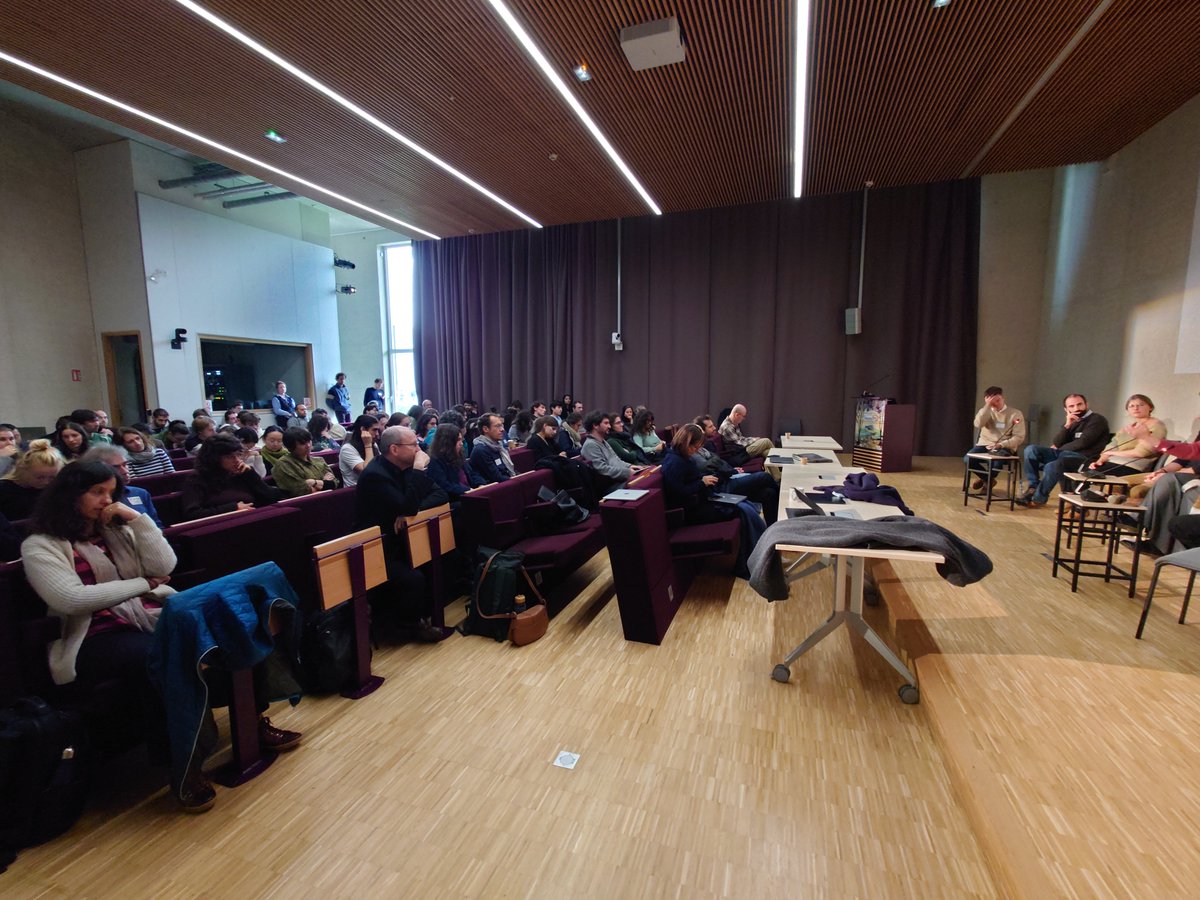
Thank you to all the wonderful speakers and the participants who came to Saclay for this outstanding edition of the GDR NeuralNet annual meeting! It was such a pleasure for NeuroPSI to host this great crowd of neuroscientists :)
We grieve the passing of Dr. Yves Frégnac.
Yves has shaped the study of cortical processing and plasticity. He heralded interdisciplinarity and was one of the founding fathers of our institute.
Our thoughts go to his family and to his friends in the community and beyond. https://t.co/BGE4QGcg8g
BREAKING NEWS
The Royal Swedish Academy of Sciences has decided to award the 2024 #NobelPrize in Physics to John J. Hopfield and Geoffrey E. Hinton “for foundational discoveries and inventions that enable machine learning with artificial neural networks.”
How does sensorimotor (S1/M1) cortex support adaptive motor control?
Come find out in our latest preprint, which spans the development of a full adult forelimb model + physics simulations, neural-modeling for control, complex 🐭behavior 🕹️, large-scale imaging, and of course @DeepLabCut and @CEBRA!
We hypothesized that S1 supports motor learning by computing prediction errors. To tackle this, we needed to understand what is being represented, and no studies have reported what forelimb S1 represents during learning in mice🧠🐭. Moreover, this requires modeling the body🦾: kinematics, torques, force, muscle activations, & proprioception (muscle spindles & GTOs).
After our 7 year journey, we have an answer: S1 & M1 represent muscle-level features. During learning, computational motifs map to functional types (like muscle-encoding), and neural dynamics in S1 change & encode sensorimotor prediction errors!
https://t.co/IbVeQz3718
🧵👇
Congrats to the team @NBC_ParisENS! Multiple Functions of Cerebello-Thalamic Neurons in Learning and Offline Consolidation of a Motor Skill in mice https://t.co/WmifNKqkn3
🏃♂️ 🏃♀️Les Jeux #Paralympiques2024#Paris2024 vous manquent déjà ? À nous aussi !
Nous vous invitons à jouer les prolongations en participant au colloque de l'@AcadSciences, "Handicap, sport, et sciences du mouvement", qui se tiendra le 1er oct.
ℹ️ https://t.co/6UE80UrAHl
🧵1/3
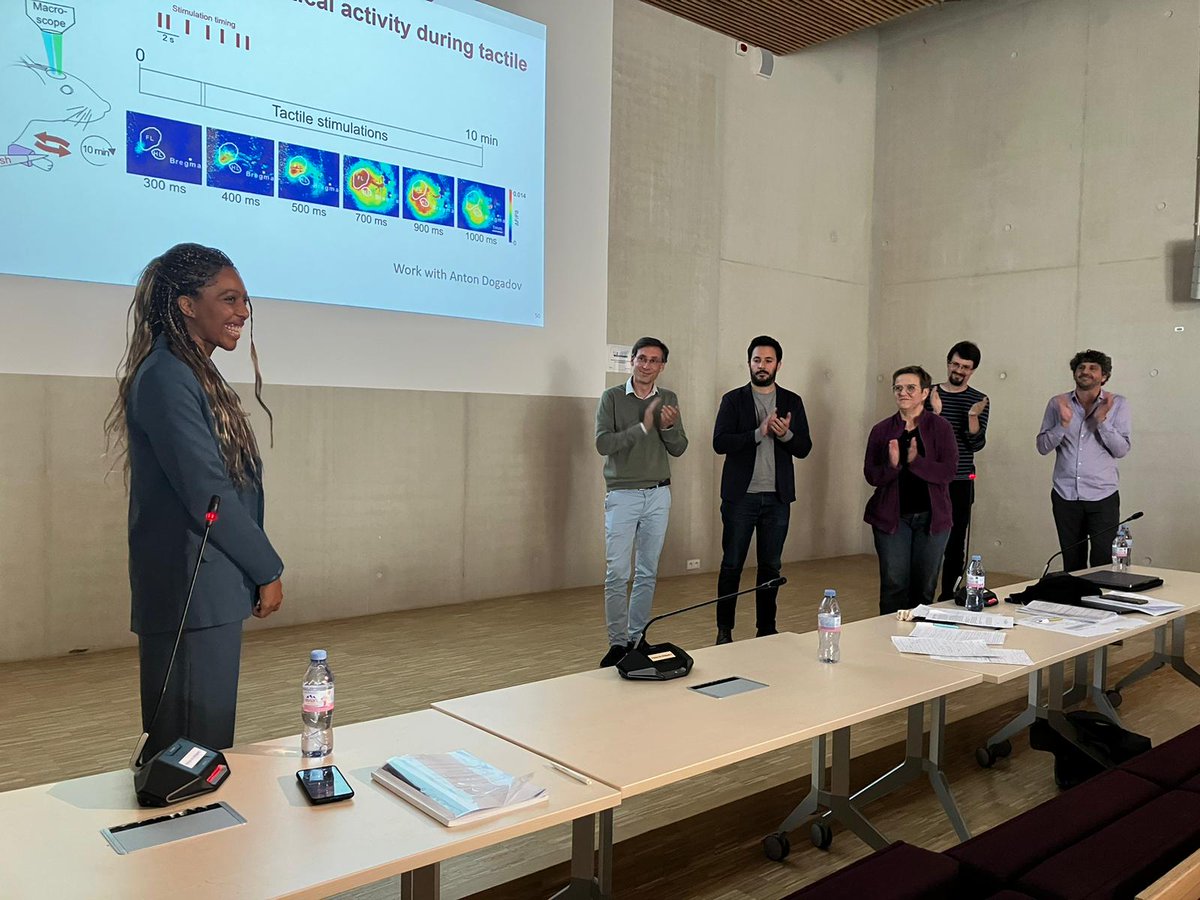
Yesterday, Dr. Zineb Hayatou carried an amazing defense of her work on limb embodiment in the mouse model! Congratulations, and many thanks to jury:
F. de Vignemont (philosophy),
A. François (physiology of touch),
N. George (physiology of perception),
N. Jarrassé (robotics).
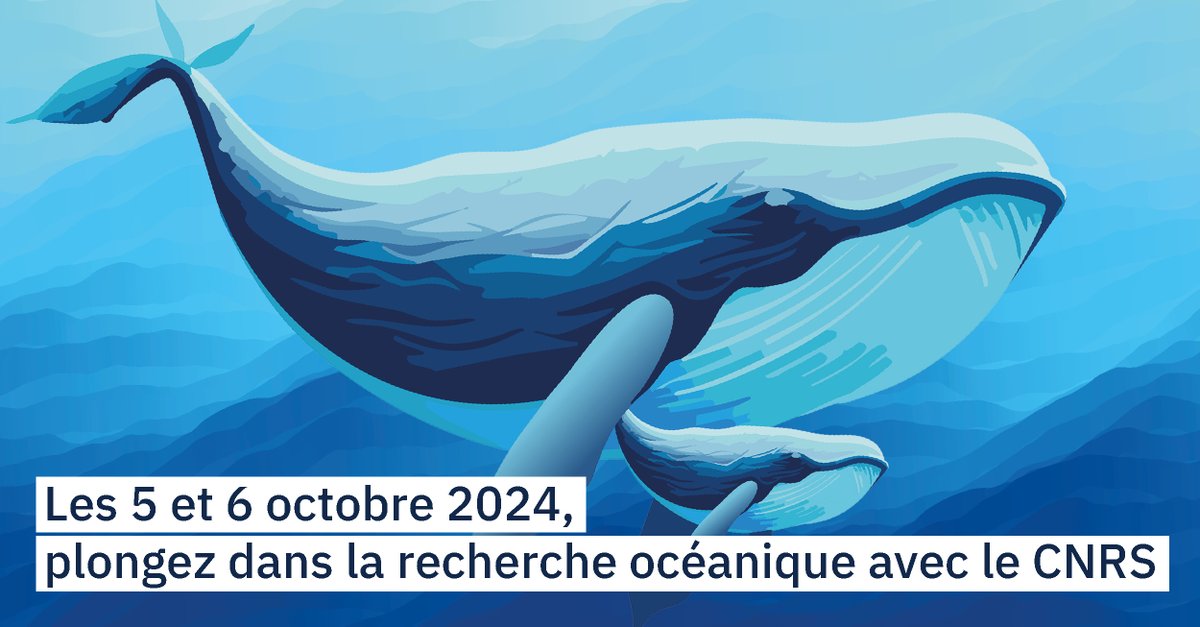
🐋 Mieux comprendre les chants de la mer
Retrouvez Isabelle Charrier et Chloé Huetz au stand CNRS du village des sciences Paris-Saclay les 5 et 6 octobre pour en apprendre plus sur les vocalisation d'animaux marins prises sur le terrain !
▶https://t.co/cZVLmkxxDs
❗️We are thrilled to welcome @HumboldtUni Prof. Matthew Larkum @mattlark in our seminar series.
❓What: "Anesthesia, apical dendrites, and thalamocortical loops".
❓When: Friday the 13th of September at 11 am.
❓Where: at NeuroPSI @NeuroPSI_saclay
▶️ Attend, you are welcome!
We report the 3D architecture and mechanism of touch detection by the Pacinian corpuscle. Contrary to the textbook knowledge, the outer core is dispensable for frequency detection. A new study by Luke Ziolkowski and @Yury_A_Nikolaev https://t.co/RWQ7WLeMEw