Thank you, Gary, for this piece. Finally someone writing about the issue with a depth of understanding and nuance we so rarely see. It’s unbelievable the amnesia so many pundits and federal politicians seem to have about such a critical topic.
“Developers in B.C. knew exactly what was driving sky-high prices throughout the 2010s and didn’t want it to stop. Their profit margins soared. And how could they not, when they were charging up to $3,000 a square foot for some new condos.” https://t.co/Ebjboh9Wqx
New Drug Targets Brain Glial Cells to Reverse PTSD Symptoms
PTSD patients often struggle to forget traumatic memories, even when the danger has passed.
New research has uncovered that astrocytes, not neurons, are producing excessive GABA in the medial prefrontal cortex, impairing fear extinction.
This discovery shifts the focus from serotonin-based treatments to glial cell mechanisms.
Using the MAOB inhibitor KDS2010, researchers successfully reversed PTSD-like symptoms in mice.
The drug reduced GABA levels and restored normal blood flow and brain activity.
These findings could reshape PTSD treatment by targeting the cellular origins of fear memory persistence.
https://t.co/RgzJdwVV3H
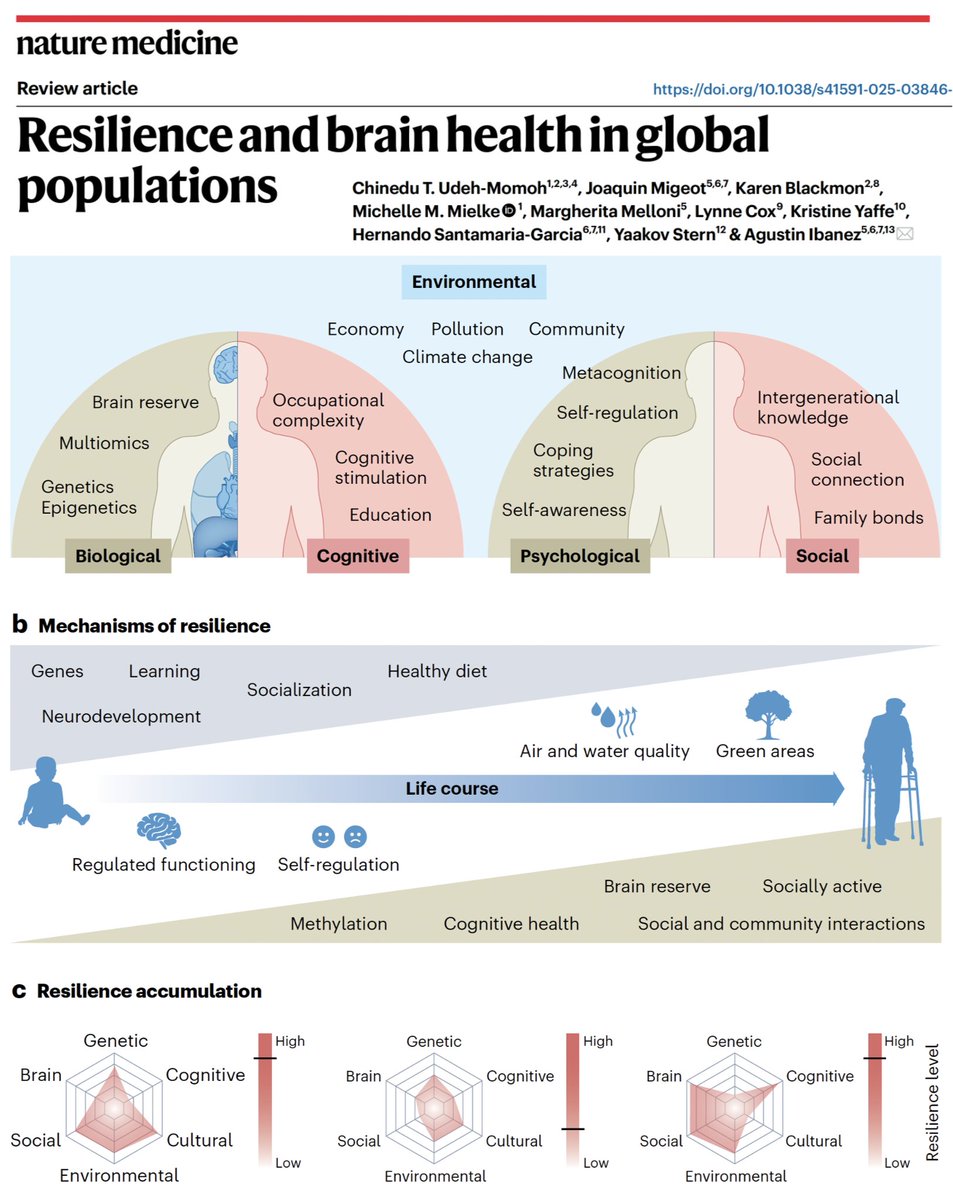
🌍🧠 Resilience isn’t one thing. Synergistic integrations
of genetics, exposome, community reserve, psychology, allostasis, & whole-body health principles show its many faces.
https://t.co/SeAxHKAAru 1/5🧵Out today in @NatureMedicine with a stellar team:
@MomohChi@joaquin_migeot Karen Blackmon, Michelle M. Mielke, @MargheritaMelloni, @OxAgeN_oxford@KristineYaffe@nanosanta@Yaakov_Stern
@darbysaxbe As someone with a partner who (almost manically) did most of the housework while I got to focus on rocking, playing with, and nursing our baby, I believe it was one of the reasons I didn’t have PPD or PPA. Another reason why early parenting is *so* not a one person job.
🚨 New preprint alert! 🚨 We used machine learning to examine how early life adversity ⚠️ is associated with the adolescent brain 🧠 in the ABCD Study across 7 adversity dimensions and 3 timepoints. 👉https://t.co/PQsF6RRuAm
@CaitlinPacific I’d say it was earlier: when the DNC pushed out Sanders in favor of a war hawk—at a time when political reckoning was decidedly anti-imperialist.
(As you so beautifully wrote in this epic piece I wish every leftist would read: https://t.co/lDCF8FVtY9 )
@CaitlinPacific Came on here just to say, Wow. Finished this with my jaw wide open. You’re why I subscribe. No other journalism makes me laugh, cry, & remember an entire history undergrad with a one-sentence quip. Then THIS. Utterly stunning work. There’s no greater writer than Caitlin Flanagan.
@hubermanlab What helped me when NSDR stopped working: interrupt the “articulatory loop” that can spike adrenaline + cortisol. Suggested in the CBT-i literature to do a prosocial scan of the day: a stranger holding the door for a new mom, teens laughter together, old couple holding hands, etc
@chargrysolle@DavidAKesslerMD Essentially negative reinforcement. Rather than “I reeeeally want to but I’ll deny myself!” Think: Yuck, don’t wanna feel THAT way right now. I’d rather look at the white clouds or scan for people laughing/being friendly. Different rewards.
@chargrysolle Another great tactic for undoing habits/compulsions that I read from @DavidAKesslerMD on highly palatable junk, is to think of the feeling of “ick” after you’ve caught yourself sitting on your phone too long. How bogged down you feel. (Aversive salience vs incentive salience.)
Do you intend to read any article this weekend?
Read this paper to know how to 'actually' read a paper!
I've highlighted the key points -> now this 10 min read of 3-pass apprach will change your paper reading technique for good
Key takeaways:
- First Pass (5-10 minutes)
Quick scan for bird's-eye view
- Second Pass (up to 1 hour)
Read with greater care
- Third Pass (1+ hours)
Virtually re-implement the paper
Page 1/2 ⤵️
Key Brain Protein Tied to Motivation and Mood Identified
A recent study has identified a brain protein, Vnut, as crucial for regulating mood and motivation in mice. Researchers found that removing Vnut from brain cells called astrocytes increased anxiety and depressive-like behavior, particularly in female mice.
This change also decreased the mice’s motivation to seek rewards, linking Vnut’s role directly to dopamine, a key neurotransmitter associated with motivation and mood.
The study used behavioral tests, where mice without Vnut showed less interest in seeking rewards and displayed more anxiety in open spaces.
These findings highlight Vnut’s potential as a target for mood disorder treatments, offering insights into how certain proteins influence brain functions related to mood.
This research opens avenues for new approaches to understanding and potentially treating mood disorders.
🧬 "The biopsychosocial model has served us well, but evolutionary theory adds a crucial layer of understanding."
An evobiopsychosocial model is essential for fully understanding complex chronic conditions, such as autoimmune diseases and mood disorders.
Dopamine flooded my brain's pleasure center while Vijay @vijay_mkn
and Ali @mohebial told me how it's out with the old and in with the new dopamine stories.
https://t.co/aWU8eiF0gY
If you prefer reading, check out Vijay's article in @_TheTransmitter:
https://t.co/pUeFhTYqDX