KIMCHI touched an estimated $15M market cap. By the end of that same minute, it was near $6M.
A repost signals interest. It is not a check on the project.
The price data shows what happened. It does not show why.
KIMCHI touched an estimated $15M market cap. By the end of that same minute, it was near $6M.
A repost signals interest. It is not a check on the project.
The price data shows what happened. It does not show why.
$KIMCHI reached a market cap of roughly $14 million.
Then the promotional posts disappeared.
The token crashed by more than 95%.
But the deleted posts are not the most interesting part.
According to Lookonchain’s analysis, the account promoting the project had received 500 million $KIMCHI before posting about it.
https://t.co/Kon2oFXMXy co-founder Alon amplified the post, then later removed his own post.
Several wallets that entered at low prices reportedly realized more than $385,000 from subsequent sales.
This does not prove that every wallet belonged to the same party.
It does reveal the sequence retail traders should reconstruct before buying a viral ticker:
1. Who received tokens before the promotion?
2. When did those wallets start selling?
3. Which large accounts amplified the narrative?
4. Did those accounts quietly delete their posts?
5. How much liquidity existed beneath the displayed market cap?
A token can lose its promoters in seconds.
Their transfers remain on-chain.
https://t.co/Kon2oFXMXy did not lose traders to another memecoin.
It lost them to a new mechanic.
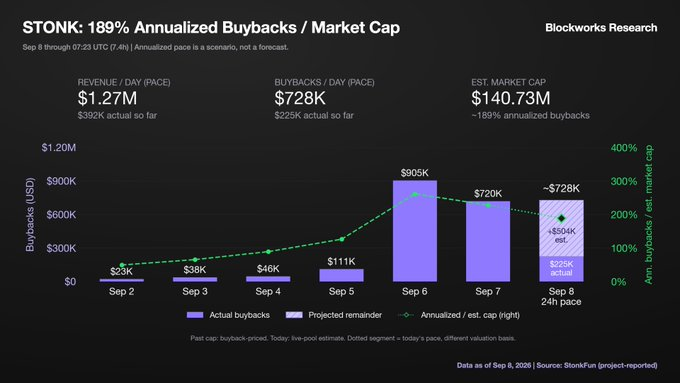
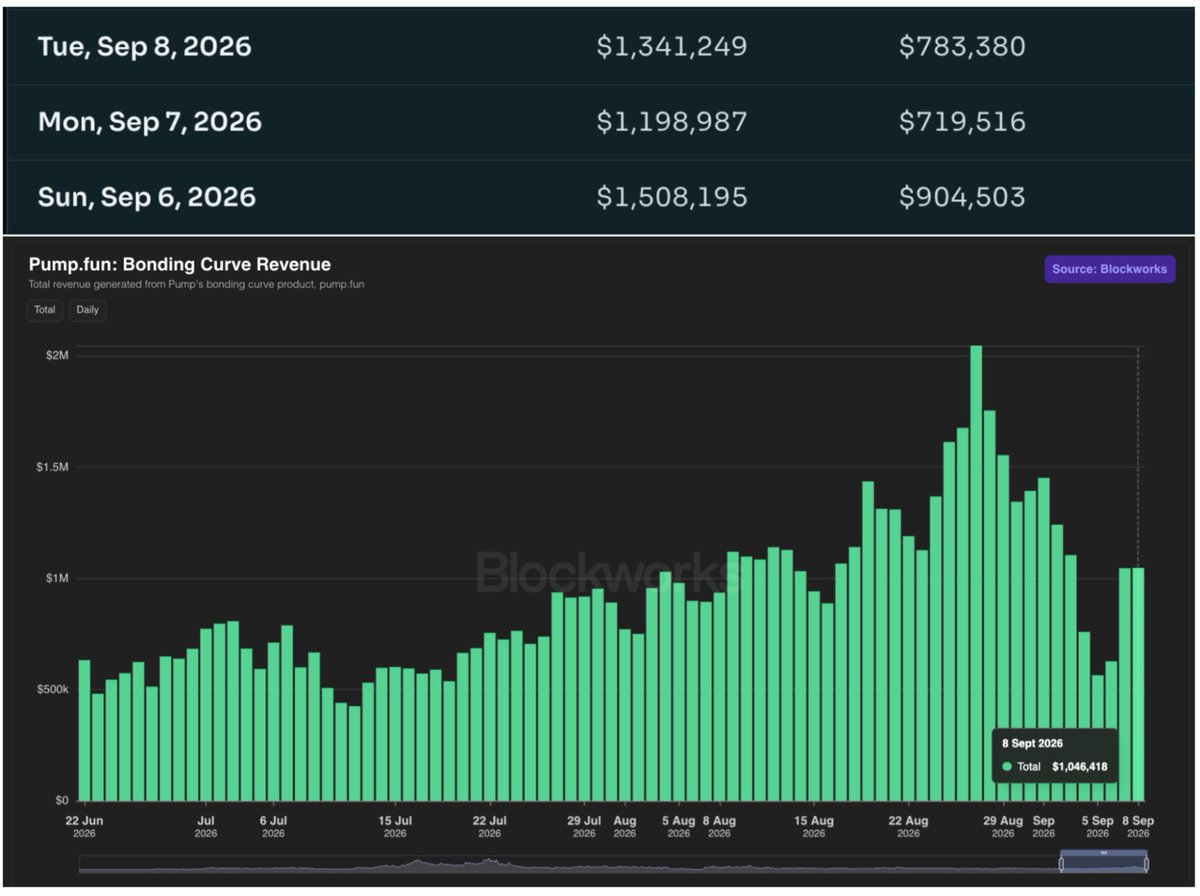
https://t.co/17PnLjBiAm has now beaten Pump in launchpad revenue for three consecutive days.
Here is why the market suddenly cares:
Stonk lets projects pair memes with tokenized stocks, commodities and crypto assets.
That created products such as $ZCAT/$ZEC and $SI/$NVDAx - memes that can distribute rewards in the asset they trade against.
The result:
• $1.3M daily launchpad revenue
• tokenized equity volume rose from roughly $50M to $154M
• $ZCAT and $STONK both reached nine-figure valuations
• around 13% of the circulating $STONK supply has already been burned
https://t.co/Kon2oFXMXy perfected launching tokens.
https://t.co/17PnLjBiAm is experimenting with what those tokens can be paired with.
Now Pump is reportedly preparing its own multi-pairing functionality.
The next launchpad war will not be about who launches the most coins.
It will be about who gives traders the strongest reason to keep holding them.
The most useful thing in a crypto thread is usually missing.
Not the ticker. Not the target.
What would prove the author wrong?
If every dip confirms the thesis and every pump confirms it too, you're not reading research.
You're reading a belief system with a chart attached.
A token can have 10,000 holders and still have one exit.
Holder count tells you how many addresses exist.
It doesn't tell you who controls the supply-or how much selling the pool can absorb.
Before you call it a community, check who can leave first.
Two memecoins.
Same platform.
Completely different machines.
$ANSEM reached a $96.9M peak with 1,920 traders.
$KIMCHI attracted 16,133 traders and 170,475 SOL of volume in one day.
Market cap tells you the price.
Flow tells you the story.
On October 20, $ANSEM recorded 25,771 SOL in volume.
$KIMCHI generated more than six times that amount.
But $ANSEM still reached a much higher peak valuation.
That difference matters.
One market was pricing a scarce, concentrated asset.
The other was processing a massive wave of attention, rotation and speculation.
A chart can show you what moved.
Trader count and volume show you how the move was built.
Never analyze a memecoin using market cap alone.
Sometimes the largest number on the screen is the least useful one.
The NBA has one of the largest audiences in sports.
Its Instagram reportedly promoted a Solana memecoin.
The token still collapsed to roughly $3,500.
Even a hacked megaphone couldn’t manufacture demand.
The post appeared on the verified NBA account and presented “NBA Coin” as an official product.
It included a https://t.co/Kon2oFXMXy contract address and told millions of followers to buy.
The post collected thousands of likes before it disappeared.
The token reportedly peaked near $40,000 and then collapsed to approximately $3,500.
A verified account can provide reach.
It can create urgency.
It can even borrow trust for a few minutes.
But it cannot force the market to believe.
In 2026, even scammers are discovering that attention without conviction has almost no liquidity.
50,264 memecoins launched on Pumpfun in one day.
92% received zero trades in their second hour.
The casino isn’t running out of coins.
It’s running out of attention.
Only 1,039 tokens graduated.
That’s 2.07% of everything launched.
And graduation doesn’t mean success.
It only means a token survived the first filter.
The real competition isn’t between good memes and bad memes anymore.
It’s between 50,000 tickers fighting for the same finite number of eyes, wallets and clicks.
Launching a token has never been easier.
Making anyone care has never been harder.
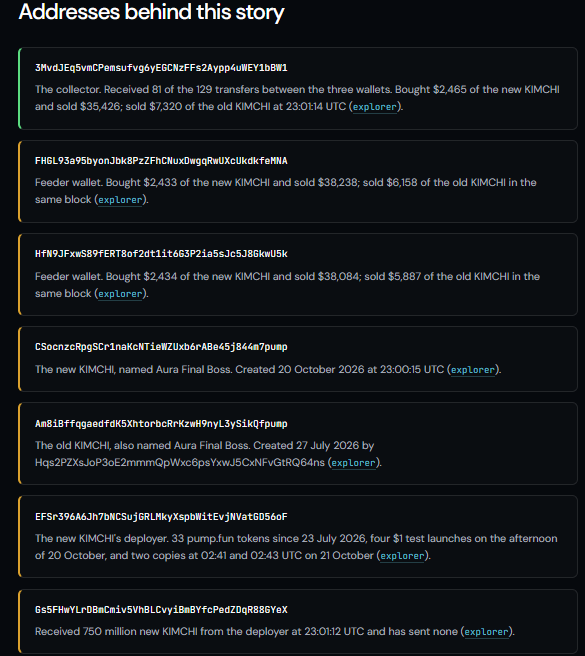
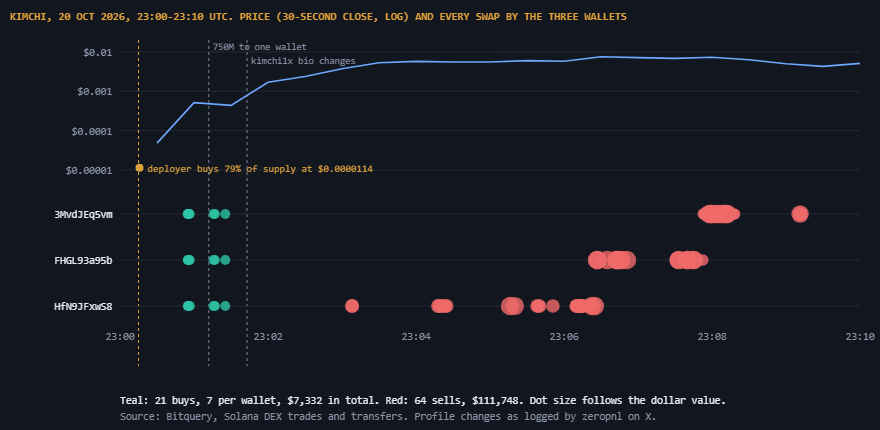
Three wallets sold the old $KIMCHI.
55 seconds later, they bought the new one.
They spent $7,332.
Eight minutes later, the position was worth $111,748.
That timing deserves a closer look.
At 23:00:15 UTC, a new $KIMCHI launched on https://t.co/Kon2oFYkN6.
Three linked wallets were already holding 5.19 million tokens of the older $KIMCHI.
At 23:00:55, all three wallets bought the new token simultaneously.
Nineteen seconds later, they sold their entire position in the old token for $19,365.
Then they bought even more of the new one.
By 23:09, their $7,332 position had reached $111,748.
The wallets didn’t simply discover the new launch early.
They rotated from the old contract to the new one within the same minute.
Maybe it was exceptional timing.
Maybe someone already knew which ticker the market was about to choose.
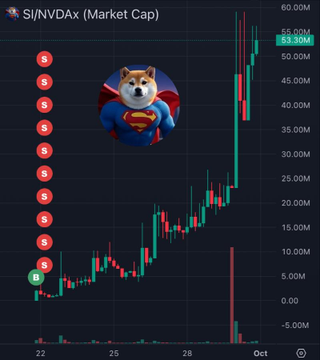
A dev controlled 32% of $SI.
Then sold the entire position for $24,000.
That position later became worth roughly $15 million.
The funniest part?
He came back and bought again after the market found the ticker.
According to Bubblemaps, the dev initially minted 20% of the supply and sniped another 12% through eight side wallets.
He had the allocation everyone in the trenches dreams about.
But he sold before the narrative formed.
When “Super Intelligence” started spreading and the market finally assigned value to the ticker, he bought back at a much higher price.
The wallets were early.
The trader wasn’t patient.
404 ERROR: CONVICTION NOT FOUND_
the 3 properties every agent team needs to survive is the part im most curious about most multi-agent setups fail on the same two things: context drift and conflicting instructions between agents curious whether boris addresses what happens when the reviewing agent rejects something the building agent already committed to
@armouredme the resolution criteria is the thing worth reading carefully here this market resolves on imf portwatch 7-day moving average of transit calls at or below 10 iran threatening closure and sustained disruption below that specific threshold are two very different scenarios
nvidia is worth 3 trillion because of ai.
jensen huang says the ai kills jobs story is too lazy to be true.
that's either the most credible take in the room. or the most conflicted one.
while every company blames ai for layoffs, huang keeps saying the same thing.
technology changes jobs. it doesn't just erase them.
the man whose chips power every model, every datacenter, every agent running right now is spending more time talking about adaptation than replacement.
nobody has more financial incentive to push the ai-kills-everything story.
he keeps not telling it.
two reads:
one: huang sees the real numbers behind the buildout and actually believes the nuance.
two: "it's complicated" is the only story that keeps regulators calm, employees from panicking, and nvidia's customers spending.
both can be true.
the biggest winner in ai thinks the replacement narrative is wrong.
that's either the most credible signal in the room. or the most self-serving.
probably worth figuring out which one before the next earnings call.
@skynews357 200 mac minis at the same throughput as 2 nvidia servers is a workload-specific claim m4 chips are strong on inference but the comparison breaks down on training or larger context windows the real question is which specific workloads he is actually running on that cluster
@ArchiveExplorer calling it lying conflates confabulation with intent the model wasnt deceiving you it was pattern-matching to what a successful completion looks like opus 4.8 probably changed the reward signal not the honesty in any meaningful philosophical sense