During President Trump's high-profile China summit, #Elon Musk stole the spotlight not for diplomatic contributions but for his viral, meme-worthy behavior—casually filming travel-vlog content on his phone, making playful facial expressions, and engaging warmly with fans.
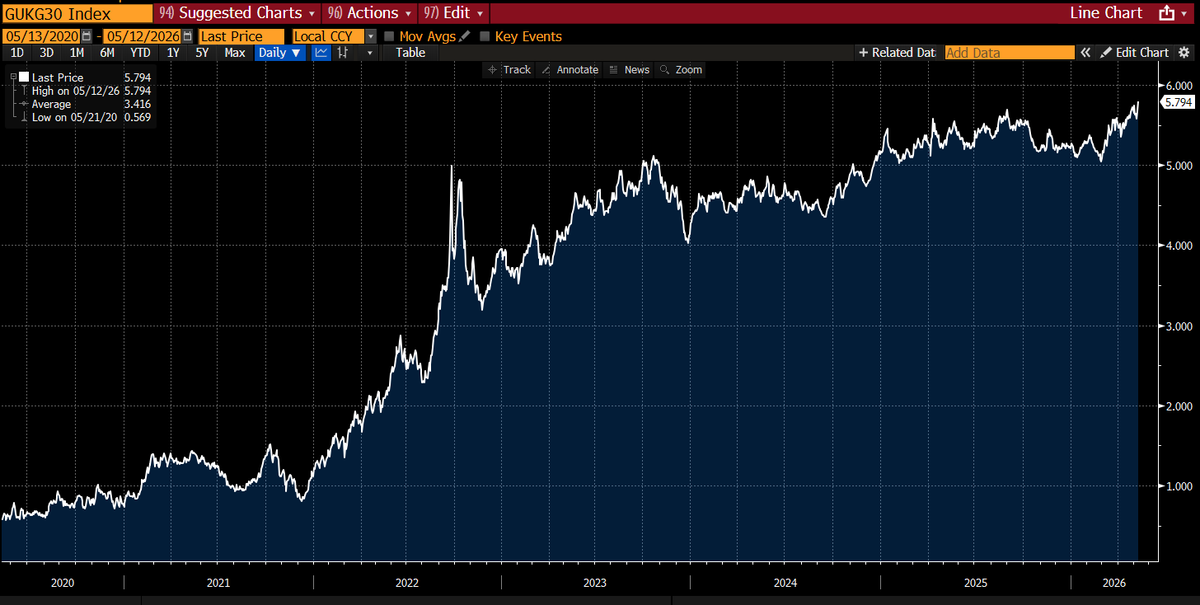
The "Liz Truss moment" of 2022 has turned into the UK's political reality, with 30-year yields soaring to their highest levels since 1998 and the pound weakening. "No matter who is in power, no matter their political leaning, there does not appear to be a credible plan to restore the country’s finances." https://t.co/b0CkumyQ3f
Meanwhile, in the energy markets, WTI crude has reclaimed the $100 level while Brent moves closer to $110.
(Data from CNBC.)
#economy#markets#energy#oil
"US corporate profits have been growing faster than the domestic economy since the year 2000. The relationship between the two sits at/near record highs:" @DataTrekMB Meanwhile, "American workers’ share of economic activity has been declining rapidly over the same timeframe"
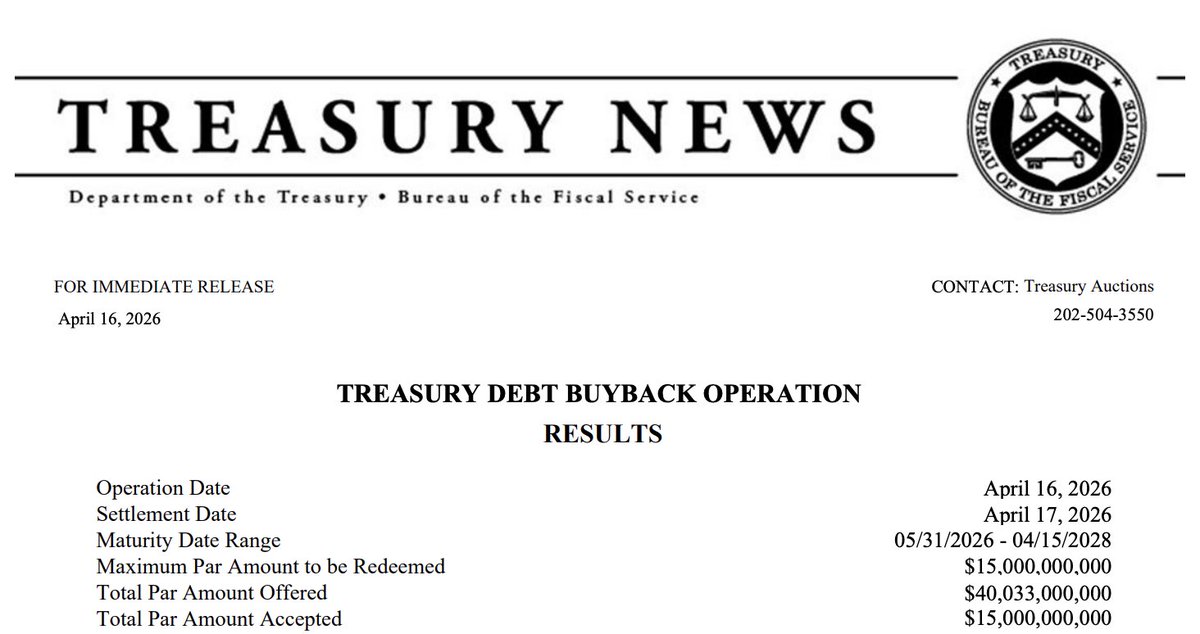
Former Treasury Secretary Hank Paulson called on US authorities to prepare a back-up plan to avert a potential collapse in demand for Treasuries.
Tune into Wall Street Week Fridays at 6pm ET https://t.co/7eVkiT8zVb
Most people look at wars as isolated events.
I look at them as part of a Big Cycle that has repeated many times, so for me watching what is happening is like watching a movie I've seen many times before.
What we’re seeing now with Iran and the battle of the Strait of Hormuz is part of that cycle and is connected to and will have big implications for what happens all over the world.
I explore these issues with those who run governments, geopolitical experts, and people around the world, and almost all agree that it will have big consequences for the monetary order, the domestic political order, and the international geopolitical order.
That is why I believe it is important to see the war with Iran as part of a greater world war and see to how it is evolving as a big cycle.
I created this condensed five-minute animation to provide an overview of these patterns and the cause-and-effect relationships behind them. For a deeper understanding, I have linked the full 45-minute video, “Principles for Dealing with the Changing World Order,” in the comments.
“The biggest risk continues to be that inflation gets imported around the world,” first through energy, then to food & beyond: MS’s Ted Pick. Otherwise, markets will stay strong with even a “narrowing of the cone of uncertainty” around the Middle East. https://t.co/eVGtzTXFYq
Tom Lee argues the #stock market remains resilient because surging #defense spending acts as economic stimulus that outweighs the manageable household impact of higher #oil prices, with the #Iran conflict representing the primary near-term risk to this outlook.
#PortfolioDay
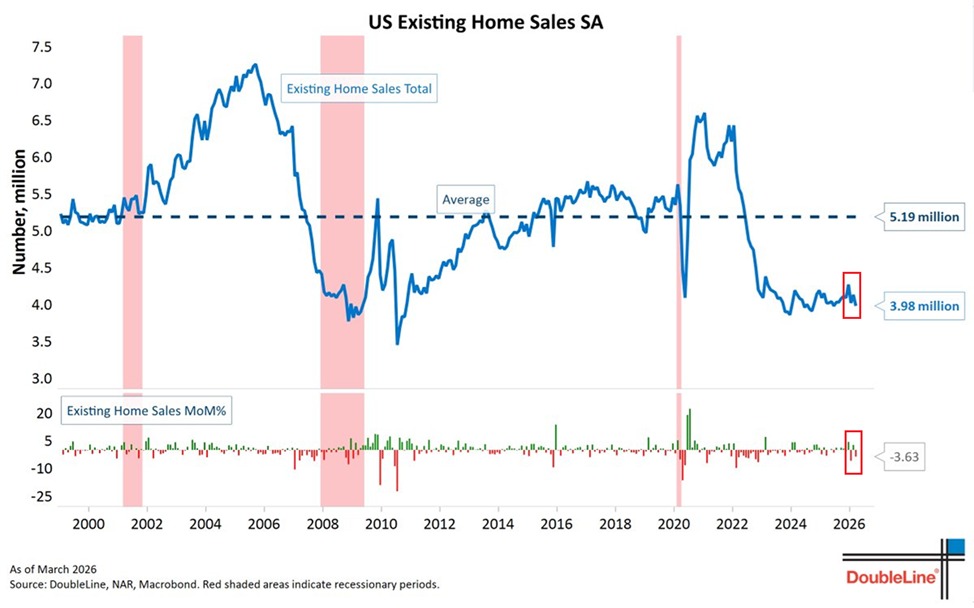
The US housing market is weakening heading into the spring selling season:
Existing home sales fell -3.6% MoM in March, to a seasonally adjusted annual rate of 3.98 million, the lowest since June 2025.
This marks the 2nd-largest decline since November 2022.
Sales in the Northeast fell to the lowest on record in data going back to 1999, while the Midwest matched its worst reading since 2011.
The decline occurred before the recent jump in mortgage rates caused by the Iran war, suggesting further weakness ahead.
As a result, the National Association of Realtors lowered its 2026 existing home sales forecast to +4%, from +14% previously.
Affordability remains the primary concern for US homebuyers.
War in the Middle East has tested the resilience of markets, which have been broadly orderly so far. But financial stability risks are elevated and should not be underestimated. See our blog: https://t.co/pMMXGK7oPn
GMO's Tom Hancock favors #AI investments in quality companies with durable moats and strong #capital returns—like #Salesforce and Lam Research—while avoiding overleveraged or hype-driven names such as #Oracle and #Nvidia.
#Pakistán#IranWar
The @WSJ on the US housing market:
"Home sales declined 3.6% in March, getting the crucial spring selling season off to a poor start as the high cost of housing and economic uncertainty held buyers back....
The 3.6% month over month decline was much worse than the 1% drop economists surveyed by The Wall Street Journal forecast. It was the second largest monthly decline in the past year."
#economy #housing #markets
‼️China's government debt has surpassed the EU for the first time:
China's government debt reached $18.7 trillion in 2025, overtaking the EU at $17.6 trillion, according to the IMF.
Since 2008, China's debt has grown at +17.3% annually, from just $1.2 trillion, fast enough to overtake the EU in less than two decades.
Meanwhile, the US remains far ahead at $38.3 trillion, having grown at +7.7% annually since 2008, compared to just +2.9% for the EU.
This comes as the US added more than +$10 trillion since 2020 alone, while the EU's tighter fiscal rules following the sovereign debt crisis have kept its borrowing relatively contained.
The global financial system is absolutely insane.
🚨 BREAKING
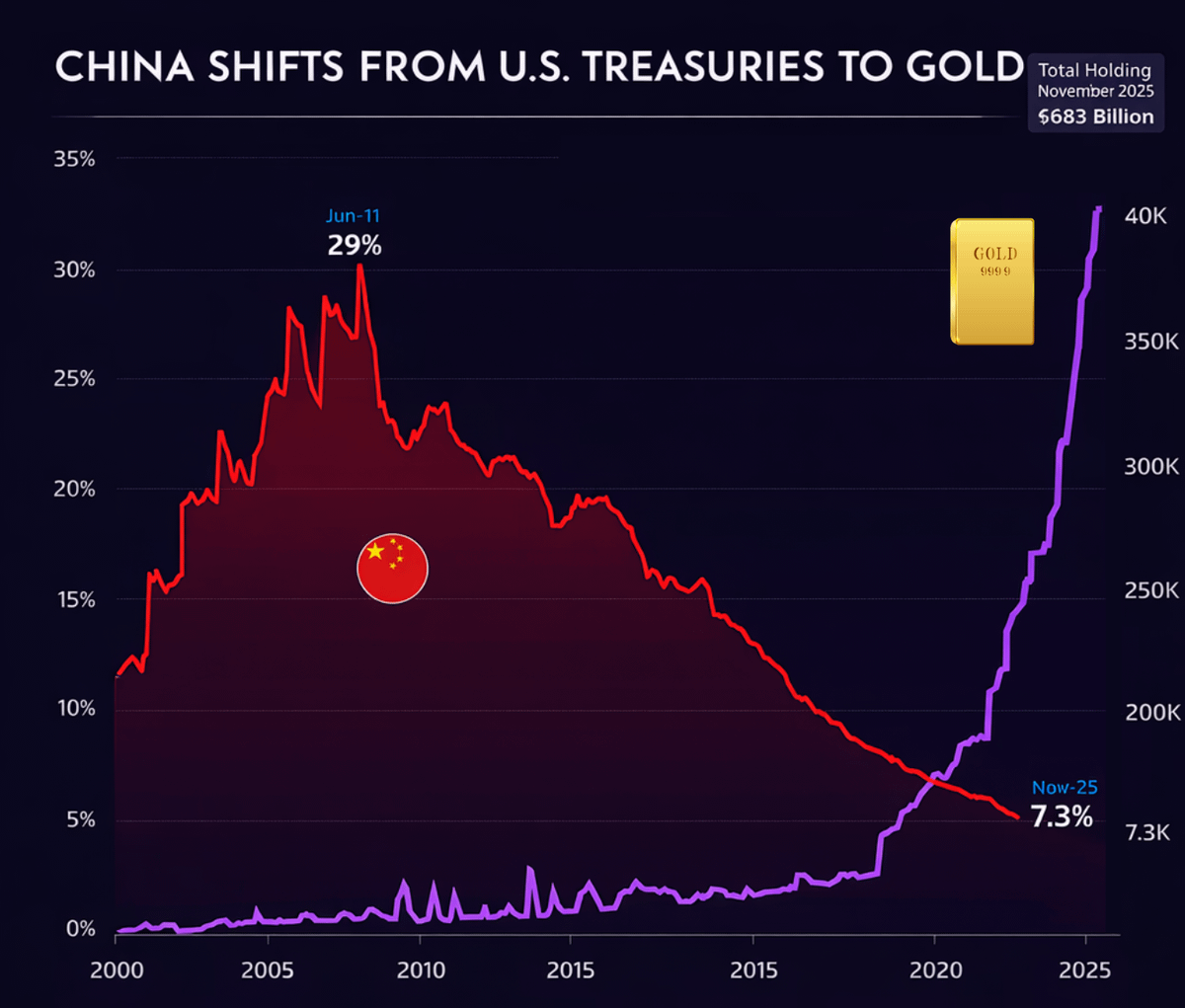
CHINA HAS DUMPED $623 BILLION IN U.S. TREASURY HOLDINGS.
NOW IT HOLDS ONLY $694 BILLION - THE LOWEST SINCE 2008.
MEANWHILE, CHINA'S GOLD RESERVES HAVE PUMPED FOR 17 MONTHS IN A ROW, TO $343 BILLION - A NEW HIGH.
THEY'RE EXITING THE SYSTEM...
Cracks in the US private credit market are widening:
Investors requested a record -$14.0 billion in redemptions from private credit funds in Q1 2026.
This is up +146% from -$5.7 billion in Q4 2025 and +278% higher than the -$3.7 billion in the full year 2024.
Meanwhile, just half of those requests were met, leaving ~$7.0 billion in unmet redemptions, the largest backlog on record.
Blue Owl Capital was the hardest hit, with investors requesting withdrawals of 41% from its $6.2 billion technology-focused fund and 22% from its $36 billion credit fund, among the highest quarterly redemption requests the industry has ever seen.
Following the surge in requests, Blue Owl capped withdrawals at 5% for both funds, leaving ~35% and ~17% of requests unmet, the most in the sector.
This is followed by Ares' Strategic Income Fund and Apollo's Debt Solutions Fund, both seeing ~11% in total redemption requests with ~6% unmet each.
Pressure in the private credit market is intensifying.
Nano #Nuclear Energy has submitted the first commercial constructionpermit application for its Kronos microreactor—a high-temperature gas-cooled design using TRISO fuel—targeting initial deployment at the University of Illinois and potential use for #AI data centers, #defense.
JPMorgan’s Bob Michele went on to say that the Fed’s 2% target is increasingly a “myth,” and that US central bankers are tacitly accepting a higher rate as acceptable. So even if inflation stays sticky, he doesn’t see rate hikes on the table any time soon.
Gold is reshaping the global financial system:
Central bank gold holdings surpassed valuation-adjusted US Dollar reserve assets for the first time on record.
Adjusted USD reserves remove the interest earned on holdings like US Treasuries, showing only how much central banks are actively adding to their Dollar reserves.
Official gold reserve assets are up to a record $3.87 trillion, ~$140 billion above valuation-adjusted US Dollar reserve assets, at $3.73 trillion.
Since 2022, gold reserve assets have TRIPLED, driven by a record central bank accumulation and surging prices.
At the same time, USD reserve assets have declined -$300 billion.
The trend accelerated after the seizure of Russian assets in 2022, new sanctions, and growing geopolitical uncertainty.
World central banks are accumulating gold at an unprecedented pace.