It was an incredible honor to receive the Wildlife Conservation Society Award at the 2023 NASBR Symposium.
I'm continually amazed at what biologging can tell us about the secret lives of animals and the energetic decisions they are often faced with🦇
#NASBR#MovementEcology
How can flight plasticity help migrants to better utilize meteorological conditions along their route? We found that common cranes use thermal updrafts when crossing the sea.
Just published in @RSocPublishing#procB. #cranes, #migration, #movementecology
https://t.co/kBsopaIbvI
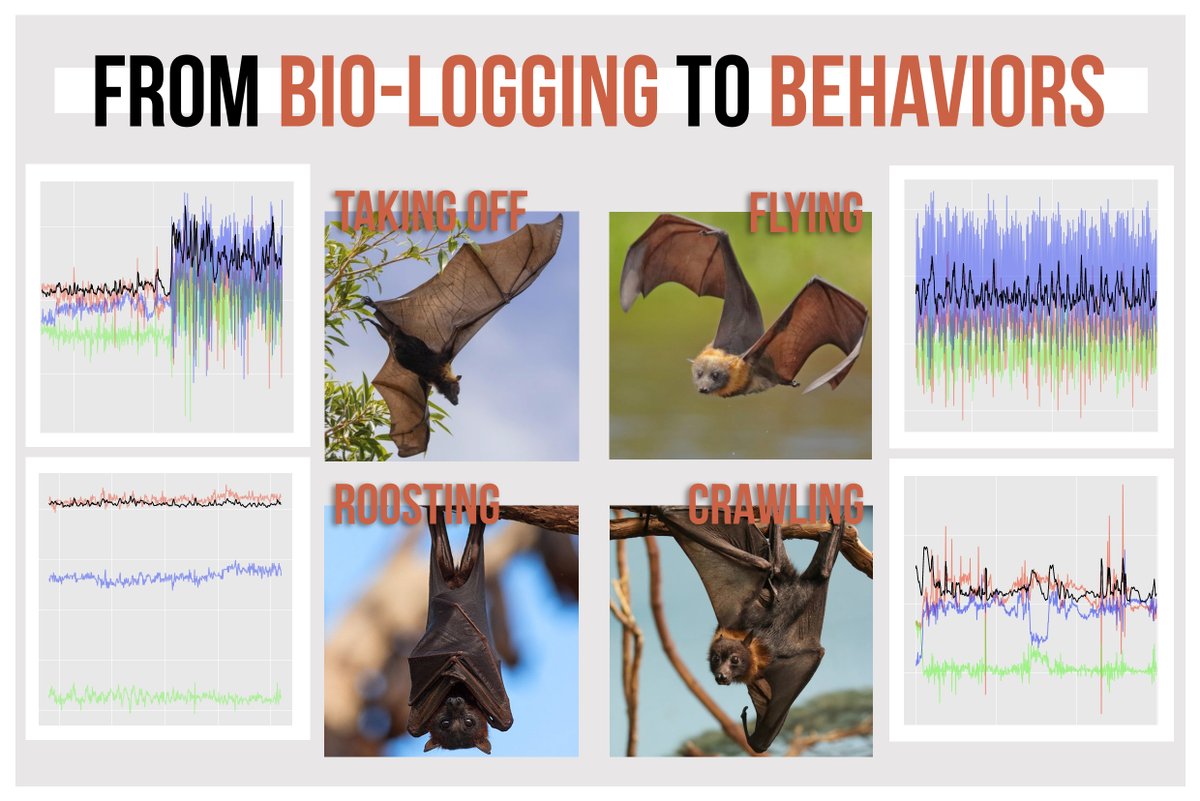
How can we use bio-logging to know what an animal is doing?📡
Since behaviors require specific movements from the body/limbs, we can look at accelerometer data and see patterns unique to distinct behaviors, giving us an idea of what the animal is doing, when, and for how long🐾
The last paper out in @JAppliedEcology of our PhD student Suzanne van Beek Calkoen. She shows that a reduction in deer density only occurs when wolf, lynx and bear co-occur , but humans had a stronger effect than the presence of all large carnivores. https://t.co/H5g6RtQI3u
Collared elephant Fred is not only one of the largest bulls we (@kwskenya and @wrtikenya) track but also one of the longest continuously tracked elephants. This week, he was monitored by the MEP long-term monitoring team nearby our headquarters.
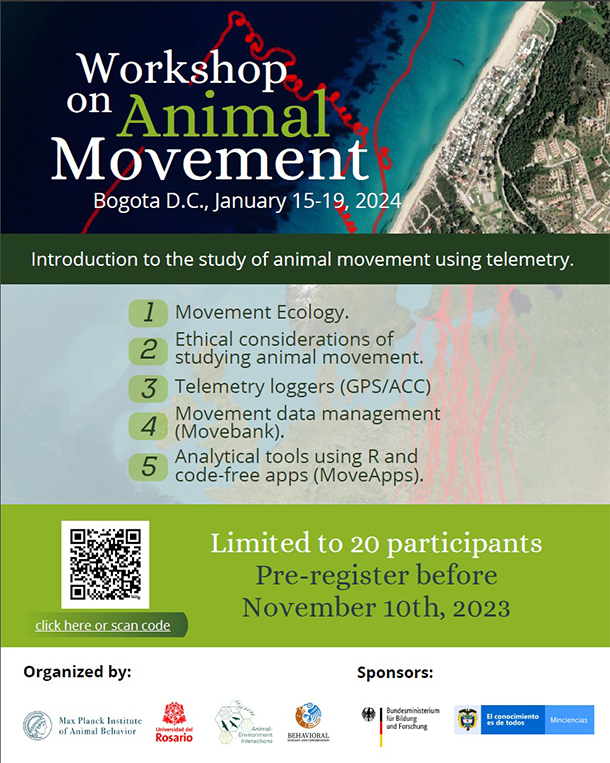
Workshop on Animal Movement Ecology in Colombia, January 15-19, 2024. A collaboration between the MPI of Animal Behavior and Universidad del Rosario. Please share with colleagues, researchers, students and friends in Colombia Pre-registration open now: https://t.co/dQdgkJOSMJ
What is the Internet of Animals?
@Animaltracking and I see it as an emerging convergence of linked #BigData + #LiveData + Automated #Analytics and #AI.
A powerful tool for science and conservation!
We describe the #IoA in our new paper @Trends_Ecol_Evo
https://t.co/v0huSg5e7B
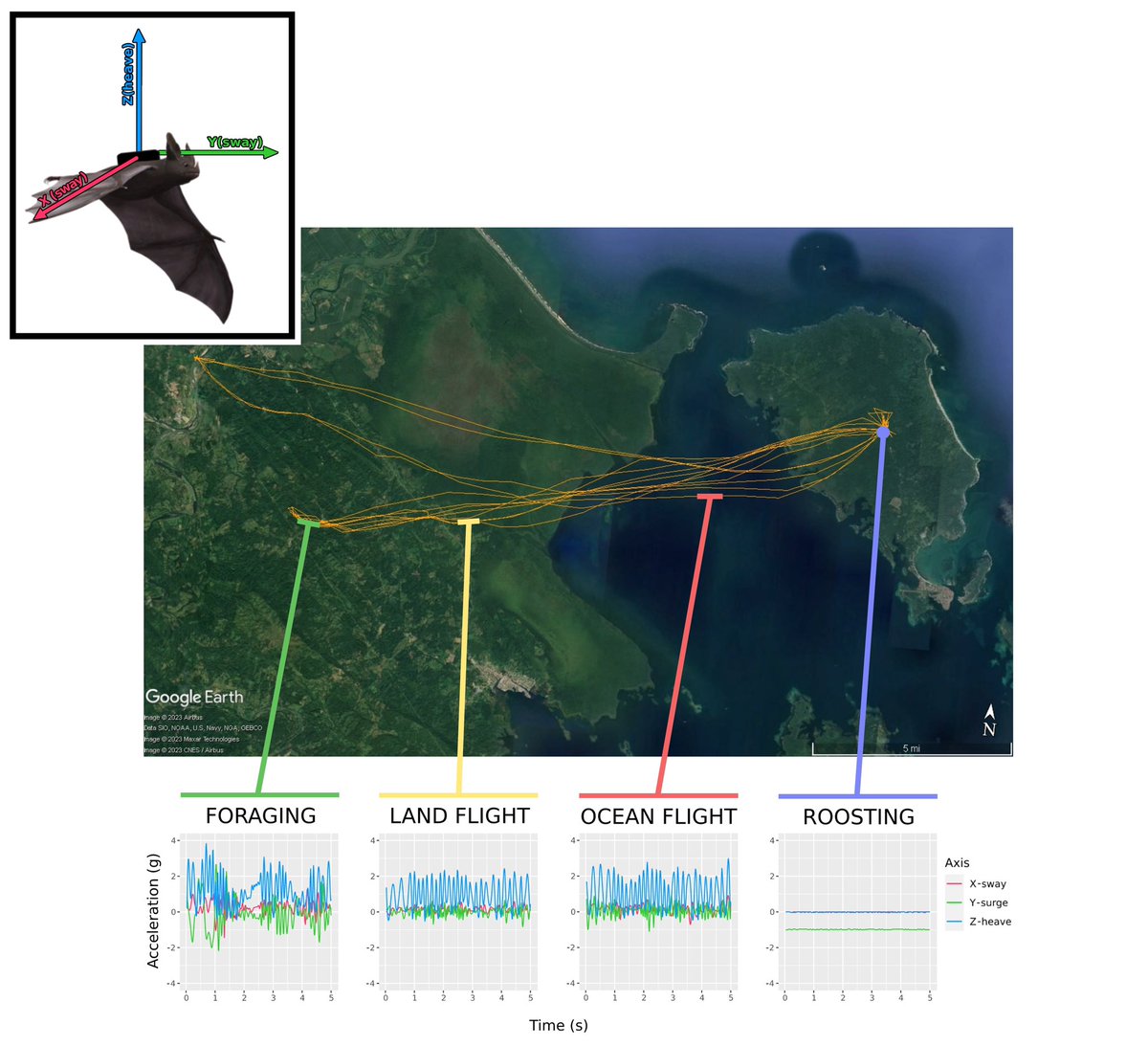
(2)Mapped GPS routes of nightly foraging trips of an individual bat over multiple days. The visualization is a basic example of how accelerometry can be used to help us better understand the individual behaviors being performed and how much they cost the bat in the form of energy
(1)One of the most fascinating aspects of studying the movement of wildlife is the ability to get a glimpse into their secret lives and understand their decision making.
Some of my work preliminary on Greater spear-nosed bats in Panama 🇵🇦 #bats#movementecology#batresearch
Have you ever wondered about the first animal to be tracked by satellites?
We dig into the history and controversy of tracking Monique the Space Elk with @airandspace, @martinwikelski, and Harry Reynolds, the scientist who collared her in 1970.
@NationalZoo@animaltracking
📢New paper: Wind energy production in forests conflicts with tree-roosting bats. Placing turbines next to roosts puts 🦇at risk. Beyond roosts, 🦇 avoided wind turbines . Better no wind turbines in 🌳🌲. Superb job Christine + team.
https://t.co/MHAoGmOVP2
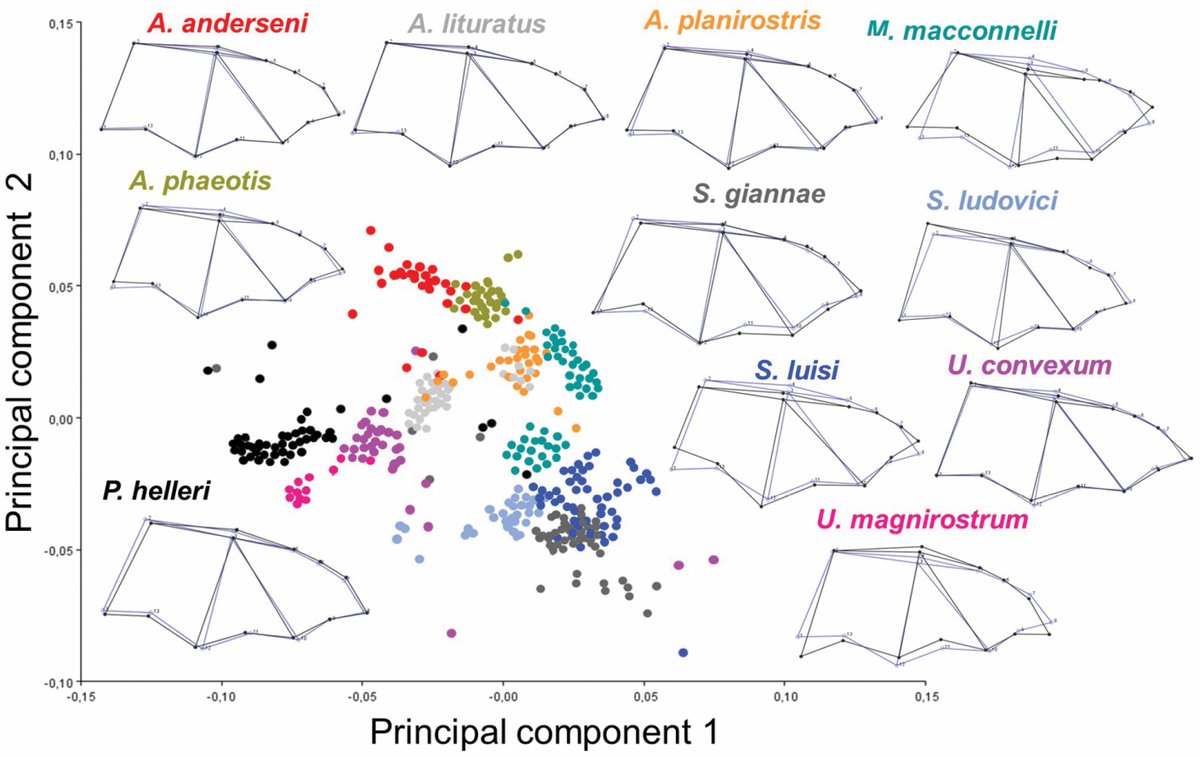
Wing shape is associated with food specialization of fruit-eating bats in the tropical dry forests of Colombia. Research led by @LeidyVi91157316 and @Leidyazucena7 from a collaborative project when they were visiting @ROMtoronto just as the pandemic hit! https://t.co/5mXsyRLYIT