@konstantinov_ie I love your article, I actually published one case report of sinus node artery fistula into right atrium with associated rca -sna aneurysms, and we used aspirin after surgery as your comment in the article
@SusumuOshima Thank you for sharing, I want to ask: Do you mean interrupted suture? Do you use it for proximal or distal anastomosis, how about your technique with the coronary button
@docpark Can you show the steps of this technique? In the picture I can see the complete band, do you need to use suture or bioglue to fixate the band? Thank you so much
For trainees: if the path of a coronary artery appears a bit too straight, it's usually intra-myocardial. Patient I operated on today with an occluded LAD, intra-myocardial Ramus, and high grade Circ. @AspiringCTS@STS_CTsurgery@StanCVFellows
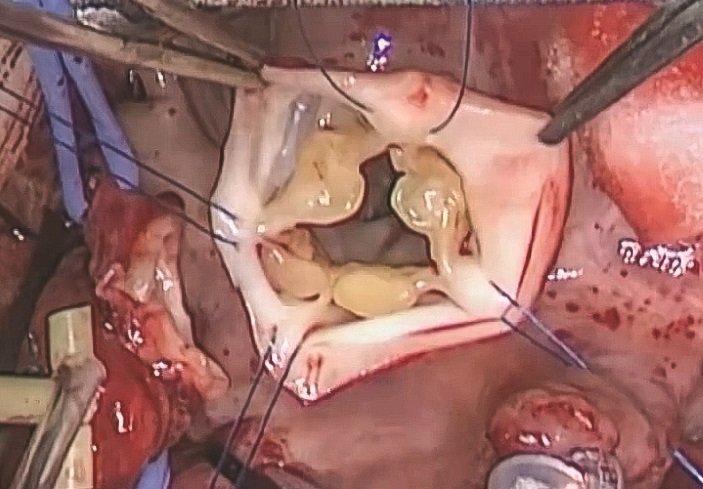
How do you repair truncal valve with severe insufficiency in a neonate? See detailed videos in forthcoming articles: Surgical anatomy of aortic root: towards precise and durable aortic, neo-aortic and truncal valve repairs https://t.co/x35DEVZmGD
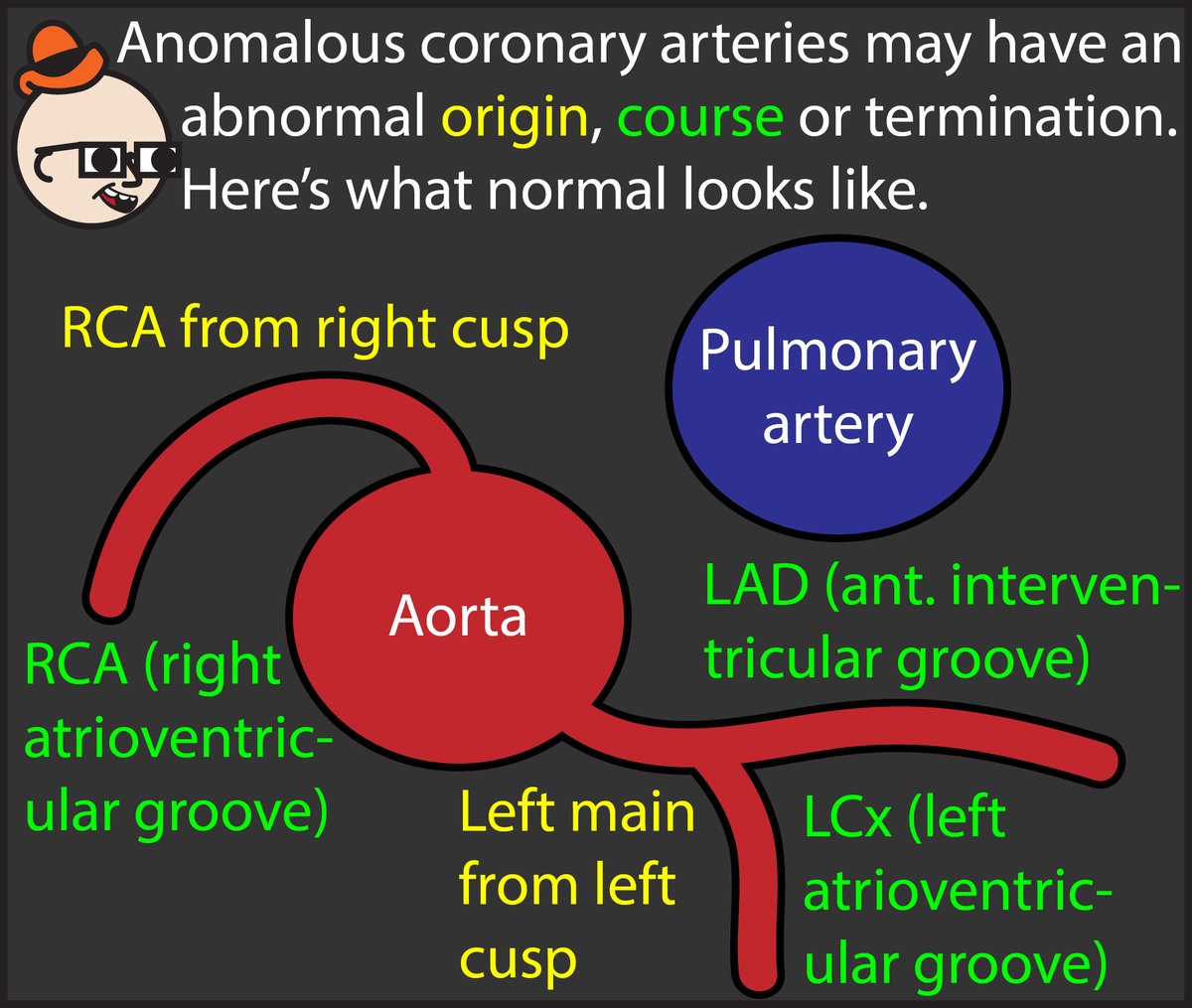
Here’s a "benign" coronary anomaly. If you’d like to learn how to read Chest X-rays, check out my free online interactive comic: https://t.co/xhAMW41QCh
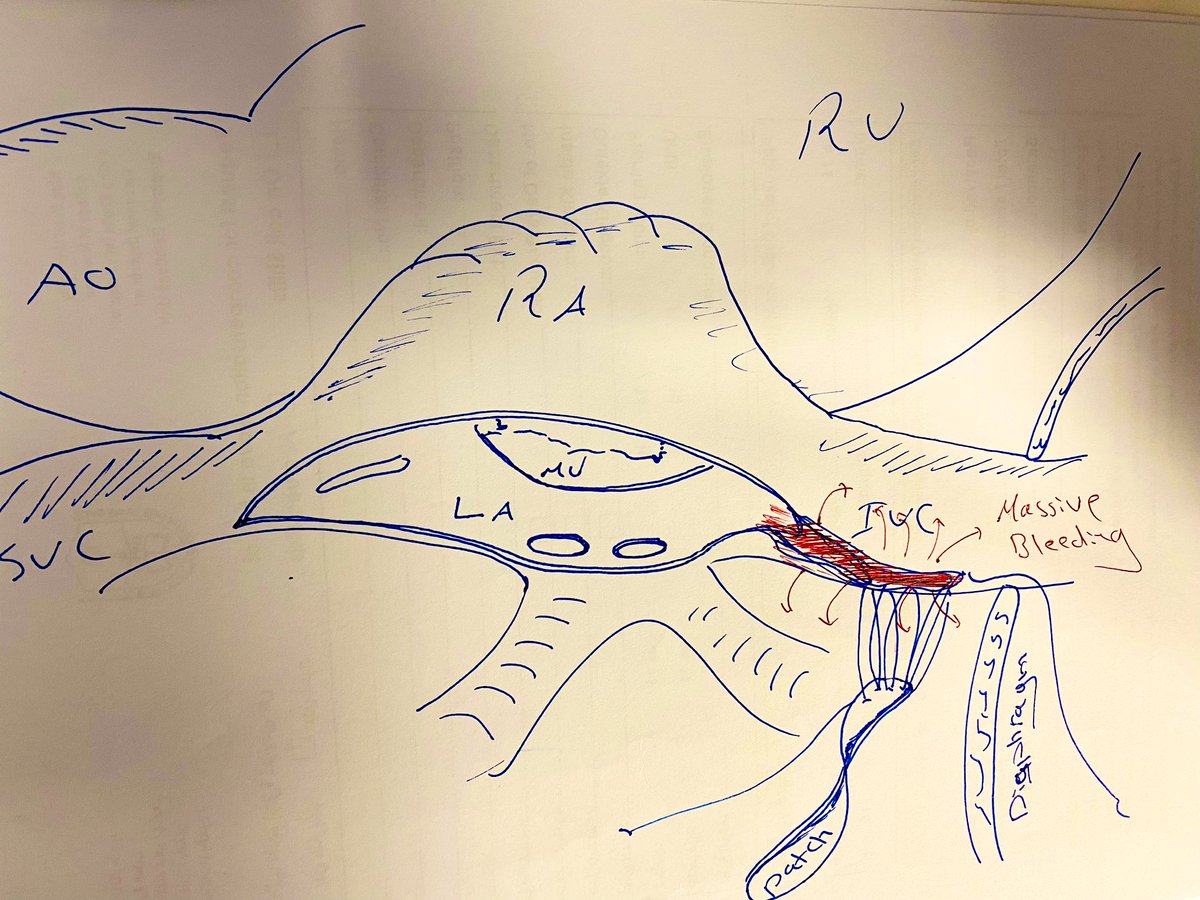
Cardiac surgery pitfall: massive bleeding from the IVC/SVC/RA injury during chest entry.
-Keep calm and call for help.
-Give heparin.
-Get blood in the room.
-Close the sternal retractor.
-Initiate CPB either centrally or peripherally.
-Use cardiotomy suction to fill venous reservoir and control bleeding in the chest. (Suction bypass)
-Cool systemic temperature to circulatory arrest.
-Control the bleeding source under hypothermic arrest.
-Resume circulation and original surgery.
-Rewarm and off bypass.