📢¿Conoces los 3 principales síntomas de un ictus?
🗣️ Rodrigo Cuevas, junto con la Asociación Ictus de Asturias y otras lesiones cerebrales adquiridas (@ictusasturias ), ha participado en la grabación del siguiente vídeo para ayudar a identificar sus señales y síntomas.
❗Recuerda:
▪️¿Boca torcida?
▪️¿Dificultad al hablar?
▪️¿Pérdida brusca de fuerza en brazos y piernas?
👉🏼Puede ser un #ictus y cada segundo cuenta.
☎️ Llama al 112.
#GanaTiempoGanavida
Cómo llevais el verano? Mucha eco veraniega? Esperamos que entre vacaciones y guardias lo hayais pasado bien! En breves nuevas fechas! Y estamos preparando además cosas nuevas!
Llevo unos días soñando que soy Cleopatra, la de Astérix y Obélix, y, con la nariz levantada, voy mandando a los del famoso lago a un sitio muy egipcio y faraónico:
https://t.co/Qxh2PW6x90
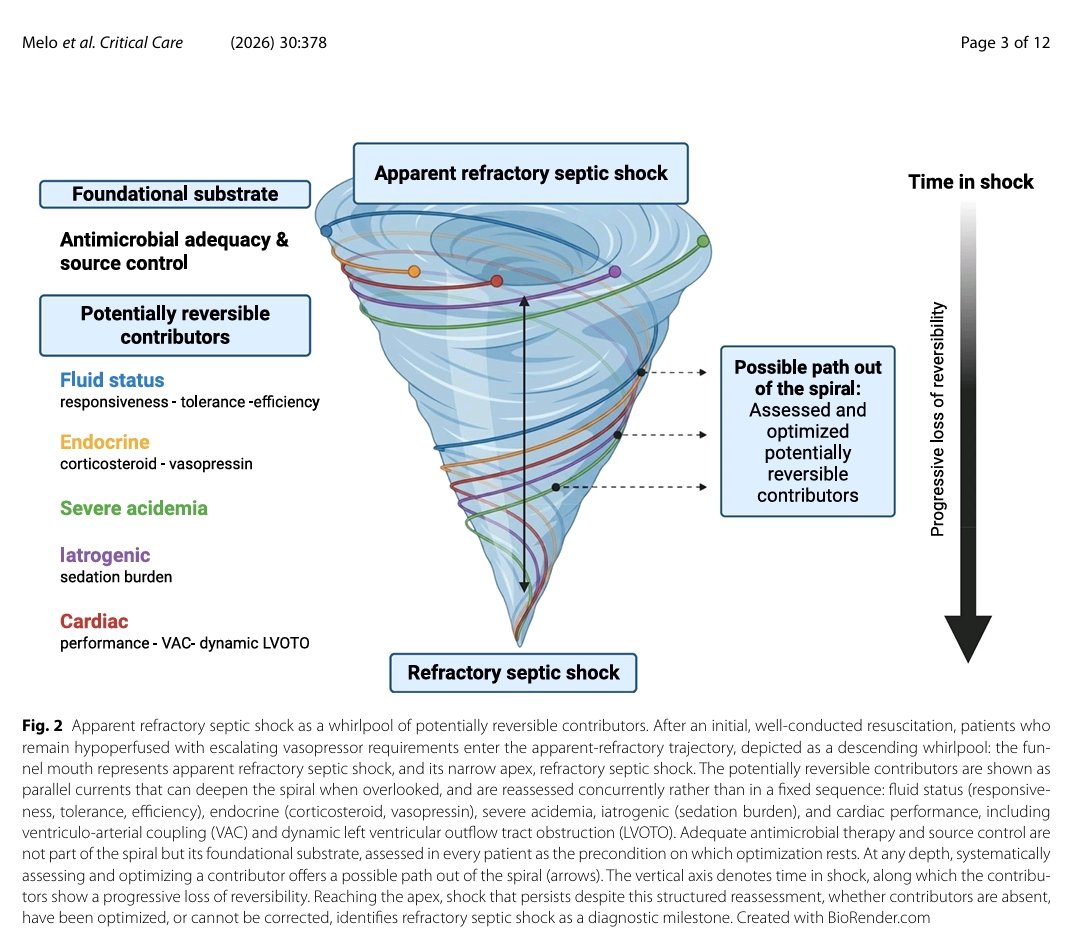
🫀Before calling septic shock “refractory,” look again.
A patient remains hypoperfused. Norepinephrine requirements continue to rise. Additional vasopressors are being considered. It is tempting to conclude that we are dealing with refractory septic shock, but high vasopressor requirements do not necessarily mean true refractoriness.
Melo et al propose a framework for distinguishing an apparent refractory trajectory from established refractory septic shock.
The question at the bedside therefore becomes: What potentially reversible mechanism is still sustaining hypoperfusion or increasing vasopressor requirements?
The authors describe these mechanisms as the “usual suspects.”
First comes the foundation: adequate antimicrobial therapy and source control. Without control of the infectious stimulus, optimization of fluids and vasoactive drugs cannot eliminate the underlying inflammatory and vasoplegic drive.
Then comes fluid status, but with an important evolution beyond simply asking whether the patient is “fluid responsive.”
We should evaluate three different concepts ALWAYS fluid Responsiveness, Tolerance, cardiac efficiency. A patient can therefore be fluid responsive but fluid intolerant, and even an initial hemodynamic response may disappear rapidly. Fluid responsiveness alone is not an indication for fluid administration.
Persistent vasoplegia should also trigger evaluation of potentially reversible endocrine, metabolic and iatrogenic contributors. Corticosteroid insufficiency, relative vasopressin deficiency, severe acidemia and excessive sedation may all increase apparent catecholamine resistance. Importantly, sedation itself can reduce venous tone, venous return, myocardial contractility and vascular tone, potentially increasing preload dependence and vasopressor requirements.
Sepsis induced myocardial dysfunction may involve LV systolic or diastolic dysfunction, RV dysfunction or hyperdynamic phenotypes. The authors also emphasize VAC. Increasing arterial pressure by increasing effective arterial elastance may improve pressure and flow when ventricular reserve is adequate, but in another patient it may create afterload mismatch: MAP rises while stroke volume and tissue perfusion deteriorate.
Dynamic LVOT obstruction represents another easily missed mechanism. Low preload, low afterload and hypercontractility can generate obstruction and paradoxically reduce stroke volume despite an apparently excellent ejection fraction. More catecholamine stimulation can make the problem worse.
Reference 📚
Melo, P., Wendel-Garcia, P. D., Leone, M., Khanna, A. K., Morales, S., Ospina-Tascón, G. A., Castro, R., Hernández, G., & Kattan, E. (2026). The usual suspects: A pragmatic framework to identify and address reversible contributors in apparent refractory septic shock. Critical Care, 30, 378. https://t.co/ZOAKw5hgoU
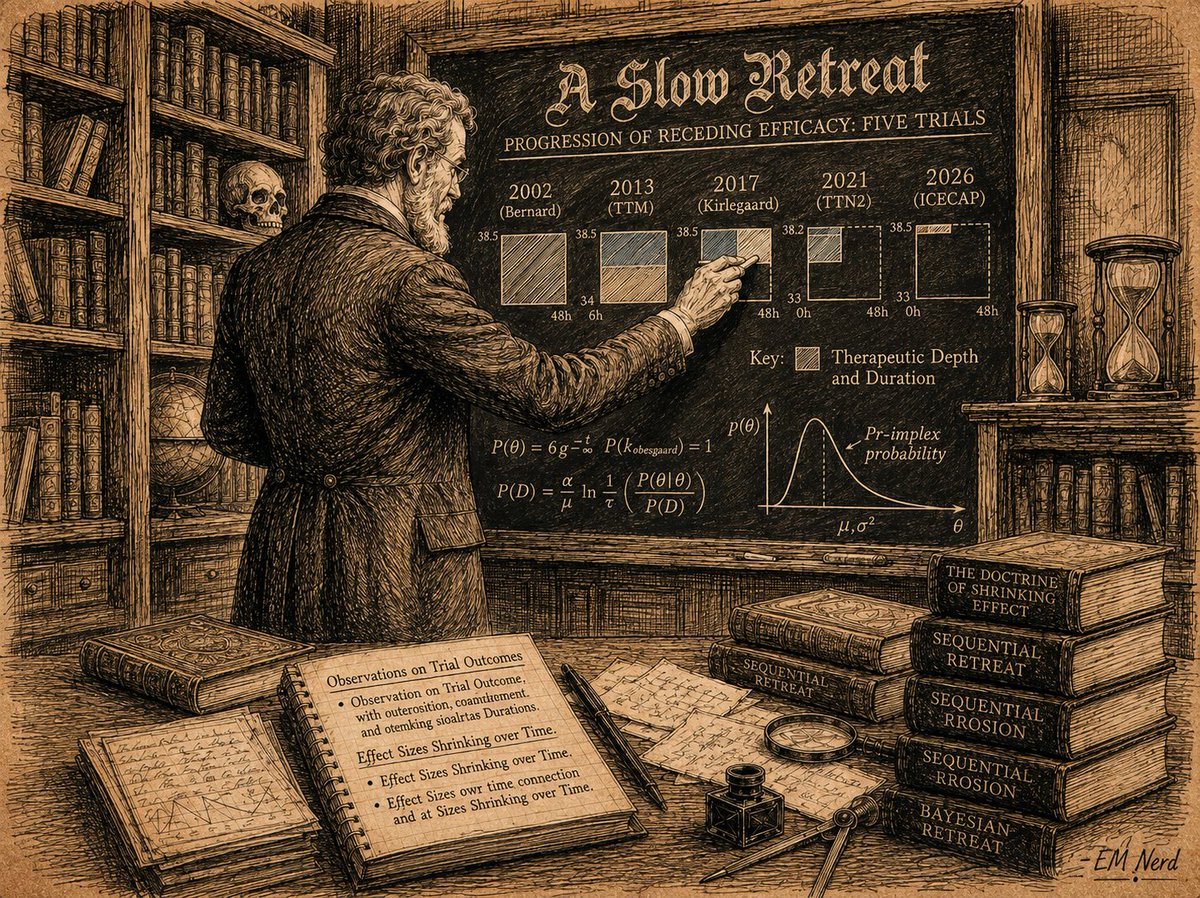
Imagine, for a moment, that targeted temperature management (TTM), the standard of care in post cardiac arrest management for more than two decades, was built on a false premise from the very beginning. A Slow Retreat https://t.co/eKHkjqYNmU
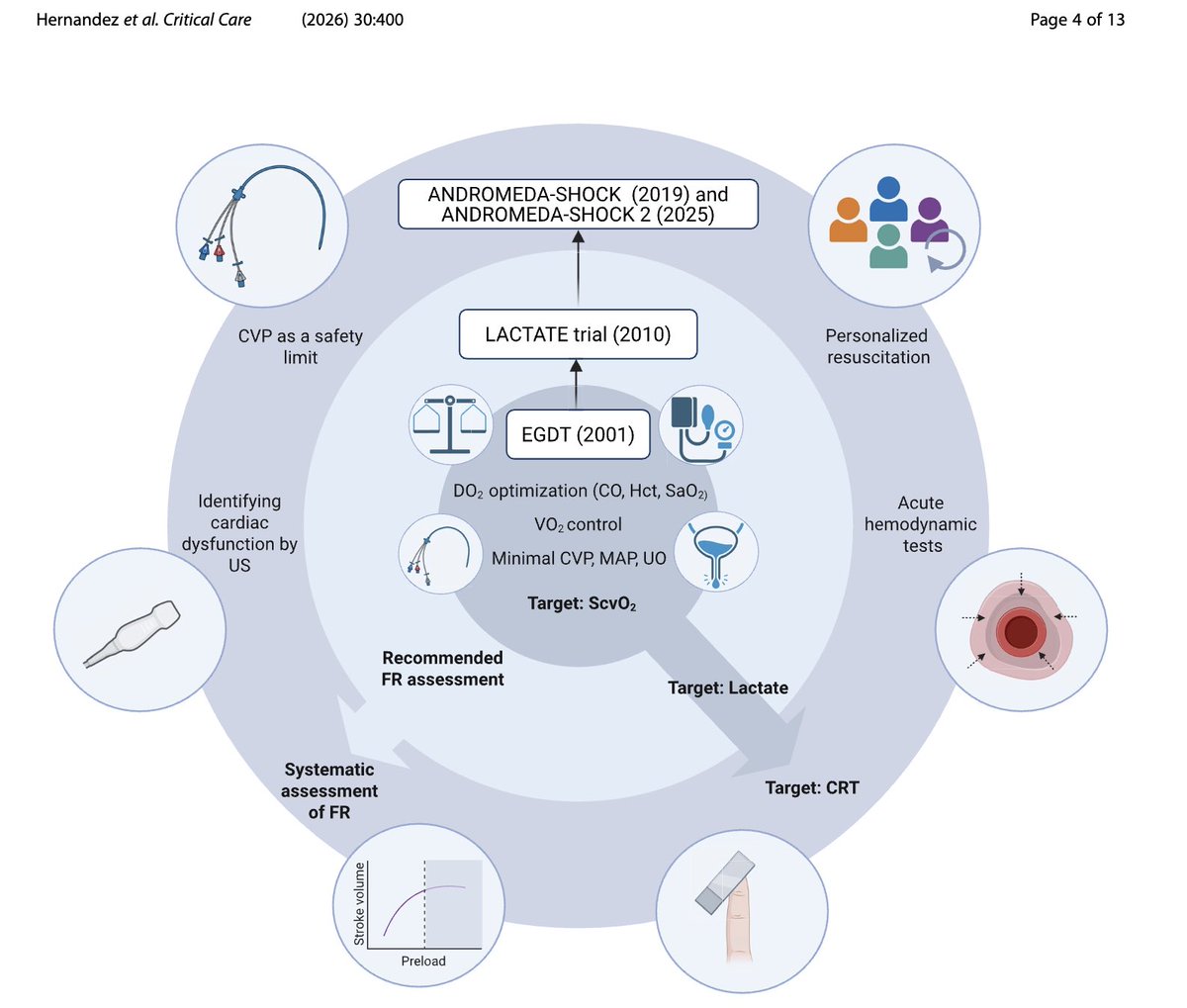
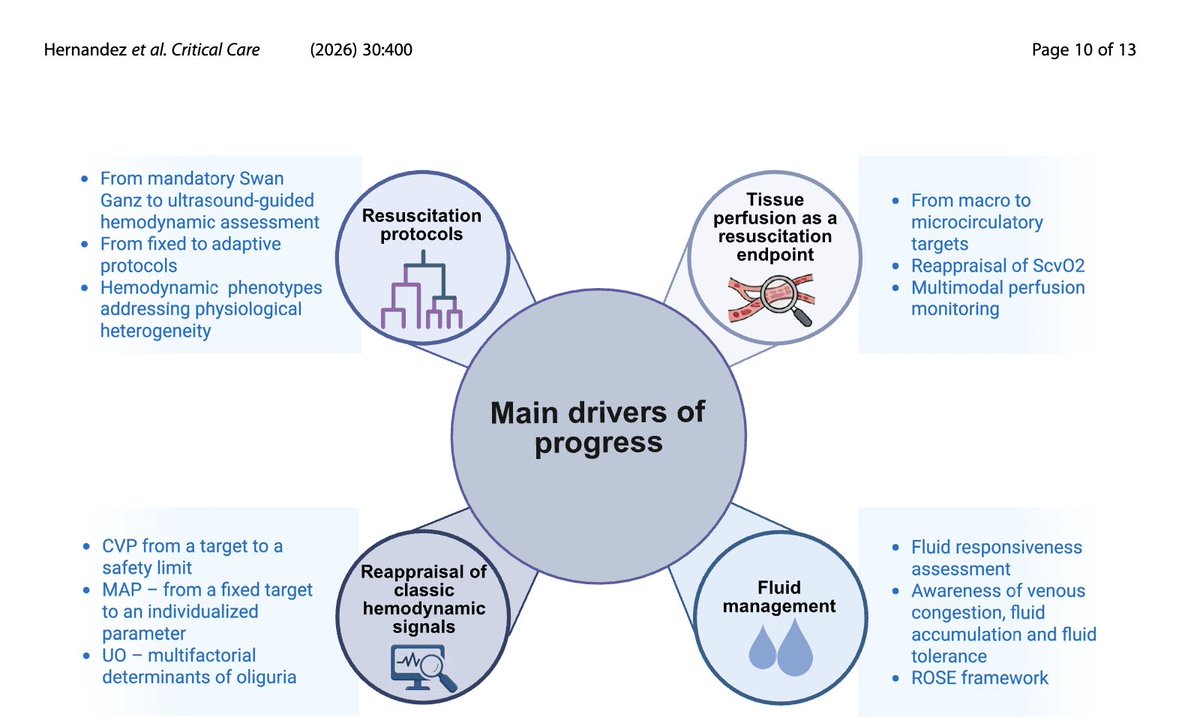
Dear friends, I love this paper. It was written with passion and summarizes with a conceptual perspective what we have learnt in 25 years of septic shock resuscitation (from EGDT to AS2). With close friends. Happy to share! https://t.co/S0pq13bvdb
The usual suspects: a pragmatic framework to identify and address reversible contributors in apparent refractory septic shock
https://t.co/FRTCxcOlYF
@khannaAshishCCM@edu_kattan
I saw a post on Reddit that said that “The underlying purpose of AI is to allow wealth to access skill while removing from the skilled the ability to access wealth.” And I don’t think I’ve ever seen AI described so incisively.
If you never “treated” pulmonary edema with rotating tourniquets in a desperate situation, you missed the good old days and I can tell that you are not GenX (or a boomer!). We placed (and inflated) BP cuffs on three limbs at a time to pool venous blood in the extremities and reduce venous return and preload. Every 15 minutes, we moved one tourniquet to another limb. Later studies showed that the technique did not work... But it was fun!
Honor al periodista de The Guardian que ha escrito el mejor pie de foto del Mundial
“Gianni Infantino explica cuidadosamente a Donald Trump que no forma parte de la selección española”.