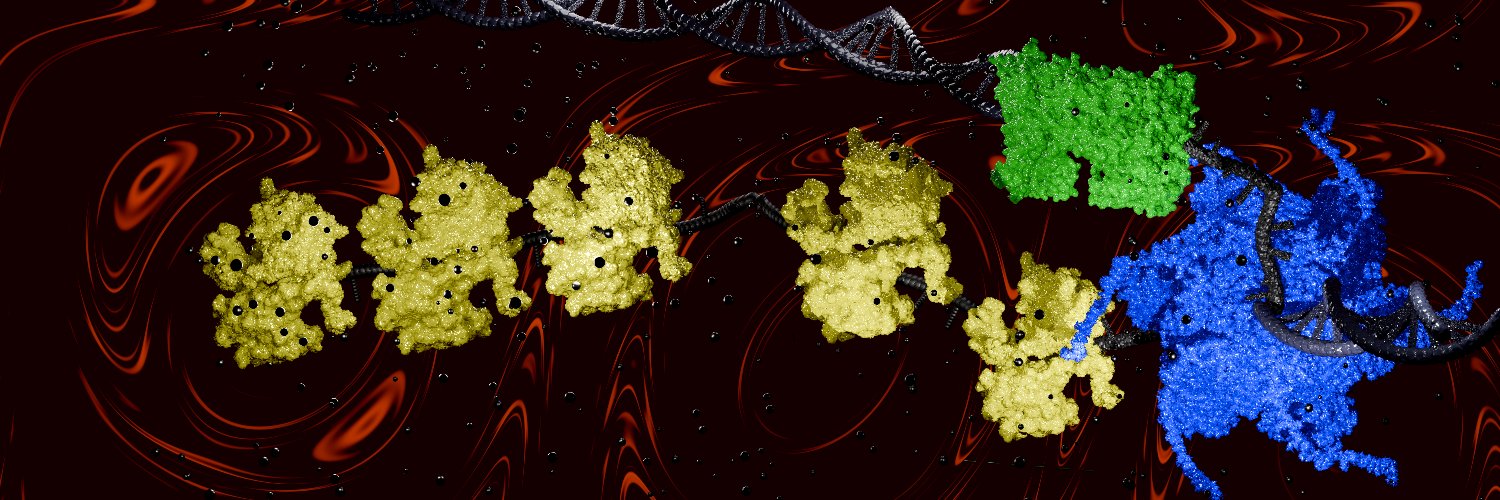
PhD-trained molecular biologist and biophysicist who has studied the human mitochondrial replisome using single-molecule techniques like optical tweezers
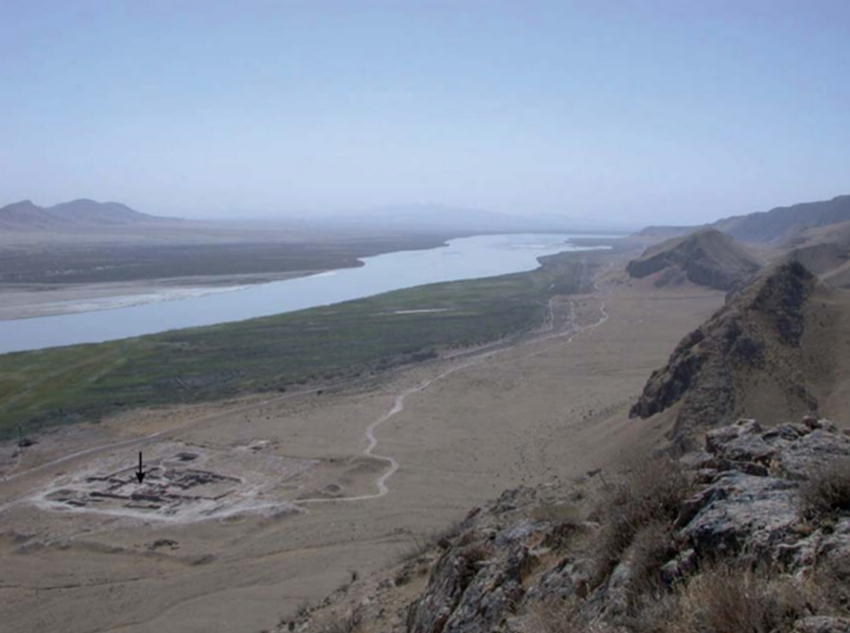
El templo del Oxus, junto al río al que rinde culto (Amu Daria) en Tayikistán. El más importante de los santuarios helenísticos en Asia Central, aunque sus orígenes se retrotraen a época aqueménida.
Hace poco más de un año, el 28 de marzo de 2025 se grababa por primera vez el movimiento de una falla transformante tras el terremoto de M7,7 en Myanmar. El salto de falla se ha estimado en ~2,5 metros en 1,3 segundos.
Puede parecer extraño, pero el templo de Olimpia, donde empezaron las olimpiadas hace 2800 años, está muy relacionado con nuestros hallazgos arqueológicos en Somalilandia. Os cuento en este hilo:->
Reflecting on the challenges of in vitro studies, simplified and less crowded than cellular environments. Future single-molecule research should aim to bridge these gaps by studying organelles or cell extracts to better capture in vivo complexity.
Thrilled to be attending the Optical Tweezers Course at the IBFG (Salamanca) during this week!
It has been an incredible experience to listen to Prof. Carlos Bustamante, a true pioneer in the field and one.
Many flagella use flowing protons to power their movements.
Protons flow through "stator" proteins, causing them to shapeshift and nudge on a driveshaft, which spins the tail. The motor is nearly 100 percent efficient at converting energy from protons into mechanical work (at constant torques!)
To put that into context, a typical combustion engine converts 20-30 percent of the chemical energy stored in gasoline into mechanical work at the crankshaft. The rest is lost to heat, friction, and so on.
Even though the stators themselves are highly efficient, though, the cell itself swims far less efficiently. Only about 0.2% of the energy stored in the proton gradient is ultimately transferred into forward motion; a large amount of energy is lost to the drag of water at microscopic scales.
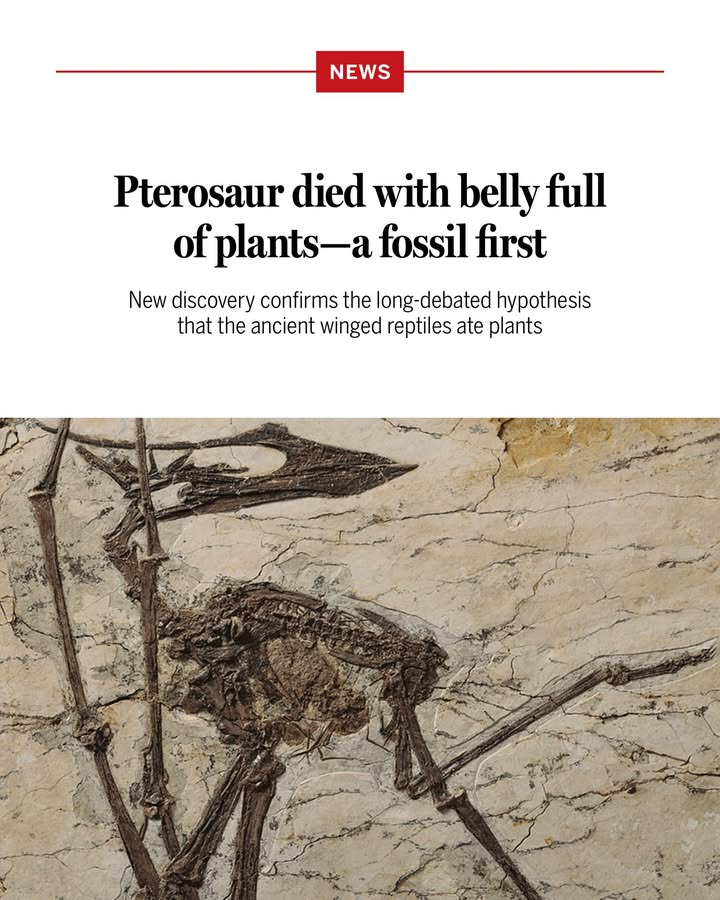
About 120 million years ago, an aerial reptile known as a pterosaur fell from the sky and died in a shallow pond. A fine layer of sediment washed over it, preserving not only its skeleton, but, to the delight of modern paleontologists, its stomach.
The resulting fossil is the first pterosaur ever found with a belly full of plants. Learn more on #NationalFossilDay: https://t.co/quYgxFZucd
1/6) How Fructose Hijacks the Liver to Fuel Cancer (Link in 6/6)
Quote: “In all cases, diets supplemented with high-fructose corn syrup resulted in faster tumor growth compared with control diets.”
This includes melanoma, breast, and cervical cancers. What’s going on is ‘sneakier’ than you might think? Let’s break it down 🧵👇
Today I had the pleasure of giving a talk at IMDEA Nanociencia about our work on the mitochondrial replisome in the Molecular Motors Manipulation Lab.
The presentation was aimed not only at biologists but also at physicists and researchers from other fields, with the (1/4)
the molecular motors that drive mitochondrial DNA replication in real time. Always inspiring to share science and connect with researchers from diverse backgrounds! (3/4)
Net balance per ½ O₂ molecule:
•10 protons are pumped from the matrix to the intermembrane space (via complexes I, III, IV).
•~2.7 protons are required by ATP synthase to generate 1 ATP. Therefore, approximately 3–4 ATP molecules can be produced per ½ O₂
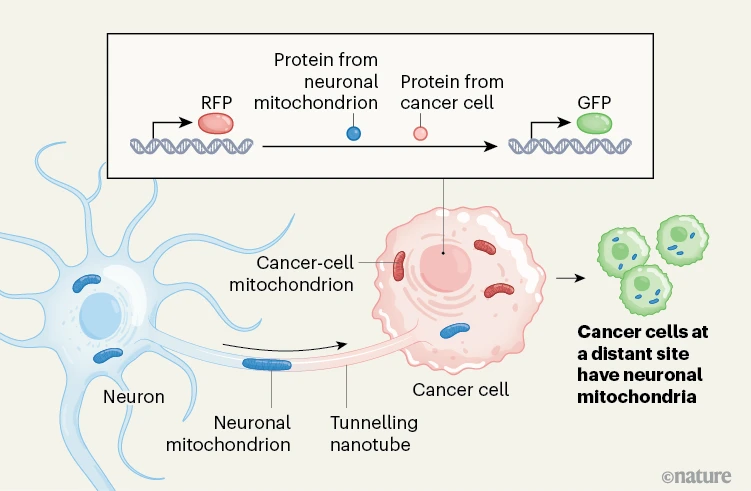
The ETC consists of four different complexes that carry out a series of redox reactions, ultimately transferring electrons to molecular oxygen — which is why we need to breathe.
This electron transfer is coupled to the translocation of protons from the mitochondrial matrix to the
intermembrane space, generating an electrochemical gradient across the inner mitochondrial membrane. When protons flow back into the matrix through ATP synthase, ATP is produced.
This process is remarkably efficient and operates in essentially the same way across eukarya.