New research on OpenCap validity and reliability compared to optical motion capture from @YuriLimaPT
In this study, we focused on tasks relevant to injury & performance testing.
Findings in the thread ⬇️
Full article link: https://t.co/B3n31HOtSc
#markerless#mocap
📈 Think high EMG = better glute gains? Think again
🧠 This study shows EMG activity doesn’t always match force output —more activation doesn’t necessarily mean more strength
⏰ No time to read the full paper?
✅ We broke it down into a 5-minute read
https://t.co/f9nQ1LJwIQ
@GregLehman @gerdy_mac @MBourne5 Agree Greg. This study came more from the question of whether a new method (modeling) provides a different interpretation to the traditional approach (EMG). Anyone who knows the theory won’t be surprised by the answer..
Poor agreement between EMG based ranking of exercises and gluteal forces ranked exercises.
This is *exactly* why we shouldn't use EMG amplitude as our sole/main measure of guaging how effective an exercise is.
Great work @TylerCollings3@MBourne5
https://t.co/NOLPGyIZXv
🚨 Myths, Realities & Clinical Pearls in Gluteal Tendinopathy ✅
NEW #BJSMPodcast with Dr. Alison Grimaldi offering take home messages that can be applied immediately 🎧
#MustListen ➡️ https://t.co/VcV2cl3uRp
PhD scholarship alert: Sprint running biomechanics (Edith Cowan University, Australia)
Interested in understanding how fatigue affects sprint running mechanics and injury risk: a question relevant to both modern sports performance and understanding our evolutionary past? 1/5
"Time-course changes in lower limb strength, vertical jump metrics and their relationship with patient reported outcomes following anterior cruciate ligament reconstruction"
https://t.co/e6JswPTsJ5
@lahti_johan I think the key is starting with what we care about measuring and how we intend to use that info to inform decisions. If hip mobility (or any construct) is something we deem important—based on performance relevance, injury risk, etc.—then we should aim to measure it directly...
Why 'functional training' is still ill-defined. Look up the history of the word 'upmost'. In 1979 this wasn't a word. It has become one (it gets a gig in most dictionaries) because muppets, who never read, mis-heard utmost and started their own word. 1/n
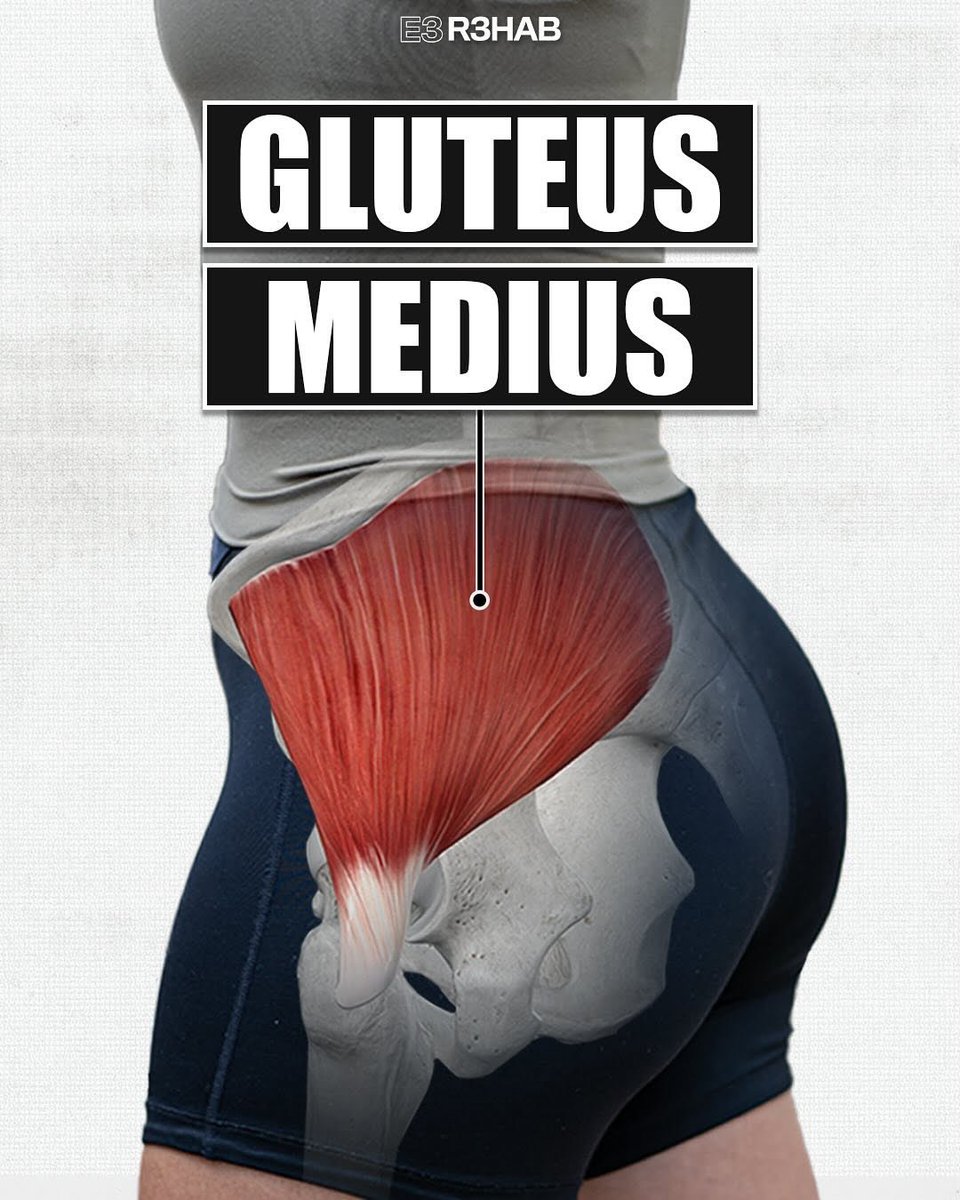
Exercises targeting the gluteus medius should likely involve direct hip abduction or include a component of having to control and stabilize the pelvis in weight bearing.
Shown are a handful of options that can be used for training or rehab purposes.
🧵
Some excellent work on the way from Jinyun Cai.
Does targeted muscle strengthening reduce ACL loading during dynamic tasks?
✔8 week training intervention
✔Reactive sidestepping & single-leg landings
✔EMG-informed neuromusculoskeletal modelling
✔Muscles personalized with MRI
@GregLehman@avigotsky I agree - from the point of view of external moments, there may be some ‘hidden’ coactivation to compress the spine, oppose posterior shear, or maybe create a posterior pelvic tilt moment? - but surely can’t be similar to a loaded trunk flexion movement
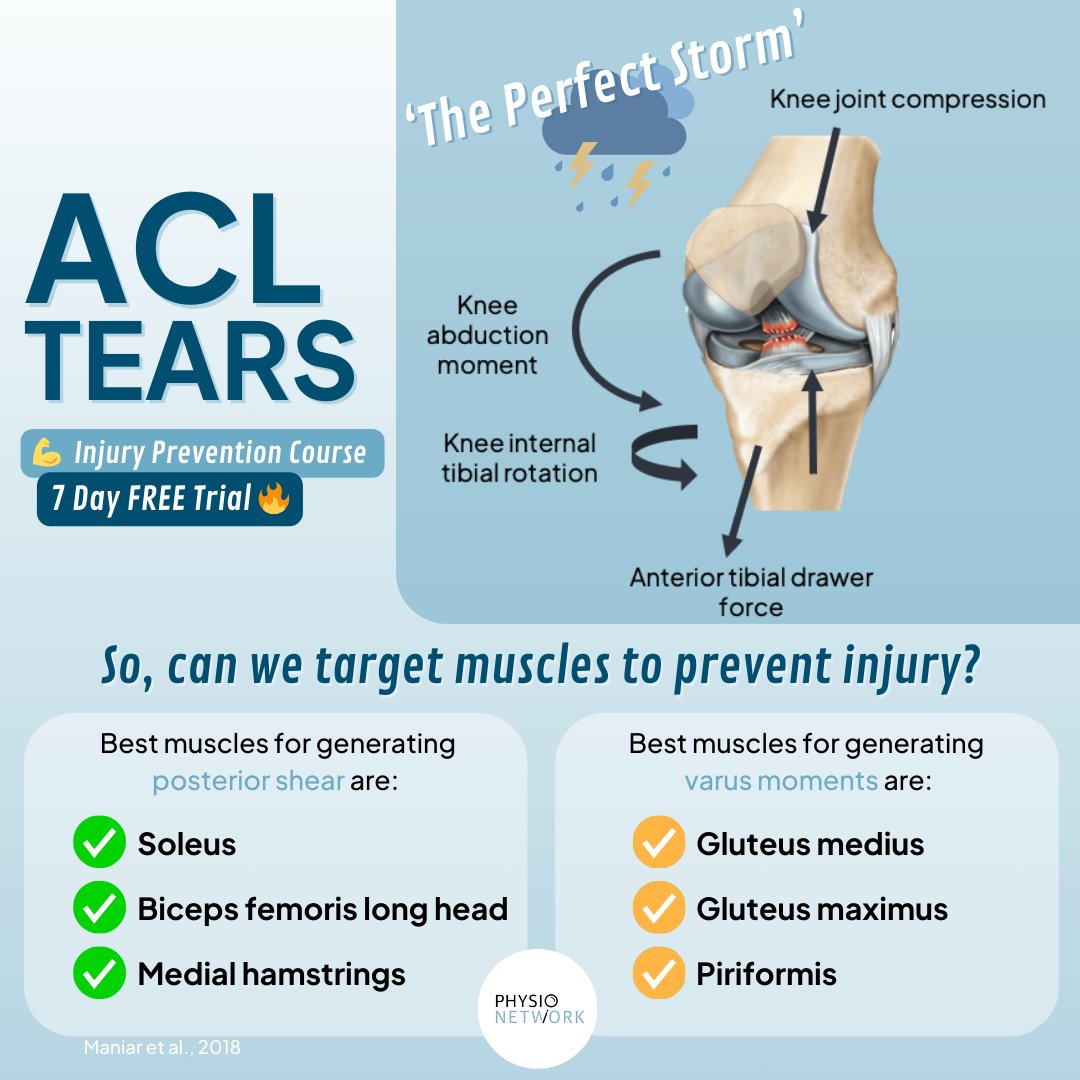
🦵 Can targeting specific muscles really help prevent ACL tears?
🤔 While promising, it's no perfect solution—ACL injury prevention is complex!
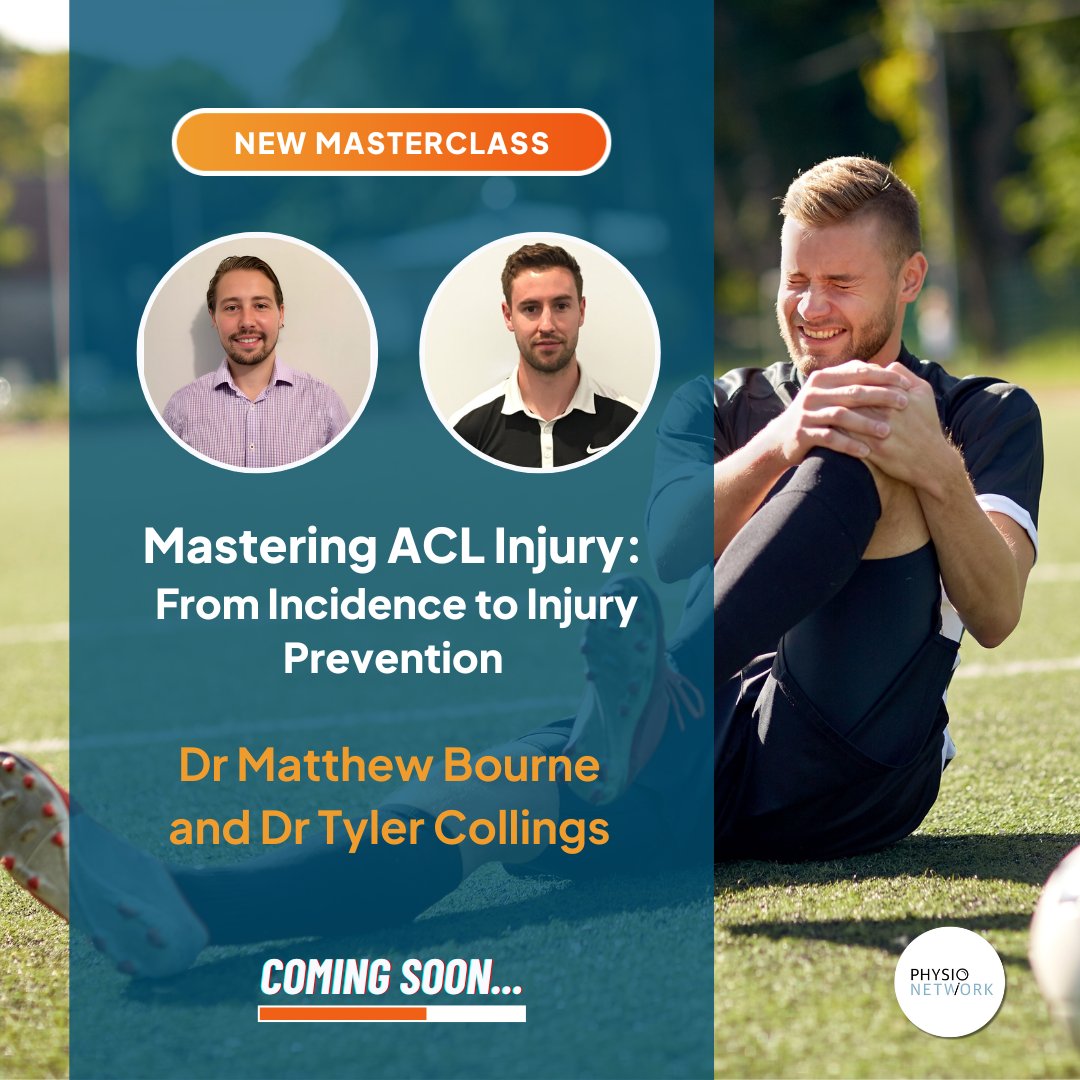
🍿 Learn ACL injury risk and prevention in our new Masterclass with Dr. @MBourne5 and @TylerCollings3
🔗 https://t.co/E7XWgMINdh
💡 @MBourne5 and @TylerCollings3 Teach: Mastering ACL Injury: From Incidence to Injury Prevention
⏳ Coming soon to Masterclass!
🤩 Did you know that we have 67+ Masterclasses in our library?
🚀 Try Masterclass for FREE for 7 days:
🔗 https://t.co/b4CNAnhThN