🇲🇳 Assistant Prof of Medicine and Associate PD of CCEP program at University of Washington @uwmedheart, Cardiac electrophysiologist via @brigham_ep #ablatevt
More than 10 years ago Oussama and I started our journey of investigation, trying to the define the optimal first treatment for patients with atrial fibrillation.
Separately we pursed randomised studies in populations with treatment-naive paroxysmal AF.
Five years ago we presented our RCTs in the paroxysmal AF population, which ended up sitting side by side in the same issue of the New England Journal of Medicine.
https://t.co/DWgHQ2VhiJ
https://t.co/z346xqq0jg
Since then we have been working together to examine the same question of optimal initial therapy, but instead looking at patients with more advanced forms of atrial fibrillation.
Today Oussama presented the results of the AVANT-GUARD study, which definitively demonstrated the value of initial catheter ablation in the treatment naive persistent AF population.
Like EARLY-AF, AVAT GUARD used implantable cardiac monitors to evaluate arrhythmia endpoints
Like EARLY-AF - initial catheter ablation reduced recurrences in AVANT GUARD by about 50%, which was about 25% in absolute terms. To put this another way, only 4 patients need to be treated with ablation to prevent a recurrence of arrhythmia.
However, binary recurrence doesn’t tell the whole story. Because we had loop recorders we were able to assess the time spent in AF (or AF burden). In this regard significantly more patients had none or negligible burden after ablation (<0.1%), with significantly more AAD treated patients having a very high burden (>5%). This is important as AF burden is associated with clinical outcomes such as hospitalisation.
In terms of risk - the rates of any adverse event or serious adverse event were comparable between randomised arms. Highlighting that persistent AF patients with high CHADS-VASc score are high risk irrespective of treatment provided. This is important as we reflect on treatment options as part of shared decision-making.
Congratulations to Oussama for the presentation and leadership, to the co-investigators and study sites for their participation and dedication, and a huge thank you to the Boston Scientific team for their support and commitment to advancing science.
To end, I want to acknowledge and thank Oussama for this shared journey, I’m grateful for our collaboration and friendship, and look forward to what we will do next.
New Evidence in AF Ablation: ICE Matters!
A multicenter study shows that confirming catheter tissue contact with ICE during PFA dramatically improves outcomes.
Recurrence: ICE 12.6% vs Fluoro 22.3%
Reconnection at redo: ICE: 10.3% vs Fluoro: 59.2%
Source: HRJ, 2025 Mohanty et al.
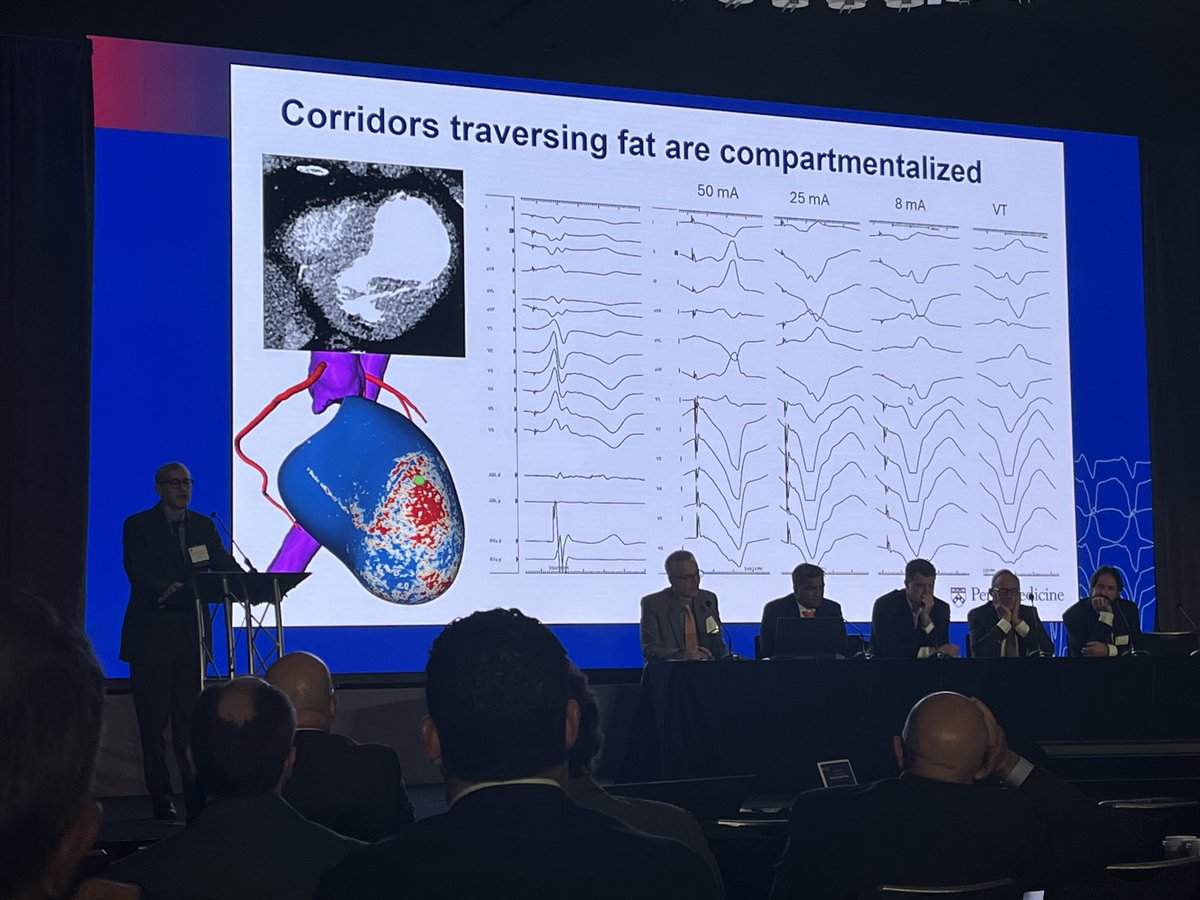
Our star EP Fellow Rob Kerley (winner of the VT Innovation Award) wrote up our experience using ICD electrograms to target fascicular substrate to ablate VF. When combined with a HPSD RF we observed very favorable outcomes.
Free read from JICE https://t.co/B1YZJnARLi
Slowly Conducting Anatomic Isthmuses of Tetralogy of Fallot: An Opportunity for “Prophylactic” VT Ablation
@brycevjohnson@B_Naz_MD
https://t.co/6dqkpVyFxe
There aren’t a lot of opportunities for “preventive medicine” in EP or VT, but our “prophylactic” approach for our Tetralogy of Fallot patients appears to have an early signal of safety and reduction in incident ventricular arrhythmias long-term (with fewer ICD implants)
PFA is transforming EP, but remember — CIED patients weren’t included in IDE trials. Up to 20–30% of device patients may eventually need AF ablation. Real-world experience matters. Our case shows why vigilance is key when performing PFA in this group. #EPeeps#Cardiology
2 simultaneous publications of studies presented @VTSymposium 2025:VANISH2 substudy results presented by John Sapp (Pablo Nery first author) and VCAS trial presented at our inaugural LBCT by Vivek Reddy. A banner year! @JACCJournals@CircAHA
Proud of @UWCardiology fellow Craig Morris for being a finalist for @VTSymposium Mark Josephson VT Innovation Award on his contact sensing work to further our efforts on ultrasound ablation. Lots more to come from his career. Just getting started. @UWMedHeart
It is a great privilege to be a part of the elite journal family! The permanent vector of JACC family of journals publishing studies ranging from humans to molecules to in silico is directed toward improving cardiovascular care! @hmkyale@utedrow@ACCinTouch
Instillation of intrapericardial steroids along w/ periprocedural colchicine after epicardial VT ablation led to a 📉 incidence of adverse effects assoc w/ pericardial inflammation when compared w/ historical control groups. https://t.co/GnL77g3Wi1
#JACCCEP#AFib#epAblation
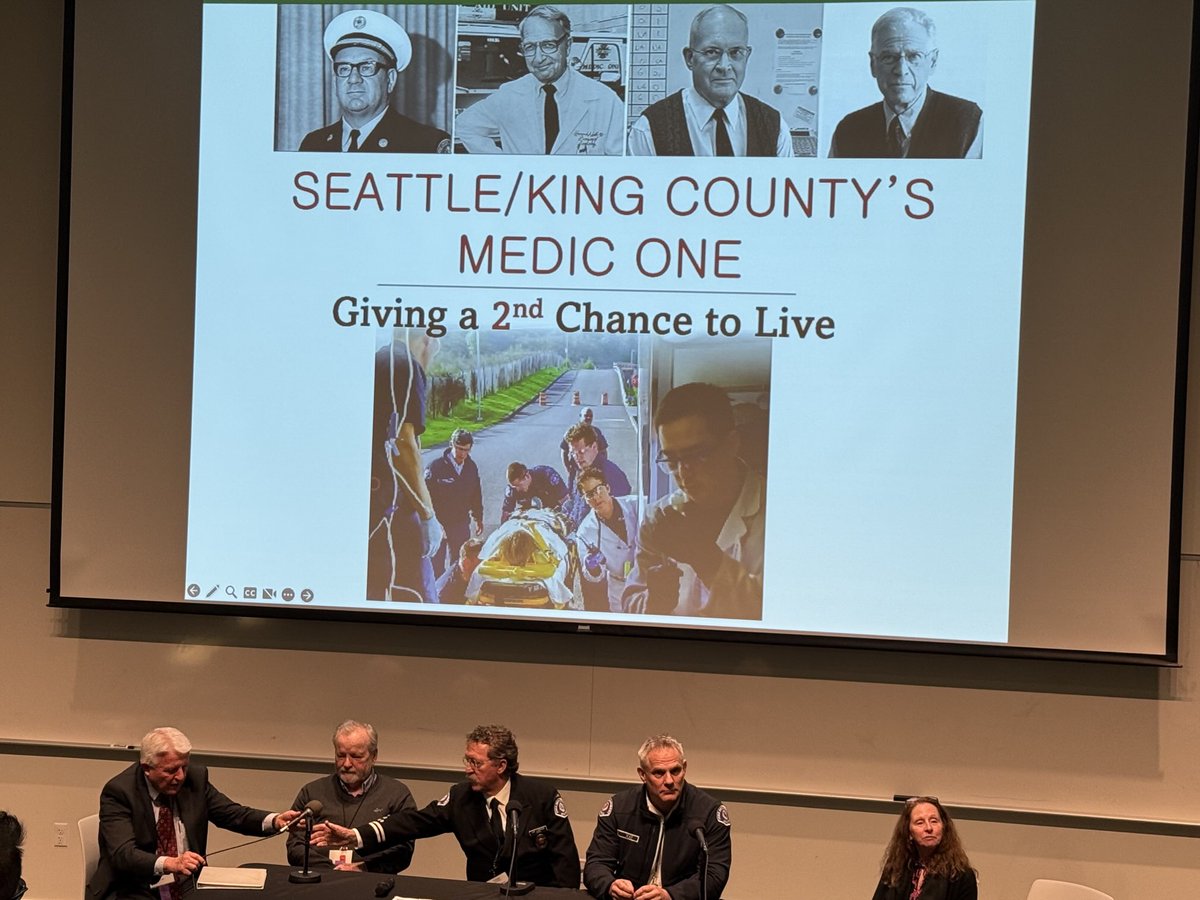
Learning from two generations of true heroes of resuscitation science and implementation at @UWMedHeart Sudden Cardiac Death Symposium. Join us next year: https://t.co/bBq9sY9TA4