We are so excited to join with our MGB cardiology colleagues for our first recruitment cycle for CCEP! MGB Electrophysiology ID 1542411028 on ERAS/NRMP!! Watch for our combined handle. Great mentors, education, cases, collaboration. #EPeeps#AblateVT@paulzei@MoussaMansour10
We're excited to officially kick off recruitment for the first-ever Mass General Brigham Cardiovascular Disease Fellowship Programs!
Bringing together the strengths of BWH and MGH, we're proud to offer exceptional clinical training, world-class research & outstanding mentorship.
We have known about #WPW and accessory pathways as a common cause of SVT for >100 years and have effective procedures to address them, but we still have NO IDEA why some patients are born with these extra slivers of muscle that electrically connect atria to ventricles. Medicinal use of lithium in pregnant women leads to heightened risk of a particular form of congenital heart disease associated with these pathways. Might variable levels of lithium in drinking water affect the chance a growing fetus will be born with such a pathway? @jclinicalinvest@UCSF@UCSFHospitals@stopafib@DrDave01@KnowYourPulse
JCI - Elevated lithium levels in drinking water are associated with higher prevalence of Wolff-Parkinson-White diagnoses https://t.co/WFUt4tcd2a
A #JACCCEP study showed that in pts. w/ prior spontaneous polymorphic VT/VF, adjunctive Purkinje de-networking during VT #epAblation was associated with a substantial reduction in recurrent ventricular arrhythmias, w/ a modest increase in risk of LBBB.
https://t.co/V6ni4V7H7l
Great to see imaging and mapping come together so clearly in this recent case with Dr. @EsseimS and the @UHhospitals Cleveland team 💪🏻
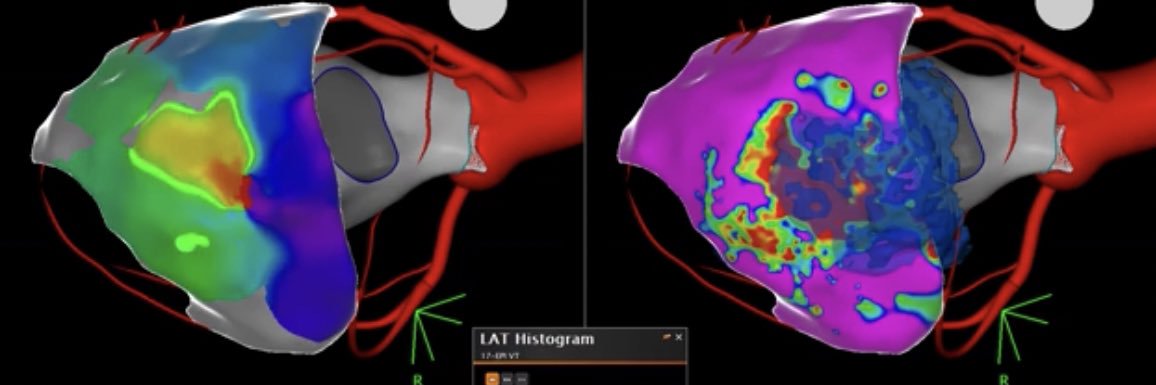
An initial ILAM map demonstrated deceleration zones along the border of fatty infiltration in the RV. The #VT was easily inducible and hemodynamically tolerated, allowing mapping in VT as well. The circuit location correlated nicely with the imaging and was confirmed by entrainment.
The VT terminated after only a few lesions and, after additional ablation in the area of interest, was rendered non-inducible. The entire procedure was completed in under three hours.
Thank you Mitchell Kershner for the excellent mapping.
#epeeps #cardiacimaging #VTablation #inHEART
Cardiac Electrophysiology at a Crossroads: Building on Dr. Josephson's 20 years of observations. Is EP science, procedure or both? What is the future of EP science?
https://t.co/qQ33wCvekc
#EPeeps#CardioX@ACCinTouch@HRSonline
In VT ablation, does scar architecture matter more than scar burden, and is noninducibility equally meaningful across substrates?
Pleased to share our editorial with @utedrow, discussing the intriguing findings of Pittorru et al. in @JACCJournals.
https://t.co/MObq95iFhs
Thank you to everyone who made @VTSymposium & the pre-con, PFA 101: From Bench to Bedside, a resounding success. @VTSymposium 2026 ON-DEMAND will be available soon to all conference attendees and later for general viewing. Keep an eye out for details on the 22nd Annual International VT Symposium 2027
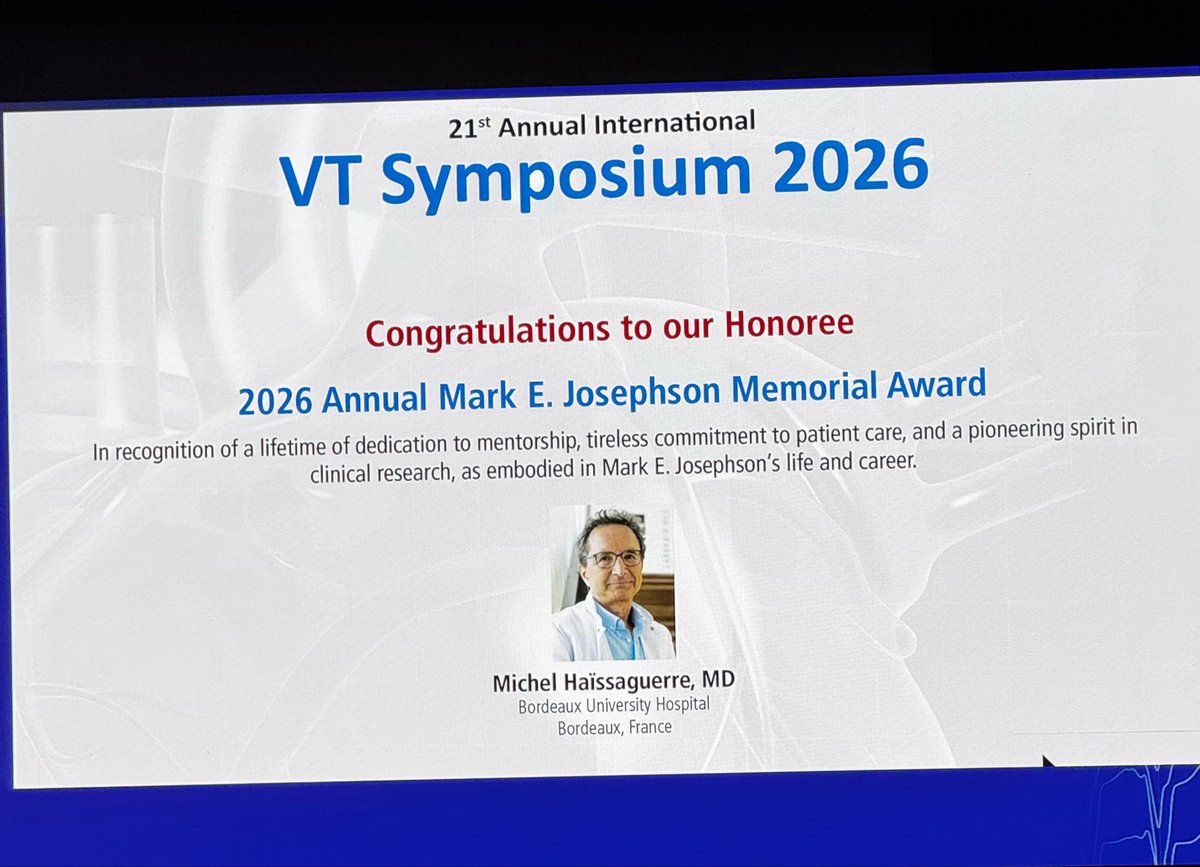
Live- 21st VT Symposium - Mark E. Josephson Memorial Lecture by Michel Haissaguerre- Structural basis of Ventricular Fibrillation- simultaneously published in JACC Clinical Electrophysiology- Congratulations to International team @VTSymposium@ACCinTouch
@VTSymposium starts this Friday, featuring live and recorded case sessions, late-breaking clinical trials, cutting-edge lectures, interactive panel discussions with Q&A, lively debates, the Annual Mark E. Josephson Abstract Competition & VT Innovation Award, and a Welcome Reception with exhibits and a Poster Session. Still time to attend at the Brooklyn Marriott Bridge or virtually in real-time https://t.co/kKnjPVuxUU